
Your cart is currently empty!
Life May Have Started Twice, And Scientists Say The Clues Are Everywhere

For more than a century, scientists have worked from a remarkably simple idea about the history of life on Earth: everything alive today ultimately traces back to one ancient beginning. Bacteria, trees, insects and humans may look impossibly different, but beneath all that diversity sits the same genetic code. It is the biological thread connecting every living thing on the planet.
Contents
show
Now researchers say that picture may be missing a crucial part of the story. A new study from Heinrich Heine University Düsseldorf suggests the genetic code may indeed have one common origin, while some of the biochemical machinery needed to keep early life running appears to have emerged independently in bacteria and archaea. If that interpretation holds, Earth may have produced life more than once before the two major lineages began evolving along separate paths.

The Mystery Hidden Inside Earth’s Oldest Life
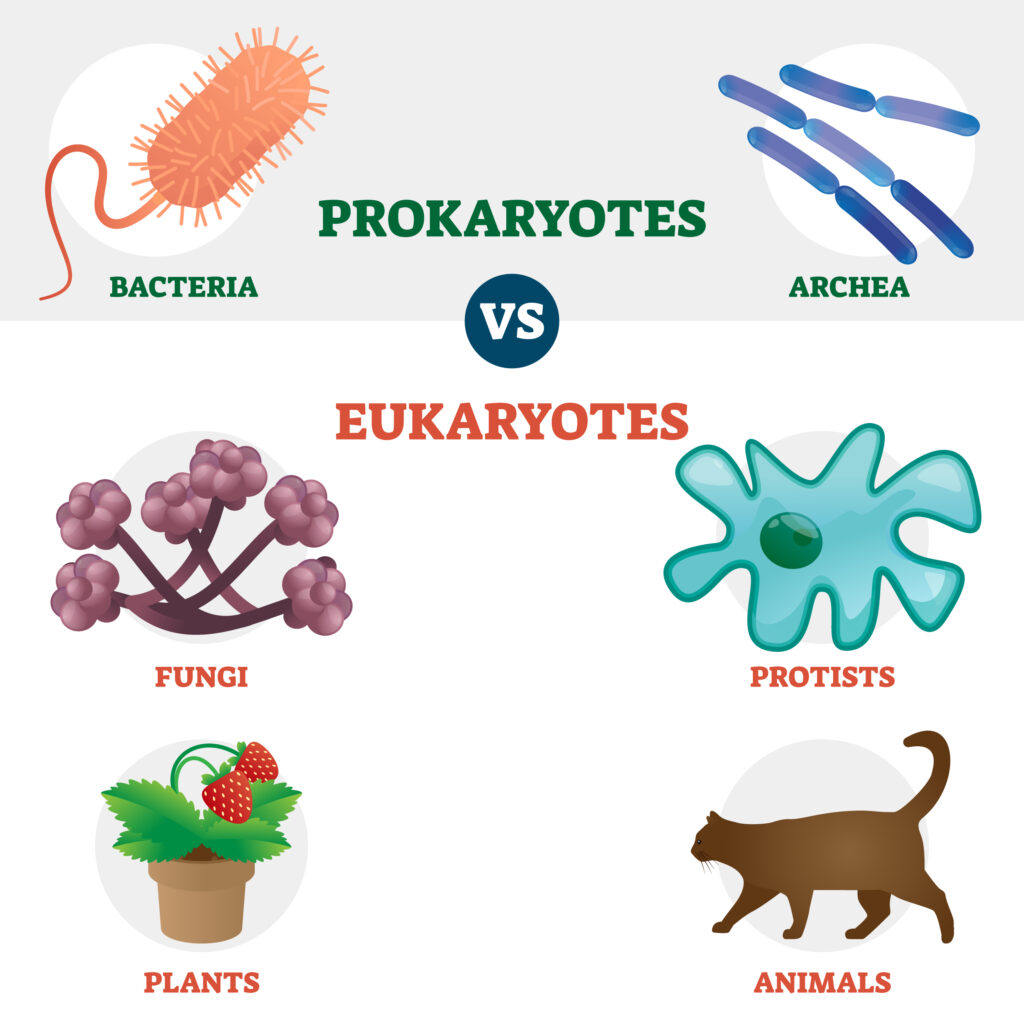
The researchers began with a contradiction that has been sitting inside biology for years. Bacteria and archaea are among the oldest major branches of life, and both rely on complex metabolic reactions to build themselves and survive. Yet some of the enzymes performing those essential reactions are radically different between the two groups.
That creates a difficult evolutionary question. If bacteria and archaea inherited all of their earliest metabolic machinery from the same ancestor, why do some of their most important enzymes have completely different structures? The reactions can be essentially identical, while the molecular machines carrying them out appear to have separate evolutionary histories.
A team at Heinrich Heine University Düsseldorf set out to investigate whether that apparent contradiction could tell researchers something about the earliest stages of life. Their findings, published August 5 in Science Advances, suggest that the split between bacteria and archaea may have happened before the earliest biological systems had developed the full collection of enzymes found in modern cells.
The distinction is important because the researchers are not claiming that humans, plants and bacteria somehow came from two unrelated versions of life. Their argument is more specific. One ancient system may have supplied the shared genetic foundation, while different biological lineages later developed their own solutions for carrying out essential chemistry.
Researchers Mapped 420 Reactions To Find The Missing Pieces
The team reconstructed a core metabolic network containing 420 chemical reactions that bacteria and archaea both depend on. These reactions include the basic chemistry organisms need to build cellular material from simple compounds such as carbon dioxide and hydrogen.
The researchers then asked how much of that metabolic network could have been handled by LUCA, the last universal common ancestor of all modern cellular life. Their answer was surprisingly limited. They estimated that LUCA could directly catalyze only about half of those reactions using enzymes.
“We found that the last universal ancestor of all cells, LUCA, possessed enzymes for only about half of the reactions of metabolism,” senior author William Martin said. “The other half was catalyzed by metals in the environment where LUCA arose.”
That finding changes the picture of what early life may have looked like. Instead of imagining LUCA as a primitive version of a modern cell carrying all the necessary machinery, the researchers suggest it may have depended heavily on the surrounding environment to complete its chemistry.
The idea also offers a possible explanation for why bacteria and archaea eventually ended up with different molecular solutions. If early systems were relying partly on environmental chemistry, there may have been room for separate lineages to develop different enzymes after they began moving beyond those environments.
LUCA May Have Lived Inside Hydrothermal Rock
The proposed setting is deep beneath the ancient ocean, around hydrothermal vents where hot, mineral-rich fluids emerged from the seafloor. These environments contain metals and minerals capable of driving chemical reactions without the sophisticated enzymes found in modern organisms.
On the Düsseldorf team’s interpretation, LUCA may have been less like a free-swimming cell and more like a biological system embedded within porous rock. It could have contained genetic material and enzymes while still relying on the chemistry of its surroundings to perform reactions it had not yet evolved the machinery to handle.
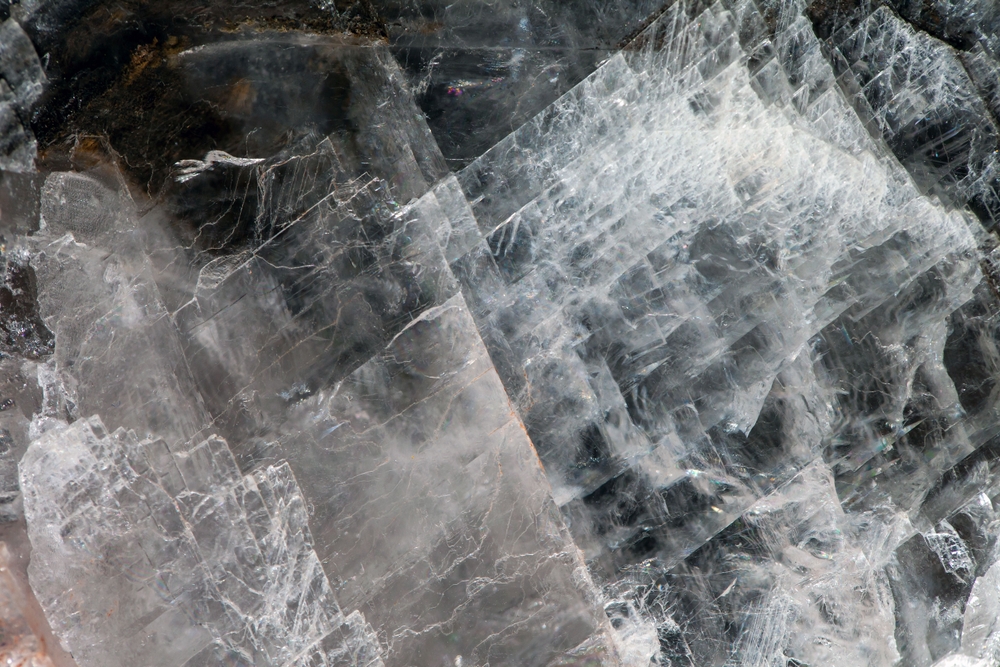
That would place the earliest stages of cellular evolution inside an environment that effectively provided some of the tools biology was still missing. The rocks and metals were not alive, but they could potentially have helped produce the chemical reactions that early biological systems needed.
The hydrothermal vent setting also fits one of the central problems in origin-of-life research. Modern cells are extraordinarily dependent on complex molecular machinery, but that machinery itself had to come from somewhere. A system that could borrow catalytic functions from its environment offers one possible bridge between simple chemistry and increasingly sophisticated biology.
Metals Could Have Served As Primitive Catalysts
“In particular these native metals are good at fixing CO2, something that was always a stumbling block for origins, and they fix CO2 to pyruvate, the most central compound in metabolism,” Martin explained.
Pyruvate is not some obscure chemical that disappeared billions of years ago. It remains a central molecule in modern metabolism, including the chemical processes taking place inside human cells.
Inorganic chemist Harun Tüysüz of the Max-Planck-Institut für Kohlenforschung also pointed to the importance of the environmental chemistry. “Metals that naturally occur in hydrothermal vents can replace a surprisingly large number of enzymes in metabolism,” he said.
Chemist Joseph Moran of the University of Ottawa described the picture as a hybrid system in which enzymes and metal catalysts both played roles during early biochemical evolution.
A Strange Phosphorus Experiment Adds Another Piece
The team also investigated how early chemical systems could have produced phosphorylation reactions before the sophisticated energy machinery of modern cells existed.
Every modern cell relies heavily on ATP, the molecule that transfers usable chemical energy around the cell. But ATP-dependent metabolism raises another origin-of-life problem: how could an early biological system have developed this machinery before it had the enzymes and cellular structures needed to support it?
The researchers tested phosphite, a form of phosphorus that can occur naturally in hydrothermal environments. Their experiments found that phosphite could react with organic compounds in water and produce metabolic phosphorylation reactions.
“When we react phosphite, a form of phosphorus that naturally occurs in hydrothermal vents, with organic compounds, we get metabolic phosphorylation reactions overnight in water,” researcher Manon Schlikker said.
The results were modest. The experiments produced yields of around 8% after 72 hours at 50 degrees Celsius. That does not recreate modern cellular energy production, but the researchers argue that it demonstrates a previously unknown route by which useful phosphate bonds could potentially have formed under early-Earth conditions.
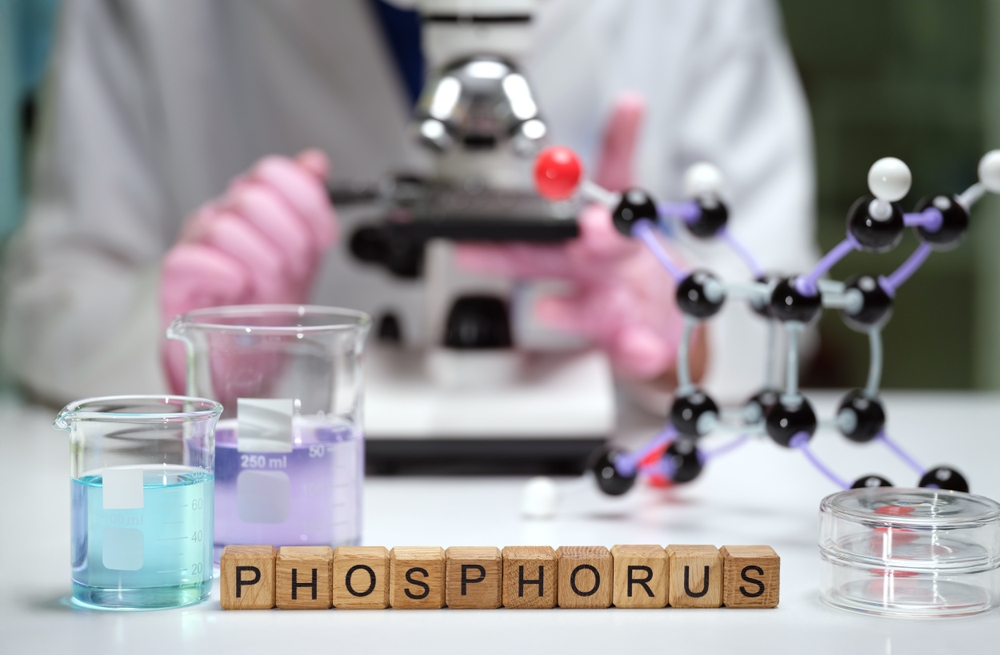
Martin described it as “a previously unknown route of (geo)biochemical phosphorylation, a new and natural source of energy at origins.”
The experiment therefore adds another possible piece to the same larger model. Before biology had sophisticated enzymes and ATP-based energy systems, the surrounding chemistry may have been doing some of the work.
The Evidence Points Toward Two Different Biological Solutions
The researchers then turned from chemistry to evolutionary history. They examined enzyme families across 953 microbes, including 552 bacteria and 401 archaea, looking at where the different enzyme families appeared in the evolutionary tree.
Only 166 enzyme families could be traced confidently to before the bacterial and archaeal lineages separated. The analysis also identified 89 families associated with the bacterial side, 38 associated with archaea, and 37 that were too scattered to place confidently.
Five cases were particularly interesting because the bacterial and archaeal lineages appeared to have developed structurally different enzymes that perform the same essential metabolic reaction.
That is the evidence behind the study’s most provocative interpretation.
“We can see cases where the ancestors of bacteria and archaea independently evolved structurally distinct enzymes to catalyze the same essential metabolic reaction,” lead author Natalia Mrnjavac said.
The researchers believe this could indicate that two different biological lineages began developing their own biochemical machinery after leaving the confines of a shared hydrothermal environment.
Martin’s conclusion is unusually direct: “Only free-living cells are alive. Let’s call it by name: we are looking at one origin of the genetic code, but two origins of life.”
Scientists Say The Study Does Not Solve The Origin-Of-Life Mystery
That headline-grabbing conclusion comes with major qualifications.
There is no fossil showing exactly what LUCA looked like or proving that it lived inside a particular hydrothermal vent. The researchers are reconstructing ancient events from modern genomes, evolutionary relationships and laboratory experiments.
Of the reactions they tested with metals, 37 matched specific metabolic reactions while another 106 matched the general reaction type. The phosphite experiments also demonstrated chemical reactions, but the researchers have not produced a complete interconnected metabolic network operating entirely through these proposed environmental processes.
That leaves plenty of room for competing explanations.
Protein crystallographer Juan Fontecilla-Camps, speaking to Smithsonian magazine, said reconstructing early metabolic networks is a valid approach but cautioned that determining whether the proposed scenario is what actually happened is “very difficult to know.”
Microbiologist Donato Giovannelli also described the research as a strong paper while stressing that it should be treated as one possible scenario for early life.
LUCA Was Not Necessarily The First Life
Another distinction is easy to lose in the excitement surrounding the study.
LUCA was the last universal common ancestor of modern cellular life. That does not automatically make LUCA the first organism or the moment when life first appeared on Earth.
The chemical systems that eventually led to LUCA could have existed long before it. Other early biological systems may have appeared and disappeared without leaving descendants in modern life.
Betül Kaçar, who directs a NASA astrobiology center at the University of Wisconsin-Madison and was not involved in the research, told Scientific American that the idea of environmental chemistry supplying functions before biology evolved them is plausible.
She also emphasized that the origin of life and LUCA are separate questions.
Two Origins Could Change How Scientists Search For Life
If the model is eventually supported by additional evidence, it could change one of the biggest assumptions behind origin-of-life research.
A single surviving lineage can make the appearance of life look like an extraordinary one-off event. But if early Earth repeatedly produced biological systems from similar chemistry, the story becomes more complicated.
That does not mean life must appear whenever a planet has water, carbon and hydrothermal activity. The study cannot establish that. What it does is provide a reason to investigate whether the transition from chemistry to biology could happen through more than one route.
The distinction could matter far beyond Earth. Scientists searching for life elsewhere often look for environments where the chemistry necessary for biology might exist. If multiple pathways can produce early biological systems, researchers may have more possibilities to investigate on planets and moons with similar chemical conditions.
The study also puts the genetic code in an interesting position. Its universality could still point to one common ancestor, even if some of the biochemical machinery used by later descendants was invented independently.
That leaves a strange possibility: the oldest thing all life shares may not be every part of its machinery. It may be the information system that allowed one surviving lineage to inherit and build upon what came before.
The Biggest Question Is Still Sitting There
The Düsseldorf research does not prove that life began twice. It proposes a way to reconcile two otherwise difficult observations: the shared genetic code found across modern life and the radically different enzyme architectures found in bacteria and archaea.
If future experiments support the chemistry and evolutionary reconstruction, the first chapter of life’s history could look less like a single miraculous leap and more like a period of competing experiments conducted by chemistry itself.
The researchers have not closed the mystery of how life began. They may have made it considerably stranger.
And that leaves scientists with a question that is even harder to answer than where life started: how many times did Earth try before one version finally survived?
Sources:
Mrnjavac, N., Schlikker, M., Tüysüz, H., Moran, J., & Martin, W. F. (2026). [Article title]. Science Advances. https://doi.org/10.1126/sciadv.aef3128
Arrais, L. (2026, August 10). Life may have started twice – and deep-sea vents may explain how. Earth.com. https://www.earth.com/science/two-origins-of-life-bacteria-archaea/