
Your cart is currently empty!
38 Year Old Man Fears Losing His Sight After Swimming With Contact Lenses
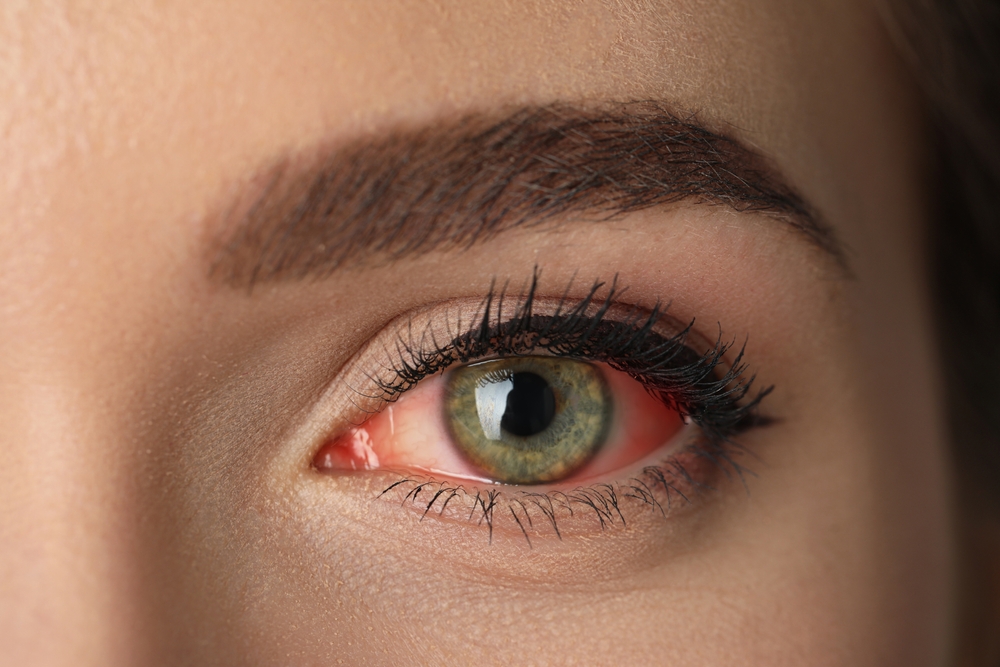
A 38-year-old British photographer thought a painful red eye was probably caused by sand or saltwater after a long day of surfing in Bali. Instead, doctors eventually discovered a rare infection that could permanently damage his vision.
Contents
show
Matt Flack had worn daily contact lenses for more than 20 years, but during his two-month holiday he regularly swam with them in. Now, after being diagnosed with acanthamoeba keratitis, he is facing months of treatment and the frightening possibility of losing sight in his left eye.
His Holiday Nightmare Started With A Red Eye
Flack traveled from Colchester, Essex, to Bali in May, spending his time surfing, swimming and exercising. Toward the end of the trip, his left eye became red, watery and “gritty,” but he initially thought the irritation was nothing more than the result of his time in the water.
He removed his contact lenses and expected the problem to settle, but the symptoms continued to worsen. His eye became increasingly uncomfortable, the watering was almost constant, and he developed severe sensitivity to light that made it difficult to keep his eye open.
“I stopped wearing my contact lenses and figured whatever it was would sort itself out,” Flack said. “But then it worsened. I became really sensitive to light, and it got more uncomfortable. The watering was pretty much constant, and I couldn’t really open [my eye] much.”
Flack visited a local pharmacy and was given antiseptic drops, hoping they would calm the irritation. However, the problem followed him home, and after returning to the U.K. on July 10, he arranged an appointment with an optician.
He was initially told he was likely suffering from chemical damage to the eye and was referred to an eye clinic. Doctors performed a corneal scraping, taking a small tissue sample from his cornea, and he was advised to continue using eye drops.
The treatment did not bring the relief he was hoping for. His eye continued to deteriorate, leading doctors to conduct additional scans and corneal microscopy.
The Diagnosis Was Far More Frightening
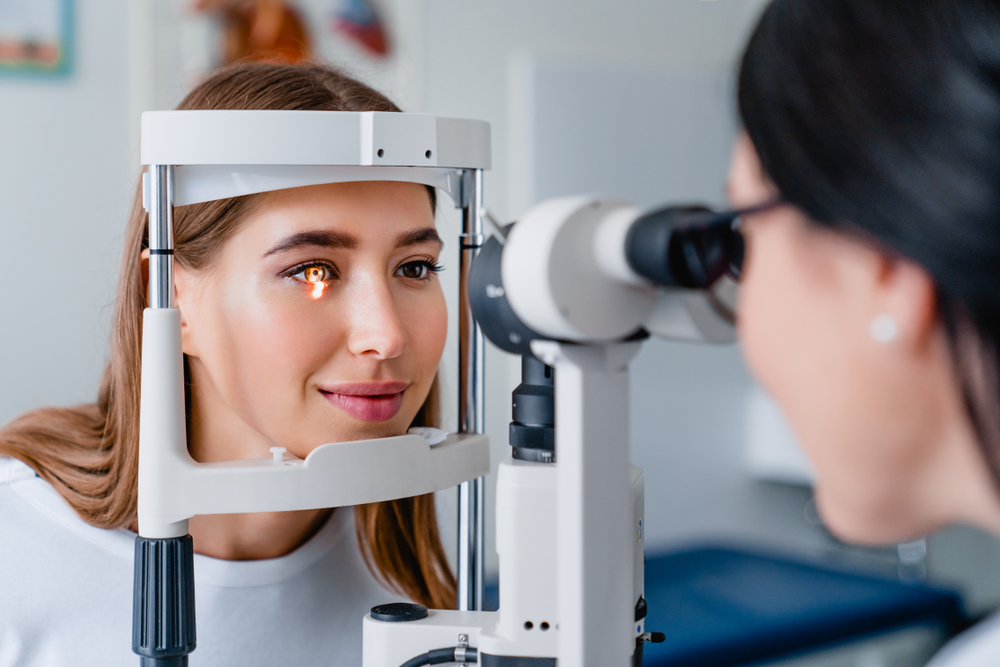
Those tests eventually revealed that Flack had acanthamoeba keratitis, a rare parasitic eye infection caused by a microscopic organism known as Acanthamoeba.
According to the Cleveland Clinic, the infection initially affects the outermost layer of the cornea and can extend deeper into the tissue. It can cause severe pain, redness, excessive watering, light sensitivity, irritation and blurred or cloudy vision.
For Flack, learning what was happening inside his eye triggered immediate panic.
“It’s essentially a parasite eating away at my eye,” he said. “When the doctors told me it was that, I [felt] big panic and I was very scared.”
The diagnosis was especially alarming because the condition can resemble more common eye problems. A person experiencing redness, watering or irritation may initially assume they have an ordinary infection or have simply irritated their eye.
Flack said the news became overwhelming when he realized the potential consequences.
“I’m not ashamed to admit I had a little cry,” he said. “At that point, I thought, ‘Well, I’m going to lose an eye.’”
He has since given the microscopic organism an unlikely nickname: Alan. The name provides a small moment of levity in an otherwise deeply frightening situation.
His doctors have prescribed a three-month course of medicated eye drops in an effort to eliminate the infection. For now, however, the final outcome remains uncertain.
Why Swimming In Contacts Can Be Dangerous
Flack believes swimming in Bali while wearing his contact lenses may have played a role in his infection. He spent a significant amount of time swimming in pools during the trip and did not think much about keeping his lenses in while he was in the water.
“I’ve done a lot of swimming in pools in Bali and had contacts in,” he said. “It’s one of those things I’ve never really thought about. I’ve probably been quite blasé with it.”
“Perhaps I didn’t know the full risks, but I wish I had.”
Acanthamoeba can exist in a range of water environments, including swimming pools, freshwater and seawater. Contact lenses can increase the risk because water can become trapped between the lens and the surface of the eye.
That can give microscopic organisms an opportunity to remain against the cornea. If the surface of the eye has a tiny scratch or abrasion, an organism such as Acanthamoeba can potentially enter the tissue and cause infection.
The risk is particularly relevant to people who regularly wear contact lenses and may assume that swimming with them is harmless because the water appears clean.
Flack’s case demonstrates why that assumption can be dangerous. He had used daily contact lenses for decades and had never expected a routine swim to result in a rare infection threatening his eyesight.
The Symptoms Can Look Like A Common Eye Problem
Acanthamoeba keratitis is uncommon, but the symptoms can be severe. One reason the condition can be difficult to identify is that its early signs can resemble other forms of eye irritation and infection.
Someone experiencing the condition may develop eye pain, a persistent sensation that something is stuck in the eye, excessive watering, redness, light sensitivity or blurred vision. The cornea can also become cloudy or develop visible changes as the infection progresses.
For contact lens wearers, the sensation of something being stuck in the eye can be especially easy to dismiss. A lens that feels uncomfortable might seem like the obvious explanation, particularly after exposure to chlorine, saltwater, sand or other irritants.
Flack initially followed that same line of thinking. His time surfing and swimming gave him an easy explanation for why his eye felt irritated, but the symptoms continued to worsen even after he removed his lenses.
That progression eventually led to more detailed testing and the diagnosis of Acanthamoeba keratitis.
The condition is treatable, but treatment can be intensive and the outcome can vary. In severe cases, damage to the cornea can have lasting effects on vision.
Daily Contact Lenses Did Not Make Swimming Safe

Flack had been wearing daily contact lenses for more than 20 years, which is why he now wants other users to understand that disposable lenses do not remove the risks associated with water exposure.
A daily lens is designed to be discarded after use, but it is still a contact lens while it is being worn. Wearing one in a pool can still expose the eye to organisms present in the water.
Flack’s warning is aimed particularly at people who have become comfortable wearing lenses for everyday activities and may not think twice about keeping them in before jumping into a pool.
“It’s important for contact lens wearers to realize just because you wear dailies doesn’t mean you’re safe,” he said. “I wore daily contacts, and here I am.”
The experience has changed Flack’s own plans. He has said he intends to stop wearing contact lenses altogether because of what happened.
For him, the inconvenience of removing lenses before swimming now seems insignificant compared with the possible consequences of leaving them in.
He Is Now Fighting To Save His Vision
Flack’s biggest fear is what could happen if the infection does not respond to treatment.
His doctors have prescribed three months of eye drops to try to eliminate the parasite, but he does not yet know whether the treatment will completely resolve the infection or whether his eye will suffer lasting damage.
“There’s a huge fear that I’ll become blind in that eye,” Flack said. “To find out I’ve got something that could potentially take one of [my eyes] away is petrifying.”
The uncertainty has made an already painful situation even more difficult. Flack said that if the infection continues to resist the medication or becomes worse, he could face more extensive treatment.
That could include corneal transplants and repeated operations, depending on how his eye responds.
“If it continues to fight the eye drops or gets worse, then that’s obviously a lot more impactful on my eyesight, and we could be talking about corneal transplants and operation after operation,” he said.
He has also described the possibility of losing his eye as his worst-case scenario.
“In the absolute worst-case scenario, I wave goodbye to my left eye. It’s a horrifying thought,” he said.
The Pain Has Changed His Daily Life
The infection has affected much more than Flack’s vision. Severe sensitivity to light has made ordinary activities difficult, forcing him to spend long periods in a darkened room.
He described the photosensitivity as “horrific,” and the constant discomfort has made the recovery process far removed from the holiday he had originally imagined.
Instead of returning from Bali with memories of surfing and swimming, he is now spending months focused on treating an infection that threatens one of his eyes.
The emotional impact has also been significant. Flack has spoken openly about being frightened when doctors explained what the infection could do, including his fear that he could become blind in the affected eye.
His decision to speak publicly about the experience is partly driven by the hope that other contact lens wearers will take water exposure more seriously.
His Warning To Other Contact Lens Wearers
Flack does not want other people to discover the risks of swimming in contact lenses through an experience like his.
His message is simple: remove contact lenses before getting into a swimming pool or other water.
He also wants people to take persistent eye symptoms seriously rather than assuming that redness or irritation will automatically disappear. His own symptoms began in a way that seemed easy to explain, but they eventually turned out to be signs of a rare infection.
“If I can just get a couple of people to take their contacts out before they fling themself into a swimming pool, that’ll be good news because no one needs to go through this,” Flack said.
That warning is particularly striking because the decision he now regrets was so ordinary. Flack had spent years wearing contact lenses and had become accustomed to them being part of his everyday routine.
A few minutes of preparation before swimming could have seemed like a minor inconvenience. He now hopes other people will make that small adjustment before they find themselves dealing with a much more serious problem.
A Small Habit Could Prevent A Much Bigger Problem
Flack traveled to Bali expecting two months of surfing, swimming and exercise. Instead, he returned home facing an infection that has left him uncertain about the future of his eyesight.
His doctors are continuing treatment, and he is hoping the course of eye drops will eliminate the infection before it causes further damage.
For other contact lens wearers, the lesson he wants people to take from his experience is straightforward. Water exposure and contact lenses can create a serious risk, even when the lenses are daily disposables and the water looks perfectly clean.
Flack’s holiday ended with a frightening medical diagnosis. His hope is that someone else can avoid the same outcome simply by taking their lenses out before they get in the water.