
Your cart is currently empty!
The Three Nations Working Together to Protect the Mayan Jungle
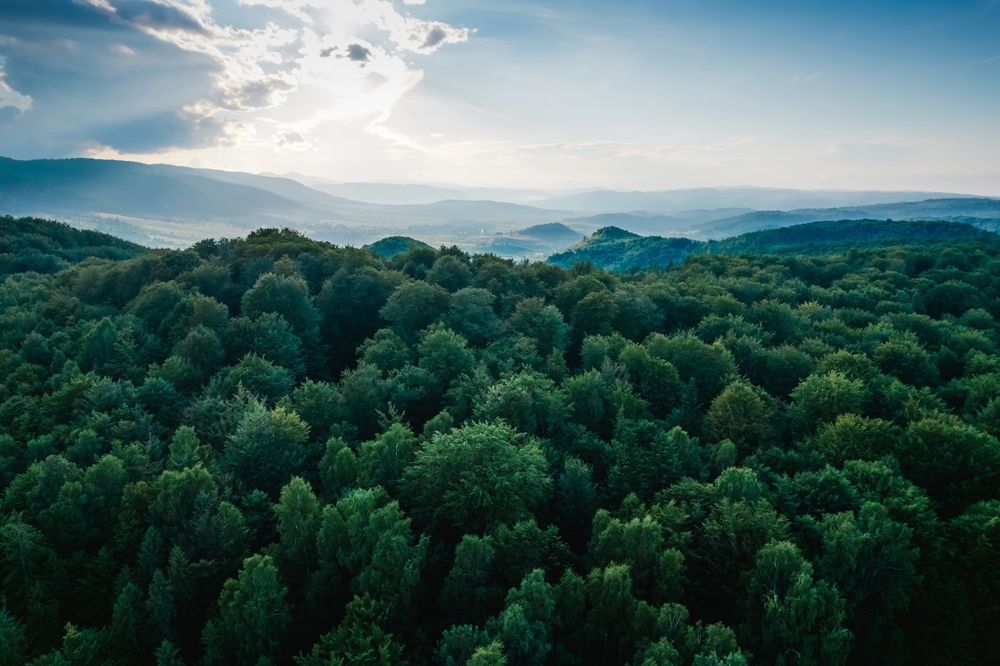
Stretching across southern Mexico, northern Guatemala, and western Belize, the Great Mayan Jungle, also known as the Selva Maya, is one of the last great tropical rainforests of the Americas. This vast expanse of emerald canopy shelters ancient Mayan ruins, rare wildlife, and some of the planet’s most vital carbon-storing trees. Now, in an unprecedented act of regional unity, the governments of Mexico, Guatemala, and Belize have joined forces to create the Great Mayan Jungle Biocultural Corridor, a tri-national nature reserve that will span more than 14 million acres (5.7 million hectares). If the project succeeds, it will become one of the largest protected areas in the Western Hemisphere, surpassed only by the Amazon. The new corridor represents a bold step toward a shared vision: protecting the environment while ensuring that the cultural and economic life of the region’s communities can flourish alongside nature.
Contents
show
But ambition alone does not secure the forest’s future. The Mayan Jungle faces threats as complex as its ecosystem is diverse illegal logging, drug trafficking, deforestation, and controversial infrastructure projects, all loom large. Conservation in this region demands more than declarations; it requires coordination between governments, Indigenous communities, scientists, and law enforcement. The corridor’s creation offers hope, but its success depends on whether this tri-national alliance can transform political promises into sustained protection and genuine prosperity for those who live within the forest. The challenge is immense, but so too is the opportunity to redefine what cooperative conservation can look like in the 21st century.
A New Kind of Reserve
Rather than a typical protected area, the Great Mayan Jungle Biocultural Corridor functions as a model for conservation that unites multiple nations and cultures. The corridor links Mexico’s Calakmul Biosphere Reserve, Guatemala’s Mirador-Río Azul National Park, and Belize’s Maya Forest Reserve into one continuous belt of protection. It connects ecosystems that have been fragmented by decades of land clearing, ensuring that species like the jaguar and the Central American tapir can roam freely across their ancestral ranges. More than 500 bird species and hundreds of plants, many endemic to the Yucatán Peninsula, depend on this forest’s continuity for survival.
The “biocultural” framework recognizes that this region’s biodiversity and cultural heritage are inseparable. Beneath the thick canopy lie countless archaeological treasures, pyramids, cities, and ceremonial sites that once formed the heart of the ancient Mayan civilization. The corridor thus protects not just the environment but also the living legacy of the Maya people, whose descendants continue to inhabit and steward these lands.

Leaders from all three nations have emphasized that conservation efforts will be paired with respect for Indigenous governance and traditions, acknowledging that the forest’s survival depends on those who know it best. By blending cultural preservation with environmental protection, the corridor aims to become a global model for integrated sustainability.
The announcement, made in August 2025 in Guatemala City, was celebrated as “historic” by environmental groups and governments alike. Mexican President Claudia Sheinbaum called the project “a living space for thousands of species with an invaluable cultural legacy that we should preserve with our eyes on the future.” Her Guatemalan counterpart, President Bernardo Arévalo, echoed the sentiment but warned that success would depend on implementation, transparency, and ensuring that development pressures like the controversial Maya Train project do not undo years of environmental progress. For the first time in history, three nations have committed to managing the Selva Maya as one living, breathing system.
The Ecological Heartbeat of Mesoamerica
The Mayan Jungle functions as one of the planet’s great climate regulators. Its trees absorb vast quantities of carbon dioxide, mitigating global warming while producing the oxygen and rainfall patterns that sustain much of Central America. Scientists estimate that the forest stores tens of millions of tons of carbon, making its preservation critical for both regional stability and the fight against global climate change. The corridor’s vast canopy also forms a lifeline for endangered species, serving as one of the few remaining safe havens for jaguars, pumas, and tapirs. Researchers like Dr. Gerardo Ceballos have identified the Calakmul region as the most biodiverse area in Mexico, hosting nearly 100 mammal species and over 350 bird species.
Yet even this resilient forest is under siege. Over the past two decades, deforestation has accelerated as land is cleared for cattle ranching, illegal logging, and mining. Satellite data show that the Mayan Jungle loses thousands of hectares each year. In some places, forest loss is compounded by the activities of drug cartels, who carve airstrips out of the jungle to smuggle narcotics. As Guatemala’s Environment Minister Patricia Orantes put it, “This is not primarily an environmental battle. It’s about reclaiming the state’s territory from organized crime.” Without robust governance, any protected area risks being little more than lines on a map.
The corridor’s design reflects an understanding that environmental protection cannot succeed without addressing security, economics, and social equity. Conservationists, local NGOs, and international partners such as Global Conservation have long worked to create cross-border patrol networks that combine local rangers, community leaders, and even military units. These efforts have already shown results: the Genesys Rangers, supported by Global Conservation, have successfully dismantled illegal logging operations and halted poaching in the Mirador region. Integrating these grassroots successes into the new corridor framework could prove decisive in turning symbolic protection into measurable results.
The People at the Center: Indigenous Leadership and Local Economies

Conservation history is full of well-meaning but top-down projects that excluded the very people who live in the forests they aim to protect. The Great Mayan Jungle Biocultural Corridor seeks to learn from those mistakes by placing Indigenous communities at its heart. The newly established Indigenous Advisory Council will ensure that local voices guide the management of the reserve, alongside an Environmental Council responsible for policy oversight. This partnership is essential, given that many communities within the corridor rely on the forest for their livelihoods through small-scale farming, foraging, and ecotourism.
In Mexico, the “Planting Life” program has provided one model for combining conservation and economic opportunity. By paying farmers to plant trees, both fruit-bearing and timber species, the initiative has helped thousands of landowners transition away from destructive clearing. However, critics have pointed out that some participants initially cleared existing forest to qualify for payments, prompting government revisions to prevent such unintended consequences. Similar caution will be necessary in Guatemala and Belize, where community forestry programs have proven successful when locals are empowered to make decisions about land use. Studies show that forests managed by Indigenous peoples often have lower deforestation rates than those managed solely by state agencies.
The corridor’s strength will lie in transforming former extractive economies into sustainable ones. Ecotourism, carbon credits, and sustainable agriculture can all offer viable alternatives to illegal logging or cattle ranching, but only if supported by transparent governance and fair access to resources. Activists like Guatemalan lawyer Rafael Maldonado argue that local buy-in isn’t optional, it’s the only path forward. “Without opportunities,” he warned, “people will turn to whatever keeps them alive. We can’t ask them to protect the forest while ignoring their hunger.” Real conservation, then, means pairing ecological protection with human dignity.
The Maya Train Controversy: Progress or Peril?

While the corridor offers hope, the Maya Train project remains its greatest contradiction. Conceived as a 1,500-kilometer rail loop around Mexico’s Yucatán Peninsula, the train promises to connect tourist cities with rural Mayan communities. Yet it has already sparked outrage among environmentalists. Construction has felled an estimated seven million trees and damaged fragile cave systems that serve as vital aquifers. Critics fear that the train’s expansion could slice through untouched jungle, spurring urban sprawl and weakening conservation efforts.
Former Mexican President Andrés Manuel López Obrador fast-tracked the train’s development without comprehensive environmental studies, brushing aside legal challenges and accusations of ecological negligence. His successor, President Sheinbaum, continues to defend the project, insisting it will drive equitable growth. However, Guatemalan President Bernardo Arévalo has made his stance clear: “The Maya Train will not pass through any protected area.” His government has even canceled a petroleum company’s contract in the Maya Biosphere Reserve to underline that commitment. Belize’s Prime Minister Johnny Briceño remains cautiously optimistic, suggesting that economic development and ecological preservation can coexist if managed properly.
For now, the corridor’s governance councils will serve as the first line of defense against destructive development. Any future expansion of the Maya Train or similar projects will have to be reviewed by both environmental and Indigenous representatives. Whether those checks will be strong enough to resist political pressure remains to be seen, but the principle is groundbreaking: large-scale infrastructure will no longer be decided without local and ecological consent.
Technology, Security, and the Fight Against Environmental Crime
Protecting 14 million acres of dense, often inaccessible jungle is a logistical nightmare. But technology and international collaboration are reshaping what’s possible. Conservation organizations are already experimenting with drones equipped with infrared sensors, which can detect illegal fires and logging operations at night. Upgraded ranger stations powered by solar energy, and digital monitoring tools like SMART and Earth Ranger, are improving data collection and response times. Combined with satellite surveillance, these tools could make cross-border coordination more efficient and transparent.
Still, technology alone cannot solve deep-rooted problems. Organized crime networks continue to exploit the region’s remoteness, trafficking drugs, wildlife, and timber. A purely militarized approach risks alienating communities and repeating past mistakes. Experts emphasize that anti-poaching patrols must work hand in hand with social initiatives, education, healthcare, and local enterprise to provide meaningful alternatives. Programs funded by Global Conservation and other NGOs show that when communities see tangible benefits, illegal activities drop dramatically. Building on these successes could turn the corridor into a laboratory for community-based conservation, blending high-tech surveillance with local wisdom.
Funding and Accountability
The three governments have pledged an initial $6 million to launch the corridor, but such funding barely scratches the surface of what’s needed. Long-term success will require continuous investment from national budgets, international climate funds, and private donors. Mechanisms like carbon markets and biodiversity credits could provide new revenue streams if structured transparently. Effective governance free of corruption and political interference will be the ultimate test. Environmentalists like Pedro Uc caution that governments must back their promises with action, not just headlines.
Transparency will also be essential to maintain trust. Clear land titling, open reporting on patrol activities, and community participation in monitoring are critical to preventing abuse and ensuring that benefits reach those most affected. The corridor could eventually serve as a prototype for global conservation financing, demonstrating how developing nations can collaborate on ecosystem-scale protection without sacrificing sovereignty or development goals.
The Great Mayan Jungle Biocultural Corridor represents more than a conservation project it’s a statement of intent. It challenges the idea that environmental protection and economic progress must exist in opposition. If Mexico, Guatemala, and Belize can prove that collaboration across borders, cultures, and economies is possible, they may redefine what sustainable development looks like for the rest of the world.
Hope Beneath the Canopy
The Selva Maya remains one of Earth’s last truly wild frontiers, a place where jaguars still prowl, howler monkeys echo through the trees, and ancient pyramids rise from moss-covered hills. Its protection now rests on an experiment in international cooperation and shared stewardship. The Great Mayan Jungle Biocultural Corridor will test whether three nations, often divided by politics and economics, can unite around something far greater than themselves: the survival of a forest that sustains both nature and culture.
If the corridor succeeds, it will not only preserve biodiversity but also become a living symbol of resilience, showing that communities, governments, and ecosystems can thrive together. If it fails, the consequences will echo far beyond Central America, reminding us that in the age of climate change, every forest lost is a loss for all humanity. For now, hope endures beneath the canopy alive in the rustle of leaves, the pulse of the forest, and the belief that a better balance between people and planet is still within reach.