
Your cart is currently empty!
Multiple Solar Eruptions Raise Hopes for Northern Lights Across the US
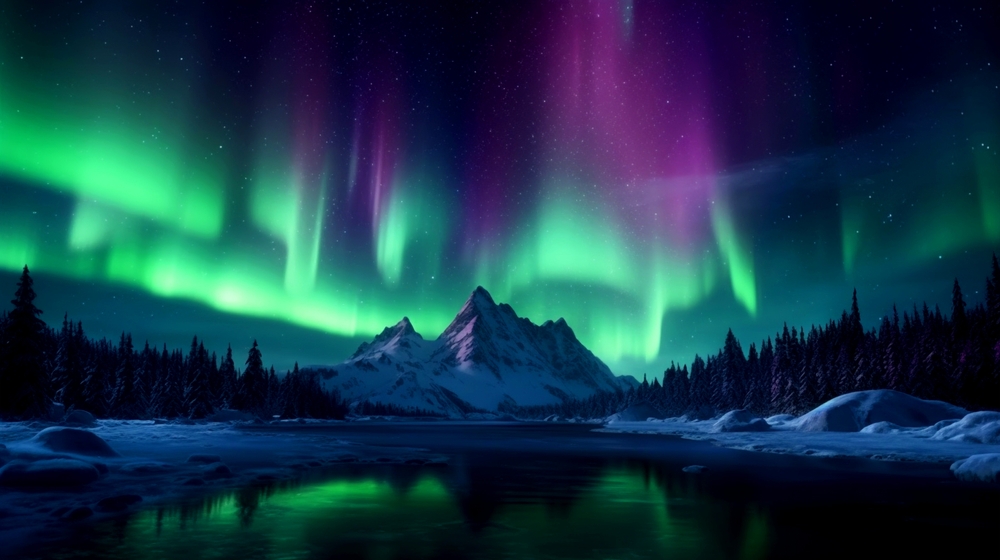
The sun is giving skywatchers across the United States another reason to look toward the night sky, as incoming solar material could trigger a display of the northern lights farther south than usual. Forecasters are monitoring a coronal mass ejection linked to recent solar activity, with minor to moderate geomagnetic storm conditions expected on October 9.
Contents
show
The forecast offers an opportunity for people in northern states to catch the aurora borealis, although visibility will depend on how the incoming material interacts with Earth’s magnetic field. Multiple solar eruptions have also raised questions about whether geomagnetic activity could continue into the weekend, giving skywatchers more chances to see the colorful phenomenon.
NOAA Issues a Geomagnetic Storm Watch as Solar Activity Intensifies
The National Oceanic and Atmospheric Administration’s Space Weather Prediction Center has issued a G2, or moderate, geomagnetic storm watch for October 9. According to NOAA, the expected activity is associated with a coronal mass ejection linked to an M1.4 solar flare from active region 4549 on October 6.
A coronal mass ejection, commonly called a CME, occurs when the sun releases a huge cloud of magnetized plasma into space. When that material reaches Earth, it can disturb the planet’s magnetic environment and create conditions that allow auroras to appear farther from the polar regions.
NOAA’s forecast indicates that G1, or minor, to G2, or moderate, geomagnetic storm conditions are likely as the incoming material arrives. The agency has also noted a high chance of additional M-class solar flares from the same active region in the coming days, meaning solar activity will remain worth monitoring.
The forecast does not guarantee that every location within the potential viewing area will see the lights. The timing and intensity of the geomagnetic disturbance, combined with local weather conditions, will determine whether the aurora becomes visible from any particular place.
Multiple Solar Eruptions Could Complicate the Aurora Forecast
The sun has been producing several eruptions in recent days, prompting interest in the possibility of repeated geomagnetic disturbances. When multiple CMEs travel toward Earth in quick succession, their arrival times and interactions can make space weather forecasts more complicated.
Some CMEs travel faster than others and can catch up with material released earlier. If this happens, the combined structure can change the timing and characteristics of the material reaching Earth, although the resulting storm is not automatically stronger.
Reports surrounding the latest activity have raised the possibility that several eruptions could influence conditions over multiple days. However, the number of eruptions alone cannot establish how far south the northern lights will appear, because the magnetic orientation of the incoming material also plays a major role.
Scientists monitor solar observations and space weather models to estimate when these clouds might arrive and how they could interact with Earth’s magnetic field. Those predictions become more useful as spacecraft measurements provide information about the solar wind approaching our planet.
For aurora watchers, this uncertainty means forecasts should be checked regularly rather than treated as fixed schedules. A display could develop later than expected, remain concentrated at higher latitudes, or become visible across a wider area if conditions prove favorable.
Why the Northern Lights Can Appear Farther South
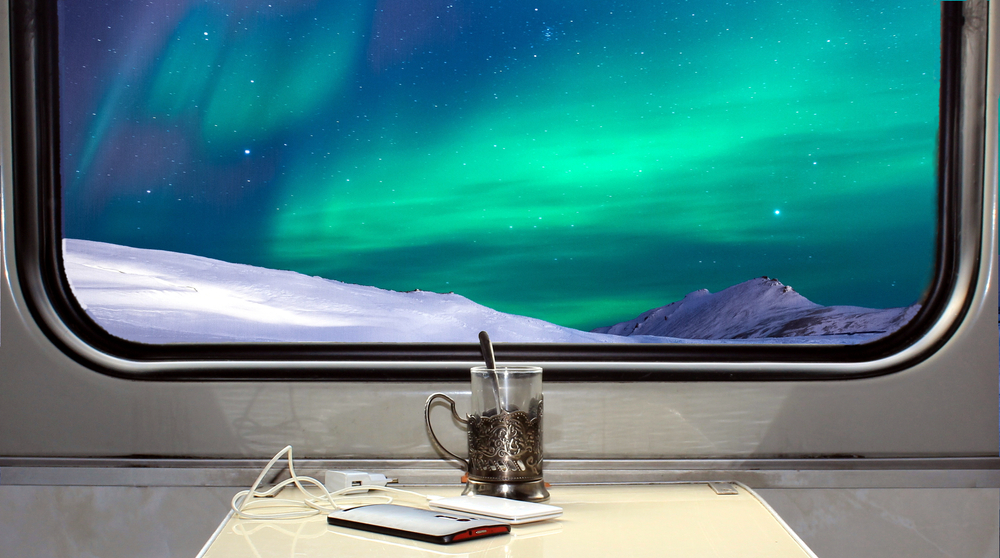
The northern lights, scientifically known as the aurora borealis, form when energetic particles interact with gases in Earth’s upper atmosphere. These interactions release energy as light, producing the shifting colors that can appear as glowing curtains, arcs and bands across the sky.
Earth’s magnetic field guides many charged particles toward regions surrounding the magnetic poles. When geomagnetic activity increases, the area in which auroras occur can expand, making displays visible from locations that rarely experience them.
The colors depend on the gases involved and the altitude where the interactions take place. Oxygen is responsible for much of the familiar green auroral light and can also produce red emissions, while nitrogen contributes to blue and purple hues.
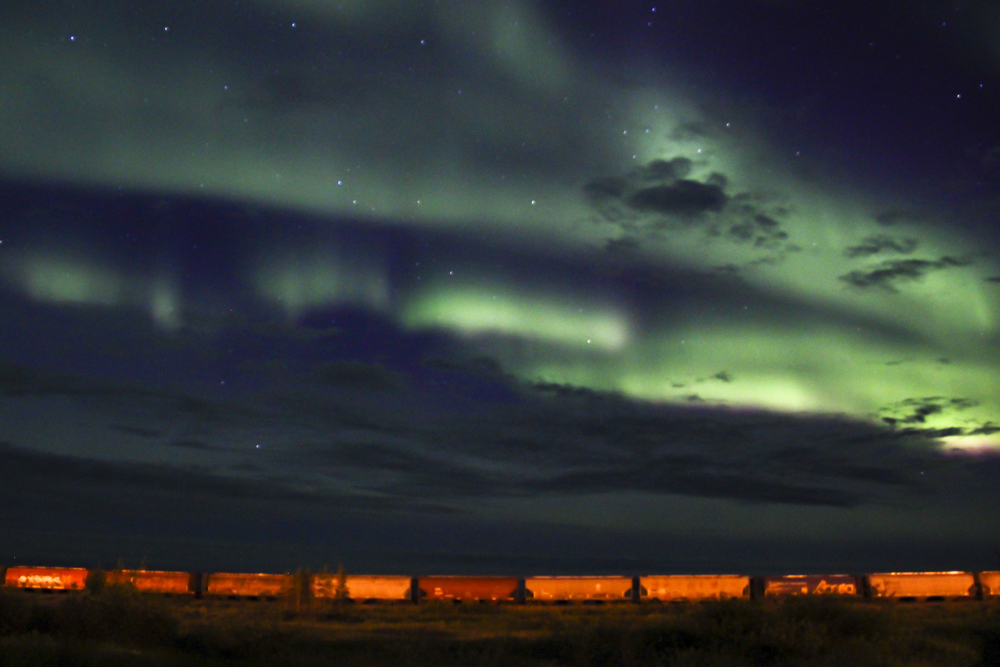
The display can change rapidly as the incoming solar wind interacts with Earth’s magnetic environment. Some auroras appear as faint green bands near the horizon, while stronger events can produce bright, moving curtains across a large section of the sky.
What Makes a Geomagnetic Storm Stronger?
A CME carries a magnetic field that interacts with Earth’s own magnetic field when it arrives. The orientation of that field helps determine how efficiently energy transfers into Earth’s magnetosphere, which influences the resulting geomagnetic activity.
A favorable magnetic configuration can drive stronger disturbances and expand the auroral oval toward lower latitudes. An eruption directed toward Earth may still produce a weaker-than-expected storm if its magnetic properties do not support efficient energy transfer.
This explains why forecasters cannot promise a spectacular display simply because a CME is approaching. The eruption’s speed, magnetic structure and interaction with the surrounding solar wind all contribute to the eventual result.
Which US States Could Have a Chance to See the Aurora?

Northern states generally have the strongest prospects for viewing auroras because they are closer to the usual auroral zone. During periods of enhanced geomagnetic activity, the display can sometimes extend farther south, although the viewing conditions vary considerably by location.
Previous forecasts associated with this period of solar activity have identified areas across the northern United States as possible viewing locations. States such as Washington, Wisconsin and New York have been mentioned in connection with the potential for auroras during stronger geomagnetic conditions, but this should not be interpreted as a guarantee for every community within those states.
People living farther south may still want to monitor updated forecasts if geomagnetic activity strengthens. However, the likelihood of seeing the lights generally decreases farther from the auroral zone, and faint displays can be difficult to distinguish from the horizon.
Several factors influence whether the aurora will be visible from a particular location:
- Geographic location: Areas farther north usually have better viewing prospects, particularly during minor or moderate geomagnetic storms.
- Cloud cover: Thick clouds can hide the display completely, even when auroral activity is strong.
- Light pollution: Dark locations away from cities make faint auroras easier to spot.
- Aurora intensity: A brighter display is more likely to be visible farther south than a weak one.
- Timing: The arrival of the solar material and changes in geomagnetic activity determine when the best opportunities may occur.
Skywatchers should check NOAA’s latest aurora forecast alongside their local weather forecast before heading outside. These updates can help identify favorable periods, but they cannot eliminate the uncertainty associated with rapidly changing space weather.
When Should You Look for the Northern Lights?
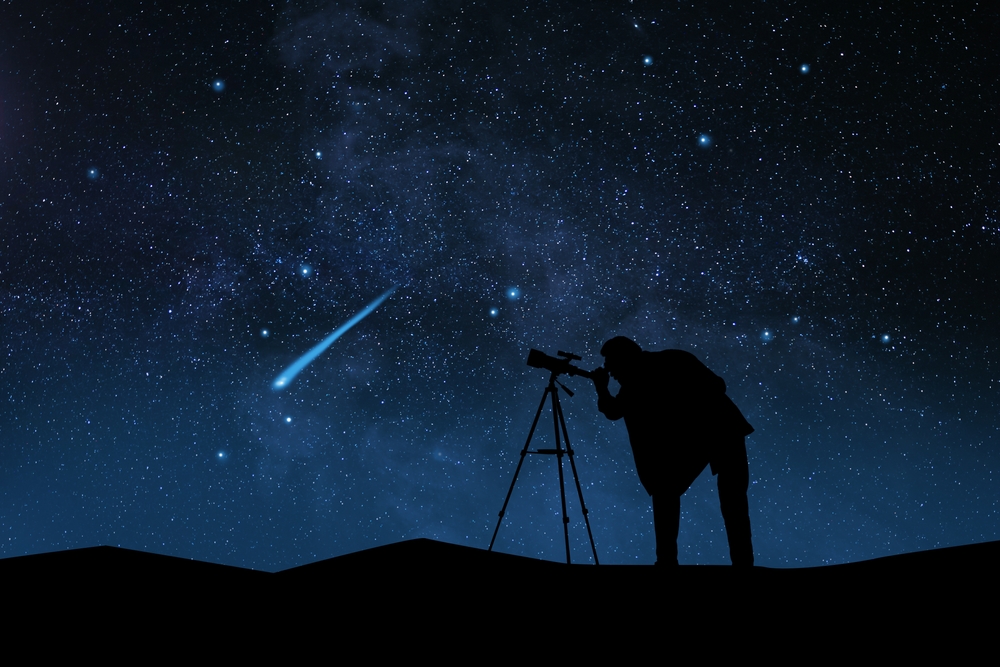
The best viewing opportunity depends on when geomagnetic activity strengthens and whether the sky is dark and clear. NOAA’s forecasts provide estimates of expected activity over specific periods, but the actual timing of an aurora can differ from the initial prediction.
For observers in the United States, evening and nighttime viewing is generally more practical because the aurora becomes visible against a dark sky. People should pay attention to updated alerts throughout the night rather than relying exclusively on a single forecast issued earlier in the day.
A clear view toward the northern horizon can be particularly useful for observers outside the usual auroral zone. Even when the lights do not appear directly overhead, a distant display may show up as a faint glow near the horizon.
There is also no guarantee that the aurora will be visible to the naked eye. A weak display may be difficult to distinguish without a camera, while a stronger event can produce colors and shapes that are much easier to recognize.
How to Improve Your Chances of Seeing the Display
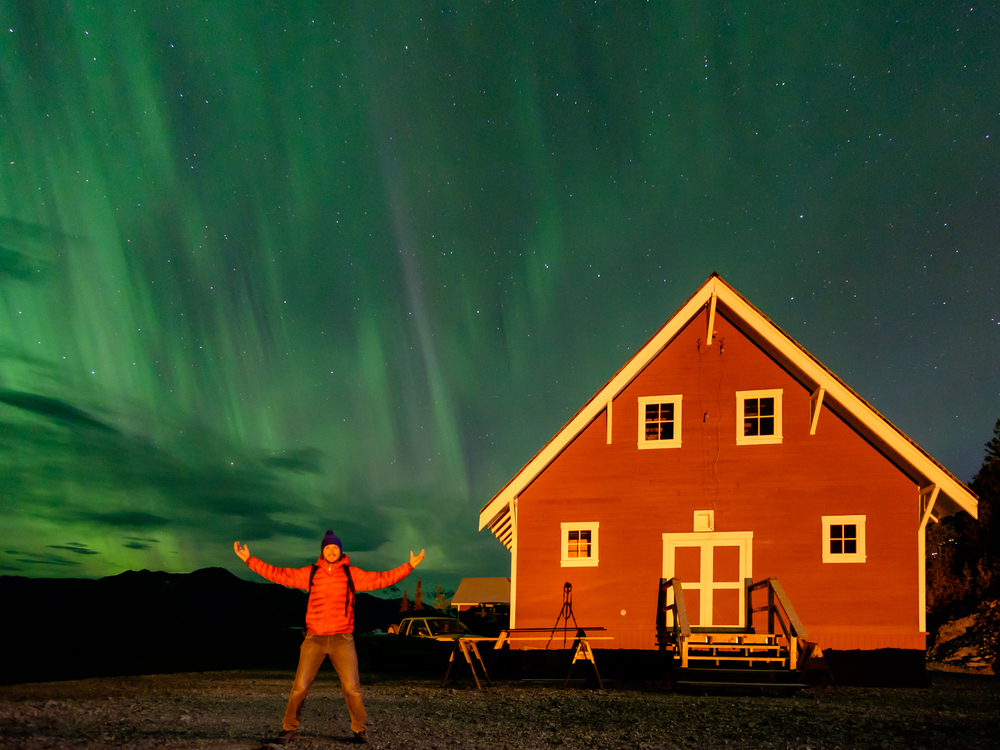
Preparation can make a viewing attempt more rewarding, especially when the forecast remains uncertain. A few straightforward steps can help people take advantage of favorable conditions without assuming that a display is guaranteed.
First, choose a location with minimal artificial lighting and an unobstructed view toward the northern sky. Check cloud cover before leaving home, and give your eyes time to adjust to darkness after arriving.
Second, monitor the latest space weather updates because conditions can change as the CME approaches Earth. If the forecast improves, remaining flexible about the viewing time may offer a better chance than relying on a fixed schedule.
Finally, consider using a smartphone camera with night mode or a longer exposure. Cameras can sometimes capture faint auroral colors that are difficult to see with the naked eye, although a steady phone and dark surroundings are still important.
Could the Solar Storm Affect Power Grids and Satellites?
Auroras are the most visible sign of geomagnetic activity, but solar storms can also affect certain technologies. The severity of these effects depends on the strength and duration of the storm, as well as the systems exposed to the disturbance.
During geomagnetic storms, changes in Earth’s magnetic field can induce electrical currents in long transmission lines. Stronger events can create operational challenges for power systems, while satellite operators may need to account for changes in the space environment.
Satellite navigation and radio communications can also experience disruptions during significant space weather events. These effects are particularly relevant to systems that depend on reliable signals traveling through Earth’s upper atmosphere or operating in space.
However, a moderate geomagnetic storm watch should not be interpreted as a prediction of widespread technological disruption. NOAA’s G1 to G5 scale distinguishes minor events from the strongest storms, with more severe categories associated with greater potential impacts.
The current forecast calls for minor to moderate geomagnetic activity, which is considerably below the most extreme levels on the scale. Anyone interested in the possible effects can consult NOAA’s space weather scale explanations for details about the different categories.

Why the Forecast Could Change Before the Weekend
Predicting space weather involves several uncertainties that become clearer as solar material approaches Earth. Scientists can estimate a CME’s speed and direction, but its magnetic structure and interaction with the surrounding solar wind can influence the actual conditions that develop.
When multiple eruptions are involved, their arrival times can overlap or change as they travel through space. This makes it harder to determine exactly when geomagnetic activity will peak or how intense the resulting disturbance will become.
The weather on Earth adds another challenge for anyone hoping to see the aurora. A favorable geomagnetic forecast offers little help to observers beneath thick cloud cover, while a darker and clearer location can improve the chances of spotting even a modest display.
NOAA continues to update its forecasts as new measurements become available. Checking those updates is more reliable than assuming that an earlier prediction will remain unchanged throughout the event.
The possibility of further solar activity also means conditions could remain unsettled beyond a single night. However, any additional viewing opportunity will depend on the actual behavior of the incoming solar material and the latest forecast.
Skywatchers Have a Reason to Keep Looking North
The current solar activity has created an opportunity for people across the northern United States to watch for auroras, with NOAA forecasting minor to moderate geomagnetic storm conditions on October 9. The possibility of additional solar eruptions could keep space weather interesting over the weekend, although the extent of any visible display remains uncertain.
The best approach is to check updated forecasts, find a dark location and watch for changes in the northern sky when conditions allow. If the incoming solar material interacts favorably with Earth’s magnetic field, the result could be a colorful display visible well beyond the regions where the northern lights usually appear.