
Your cart is currently empty!
Six Billion Miles Away NASAs New Horizons Comes Back to Life
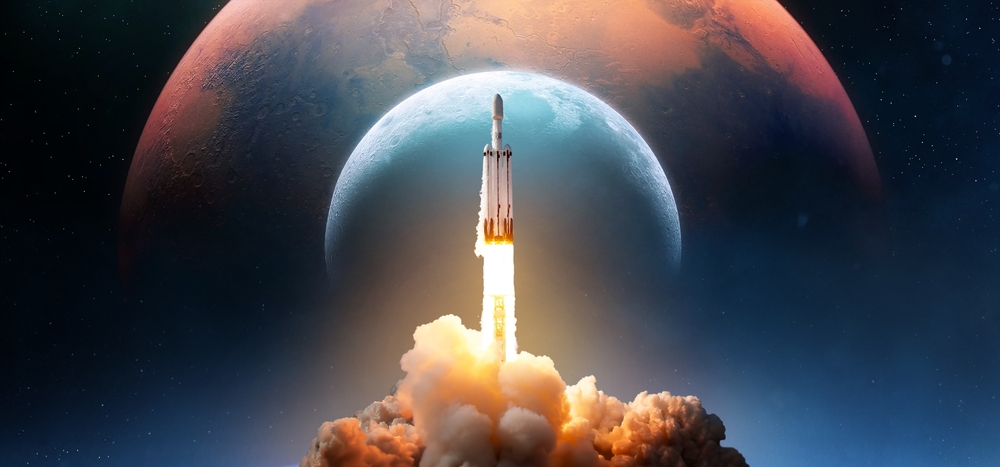
Nearly six billion miles from Earth, where sunlight is little more than a faint glow and radio messages take almost nine hours to arrive, a NASA spacecraft has quietly come back to life.
Contents
show
After spending 321 days in hibernation beyond Pluto, New Horizons has successfully awakened and checked in with mission controllers, confirming that it remains healthy despite operating in one of the coldest and most isolated regions humanity has ever explored. The spacecraft is now preparing to send home nearly a year’s worth of scientific data collected from the edge of our solar system, where the Sun’s influence begins to fade into interstellar space.
The milestone marks another chapter in one of NASA’s most remarkable deep-space missions. What began as a race to reach Pluto has evolved into an unprecedented journey into territory that only a handful of spacecraft have ever approached.
A Spacecraft That Sleeps Through the Darkness
Unlike satellites orbiting Earth or spacecraft studying nearby planets, New Horizons spends much of its time traveling through immense stretches of nearly empty space.
Since there are often months with few planned activities, mission engineers regularly place the spacecraft into hibernation. During these periods, most onboard systems are powered down to conserve energy and reduce wear on critical hardware. The spacecraft does not simply switch off, however. Its scientific instruments continue collecting valuable information while its onboard computer monitors essential systems.
New Horizons entered its latest hibernation on August 7 after receiving commands uploaded from Earth weeks earlier. Nearly a year later, on June 23, exactly as planned, the spacecraft awakened itself without requiring a wake-up command from mission control.
That level of autonomy is essential.
At approximately 5.9 billion miles, or 9.5 billion kilometers, from Earth, communication delays make real-time control impossible. Any signal transmitted from Earth takes about eight hours and fifty-two minutes to reach the spacecraft. Engineers then must wait another nine hours before receiving confirmation that their commands worked.
In practical terms, every instruction sent to New Horizons requires almost an entire day before anyone knows the outcome.
Fortunately, this latest wake-up unfolded exactly as planned.
According to NASA, the spacecraft reported itself in excellent condition immediately after reactivating. Alice Bowman, New Horizons mission operations manager at the Johns Hopkins Applied Physics Laboratory, said every weekly status beacon received during hibernation showed that the spacecraft remained healthy.
“Every status report through this hibernation period was ‘green,’ meaning all was well aboard New Horizons each and every week,” Bowman said.
With the spacecraft now fully operational again, mission controllers have begun downloading health information before retrieving the scientific observations collected over the past 321 days.
New Horizons Was Never Meant to Stop

One reason New Horizons continues making headlines more than two decades after launch is because it was built for an extraordinarily ambitious mission.
The spacecraft launched on January 19, 2006, aboard an Atlas V rocket carrying one of the fastest planetary missions ever attempted. Reaching Pluto within a reasonable timeframe required tremendous speed.
NASA engineers designed New Horizons to leave Earth faster than any spacecraft before it, then use Jupiter’s immense gravity as a slingshot to gain even more velocity.
The strategy worked.
Instead of taking decades to reach Pluto, New Horizons completed the journey in about nine and a half years.
There was one major trade-off.
Traveling at such extraordinary speed meant the spacecraft could never slow down enough to enter orbit around Pluto. Carrying the fuel needed for braking would have made the spacecraft far heavier, dramatically increasing both the mission’s complexity and cost.
Instead, New Horizons was designed for a single high-speed flyby.
Every scientific observation, every photograph and every instrument measurement had to occur during just a few carefully planned hours as the spacecraft raced past its destination at more than 30,000 miles per hour.
It was a bold gamble that paid off.
The Flyby That Changed Pluto Forever
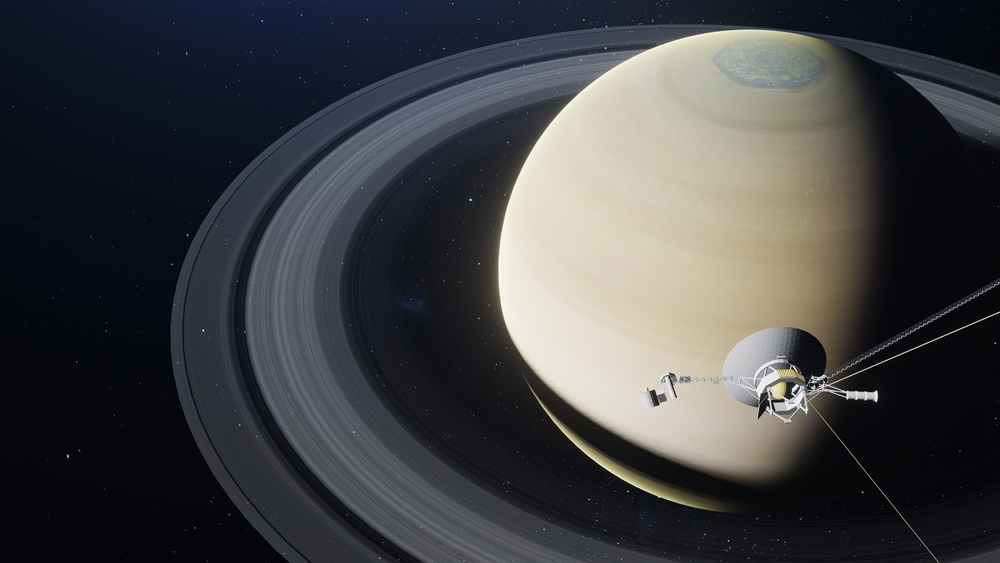
Before July 2015, Pluto remained one of the least understood worlds in our solar system.
Even the best telescopes showed little more than a blurry point of light.
That changed forever when New Horizons swept past the dwarf planet on July 14, 2015.
Within hours, scientists received the first close-up views of a world unlike anything they expected.
Instead of an ancient frozen rock covered in impact craters, Pluto revealed towering mountains made from water ice, vast plains of frozen nitrogen, layers of atmospheric haze and evidence that geological activity had continued far more recently than anyone imagined.
Perhaps the most famous image captured during the flyby showed Pluto’s enormous heart-shaped region, later named Sputnik Planitia.
The bright basin quickly became one of the most recognizable landscapes ever photographed beyond Earth.
Scientists soon realized it was much more than a striking feature.
Sputnik Planitia appears to contain slowly flowing nitrogen ice, suggesting Pluto remains surprisingly active despite its immense distance from the Sun.
The flyby also transformed our understanding of Pluto’s largest moon, Charon.
Rather than being another heavily cratered icy body, Charon displayed enormous canyons, fractured terrain and signs that its geological history had been far more dynamic than expected.
Because New Horizons was traveling so quickly, the spacecraft could not pause to investigate.
Instead, every camera, spectrometer and sensor operated according to an intricate sequence programmed months in advance.
During the encounter, there was no opportunity for engineers on Earth to intervene.
The spacecraft performed every observation independently while Earth waited anxiously for confirmation that the flyby had succeeded.
Hours later, the first images began arriving.
After nearly a decade of anticipation, Pluto had transformed from a distant mystery into a complex and fascinating world.
The Mission Continued Long After Pluto
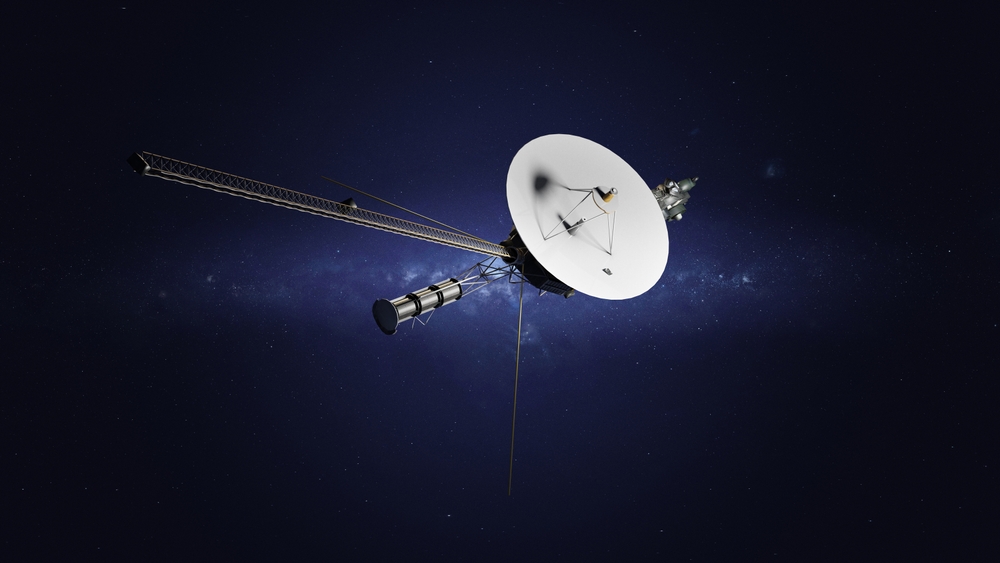
Many people assumed New Horizons had completed its purpose after leaving Pluto behind.
In reality, the spacecraft’s journey was only beginning.
Because it retained enough fuel to make small adjustments to its trajectory, NASA identified another object deep within the Kuiper Belt that the spacecraft could reach.
That object was Arrokoth.
Located roughly one billion miles beyond Pluto, Arrokoth became the most distant object ever explored by a spacecraft when New Horizons flew past it on January 1, 2019.
The encounter offered scientists a rare glimpse into one of the oldest surviving building blocks of the solar system.
Unlike planets that have undergone billions of years of geological evolution, Arrokoth has remained largely unchanged since the solar system formed approximately 4.5 billion years ago.
Its unusual appearance immediately attracted attention.
Instead of resembling a sphere, Arrokoth looked like two flattened bodies gently joined together, giving it the appearance of a snowman.
The discovery supported long-standing theories that many early planetary building blocks formed through slow, gentle mergers rather than violent collisions.
Scientists viewed the encounter as something like opening a time capsule from the birth of the solar system.
Because Arrokoth has remained so well preserved, it offers clues about the conditions that existed long before Earth became the planet we know today.
The successful flyby also demonstrated that New Horizons still had years of productive science ahead despite being billions of miles from home.
Beyond the Kuiper Belt Lies an Even Bigger Mystery
After completing its exploration of Pluto and Arrokoth, New Horizons entered a completely different phase of its mission.
Instead of focusing on individual worlds, scientists turned their attention to the vast region surrounding our solar system itself.
The spacecraft is currently traveling through the Kuiper Belt, a distant ring of icy bodies that extends beyond Neptune’s orbit.
This enormous region contains countless frozen objects left over from the formation of the planets billions of years ago.
Although astronomers have identified thousands of Kuiper Belt objects, only one has ever been explored up close.
That distinction still belongs to Arrokoth.
As New Horizons continues moving away from Earth at roughly 300 million miles each year, it is collecting measurements from a region where very few spacecraft have ever operated.
Its instruments monitor charged particles flowing outward from the Sun, microscopic dust grains drifting through deep space and the distribution of hydrogen atoms across the outer reaches of the heliosphere.
These observations may sound abstract, but they address one of the biggest unanswered questions in planetary science.
Where does the Sun’s influence actually end?
Scientists believe the answer lies much farther ahead, where the solar wind eventually slows as it encounters material drifting between the stars.
Reaching that boundary will take years, but New Horizons is already collecting data that no previous spacecraft has been able to gather in quite the same way.
Only NASA’s Voyager 1 and Voyager 2 have ventured farther from the Sun.
New Horizons carries newer instruments capable of making more sensitive measurements, offering scientists another opportunity to understand one of the least explored regions surrounding our cosmic neighborhood.
Chasing the Edge of the Sun’s Influence

The next chapter of the New Horizons mission is focused on something no telescope on Earth can study directly.
As the spacecraft travels farther into deep space, it is becoming one of humanity’s best tools for understanding the outer heliosphere. This enormous bubble surrounds the solar system and is created by the solar wind, a continuous stream of charged particles flowing outward from the Sun.
For decades, scientists have known that the solar wind does not continue forever.
Eventually, it encounters gas and particles drifting through interstellar space. As the two regions meet, the solar wind slows dramatically, creating a turbulent boundary known as the termination shock.
This invisible frontier marks the beginning of the Sun’s fading influence before the vast expanse between the stars takes over.
Only two spacecraft have ever crossed this region.
Voyager 1 and Voyager 2 made history by reaching interstellar space, proving that the heliosphere has an outer boundary. However, both spacecraft were launched in 1977 with instruments designed using technology from nearly half a century ago.
New Horizons offers scientists a fresh opportunity.
Its newer scientific instruments can measure the surrounding environment with greater sensitivity, helping researchers compare modern observations with those made by the Voyager spacecraft decades earlier.
One of its first major tasks after waking from hibernation will be studying hydrogen gas throughout the outer heliosphere using its Alice ultraviolet spectrograph.
At the same time, its Solar Wind at Pluto instrument, the Pluto Energetic Particle Spectrometer Science Investigation and the Venetia Burney Student Dust Counter will continue recording changes in charged particles and cosmic dust as the spacecraft moves steadily outward.
Together, these observations could reveal how our solar system interacts with the galaxy around it.
Why Scientists Are So Excited About This Region

Deep space may appear empty, but it is anything but featureless.
The farther New Horizons travels, the more it encounters material arriving from interstellar space. Tiny particles, neutral hydrogen atoms and cosmic radiation constantly move through this region, interacting with the solar wind in ways scientists are still trying to understand.
Recent measurements have already produced surprising results.
Data collected by New Horizons shows that the solar wind gradually slows as it travels away from the Sun because it collides with atoms drifting inward from interstellar space.
Researchers found that the solar wind in the outer solar system is around 13 to 15 percent slower than it is near Earth.
Scientists expect an even larger slowdown once the spacecraft eventually reaches the termination shock.
Voyager 2 recorded a dramatic 46 percent drop in solar wind speed when it crossed that boundary, confirming that something significant happens at the edge of the heliosphere.
Heather Elliott of the Southwest Research Institute, who led research using New Horizons data, explained that understanding these changes is about much more than studying the Sun.
“Not only do we learn more about how the sun’s influence ends, but we also gain a deeper understanding of the boundary between our solar system and interstellar space, a critical step toward planning future interstellar travel.”
While interstellar travel remains far beyond current human capability, every new measurement helps scientists refine models of the environment future spacecraft may one day cross.
A Mission That Keeps Finding New Surprises
One of the most remarkable aspects of New Horizons is how often it has exceeded expectations.
The spacecraft was originally built for a single objective.
Reach Pluto.
Instead, it has become a long-term observatory operating in one of the least explored parts of the solar system.
Its discoveries have continued long after the Pluto flyby.
Among them was evidence suggesting that the Kuiper Belt may stretch much farther than previously believed. Observations from New Horizons detected a previously unknown population of distant objects beyond the traditionally recognized boundary of the belt.
If confirmed through future observations, the finding could reshape scientists’ understanding of how the outer solar system formed billions of years ago.
The spacecraft also continues measuring cosmic dust, energetic particles and the faint glow of the distant universe, producing datasets that cannot be collected from anywhere closer to Earth.
Even after more than 20 years in space, New Horizons remains one of NASA’s most productive scientific missions.
Its longevity is a testament to careful engineering and conservative mission planning that prioritized reliability over complexity.
Life Aboard a Spacecraft Almost Six Billion Miles Away
Operating a spacecraft at such extraordinary distances requires a very different approach from missions closer to Earth.
Every watt of electricity matters.
Unlike probes orbiting Mars or exploring Jupiter, New Horizons receives no solar power. At its current distance, sunlight is simply too weak to generate useful electricity.
Instead, the spacecraft relies on a radioisotope thermoelectric generator that slowly converts heat from decaying plutonium into electrical power.
As the fuel naturally loses strength over time, mission engineers carefully manage every instrument and onboard system.
NASA has even updated the spacecraft’s autonomy software to account for declining power levels and increasingly long communication delays.
The spacecraft now makes more decisions independently than ever before.
During hibernation, it continues monitoring itself, collecting science data and sending weekly status beacons back to Earth.
Those brief signals reassure engineers that everything remains healthy even when no active communication takes place.
The latest hibernation period was the longest in the spacecraft’s history, lasting 321 days.
Its flawless return demonstrates that New Horizons remains fully capable of carrying out science despite operating farther from Earth than almost every spacecraft ever launched.
Could New Horizons Visit Another World?
Scientists have not completely ruled out another close encounter.
Mission planners continue searching for Kuiper Belt objects that the spacecraft might still be able to reach using its remaining fuel.
Finding such a target has become increasingly difficult.
New Horizons is moving at extraordinary speed, and any potential destination must lie almost perfectly along its existing trajectory. Even small course corrections require precious fuel that cannot be replaced.
The recently completed Vera C. Rubin Observatory is expected to improve those odds.
With its powerful survey capabilities, astronomers hope it may discover previously unseen icy worlds that happen to lie within New Horizons’ reachable path.
If such an object is found, the spacecraft could perform another historic flyby later this decade.
If no suitable target appears, the mission will continue studying the heliosphere as it leaves the Kuiper Belt around 2028 or 2029.
Either outcome promises valuable science.
A Journey That Is Still Far From Over
For many spacecraft, reaching their primary destination marks the end of the story.
For New Horizons, it marked the beginning of an entirely different mission.
The spacecraft that transformed Pluto from a blurry dot into a complex world is now helping scientists understand where the Sun’s influence ends and interstellar space begins. Every measurement collected billions of miles from Earth fills gaps in humanity’s knowledge that cannot be answered any other way.
Pontus Brandt, New Horizons project scientist at the Johns Hopkins Applied Physics Laboratory, summed up the importance of the mission while discussing the spacecraft’s eventual encounter with the termination shock.
“The data from the termination shock encounter will be a treasure trove for space physicists worldwide who are eager to understand how this vast boundary works. All these discoveries from pioneering missions like Voyager and New Horizons teach us how little we know about what lies beyond.”
That may be the most remarkable part of New Horizons’ journey.
Twenty years after launch and more than a decade after rewriting everything we knew about Pluto, the spacecraft is still pushing into places no human-made explorer has studied in detail. Every signal that arrives after its nine-hour trip across space carries another piece of a puzzle that stretches far beyond the planets we know.
Somewhere in the darkness beyond Pluto, New Horizons is still moving forward, still collecting data and still reminding us that the solar system remains far larger, stranger and more mysterious than we once imagined.