
Your cart is currently empty!
The Edge of the Solar System Is Hotter Than Most Fires, Yet Voyager Passed Right Through It
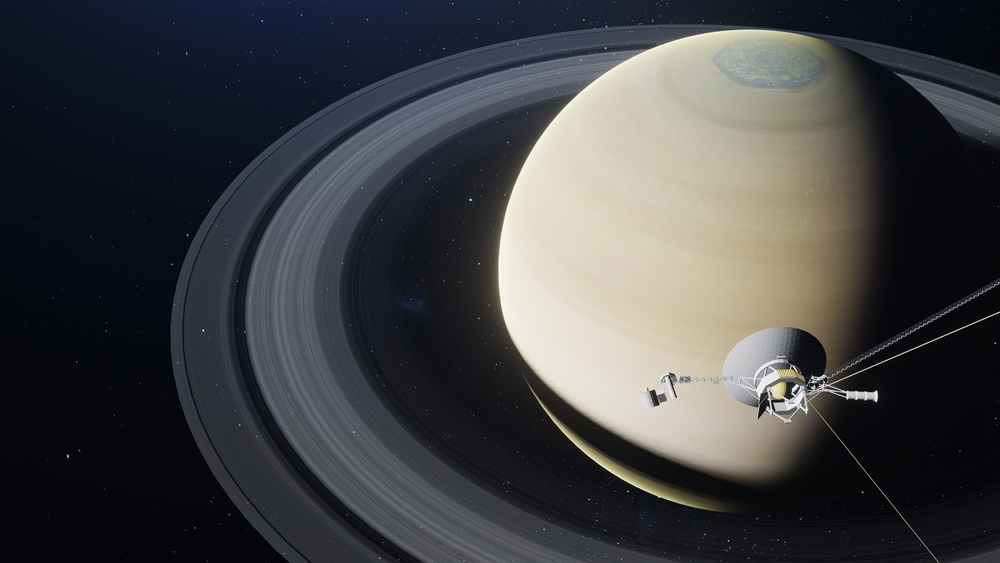
For decades, scientists imagined the edge of the Solar System as a distant boundary where the Sun’s influence slowly faded into the darkness between the stars. When NASA’s Voyager spacecraft finally reached that frontier, they discovered something far stranger than anyone expected. Instruments onboard detected temperatures as high as 90,000 degrees Fahrenheit, giving rise to headlines describing the region as a “wall of fire.” It sounded like the kind of obstacle no spacecraft could possibly survive, yet both Voyagers crossed it and continued sending valuable data back to Earth.
Contents
show
The discovery remains one of the most fascinating achievements of the Voyager mission. Although the nickname paints a dramatic picture, the reality is even more remarkable because the spacecraft passed through one of the hottest regions ever measured in space without suffering damage. Understanding how that happened reveals just how different the environment of deep space is from anything we experience on Earth, while also highlighting how much there is still to learn about the edge of our own Solar System.
The Voyager Mission Went Far Beyond Its Original Goal
When NASA launched Voyager 1 and Voyager 2 in 1977, the mission was designed to explore the giant planets of the outer Solar System. The spacecraft delivered historic close-up views of Jupiter, Saturn, Uranus, and Neptune before continuing on journeys that no other human-made objects have matched. Decades later, they remain the only spacecraft to travel beyond the protective bubble created by the Sun.
Scientists define the edge of the Solar System in several different ways. Some point to the orbit of the most distant planets, while others consider the vast Oort Cloud to be the true outer limit. Another widely accepted definition focuses on the heliopause, the point where the solar wind finally loses its battle against the particles that drift through interstellar space.
NASA explains the process in simple terms: “The Sun sends out a constant flow of charged particles called the solar wind, which ultimately travels past all the planets to some three times the distance to Pluto before being impeded by the interstellar medium. This forms a giant bubble around the Sun and its planets, known as the heliosphere.”
Voyager 1 crossed that boundary in August 2012, becoming the first spacecraft to enter interstellar space. Voyager 2 followed in 2018, giving scientists a second opportunity to study this mysterious region.
Why Scientists Call It the “Wall of Fire”
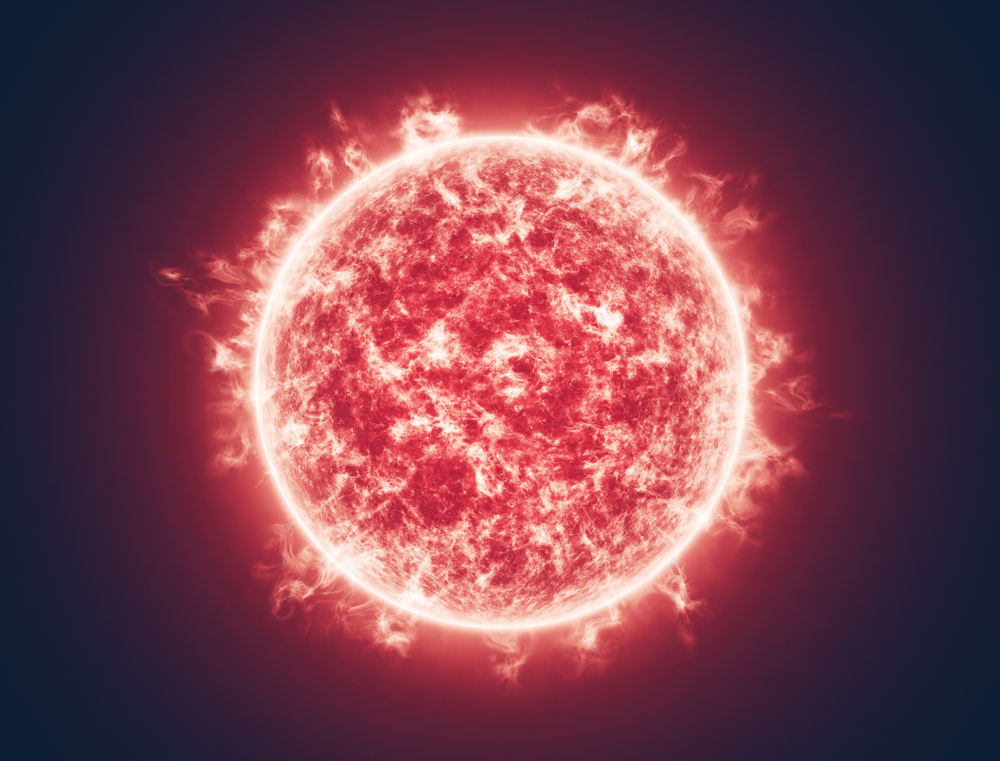
The phrase “wall of fire” is dramatic, but it helps capture how surprising the Voyager measurements were. As both spacecraft passed through the heliopause, they recorded temperatures ranging between 30,000 and 50,000 kelvin, which equals roughly 54,000 to 90,000 degrees Fahrenheit.
Those temperatures are much higher than researchers expected before the mission reached the Solar System’s edge. Scientists had predicted that the heliopause would be warm because of the interaction between the solar wind and interstellar space, but the readings exceeded many earlier estimates.
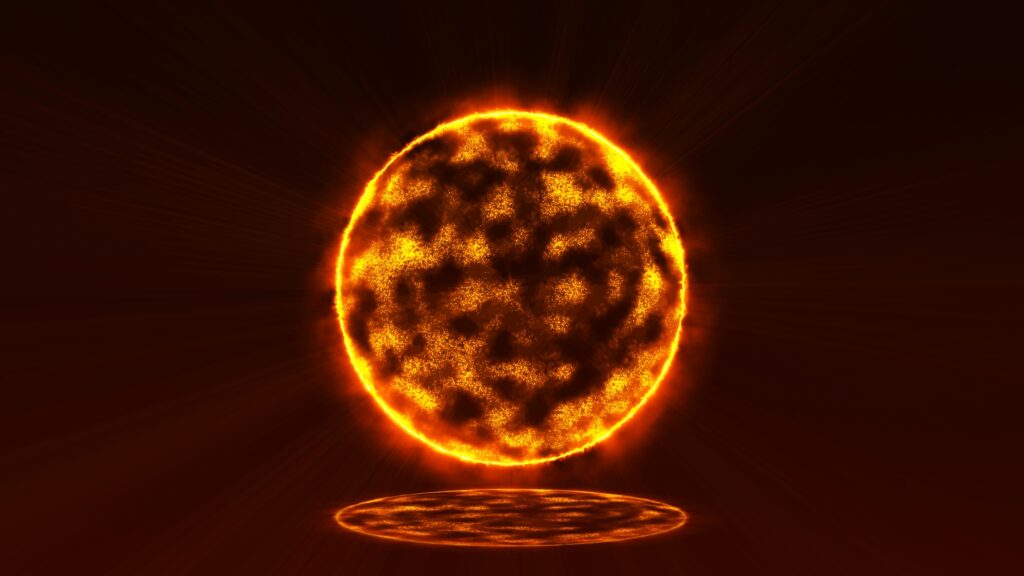
Despite the nickname, there is no actual wall waiting for spacecraft. There are no flames, no burning gases, and no oxygen feeding combustion. Instead, the region consists of extremely hot plasma created by energetic charged particles moving through an almost unimaginable vacuum.
NASA describes the boundary this way: “The boundary between solar wind and interstellar wind is the heliopause, where the pressure of the two winds are in balance. This balance in pressure causes the solar wind to turn back and flow down the tail of the heliosphere.”
Why the Spacecraft Didn’t Burn Up
Hearing that Voyager encountered temperatures of up to 90,000 degrees Fahrenheit naturally raises one question. Why didn’t it melt?
The answer lies in the difference between temperature and heat. Temperature measures how quickly particles move, while heat depends on how much energy can actually be transferred from one object to another. In the heliopause, particles are moving at tremendous speeds, but there are so few of them that they rarely collide with the spacecraft.
On Earth, hot air quickly transfers energy because countless molecules constantly strike anything in their path. Space is completely different. Even though individual particles carry enormous amounts of energy, they are spread across an almost empty vacuum.
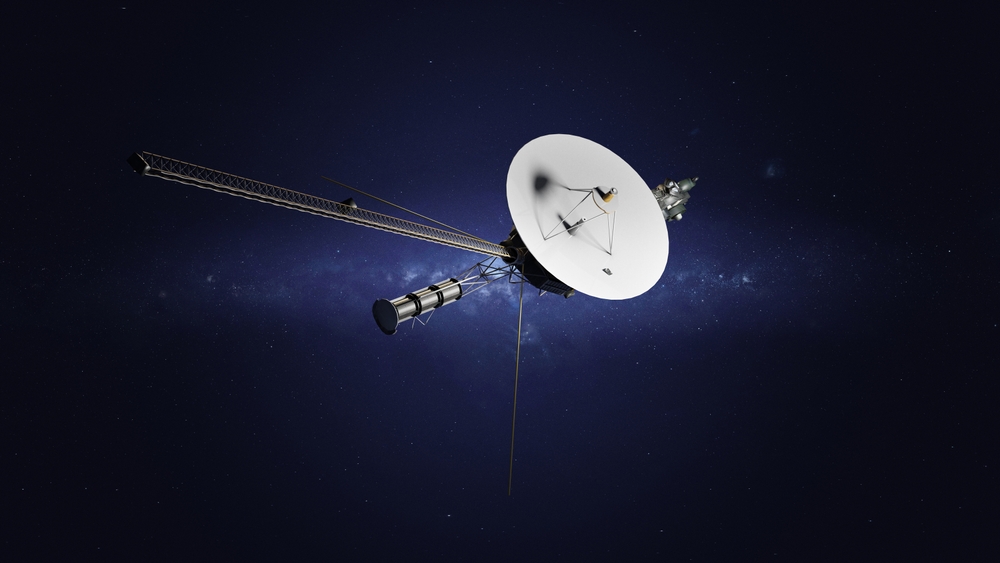
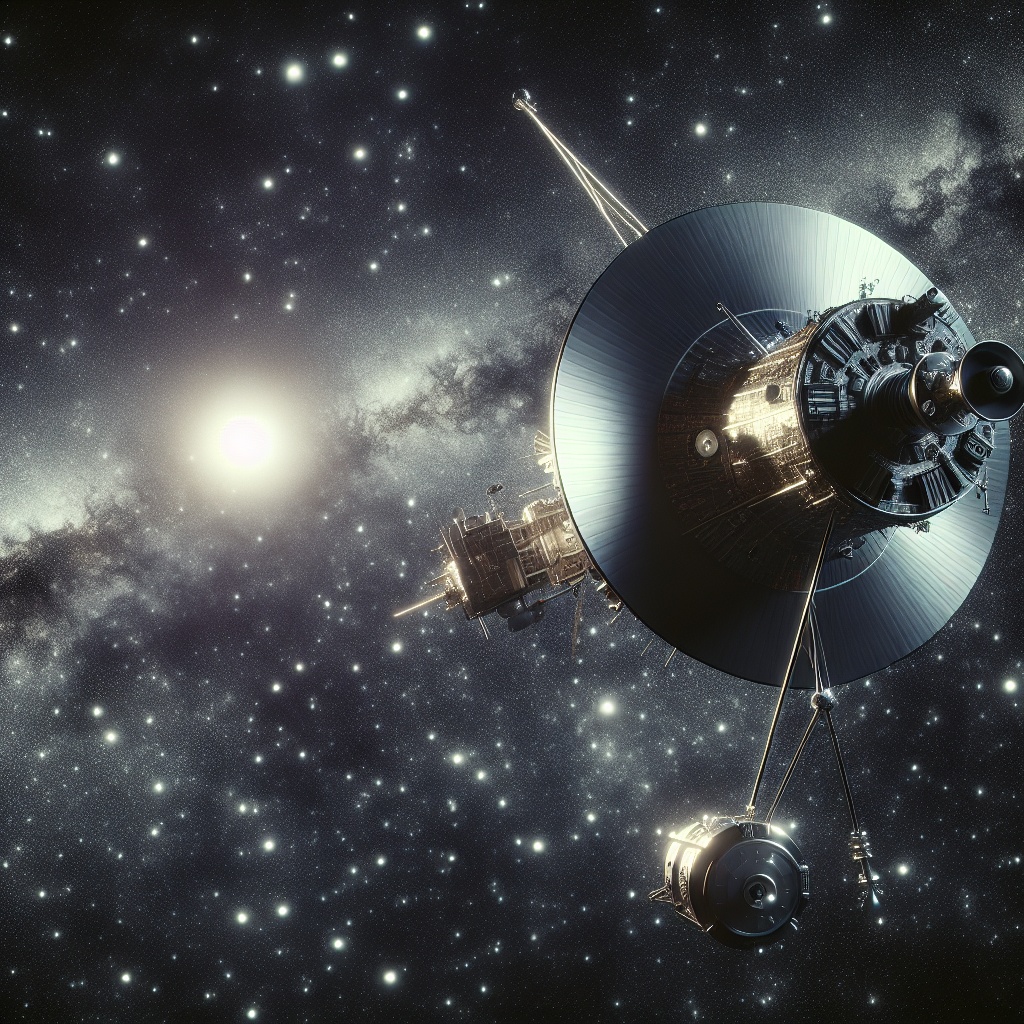
Scientists compare the region to an environment where energetic particles race through space with almost nothing to hit. The Voyager spacecraft, each weighing around 1,600 pounds, simply did not encounter enough particles for significant heat transfer. As a result, the probes remained operational even while measuring one of the hottest regions ever detected.
The Mystery Behind the Extreme Temperatures
The Voyager mission answered many questions, but it also created new ones. Researchers expected the heliopause to be warmer than the surrounding regions, yet the recorded temperatures were significantly higher than predicted.
One possible explanation involves compression. As the outward-flowing solar wind collides with the interstellar medium, the plasma becomes compressed. That process increases particle energy and raises the surrounding temperature.
Another leading explanation is magnetic reconnection. This process occurs when magnetic field lines suddenly change their structure, releasing stored magnetic energy into the surrounding plasma. The released energy accelerates particles and produces additional heating.
Magnetic reconnection is not unique to the edge of the Solar System. Scientists have observed similar events around Earth and other planets where magnetic fields interact with the solar wind. The Voyager observations suggest the same process may play an important role at the heliopause on a much larger scale.
Voyager Continues to Rewrite What We Know About Space
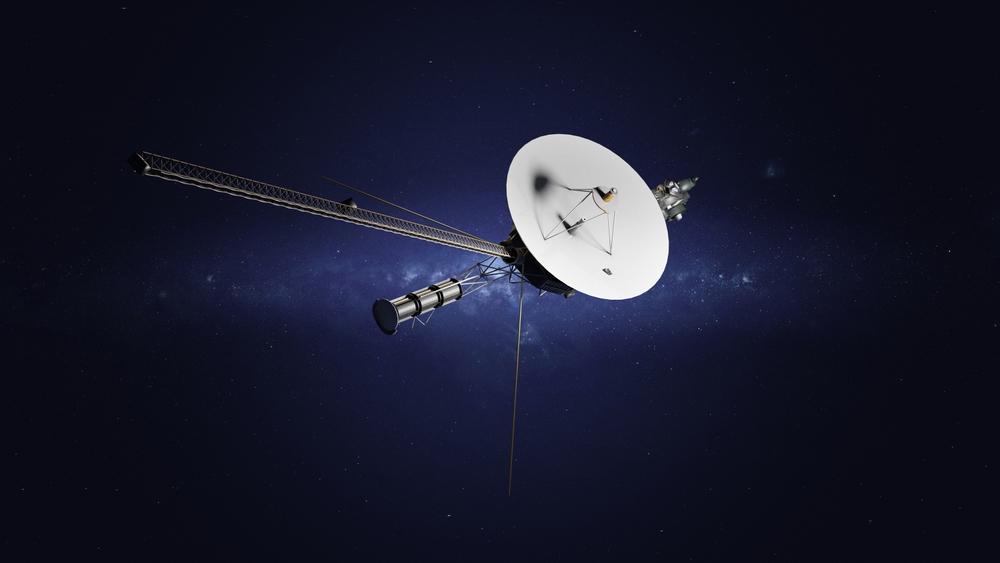
Crossing the heliopause marked the beginning of a completely new phase of the Voyager mission. The spacecraft are now sampling a region that humanity has never explored before, allowing scientists to compare conditions inside and outside the heliosphere.
One of the biggest surprises involved the magnetic field beyond the Solar System. Before Voyager crossed the heliopause, researchers expected the magnetic field outside the heliosphere to point in a noticeably different direction. Instead, both spacecraft found something unexpected.
NASA explained the finding after Voyager 2 confirmed Voyager 1’s earlier observations: “An observation by Voyager 2’s magnetic field instrument confirms a surprising result from Voyager 1: The magnetic field in the region just beyond the heliopause is parallel to the magnetic field inside the heliosphere.”
The agency added, “With Voyager 1, scientists had only one sample of these magnetic fields and couldn’t say for sure whether the apparent alignment was characteristic of the entire exterior region or just a coincidence. Voyager 2’s magnetometer observations confirm the Voyager 1 finding and indicate that the two fields align.”
Incredible Facts About the Voyager Mission
Nearly 50 years after launch, the Voyager spacecraft continue to achieve milestones that few missions have ever matched.
- Voyager 1 became the first spacecraft to enter interstellar space in 2012.
- Voyager 2 crossed the heliopause in 2018 after completing flybys of all four giant planets.
- Both spacecraft continue sending scientific data across billions of miles.
- Each probe carries a Golden Record containing sounds, music, and images from Earth.
- They remain the only human-made objects to explore beyond the heliosphere.
- Their discoveries continue helping scientists understand how our Solar System interacts with the rest of the galaxy.
Humanity’s First Step Into Interstellar Space
Every signal received from Voyager expands humanity’s understanding of the cosmos. What began as a mission to study the outer planets has become one of the greatest exploration projects ever undertaken, revealing conditions no telescope could observe from Earth.
The so-called “wall of fire” turned out to be something far more fascinating than its nickname suggests. Rather than destroying the spacecraft, it opened the door to humanity’s first direct exploration of interstellar space, proving that even after nearly five decades, the Voyager mission continues to reveal surprises waiting beyond the edge of the Solar System.
Sources:
Stone, E. C., Cummings, A. C., McDonald, F. B., Heikkila, B. C., Lal, N., & Webber, W. R. (2013). Voyager 1 observes Low-Energy galactic cosmic rays in a region depleted of heliospheric ions. Science, 341(6142), 150–153. https://doi.org/10.1126/science.1236408