
Your cart is currently empty!
NASA Wants Volunteers to Live Like Astronauts for an Entire Year
The idea of leaving Earth for Mars has fascinated people for generations. Movies have turned it into an epic adventure, while scientists have spent decades trying to solve the countless problems that stand between humanity and another planet.
Contents
show
Now NASA is inviting ordinary people to experience a small part of that journey without ever leaving Earth. The space agency is recruiting volunteers willing to spend an entire year inside a carefully designed simulation that recreates the isolation, routines, and psychological demands of living on a mission to the Moon and Mars. It may sound like the opportunity of a lifetime, but it also comes with sacrifices that few people fully appreciate.
NASA Is Preparing People for Missions That Have Never Happened Before
More than 50 years have passed since astronauts last walked on the Moon during the Apollo era. Today, NASA is preparing for an ambitious new chapter through its Artemis program, which aims to return humans to the lunar surface before eventually sending astronauts to Mars.
Building rockets capable of making the journey is only one part of the challenge. Scientists must also understand how people cope with spending months, or even years, inside confined environments where privacy is limited, communication is delayed, and help from Earth is impossible.
That is the purpose of NASA’s newest Moon and Mars Exploration Analog, known as MMEA. The program combines lessons from earlier research missions into a single year-long experience designed to imitate every major phase of a deep-space expedition.
Rather than focusing on spacecraft technology, researchers want to learn how human beings adapt when they live together under conditions similar to those astronauts will eventually experience millions of miles from home.
What Life Inside the Simulation Actually Looks Like
The volunteers will spend approximately one year living and working inside two specially designed habitats at NASA’s Johnson Space Center in Houston.
The mission begins inside a compact spacecraft simulator that recreates the long journey from Earth toward the Moon or Mars. Crew members will eat, sleep, work, and exercise inside a restricted environment where every day follows a carefully planned schedule.
Once the simulated journey is complete, the crew transitions into another habitat that represents a planetary base.
This second environment is designed to resemble the earliest versions of future lunar or Martian settlements rather than the large science fiction cities often imagined in popular culture.
Researchers intentionally limit available space and resources so participants experience many of the same operational challenges future astronauts could encounter.
Each crew member receives a small private living area while sharing kitchens, workspaces, laboratories, and recreation areas with the rest of the team. Daily life revolves around structured routines that mirror those expected during real exploration missions.
The simulation also introduces communication delays similar to those experienced between Earth and Mars. Instead of receiving immediate responses from mission control, participants must often work independently while waiting for instructions, forcing them to solve problems much like astronauts eventually will.
The Crew Will Perform Far More Than Simple Experiments
Many people imagine the volunteers spending a year sitting inside a building pretending to be astronauts. The reality is considerably more demanding.
Every day includes scientific research, equipment maintenance, operational planning, emergency response exercises, physical fitness programs, and habitat management.
Crew members will also conduct simulated spacewalks using virtual reality technology and specialized equipment designed to recreate planetary exploration.
Food production forms another important part of the mission.
Participants will grow crops inside the habitat while researchers study how food systems perform during extended periods of isolation. Fresh produce becomes especially valuable during long missions because astronauts cannot rely entirely on packaged meals shipped from Earth.
Health monitoring also becomes part of everyday life.
Researchers continuously observe physical fitness, sleep quality, stress levels, teamwork, decision-making, and overall mental well-being throughout the mission. Every routine, from exercise sessions to meal preparation, provides valuable information that could influence future space exploration.
NASA also wants to understand how crews respond when unexpected situations arise.
Simulated emergencies may require participants to repair damaged systems, conserve limited resources, or adapt to changing mission conditions. Although no real danger exists, the situations are designed to test decision-making under pressure.
Isolation Is One of NASA’s Biggest Concerns
Long-distance space travel presents challenges that extend far beyond engineering.
Astronauts traveling to Mars cannot simply return home if something goes wrong. A round-trip mission could last close to three years depending on planetary alignment and mission design.
That reality creates psychological pressures unlike almost anything experienced on Earth.
Participants in the MMEA mission will spend months separated from family, friends, and everyday comforts. While they remain physically safe inside NASA facilities, their daily lives will deliberately resemble the isolation astronauts are expected to experience during future missions.
One unusual aspect of the simulation is the limited connection to the outside world.
NASA has previously described participation as including what many people today would consider a complete social media detox.
For a generation accustomed to constant notifications and instant communication, living without the endless flow of online interaction may prove surprisingly difficult.
Researchers are particularly interested in understanding how prolonged isolation affects teamwork, morale, conflict resolution, motivation, and emotional resilience.
Even small disagreements between crew members can become significant during long missions where there is no opportunity to leave the environment or spend time completely alone.
Learning how successful teams overcome these challenges helps NASA improve astronaut selection, training, and support systems for future exploration.
Previous Participants Reveal What the Experience Really Feels Like
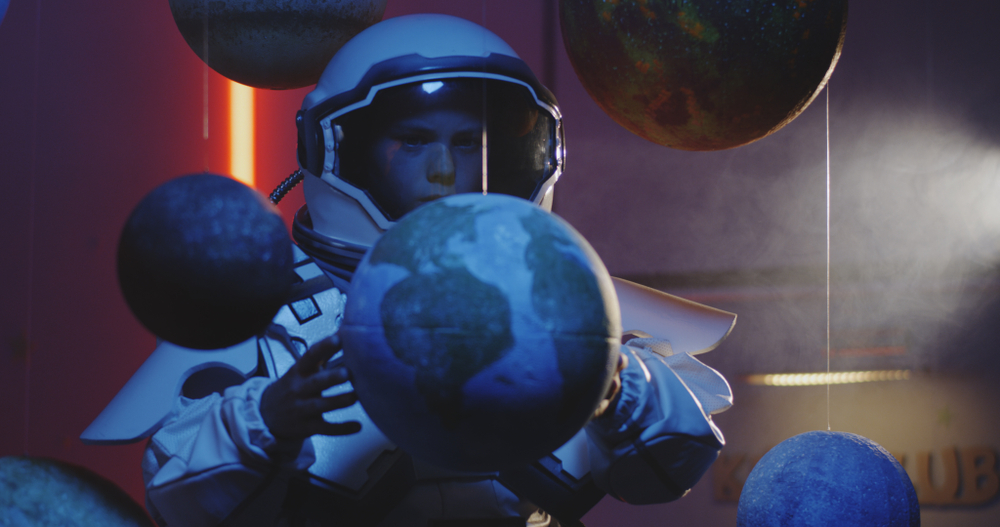
NASA is not beginning from scratch.
The agency has already completed numerous analog missions through programs such as the Human Exploration Research Analog, better known as HERA, and the Crew Health and Performance Exploration Analog, or CHAPEA.
These earlier studies laid the foundation for the new Moon and Mars Exploration Analog by examining how isolation influences human performance over extended periods.
One participant who experienced a previous year-long Mars simulation was physician Nathan Jones.
Serving as the crew’s medical officer, Jones spent twelve months inside NASA’s Mars Alpha habitat while carrying out research similar to what future astronauts may perform on another planet.
Although he described the experience as rewarding, he also acknowledged the emotional cost.
Missing birthdays, holidays, graduations, weddings, and other family milestones became one of the hardest parts of the mission.
The environment itself also changed how he viewed everyday life.
After spending a year indoors with limited food choices and no natural weather, simple experiences became meaningful again.
Fresh air, sunlight, changing seasons, and even ordinary grocery shopping felt different after months inside an artificial habitat.
His experience highlighted something NASA researchers have suspected for years.
Preparing people for Mars involves much more than teaching technical skills. It also requires understanding how prolonged isolation changes perspective, relationships, and emotional well-being over time.
Who Can Apply for NASA’s Year-Long Mission?
While the opportunity sounds like something pulled from a science fiction film, NASA is looking for a very specific type of volunteer.
Applicants must be healthy, non-smoking U.S. citizens or permanent residents who can meet the agency’s demanding physical and psychological standards. Most candidates are expected to be between 30 and 55 years old, although NASA has indicated that exceptions may be considered in certain cases.
Education is another major requirement.
Candidates generally need a bachelor’s or master’s degree in a STEM field such as engineering, mathematics, biological science, physical science, or computer science. Equivalent professional experience, including military service and some aviation backgrounds, may also satisfy the qualifications depending on the applicant’s overall profile.
Fluency in English is required because every aspect of the mission, from scientific procedures to emergency drills, relies on clear communication.
Applicants also undergo extensive medical examinations and psychological evaluations before being selected. NASA wants people who can remain calm under pressure, cooperate with teammates, and adapt to an environment where routines rarely change for months at a time.
There are practical requirements as well.
Volunteers must commit to roughly 14 months at NASA’s Johnson Space Center. That period includes around 12 months inside the simulated mission along with additional time before and after the experiment for training, preparation, and debriefing.
The agency also screens for factors that could complicate life inside a confined habitat. Certain dietary restrictions, sleep disorders, or medical conditions may affect eligibility because researchers want the simulation to resemble actual astronaut missions as closely as possible.
Why NASA Invests So Much Time in Simulated Missions
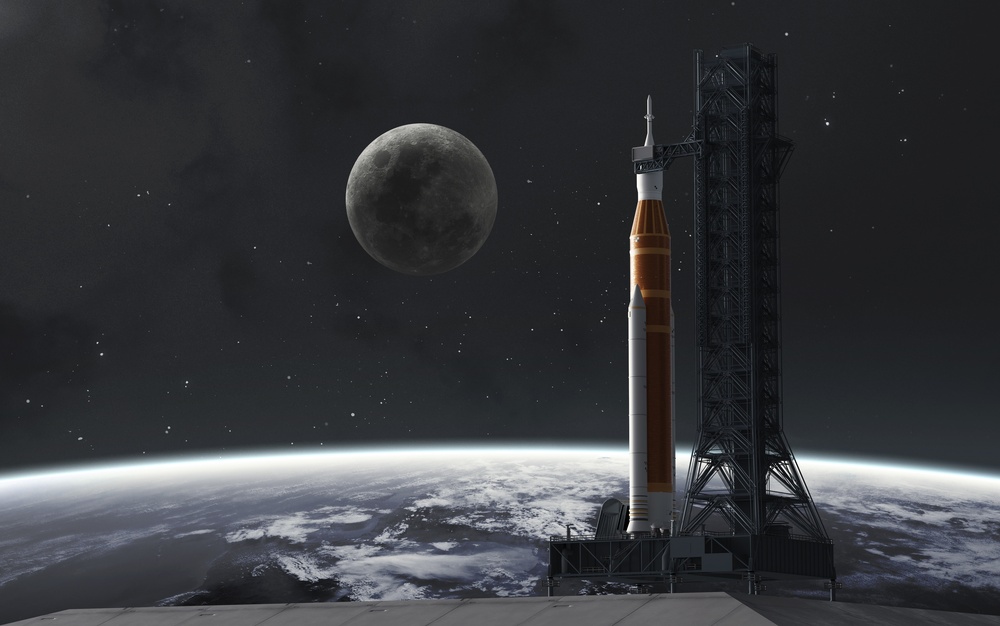
To many people, locking healthy volunteers inside a habitat for a year may seem excessive.
For NASA, it is one of the safest and most cost-effective ways to answer questions that cannot be fully explored aboard the International Space Station or through computer simulations.
A crewed mission to Mars will expose astronauts to challenges never encountered during previous human spaceflight.
The journey itself could take several months each way. Once astronauts reach the Martian surface, immediate rescue would not be possible if something went wrong. Every decision, every repair, and every resource would matter.
That makes preparation essential.
Researchers study how small crews divide responsibilities, resolve disagreements, manage workloads, and respond to unexpected problems over extended periods.
They also evaluate the equipment itself.
Everything inside the habitat, from communication systems and life-support technology to food production methods and scientific tools, can be tested under realistic operating conditions. If weaknesses appear during the simulation, engineers can improve those systems before astronauts depend on them millions of miles from Earth.
The information gathered also contributes to NASA’s Human Research Program, which develops methods to protect astronaut health throughout long-duration missions.
Every lesson learned reduces uncertainty before humanity attempts its first voyage to another planet.
Bringing Two NASA Programs Together
The Moon and Mars Exploration Analog represents the next step in research that NASA has been conducting for years.
Earlier analog missions focused on different parts of future space exploration.
The Human Exploration Research Analog, commonly known as HERA, primarily examined what happens during long periods of travel through space. Participants lived inside a spacecraft-like habitat while researchers observed how isolation affected teamwork, performance, and decision-making.
Meanwhile, the Crew Health and Performance Exploration Analog, or CHAPEA, concentrated on life after landing on Mars.
Volunteers lived inside a simulated Martian habitat where they performed scientific research, maintained equipment, grew vegetables, and completed activities similar to future surface missions.
The new MMEA program combines both experiences into one continuous mission.
Participants first simulate traveling through deep space before transitioning into a planetary base. Once the surface phase ends, they complete the return journey back to Earth inside the same spacecraft environment.
According to NASA, this integrated approach provides a more complete picture of how astronauts may adapt across an entire expedition rather than examining each phase separately.
It also supports future Moon Base concepts under the Artemis program while helping engineers prepare for the far greater challenges of reaching Mars.
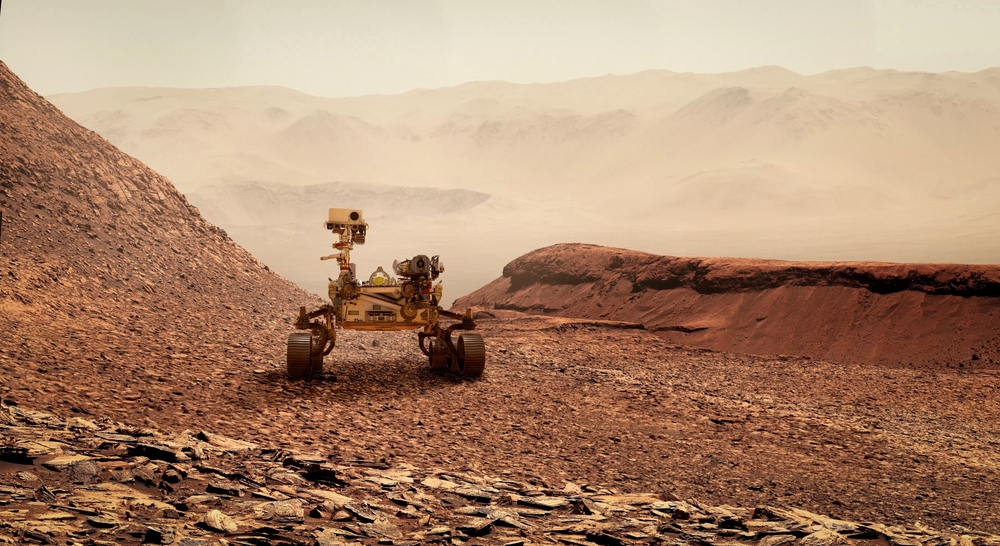
Living on Mars Time Is Harder Than It Sounds
One unusual aspect of the simulation involves something most people rarely think about: time itself.
A day on Mars, known as a sol, lasts approximately 24 hours and 39 minutes. While the difference from Earth’s day appears small, it gradually affects sleeping patterns, work schedules, and biological rhythms.
Over weeks and months, those extra minutes begin shifting daily routines.
Researchers want to understand how crews adjust when their internal clocks no longer match the familiar 24-hour cycle that humans have followed throughout history.
Sleep quality becomes especially important because fatigue affects concentration, memory, reaction time, and emotional well-being.
NASA carefully tracks how participants respond as their schedules gradually align with Martian time.
The mission also studies the effects of limited natural light.
Unlike everyday life on Earth, volunteers spend months inside enclosed habitats where sunlight, changing weather, fresh air, and seasonal changes are almost completely absent.
Previous participants have described these missing experiences as some of the most emotionally challenging aspects of the mission.
Simple pleasures that many people barely notice become surprisingly valuable after months inside an artificial environment.
Understanding those psychological changes helps NASA design future habitats that better support astronaut well-being during extended exploration missions.
Could This Research Shape the Future of Space Exploration?
NASA’s next simulated mission will not place anyone on the Moon or Mars.
Even so, its impact could extend far beyond the walls of the Johnson Space Center.
The information collected during the year-long experiment may influence how future spacecraft are designed, how astronauts are selected, how missions are planned, and even how future lunar settlements operate.
As international interest in deep-space exploration continues to grow, the lessons learned may also benefit commercial companies and global space agencies developing their own long-duration missions.
For the volunteers, the experience offers something few people will ever encounter.
They will spend a year living under conditions that closely resemble humanity’s future beyond Earth, contributing data that could shape the next generation of exploration without ever leaving the planet.
The mission will undoubtedly test patience, resilience, and teamwork.
It will also remind researchers that the greatest challenge in reaching another world is not only building machines capable of making the journey. It is understanding the people who will have to live there.
When astronauts eventually step onto Mars, they will carry decades of engineering, scientific research, and human experience with them. Hidden among those achievements will be the contributions of volunteers who spent a year inside a simulated world, helping NASA answer some of the biggest questions before the real journey finally begins.