
Your cart is currently empty!
NASA Opens Applications For A Yearlong Moon And Mars Simulation
Most people dream of escaping their daily routine. NASA is asking a handful of volunteers to do the exact opposite by locking themselves inside an isolated habitat for an entire year.
Contents
show
There will be no fresh air, no weekend trips, and no chance to step outside whenever they feel like it. Instead, participants will spend months living under conditions designed to mimic what future astronauts could experience on the journey to the Moon and Mars. It may sound like science fiction, but the mission is very real, and the research could shape humanity’s next giant leap into deep space.
NASA Is Preparing Humans for Life Beyond Earth
As NASA moves closer to returning astronauts to the Moon through its Artemis program and continues planning for the first crewed missions to Mars, the agency faces a challenge that has little to do with rockets or spacecraft.
Sending people millions of miles from Earth is only part of the equation. Keeping them physically healthy, mentally resilient, and able to work together for months or even years presents an entirely different set of obstacles.
To answer those questions, NASA has opened applications for its next Moon and Mars Exploration Analog mission, also known as MMEA. The year-long simulation is scheduled to begin no earlier than August 2027 at the Johnson Space Center in Houston.
Unlike previous analog missions that focused on a single phase of a journey, the new program combines several stages of deep space exploration into one continuous experience. Volunteers will simulate traveling through space before transitioning into a habitat that recreates the challenges of living on another planetary surface.
The goal is not to see whether people can survive inside the habitat. NASA wants to understand how ordinary daily life changes when a crew is separated from Earth for an extended period with limited resources, delayed communication, and no opportunity to simply walk away.
Every observation collected during the mission could influence how future astronauts live, work, and solve problems during real expeditions beyond Earth’s orbit.
Inside the Closest Thing to Living on Another World
From the outside, the research habitats sit firmly on Earth. Inside, they are designed to make volunteers feel as though home is millions of miles away.
The mission begins inside a modified version of NASA’s Human Exploration Research Analog, better known as HERA. This two-story habitat recreates the experience of traveling through deep space.
Crew members will share compact living quarters that include workstations, sleeping areas, hygiene facilities, and communal spaces. Privacy is limited, just as it would be aboard a spacecraft heading toward Mars.
After completing the simulated transit, participants move into another habitat inspired by NASA’s Crew Health and Performance Exploration Analog program, or CHAPEA.
This one-story, 3D-printed structure represents life after landing on another world.
Inside are private sleeping quarters, a shared kitchen, medical facilities, recreation space, crop-growing areas, bathrooms, and workstations where crews complete scientific tasks throughout the mission.
Outside the habitat sits an artificial landscape where participants conduct mock planetary excursions while wearing equipment that recreates the limitations astronauts will face on the Moon or Mars.
The crew will also use a rover module to simulate journeys beyond the immediate base, practicing exploration techniques that future astronauts may eventually perform on another planet.
Although every element is carefully controlled, the experience is designed to feel authentic enough that participants respond naturally to the pressures of long-duration exploration.
A Year of Isolation Is Only the Beginning
Many people imagine space travel as an endless series of exciting discoveries.
The reality is often much less glamorous.
Long missions are built around routines, maintenance work, scientific experiments, and solving unexpected problems before they become dangerous.
The Moon and Mars Exploration Analog reflects that reality.
Each day follows carefully planned schedules filled with operational tasks rather than adventure. Crew members perform maintenance, monitor equipment, conduct research projects, grow food, and respond to simulated emergencies that test both technical knowledge and teamwork.
Communication with mission control is intentionally delayed to mirror the reality of deep-space travel. On a mission to Mars, astronauts cannot expect immediate responses from Earth because radio signals take time to travel across millions of miles.
That means crews must learn to make important decisions independently.
Participants will also experience resource limitations that force them to think carefully about every supply they use.
Water, food, equipment, and power are all managed under conditions similar to those expected during future planetary missions.
These restrictions help researchers understand how people adapt when convenience disappears and every resource becomes valuable.
Perhaps the greatest challenge, however, is psychological rather than physical.
Living with the same small group of people for an entire year without meeting new faces or leaving the habitat creates pressures that few people ever experience.
Minor disagreements can grow into significant conflicts if not managed carefully. Small routines become essential for maintaining morale. Personal habits that might go unnoticed in everyday life suddenly become impossible to ignore.
Understanding those human dynamics is one of the primary reasons NASA continues investing in analog missions.
Why NASA Cares So Much About Mental Health

The dangers of space extend far beyond radiation, equipment failures, and harsh environments.
Isolation itself can become one of the biggest threats to a successful mission.
Astronauts traveling to Mars could spend well over two years away from Earth when travel time and surface operations are combined. During that period, they would miss birthdays, holidays, family milestones, and everyday experiences most people take for granted.
Unlike astronauts aboard the International Space Station, future Mars crews will not have the option of returning home quickly if problems arise.
Researchers want to understand how people cope with loneliness, stress, disrupted routines, and extended confinement before those situations occur during actual missions.
Throughout the simulation, scientists will monitor physical health, sleep quality, cognitive performance, emotional well-being, communication styles, and team relationships.
Every interaction provides valuable information.
Researchers are interested in questions such as:
- How does prolonged isolation affect decision-making?
- Which routines help crews maintain motivation?
- What leadership styles produce the strongest teamwork?
- How do people recover after stressful situations?
- Which habitat designs reduce mental fatigue?
The answers may seem subtle, but they could influence everything from spacecraft layouts to work schedules and emergency procedures.
NASA has spent decades learning that successful missions depend just as much on psychology as engineering.
The Moon and Mars Exploration Analog represents another step toward understanding how humans perform when Earth becomes a distant point of light instead of the world outside the window.
Building on Years of Spaceflight Research

The new analog mission did not appear overnight.
It combines lessons learned from two of NASA’s most important human research programs.
HERA has spent years examining how isolation and confinement affect crews living in spacecraft-like environments. Volunteers participate in shorter missions that help researchers evaluate communication, teamwork, workload, and behavioral health.
CHAPEA focuses on a different phase of exploration by recreating life on the Martian surface inside a specially built habitat. Participants experience realistic resource constraints while conducting scientific work and simulated planetary operations.
By merging these programs into a single year-long campaign, NASA hopes to study the complete journey instead of isolated pieces.
Researchers can now observe how volunteers transition from the challenges of space travel to the demands of establishing and operating a planetary base.
That broader perspective is expected to provide valuable data for future Artemis missions, NASA’s proposed Moon Base, and eventually the agency’s long-term objective of sending astronauts safely to Mars.
The information gathered may also influence the design of habitats, mission timelines, crew selection methods, and technologies that astronauts will rely on during some of the most ambitious expeditions ever attempted.
Who Can Apply for the Mission?
The opportunity may sound like an open invitation to anyone with a passion for space, but NASA has established strict requirements to ensure participants can handle the demands of the simulation.
Applicants must be United States citizens or permanent residents, between the ages of 30 and 55, and no taller than 74 inches. They must also be fluent in English, willing to commit to roughly 14 months that include training, the year-long mission itself, and post-mission evaluations.
Beyond the basic requirements, candidates must pass extensive medical and psychological assessments designed to evaluate whether they can cope with prolonged isolation and high-pressure environments.
NASA is also looking for people with technical backgrounds similar to those expected of astronauts.
Applicants generally need at least a bachelor’s degree in engineering, biological science, physical science, mathematics, or another STEM discipline. Advanced degrees can substitute for professional experience, while military service may also count toward qualification requirements.
There are practical considerations as well.
Participants cannot have dietary restrictions, a history of sleepwalking, or rely on sleeping medication, since those factors could interfere with the controlled environment of the study.
While the agency is recruiting research volunteers rather than astronauts, the expectations remain exceptionally high. Every crew member must be capable of operating complex systems, following detailed procedures, and working closely with teammates for more than a year under conditions that leave little room for error.
The Mission Is About More Than Mars
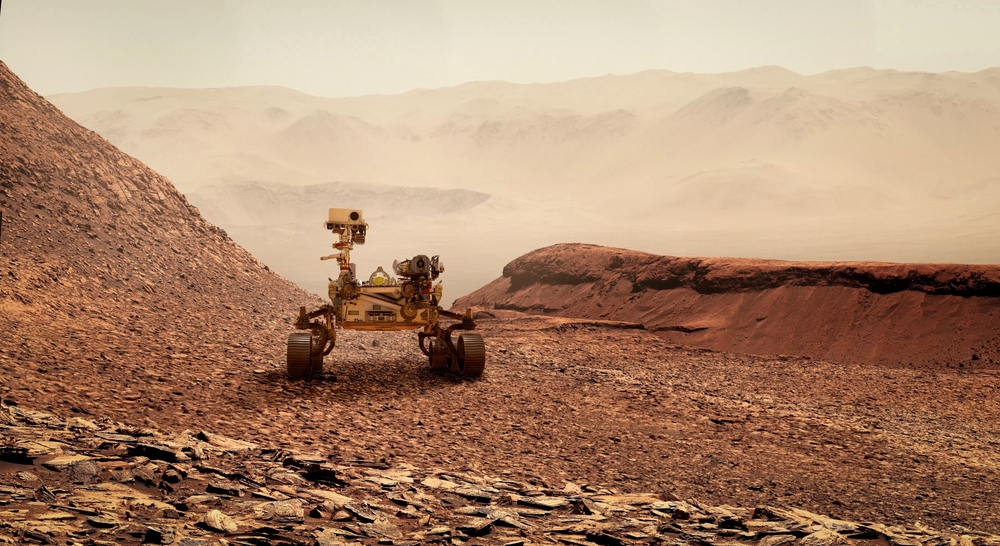
At first glance, spending a year inside a sealed habitat may seem like little more than an elaborate rehearsal for a Mars landing.
In reality, the research has much broader applications.
Every piece of information collected during the mission feeds into NASA’s Human Research Program, which studies how to keep astronauts healthy and productive during increasingly ambitious expeditions.
Researchers are evaluating far more than human endurance.
They want to understand how habitat layouts influence productivity, whether crop-growing systems can reliably support crews, how technology performs after months of continuous use, and what procedures allow astronauts to respond most effectively when something goes wrong.
Even seemingly ordinary activities, such as preparing meals, exercising, maintaining equipment, or organizing personal space, become valuable sources of data when repeated over hundreds of consecutive days.
These findings could shape the design of future spacecraft, lunar habitats, and surface bases where astronauts may eventually spend months or years conducting scientific research.
NASA also hopes the project will strengthen plans for Artemis, the agency’s program to establish a long-term human presence on the Moon.
Unlike the Apollo missions, which involved relatively brief visits, future lunar crews are expected to remain on the surface for extended periods.
Many of the lessons learned there will eventually be applied to Mars, where rescue missions or quick returns to Earth will not be realistic options.
The Moon is increasingly viewed as a proving ground for deeper exploration, making analog missions like MMEA an essential step before humanity ventures even farther into the Solar System.
Why Simulations Matter More Than Ever
History has repeatedly shown that simulations often reveal problems long before they become life-threatening.
NASA has relied on analog missions for decades because they expose weaknesses that cannot always be identified inside laboratories or computer models.
A spacecraft can be engineered with extraordinary precision, but people remain unpredictable.
Fatigue affects judgment.
Stress changes communication.
Isolation influences motivation.
The longer missions become, the more important those human factors grow.
Researchers have already learned valuable lessons from previous analog studies.
Simple adjustments, such as redesigning living spaces, improving lighting schedules, or modifying work routines, can have significant effects on crew morale and performance.
Small improvements may seem insignificant on Earth, but during a mission lasting hundreds of days, they can determine whether a crew continues functioning effectively or begins making costly mistakes.
Future missions to Mars will likely involve communication delays of up to 20 minutes each way.
That means astronauts cannot rely on immediate guidance from mission control whenever unexpected situations arise.
Crews will need greater independence than any astronauts before them.
The Moon and Mars Exploration Analog allows NASA to study exactly how people respond when they must solve problems on their own while living under constant operational pressure.
Those insights could prove just as valuable as advances in propulsion systems or spacecraft technology.
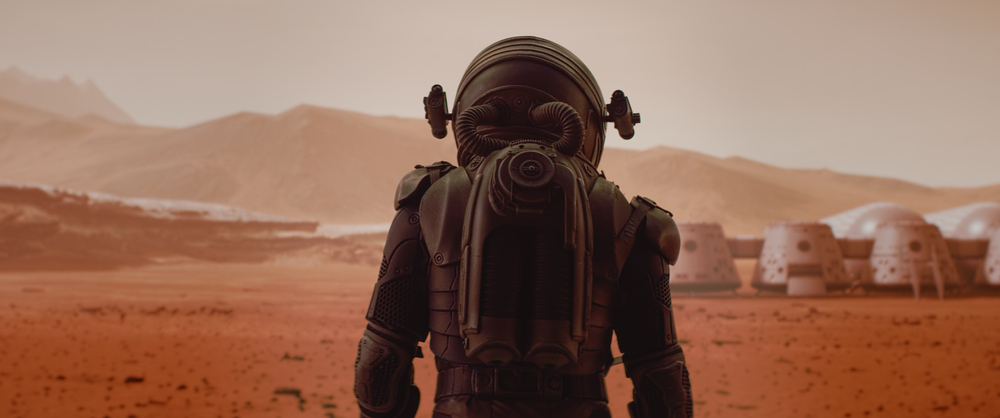
Volunteers Are Giving Up More Than Their Time
One of the most striking aspects of the program is the personal commitment it demands.
Participants will spend an entire year separated from much of normal life.
Family gatherings, birthdays, holidays, weddings, vacations, and countless ordinary moments will continue without them.
Their daily routines will revolve around scientific schedules rather than personal freedom.
Even communication with loved ones will be limited to conditions that resemble those expected during real deep-space missions.
Earlier analog participants have often described the experience as mentally demanding despite never leaving Earth.
Without changing scenery, spontaneous social interactions, or opportunities to disconnect from the mission, maintaining emotional resilience becomes a challenge of its own.
The close-knit environment also means there is little opportunity for personal space.
Every conversation, disagreement, and shared responsibility carries greater weight when the same small group lives together continuously for months.
Yet these are precisely the conditions future astronauts are expected to face.
People who volunteer understand they are contributing to research that could directly influence the safety of crews traveling farther from Earth than any humans have gone before.
Although NASA reimburses research volunteers for their participation, the financial compensation is unlikely to be the primary motivation for most applicants.
The true reward lies in becoming part of a program that could shape one of humanity’s greatest scientific achievements.
A Small Group Helping Shape Humanity’s Future
Space exploration has always depended on people willing to accept extraordinary challenges before anyone else.
The astronauts who first orbited Earth, walked on the Moon, and lived aboard the International Space Station all relied on years of testing conducted by researchers, engineers, and volunteers whose names rarely appear in history books.
The Moon and Mars Exploration Analog continues that tradition.
The four people selected for each mission will never leave Earth’s atmosphere, yet their experiences could influence missions that one day carry astronauts to another planet.
Every equipment failure they solve, every stressful situation they navigate, and every lesson researchers gather will contribute to a growing body of knowledge that cannot be obtained any other way.
As NASA works toward returning humans to the Moon and eventually planting the first footprints on Mars, understanding how people live together during long journeys has become just as important as building the spacecraft that will carry them there.
One day, when astronauts step onto the Martian surface, much of what allows that mission to succeed may trace back to a handful of volunteers who agreed to spend a year inside a carefully designed habitat on Earth, proving that some of the biggest steps toward another world begin without ever leaving this one.