
Your cart is currently empty!
New Deep-Sea “Ghost Shark” Species Discovered in the Dark Waters Off Costa Rica
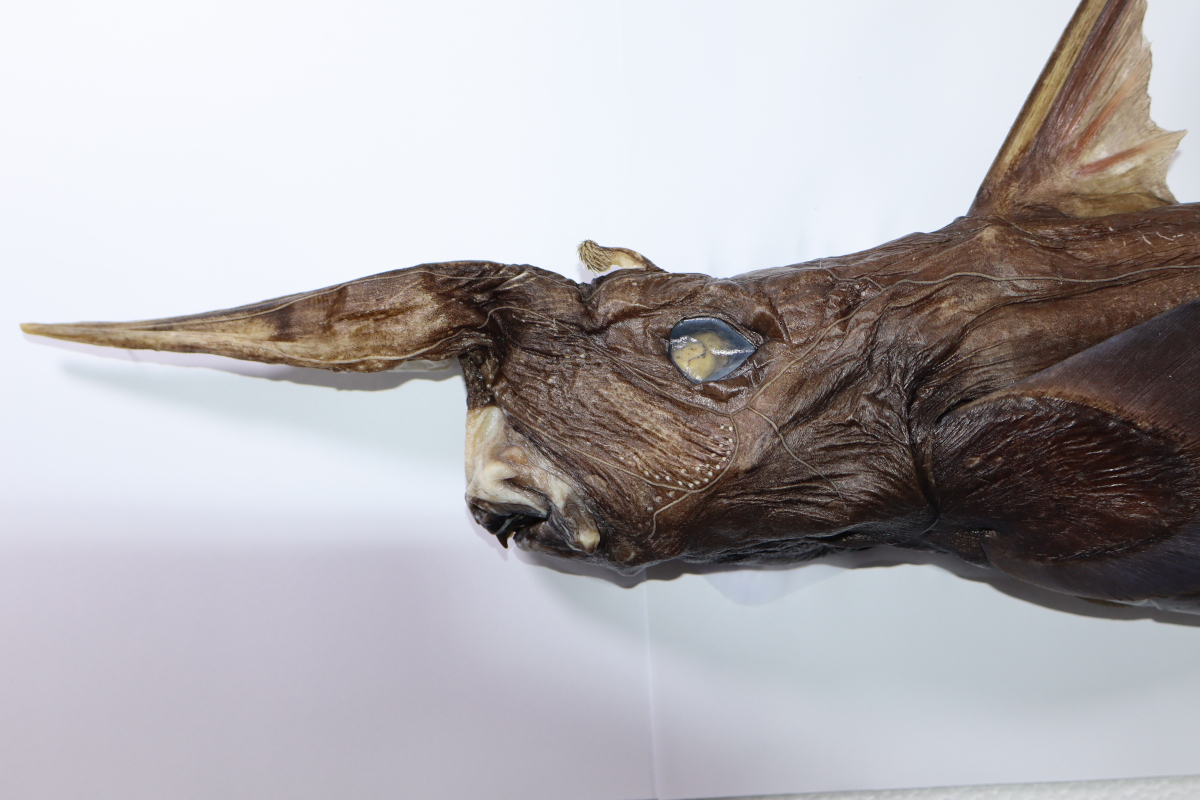
Hundreds of meters beneath the surface of the Pacific, in a realm of perpetual darkness and crushing pressure where no diver could ever venture, something pale and ancient has been drifting through the water unnoticed for far longer than anyone realized. It belongs to one of the oldest lineages of fish on the planet, a ghostly group of creatures that have haunted the deep ocean for hundreds of millions of years, and until recently, scientists did not even know it existed as a species of its own.
Contents
show
Off the coast of Costa Rica, researchers have now confirmed that this elusive deep-sea fish is new to science, a discovery decades in the making that required patience, a handful of rare specimens, and a set of genetic tools that simply did not exist when the first of those specimens was hauled up from the depths. What makes this particular fish distinct from its closest relatives, and what its quiet emergence reveals about how much of the ocean remains a mystery, turns out to be a story far larger than a single creature in the dark.
A New Member Of The Ghost Shark Family
The newly identified fish has been given the name Rhinochimaera costaricana, and it belongs to a strange and little-known group known as the long-nosed chimaeras. These animals are frequently called “ghost sharks,” a nickname they have earned through their pale coloring and their preference for the lightless waters of the deep sea. The name suits them, conjuring something spectral and half-glimpsed, which is precisely how they tend to appear in the rare moments humans encounter them at all.
Despite the name, ghost sharks are not true sharks, though the confusion is understandable. They are cartilaginous fish, related to both sharks and rays, but they occupy an ancient and separate branch of the vertebrate family tree, having diverged from their better-known cousins hundreds of millions of years ago. Their elongated snouts and deep-dwelling habits make them among the most elusive of all cartilaginous fishes, with most sightings limited to specialized research expeditions equipped to reach the depths where they live. The discovery of this new member of the family was formally described in Zootaxa, a peer-reviewed journal that serves as a leading outlet for the official description of new species.
Hidden In The Crushing Dark

Part of the reason this fish escaped detection for so long comes down to where it lives. The specimens that allowed scientists to identify the species were collected from depths ranging from roughly 390 to 787 meters below the surface, a zone defined by total darkness and extreme pressure. At those depths, sunlight has long since vanished, and the conditions are punishing enough to keep most of the organisms that dwell there far beyond the reach of ordinary scientific observation.
To put that depth in perspective, it lies well past the limits of where any recreational diver could hope to go, in a part of the ocean that humans can access only with specialized equipment and considerable effort. The very inaccessibility of this environment helps explain how a distinct species could remain unrecognized for so long, and it serves as a reminder that the deep ocean, despite all our advances, remains one of the least visited places on Earth. What swims down there has, for the most part, been left to its own devices, observed only in fleeting and hard-won glimpses.
Decades In The Making
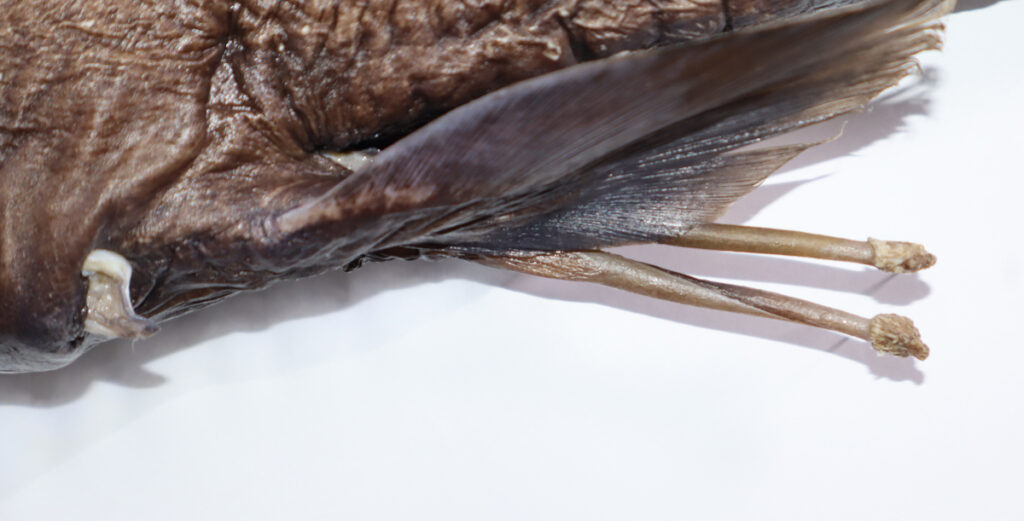
This was not a discovery that arrived in a single dramatic moment, but rather one assembled slowly over many years. The species was described on the basis of just three male specimens, gathered between the years 2000 and 2023, a span of more than two decades that speaks to how sporadic and difficult the collection of such deep-sea animals can be. Each specimen represented a rare opportunity, and it took the patient accumulation of all three, along with the right tools to study them, before scientists could be confident they were looking at something genuinely new.
The work behind the discovery was an international effort, drawing together expertise from across two countries. Costa Rica’s Fisheries and Aquaculture Institute, known as INCOPESCA, collaborated with the University of Costa Rica and Brazil’s Federal University of Pará, combining specialists in anatomy, taxonomy, and genetics. The study was led by Naidely Valeria Vidaurre-Quesada, whose name now appears at the head of the formal description. That such a collaboration was required, blending disciplines and institutions, underscores how much careful, coordinated effort goes into confirming a single new species from the deep.
What Sets This Species Apart
Establishing that the Costa Rican fish was truly distinct, rather than simply a regional variation of an already known species, demanded a rigorous and detailed comparison. Researchers measured 49 separate body traits from the specimens and weighed those measurements against data drawn from more than 90 individuals representing the three previously recognized species of the genus Rhinochimaera. Only through that kind of exhaustive anatomical accounting could the differences be made clear.
Several features consistently set the new fish apart from its relatives. It possesses a noticeably shorter snout than its closest kin, along with a taller first dorsal fin and its associated spine, a marker the researchers identified as particularly telling. The gap between its two dorsal fins is wider than in other species, and it bears fewer of the small bony structures, known as tubercles, that run along the tail region. Individually, any one of these traits might be dismissed as ordinary variation, but taken together and observed consistently across the specimens, they formed a coherent picture of a fish that did not match any species science had described before.
Genetics Sealed The Case

Anatomy alone, however, rarely settles such questions definitively, and so the team turned to the molecular evidence as well. In parallel with their physical measurements, the researchers sequenced DNA from the same specimens, seeking to confirm whether the genetic record would support what the fish’s bodies seemed to suggest. It did, and emphatically so.
The DNA sequences revealed divergences of between 3.9 and 4.7 percent from the other known species in the genus, a margin that sits comfortably above the threshold scientists typically use to define a separate species. This pairing of evidence, the physical and the genetic pointing in the same direction, is what gives the finding its strength. With both lines of inquiry in agreement, the likelihood that the distinctive traits stemmed merely from individual variation within an existing species drops away. The case becomes far more convincing than either form of evidence could manage on its own. The growing use of genetic tools in marine science has been accelerating exactly this kind of work, helping researchers uncover what they call cryptic diversity, species whose outward differences are so subtle that they might otherwise go unnoticed for generations.
Why It Matters For Costa Rica

Beyond the identification of a single fish, the discovery carries real significance for Costa Rica and for the wider region. It adds to the country’s steadily growing catalog of deep-sea species, and in doing so, it draws attention to just how little remains known about the Pacific waters that lie beyond the continental shelf. These deeper realms count among the least explored ecosystems anywhere in the region, vast stretches of ocean whose inhabitants have scarcely been surveyed.
The species name itself reflects this connection to place, honoring the nation where every known specimen was collected. There is something fitting in that choice, tying the creature permanently to the waters that gave it up. The discovery also illustrates a broader shift underway in how such science gets done, as new technologies, genetic sequencing chief among them, allow researchers to identify and properly classify organisms that may have been misunderstood or misclassified for decades. In this sense, the fish is not only a new entry in the record but also a demonstration of how much the tools of discovery have changed, and how much they may yet reveal.
A Race Against Disappearance
For all the wonder the discovery inspires, the scientists involved frame it against a more sobering backdrop. They caution that many species in the deep sea may be vanishing before they are ever documented at all, slipping out of existence unseen and unrecorded, which lends a quiet urgency to work like this. A finding such as this one, they suggest, could help reshape future conservation priorities by revealing the hidden richness of these waters and the gaps in our understanding of them.
The researchers believe the deep Pacific off Costa Rica almost certainly holds many more species that remain undocumented, waiting in the dark much as this one did. Continued exploration, paired with the genetic tools that proved so decisive here, will be essential not only for understanding these ecosystems but for protecting them, particularly as fishing pressure pushes into ever deeper waters and climate change reshapes conditions throughout the ocean’s depths. The discovery, in their view, is less a tidy conclusion than a warning and an invitation, a sign that the work of cataloging this hidden world has only just begun, and that time may not be on its side.
A Glimpse Into The Unknown

In the end, a single pale fish drawn from the deep Pacific stands as a striking reminder of how much of our own planet remains uncharted. These are waters that regional researchers have studied for many years, and yet a creature distinct enough to warrant its own place in the scientific record managed to drift through them unrecognized, hidden by depth and darkness and the simple difficulty of looking. Its emergence suggests that countless other secrets may still be held in the unexplored reaches of the sea.
What the scientists behind the discovery describe is not an ending but a beginning, a turning point for deep-ocean research in the region and a glimpse of how much more there is to find. The ghost shark off Costa Rica has surfaced into human knowledge at last, after decades in the dark, and in doing so, it has opened a door rather than closed one. Somewhere in the lightless water far below, the rest of that undiscovered world is still waiting, and the work of bringing it into view has scarcely started.
Featured Image Source: Zootaxa © Naidely Valeria Vidaurre Quesada
https://shark-references.com/species/view/Rhinochimaera-costaricana
cartilaginous fish, chimaera, Costa Rica, deep ocean, deep-sea discovery, deep-sea exploration, deep-sea fish, DNA sequencing, ghost shark, INCOPESCA, long-nosed chimaera, Marine biodiversity, Marine biology, new species, new species discovery, ocean conservation, Pacific Ocean, Rhinochimaera costaricana, University of Costa Rica, Zootaxa