
Your cart is currently empty!
Scientists Say New York City Is Gradually Sinking Beneath Its Own Weight
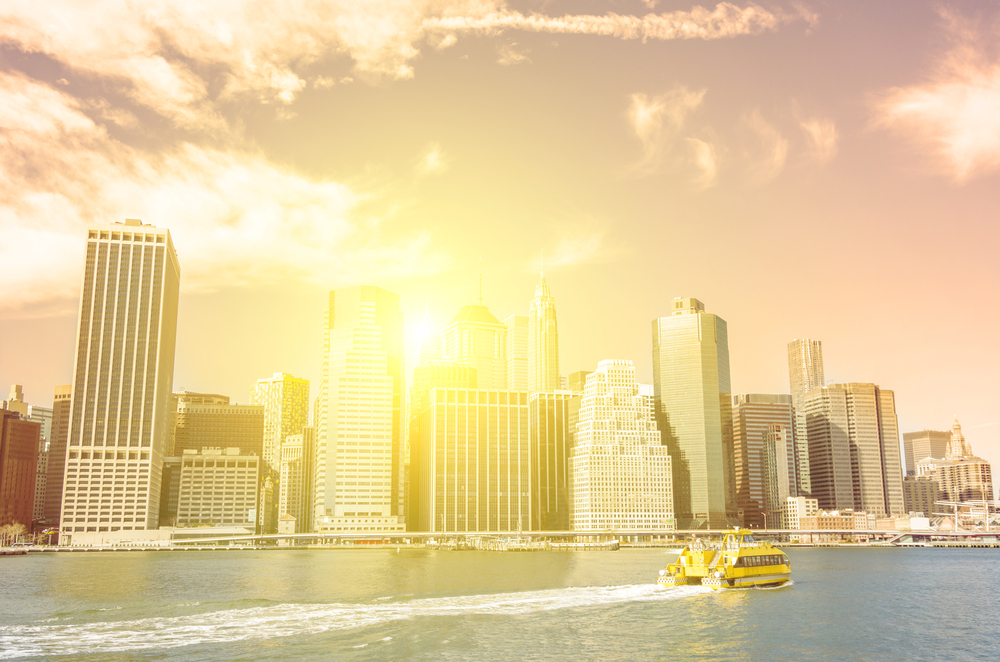
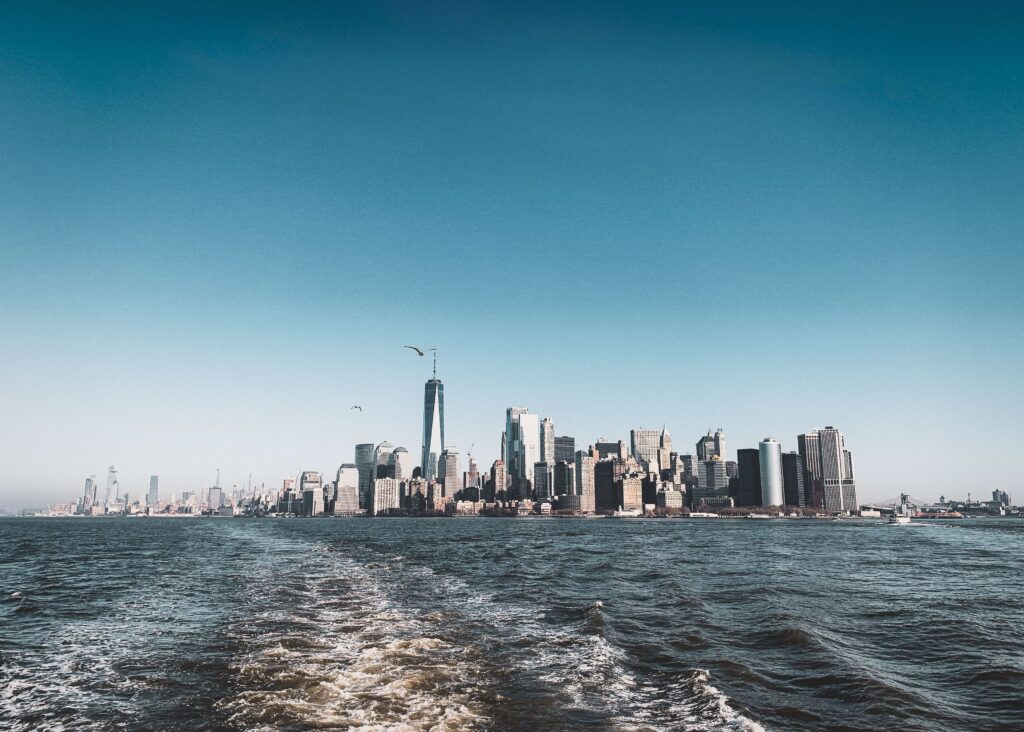
For generations, New York City has been celebrated as a symbol of ambition. Its skyline is one of the most recognizable in the world, built higher and denser with every passing decade.
Contents
show
But according to researchers, the very structures that define the city’s identity may also be contributing to a growing environmental threat. New York is not only facing rising seas and stronger storms. Parts of the city are gradually sinking under the immense weight of more than a million buildings.
Scientists Say New York Is Slowly Moving Downward
A study published in the journal Earth’s Future examined a question that sounds almost impossible at first glance: can a city become so heavy that it pushes itself into the ground?
Researchers from the U.S. Geological Survey and the University of Rhode Island set out to find the answer. Their findings suggest the answer is yes.
The team calculated the combined weight of New York City’s buildings across all five boroughs. After analyzing more than 1.08 million structures, they estimated that the city’s buildings collectively weigh around 1.68 trillion pounds, or roughly 762 billion kilograms.
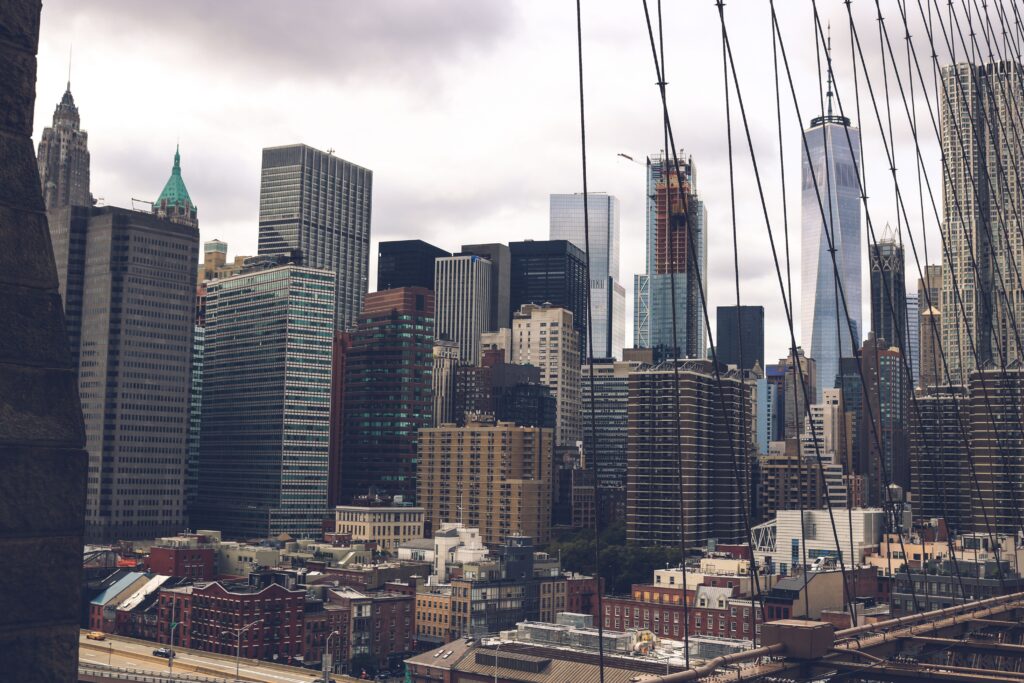
That weight is spread across an area of approximately 778 square kilometers. While the Earth’s crust can support enormous loads, the pressure created by such intense urban development affects different areas in different ways.
The result is a process known as subsidence, a gradual sinking of land that can occur due to both natural and human causes.
Researchers found that New York City is sinking at an average rate of one to two millimeters per year. In some locations, particularly parts of Brooklyn, Queens, and Lower Manhattan, the rate can reach more than four millimeters annually.
On its own, that number may sound insignificant.
The problem becomes much more serious when combined with rising sea levels.
Why A Few Millimeters Matter More Than You Think

Most people would barely notice a change of a few millimeters. Over time, however, those tiny measurements accumulate.
Sea levels around New York have already been rising faster than the global average. Scientists project that waters surrounding the city could rise between eight and 30 inches by 2050.
When sinking land and rising water occur simultaneously, the relative increase in flood risk grows substantially.
Tom Parsons, lead author of the study and a research geophysicist with the U.S. Geological Survey, warned that the issue should not be ignored.
“We’re a ways off from the ocean simply moving in,” Parsons explained, noting that flooding events linked to storms have already demonstrated how vulnerable parts of the city can be.
New York residents have witnessed those dangers firsthand.
Hurricane Sandy in 2012 caused catastrophic flooding throughout the region. In 2021, the remnants of Hurricane Ida overwhelmed infrastructure and led to deadly flooding in basements and low-lying neighborhoods.
Scientists believe similar events could become more common as climate change increases the intensity of extreme rainfall and coastal storms.
The Ground Beneath New York Is More Complicated Than It Appears
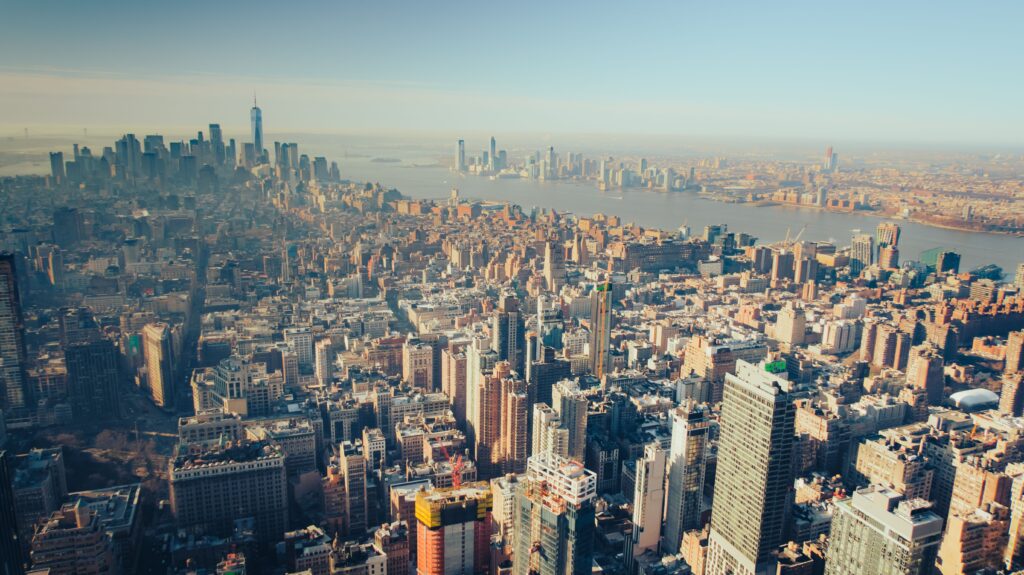
One reason subsidence varies so much across the city is that New York is built on a surprisingly complex geological foundation.
Some parts of Manhattan sit atop extremely hard bedrock. In these areas, foundations are anchored directly into strong rock formations that can better withstand the weight of skyscrapers.
Other neighborhoods tell a different story.
Large portions of Lower Manhattan and sections of Brooklyn were constructed on artificial fill. These areas were expanded over centuries using mixtures of sand, soil, rubble, and other materials to create new land along the waterfront.
Artificial fill is far less stable than solid bedrock.
When heavy buildings are placed on softer soils, compression occurs more easily. Over time, the ground settles under the pressure.
Researchers found that these softer areas tend to experience higher rates of subsidence than locations built on stronger geological foundations.
Parsons emphasized that New York’s skyscrapers were not a mistake.
“It wasn’t a mistake to build such large buildings in New York,” he said. “But we’ve just got to keep in mind every time you build something there, you push down the ground a little bit more.”
Subsidence Is Not Just A New York Problem
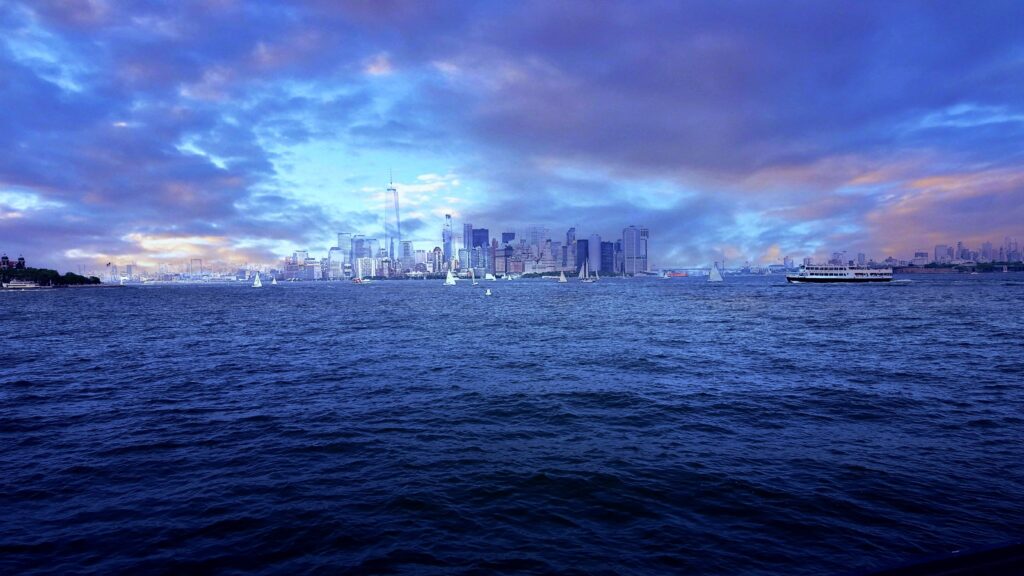
While New York’s skyline attracts attention, the city is part of a much larger global trend.
Scientists studying coastal regions have found that sinking land is affecting major urban centers around the world.
A previous international study examining dozens of coastal cities discovered that many are subsiding faster than sea levels are rising.
Among the most vulnerable locations are:
- Jakarta, Indonesia
- Manila, Philippines
- Chittagong, Bangladesh
- Karachi, Pakistan
- Tianjin, China
- Parts of Tampa Bay, Florida
In several of these cities, the sinking occurs at rates measured in centimeters rather than millimeters.
Jakarta has become one of the most dramatic examples. Parts of the Indonesian capital are sinking so quickly that the government has begun relocating the nation’s capital to a newly constructed city on the island of Borneo.
Mexico City presents another striking case. Although it is not coastal, decades of groundwater extraction have caused parts of the city to sink by astonishing amounts.
These examples reveal that subsidence is often driven by multiple forces at once.
Urban development is one factor.
Groundwater pumping is another.
Natural geological adjustments can also contribute.
The challenge for scientists is determining how much each factor contributes in a specific location.
Climate Change Is Making The Threat Harder To Ignore

The sinking of cities would be concerning under any circumstances.
The reality of climate change makes the situation considerably more urgent.
Global sea levels continue to rise as oceans warm and glaciers melt. Warmer temperatures are also increasing the atmosphere’s ability to hold moisture, contributing to more intense rainfall events in many regions.
For coastal cities, this creates a dangerous combination.
The land is moving down.
The water is moving up.
Storms are delivering larger volumes of water when they arrive.
Researchers warn that flooding hazards often begin long before permanent inundation occurs.
Saltwater intrusion can damage underground infrastructure. Utility systems become vulnerable. Foundations can weaken over time as repeated exposure to saltwater accelerates corrosion and chemical deterioration.
In New York, many structures were not originally designed to withstand the flood risks projected for coming decades.
The study noted that a large percentage of buildings located within expanded flood-risk zones fail to meet modern floodplain standards.
That reality creates significant challenges for planners, engineers, and residents alike.
How Researchers Measured The Weight Of An Entire City

Estimating the weight of more than one million buildings is not a simple task.
The research team relied on a public database that provided information about each building’s footprint and height.
Using those measurements, they estimated the number of floors in each structure and calculated the total floor area.
Researchers then applied engineering estimates for both structural weight and occupancy loads.
The calculations included the weight of construction materials such as reinforced concrete, along with the expected weight of furniture, equipment, and occupants.
Although the method required several assumptions, the results offered the most comprehensive estimate yet of the pressure New York’s built environment places on the ground beneath it.
The researchers then compared their findings with satellite observations and GPS measurements that track subtle movements in the Earth’s surface.
While the weight of buildings does not explain all observed subsidence, the comparison suggested it plays a meaningful role in some areas.
The study also highlighted places where sinking remains difficult to explain.
Parts of Staten Island, for example, show subsidence patterns that researchers have not yet fully understood.
Those mysteries illustrate how much scientists still have to learn about the interaction between urban development and geological processes.
Can Cities Stop Themselves From Sinking?
There is no single solution.
Every city experiences subsidence for different reasons, which means responses must be tailored to local conditions.
Several strategies are already being explored around the world.
In locations where groundwater extraction is a major driver, reducing pumping can slow sinking rates.
In rapidly growing urban areas, better planning can help ensure that future development occurs on more stable ground.
Cities are also investing heavily in flood defenses designed to reduce the impact of rising water.
Examples include:
- Seawalls and flood barriers
- Pumping stations
- Raised roads and infrastructure
- Restored wetlands and coastal habitats
- Improved drainage systems
- Early warning and evacuation networks
Yet many experts caution that flood defenses alone cannot solve the problem.
Seawalls require enormous investments and continuous maintenance. They can also damage coastal ecosystems that naturally help absorb storm energy.
Some researchers argue that future solutions will need to combine engineered infrastructure with nature-based approaches such as marsh restoration, living shorelines, and wetland conservation.
The goal is not simply to keep water out.
It is to build cities that can adapt to changing environmental conditions.
What New York’s Future Could Look Like
Researchers are not predicting that New York City will disappear beneath the waves anytime soon.
The city’s future remains highly dependent on decisions made today.
Investments in resilient infrastructure, smarter development practices, and climate adaptation could significantly reduce future risks.
At the same time, the study serves as a reminder that urban growth carries consequences that extend far beyond the skyline.
Every tower, apartment building, transit hub, and waterfront development becomes part of a larger environmental equation.
For more than a century, New York has reached upward in pursuit of growth. The challenge facing the city now is ensuring that its future remains secure on the ground beneath it.
The world’s most famous skyline still stands as a symbol of human achievement. The findings from this research suggest that protecting it may require paying closer attention to forces that are almost invisible, measured not in feet or miles, but in millimeters.