
Your cart is currently empty!
This Strange Orange Shark Was Found Swimming Off Costa Rica
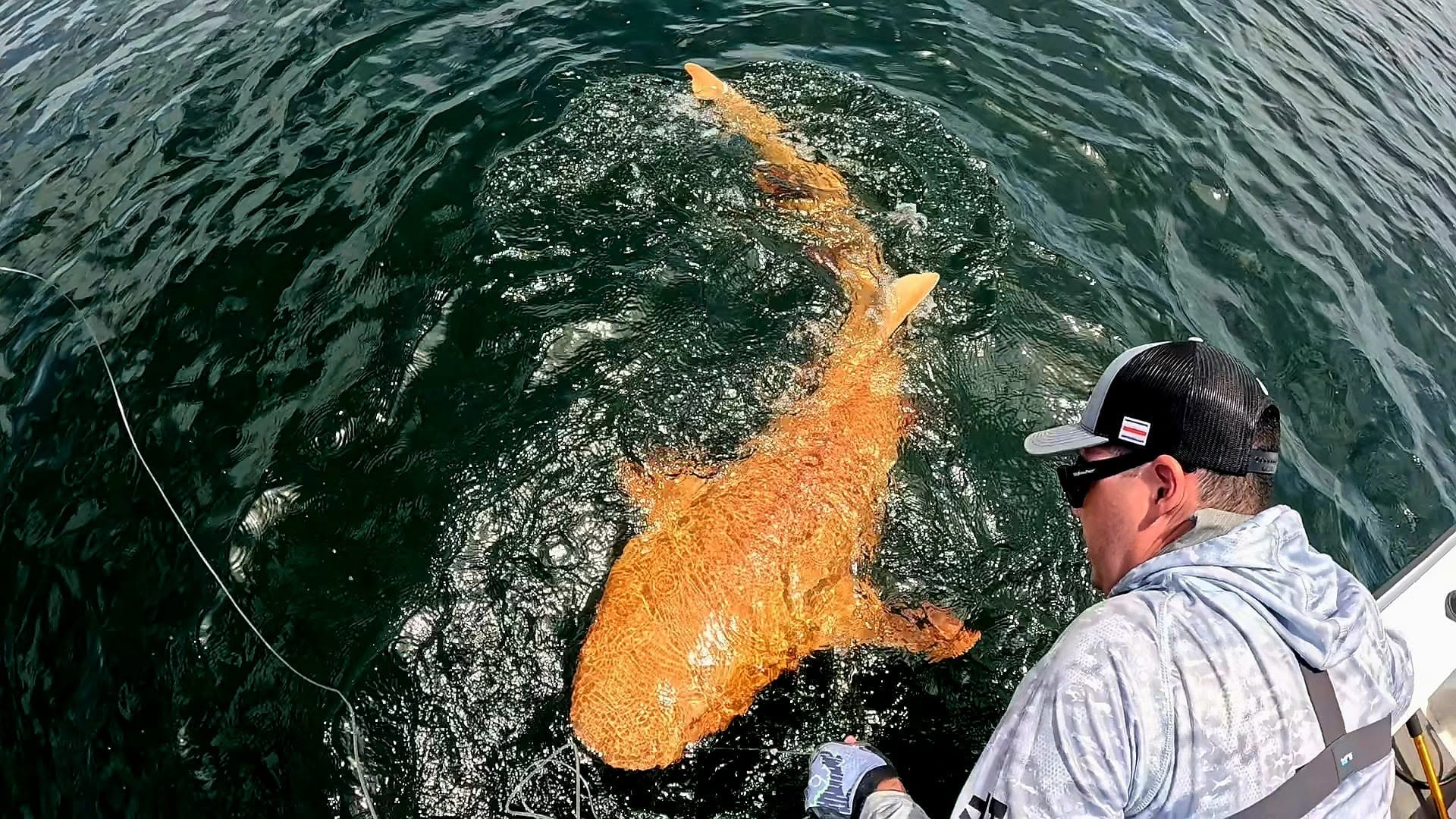
A shark pulled from the waters off Costa Rica looked as though someone had dropped it into a bucket of orange paint. Its body was a vivid yellow-orange, its eyes were strikingly white, and nothing about it resembled the ordinary nurse sharks fishermen were used to seeing.
Contents
show
The strange animal was photographed during a sport fishing trip near Tortuguero National Park in August 2024. A year later, scientists formally documented the case, identifying the shark as an adult nurse shark with an exceptionally rare pigmentation condition.
The Shark Was Almost Impossible To Mistake
The discovery happened in waters off Costa Rica’s Caribbean coast, where sport fishers encountered an adult nurse shark at a depth of 37 meters. The water temperature was recorded at 31.2°C, and the animal measured approximately 200 centimeters from nose to tail.
That would already have been an ordinary encounter with a large nurse shark, except this particular animal looked nothing like the typical members of its species. Instead of the familiar brownish or gray coloration, its entire body carried an intense yellow-orange color that made it stand out immediately.
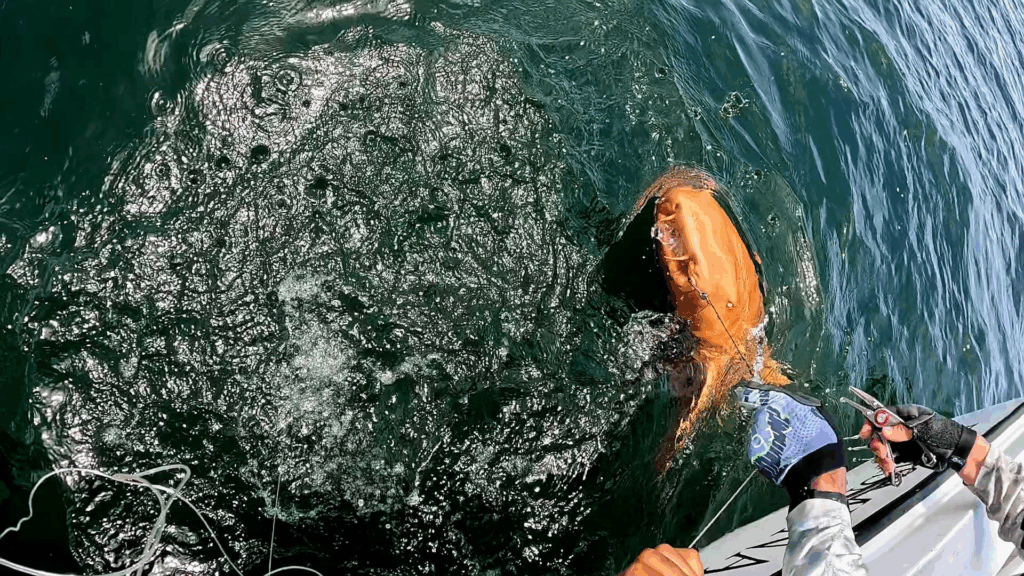
Image Credits – Facebook @ParisminaDomusDei
The shark also had unusually white eyes. Together, the extreme body coloration and pale eyes produced an appearance that looked almost unreal, which helps explain why photographs of the animal quickly attracted attention once the scientific findings became public.
The fishermen did something especially important after documenting the unusual shark. They released it back into the Caribbean, allowing the animal to continue living in the environment where it had apparently survived to adulthood.
Scientists Say This Was No Ordinary Color Variation
The orange appearance was eventually linked to a condition called xanthism, a rare pigmentation abnormality characterized by unusually strong yellow pigmentation. Researchers described the shark as the first scientifically documented case of total xanthism in the nurse shark species, Ginglymostoma cirratum.
The researchers also noted the animal’s white eyes and identified the overall appearance as consistent with albino-xanthochromism. In simple terms, the shark appears to have displayed two unusual pigmentation characteristics at the same time, producing an animal with intense yellow-orange coloration and exceptionally pale eyes.
That combination is what makes the discovery so unusual. The scientists were not simply looking at a nurse shark that happened to be slightly lighter than normal. They were documenting an extreme pigmentation anomaly that had not previously been scientifically recorded in the species.
The study was published in Marine Biodiversity in August 2025 by researchers Marioxis Macías-Cuyare, Gilberto Rafael Borges Guzmán and Daniel Arauz-Naranjo. The paper described the observation as the first record of xanthism in a shark from the Caribbean Sea.
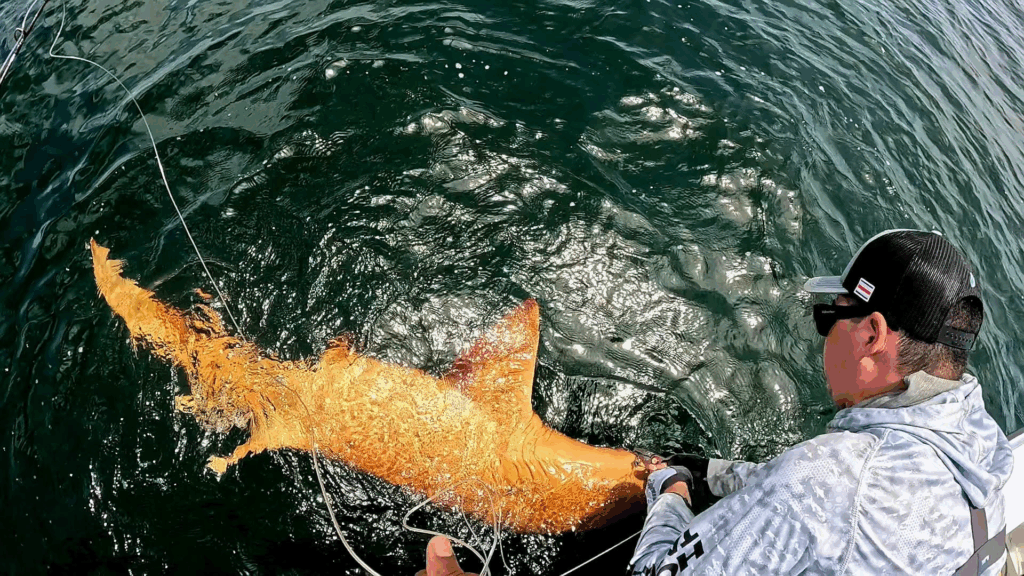
Image Credits – Facebook @ParisminaDomusDei
The Viral Claim Needs One Important Correction
Online posts have described the animal as the “world’s first orange shark,” which makes for an irresistible headline. The scientific finding is more specific, however, and that distinction matters when an unusual animal discovery begins spreading across social media.
Scientists have documented unusual pigmentation in other sharks, including cases involving albinism and other abnormalities. What makes the Costa Rican animal exceptional is that researchers identified it as the first scientifically documented case of total xanthism in a nurse shark and the first such record from the Caribbean.
So the shark was not a newly discovered species, and scientists are not claiming that no orange-colored shark has ever existed anywhere on Earth. The discovery concerns a particular pigmentation condition in a particular shark species and geographic region.
That may sound like a technical distinction, but it actually makes the finding more interesting. Scientists have a documented biological explanation for an animal that, at first glance, looks almost impossible.
What Exactly Makes A Shark Turn Orange?
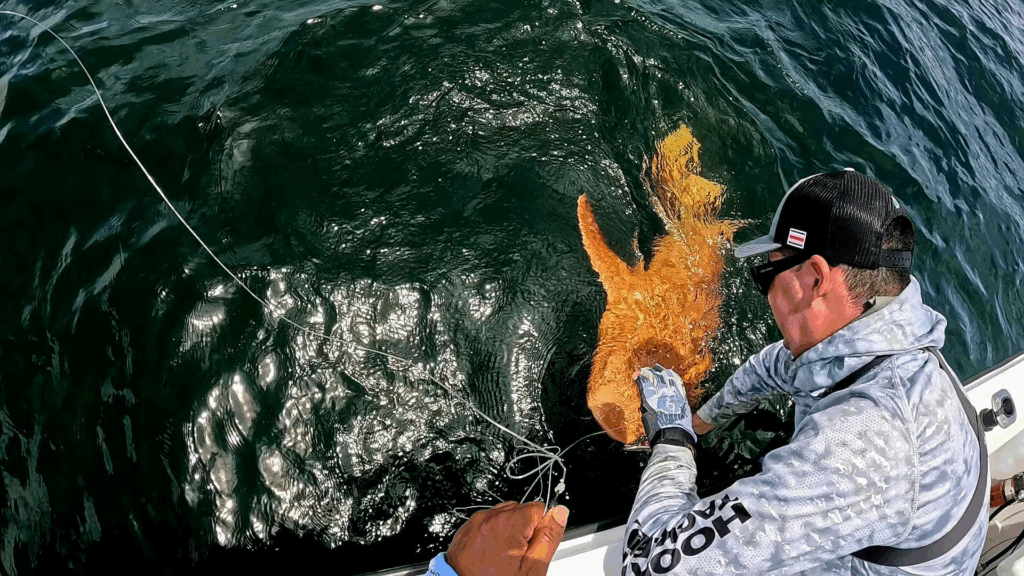
Image Credits – Facebook @ParisminaDomusDei
Xanthism is associated with an unusual increase or dominance of yellow pigmentation. It has been recorded in different groups of animals, but researchers say it is rare among marine species and had not previously been reported in cartilaginous fishes in the Caribbean. Sharks, rays and skates all belong to this broad group.
The orange nurse shark therefore represents a particularly unusual example of a pigmentation abnormality occurring in a free-living shark. The animal was not raised in captivity or produced under controlled conditions. It was encountered in the wild while swimming in the Caribbean.
The white eyes add another layer to the mystery. Albinism involves an absence or severe reduction of melanin, the pigment responsible for dark coloration in many animals. In this case, researchers interpreted the white eyes alongside the intense yellow-orange body as evidence of the unusual combination they described as albino-xanthochromism.
Researchers have not established a single definitive cause for the shark’s pigmentation. The study points toward the need for additional research into genetic and environmental factors that could influence such rare abnormalities in sharks.
That means the orange color has an explanation, but scientists still have questions about exactly how this particular animal developed it.
The Shark Somehow Reached Adulthood
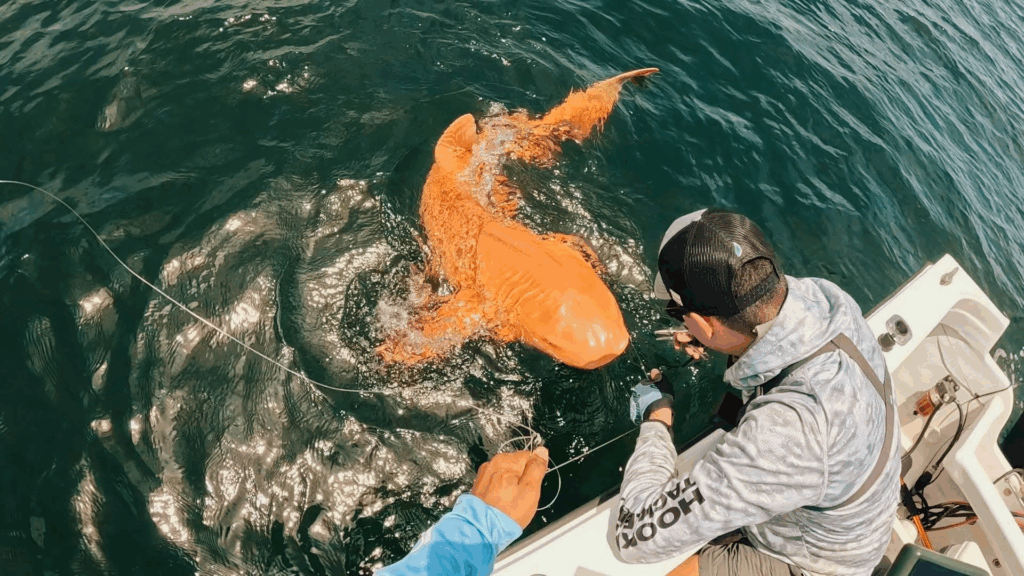
Image Credits – Facebook @ParisminaDomusDei
One of the biggest scientific questions raised by the discovery is how an animal with such conspicuous coloration managed to survive in the wild.
Color can be important for marine animals because it can help them blend into their surroundings. Nurse sharks normally have subdued coloration that fits much more naturally with the environments where they spend their time.
The Costa Rican shark had almost the opposite appearance. Its intense orange body could potentially make it easier to see, particularly against backgrounds where an ordinary nurse shark might be less noticeable.
Yet the animal was approximately 200 centimeters long when it was photographed. Researchers described it as an adult, which means it had already survived long enough to reach a substantial size despite its unusual appearance.
The scientists specifically suggested that the case indicates xanthism did not prevent the shark from surviving in the wild. That does not prove that the coloration provided an advantage, but it does show that the condition was not an automatic barrier to reaching adulthood.
Nurse Sharks Are Usually Far Less Dramatic
The animal’s ordinary identity makes the discovery even stranger. Nurse sharks are widespread in warm coastal waters and are generally recognizable by their subdued coloring, rounded heads and distinctive body shape.
They are bottom-dwelling sharks that often spend considerable time close to the seafloor. Their appearance usually helps them blend into the environments they occupy, making a bright orange individual especially conspicuous.
The Costa Rican shark therefore looked dramatically different from what observers would normally expect from its species. It retained the physical characteristics of a nurse shark, but its pigmentation completely changed the way the animal appeared.
Scientists have previously recorded other abnormal pigmentation conditions in nurse sharks, including albinism, piebaldism and hypomelanosis. The researchers behind the new report compared the orange shark with those earlier observations before identifying this case as the first documented example of total xanthism in the species.
That comparison is important because unusual coloration is not automatically evidence of xanthism. Scientists need to distinguish between different pigmentation abnormalities before assigning a biological explanation.
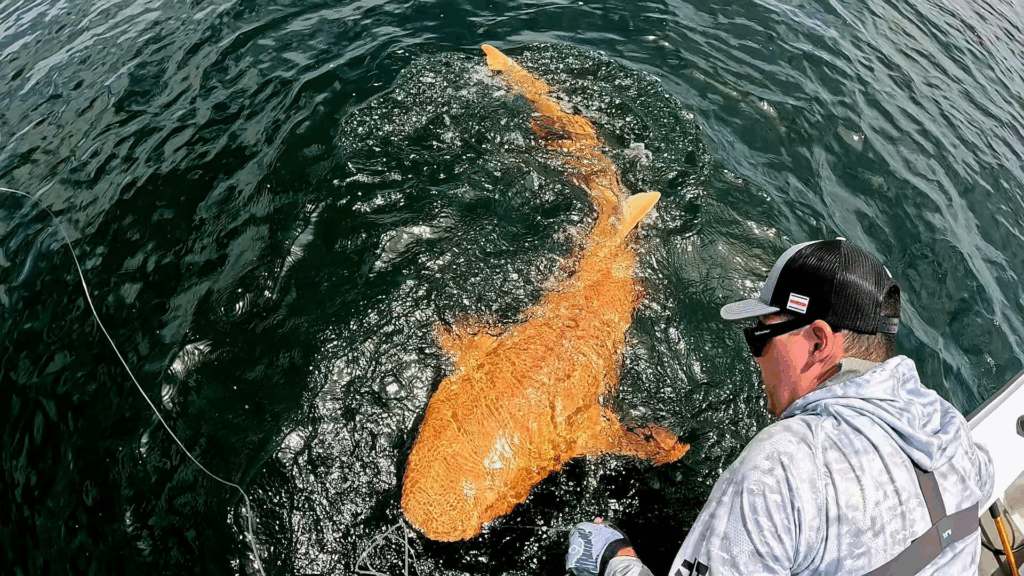
Image Credits – Facebook @ParisminaDomusDei
The Discovery Began With A Fishing Trip
Perhaps the most unexpected part of the story is how the scientific record began.
The shark was not discovered during a major expedition involving a research vessel packed with specialists. It was encountered during a sport fishing trip near Tortuguero National Park in August 2024. The animal was photographed, measured and released.
Those photographs later became the foundation for scientific investigation. Researchers could examine the animal’s appearance without taking it from the ocean or preserving it as a specimen.
The timing also explains why the story may feel newer than the actual encounter. The shark was photographed in 2024, while the scientific paper documenting the case was published online on August 1, 2025.
This is common in unusual wildlife discoveries. An animal can be encountered long before scientists have enough information to formally describe what makes it unusual.
In this case, the gap between the original sighting and the scientific publication gave researchers time to assess the photographs, identify the species and compare the pigmentation with previous reports.
Three Features Made The Shark So Unusual
Several characteristics separated this nurse shark from the ordinary appearance of its species.
- The intense orange body: Researchers documented strong yellow-orange pigmentation across the shark’s body, a feature associated with xanthism.
- The white eyes: The shark’s eyes lacked the normal dark appearance and were described as white, supporting the researchers’ interpretation of an albinism-related pigmentation abnormality.
- Its adult size: At approximately 200 centimeters long, the shark had survived to adulthood despite having coloration that could potentially make camouflage more difficult.
The combination is what makes the encounter so memorable. A shark with unusual coloration is already interesting, but an adult nurse shark displaying such intense orange pigmentation and pale eyes represents something far rarer.
Scientists Still Do Not Know Why It Happened
The scientific paper gives researchers a name for the phenomenon, but it does not answer every question about the animal.
Genetic factors are one possibility. Pigmentation abnormalities can be associated with changes affecting how pigments are produced, distributed or expressed. Researchers have also discussed environmental and physiological factors as possible influences on abnormal pigmentation in marine animals. (ResearchGate)
The Costa Rican shark cannot simply be brought into a laboratory for a complete genetic investigation because it was released after the encounter. That means researchers are working primarily from photographs and the information collected during the sighting.
Future discoveries could provide more clues. If another nurse shark with similar coloration is documented, researchers could compare the animals and potentially investigate whether they share particular environmental or genetic characteristics.
For now, the Costa Rican shark remains a rare biological snapshot. Scientists know what the animal looked like and have a strong explanation for its unusual appearance, but they do not have enough evidence to explain every step that produced it.
There Could Be More Strange Sharks Out There
The discovery also demonstrates how much can still be learned from unusual animals encountered outside formal research programs.
The ocean covers an enormous area, and many marine animals spend their lives far from human observers. A pigmentation abnormality could occur in an animal that is never seen, never photographed and never reported.
That makes documented encounters valuable even when they begin as accidental observations.
The researchers noted that further work is needed to investigate potential genetic and environmental factors behind rare pigmentation anomalies in sharks.
The possibility of finding another orange nurse shark would give scientists an opportunity to compare individuals rather than studying a single case. It could also help determine whether the Costa Rican shark was a complete one-off or part of an extremely rare pattern.
Until then, the animal remains one of those discoveries that sounds like an internet hoax until the photographs and scientific paper catch up.
The Orange Shark Was Sent Back Into The Caribbean
There is no museum display holding the Costa Rican shark, and there is no aquarium where visitors can go and see it.
After the encounter, the animal was released back into the water. Researchers were therefore left with photographic evidence and observations of a living shark that had already demonstrated its ability to survive in the wild.
That detail may be the most intriguing part of the entire discovery. The shark was not merely an unusual-looking juvenile that researchers happened to find. It was a large animal that had already made it through the hazards of life in the ocean.
Its bright coloration may have made survival more difficult, or it may have had little practical effect on the shark’s life. Scientists simply do not know yet.
What they do know is that an adult nurse shark with intense orange pigmentation was swimming off Costa Rica, and nobody had scientifically documented anything quite like it in the Caribbean before.
The discovery does not mean scientists have found a new species or solved every mystery surrounding unusual shark coloration. It means something much more precise: researchers now have a verified record of an exceptionally rare pigmentation condition in a wild nurse shark, giving them a starting point for understanding how such an extraordinary animal came to exist.
And somewhere beneath the Caribbean surface, that orange shark may still be swimming.
Featured Image Credits – Facebook @ParisminaDomusDei