
Your cart is currently empty!
The Universe Is Larger Than We Imagined

For most of human history, the night sky appeared orderly and complete. The stars moved in predictable patterns, the planets traced familiar paths, and meaning could be mapped onto the heavens with confidence. Astrology was born from this sense of cosmic reliability, a language that connected human experience to the movements of the sky. Yet in recent years, astronomy has begun to uncover something unsettling and awe-inspiring at the same time. The universe is not behaving the way our models say it should. Structures are appearing that are larger, more organized, and more coherent than expected. And our own galaxy may be caught inside one of them.
Contents
show
New observations suggest that the Milky Way may be embedded within a cosmic structure so vast that it challenges the foundational assumptions of modern cosmology. Even more striking, this structure does not appear to be a simple cluster or supercluster, but part of a flowing gravitational system called a basin of attraction. At the same time, astronomers are discovering immense rings of galaxies, enormous arcs, and spinning filaments that stretch across hundreds of millions or even billions of light years. These discoveries are forcing scientists to rethink how the universe evolved. For astrology, they raise an even deeper question. If our cosmic address is larger and more complex than we thought, what does that mean for how we understand our place in the cosmos?
This is not just a scientific update. It is a shift in context. And astrology, which has always been about context, is uniquely positioned to help us reflect on what this moment signifies.
The Expanding Cosmic Address of Humanity
Human understanding of location has always unfolded in layers. We once believed Earth was the center of everything. Then we learned we orbit the Sun. Later, we discovered the Sun is one of hundreds of billions of stars in the Milky Way. That galaxy, in turn, belongs to a local group of galaxies, which was long thought to sit inside a supercluster known as Laniakea.
Now, that picture is expanding again.
By carefully mapping the motion of tens of thousands of galaxies, astronomers have found evidence that Laniakea itself may be only a fragment of a much larger gravitational system. This system appears to be part of a basin of attraction, a region of space where galaxies flow along shared gravitational pathways. These flows are subtle. They are not about galaxies being tightly bound together, but about long range motion shaped by the overall distribution of mass in the universe.
In simple terms, galaxies behave less like isolated islands and more like leaves carried by immense cosmic currents.
Astrologically, this layered understanding of location feels familiar. A birth chart is not interpreted in isolation. A planet expresses itself through a sign, within a house, under the influence of aspects, and within larger cycles that span decades or centuries. Meaning emerges from nested systems. The universe appears to work the same way.
Basins of Attraction and the Language of Cosmic Flow

The idea of a basin of attraction is one of the most evocative concepts to emerge from modern cosmology. Scientists describe these regions using the metaphor of watersheds on Earth. Rain falls across a landscape, but gravity guides water into streams, streams into rivers, and rivers toward shared basins. In space, galaxies move under the influence of gravity and cosmic expansion, creating large scale flows that define these basins.
What makes this discovery so disruptive is scale. These basins appear to be far larger than predicted by current models of cosmology. According to the standard understanding of the universe, there should be a limit to how large coherent structures can grow. Beyond a certain size, matter should be distributed evenly, with no preferred direction or flow. Yet the evidence increasingly suggests otherwise.
From an astrological perspective, flow is everything. Astrology is not just about position. It is about movement, cycles, and timing. Planets do not simply exist in signs. They move through them. Transits describe energetic currents that carry themes through time. When we see galaxies themselves participating in vast cosmic flows, it echoes this symbolic language at a much grander scale.
The universe does not appear static. It appears directional. Purposeful, even if that purpose is not conscious in the human sense.
When the Universe Breaks Its Own Rules
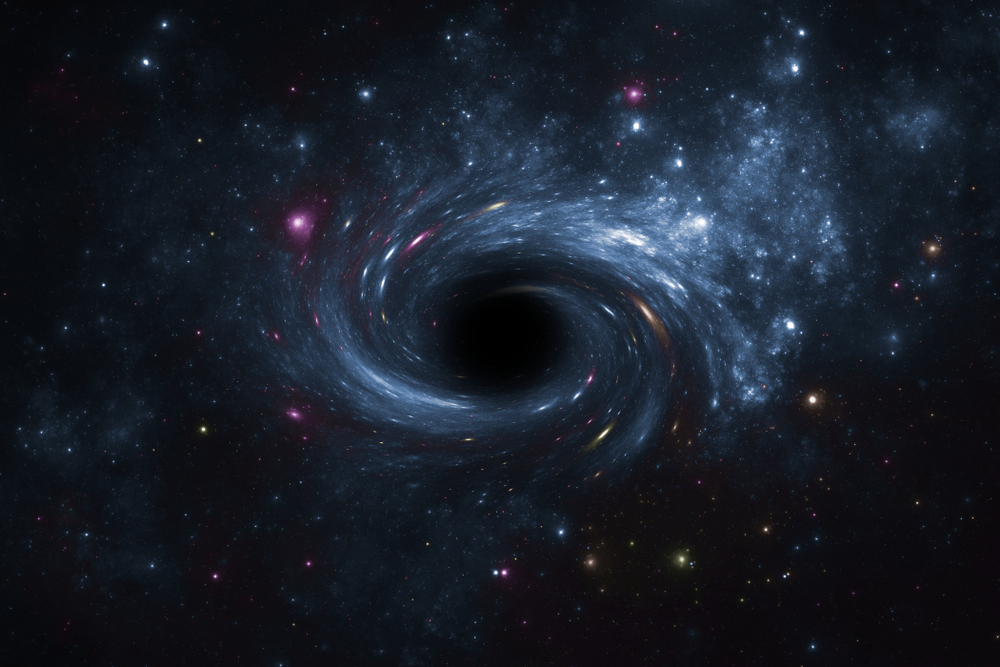
One of the cornerstones of modern cosmology is the cosmological principle. This principle states that on sufficiently large scales, the universe should look the same in all directions. No region should be special. No structure should dominate beyond a certain size.
Recent discoveries are testing that assumption.
Astronomers have identified a colossal ring of galaxies with a diameter of around 1.3 billion light years. They have also found the Giant Arc, an even larger structure in roughly the same region of the sky. These formations are not easily explained by known processes. They are too large, too coherent, and too close together to fit comfortably within existing theories.
Adding to the mystery, these structures do not resemble known features like baryon acoustic oscillations, which are fossil imprints from the early universe with a characteristic size. Instead, they appear to have complex shapes and orientations that suggest something else is at work.
Astrologically, moments like this are deeply symbolic. They resemble times when established frameworks fail to account for lived experience. In astrology, such moments often coincide with the influence of outer planets that challenge assumptions and dissolve rigid structures. Uranus breaks patterns. Neptune blurs boundaries. Pluto reveals what lies beneath and forces transformation.
On a collective level, humanity appears to be living through a similar transit. The stories we relied on to explain reality are no longer sufficient. Science itself is acknowledging uncertainty, not as a weakness, but as an invitation to look deeper.
The Discovery of Spinning Cosmic Filaments

Among the most fascinating recent findings is the discovery of enormous cosmic filaments that appear to rotate. These filaments are vast thread-like structures composed of galaxies and dark matter. They form the scaffolding of the cosmic web. For decades, astronomers assumed these filaments were largely static channels through which matter flowed.
New observations suggest otherwise.
In at least one case, researchers have identified a filament tens of millions of light years long in which galaxies not only spin individually, but also appear aligned with the rotation of the filament itself. In other words, the entire structure is rotating, carrying its galaxies along in a shared motion.
This challenges existing ideas about how galaxies acquire their spin. It suggests that angular momentum may be inherited from much larger structures, rather than arising purely from local interactions.
In astrology, inheritance of motion is a key concept. Individuals inherit themes from family lines, cultures, and eras. Personal charts are shaped by generational planets that move slowly and influence entire cohorts. The idea that galaxies inherit their spin from the cosmic structures they inhabit mirrors this symbolic truth. Smaller systems reflect the dynamics of larger systems. The universe, it seems, remembers its motion.
A Fractal Cosmos and Ancient Wisdom
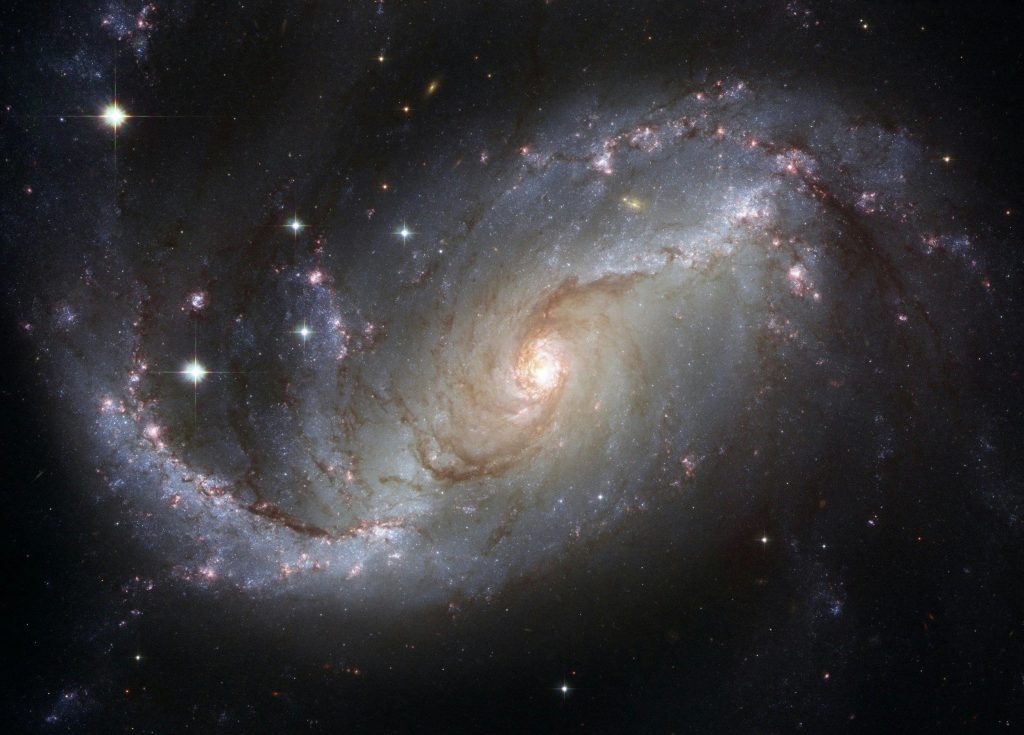
As these discoveries accumulate, a pattern emerges. The universe appears fractal. Similar structures repeat at different scales. Clusters resemble cells. Filaments resemble neural networks. Basins of attraction resemble vortices.
This is not a new idea in spiritual or philosophical traditions. Ancient teachings across cultures spoke of a cosmos structured by repeating patterns. The famous hermetic principle as above, so below captures this intuition. What happens at one scale reflects what happens at another.
Astrology has always operated within this worldview. The movements of planets mirror cycles of human experience. The macrocosm and microcosm are in dialogue.
What is new is that modern science is beginning to see this pattern not as metaphor, but as measurable structure. The universe does not just expand. It organizes. It flows. It spins.
This does not mean the universe is conscious in the way humans are conscious. But it does suggest that order, pattern, and relationship are fundamental qualities of reality.
Rethinking Astrology in a Larger Universe

Astrology developed in a time when the stars were thought to be fixed and eternal. Today, we know stars are born and die, galaxies collide, and cosmic structures evolve over billions of years. Does this invalidate astrology, or does it deepen it?
A larger universe does not strip meaning away. It changes the scale at which meaning operates.
Astrology does not depend on humanity being central in a physical sense. It depends on humanity being relational. The birth chart is not powerful because Earth sits at the center of the cosmos. It is powerful because it maps relationships between cycles, positions, and movements at the moment of birth.
If our galaxy itself is part of a vast gravitational flow, then astrology can be seen as one layer in a hierarchy of resonances. Planetary cycles operate within stellar cycles, which operate within galactic cycles, which operate within even larger cosmic flows.
Meaning does not disappear when context expands. It becomes more nuanced.
The Psychological Impact of a Bigger Sky
There is also a psychological dimension to these discoveries. When humans realize they are smaller than they thought, there is often fear. Insignificance can feel threatening. Yet there is another response that is just as valid. Awe.
Awe has been shown to reduce ego fixation and increase a sense of connection. It places personal concerns within a wider frame. Astrology, at its best, fosters this same perspective. It invites individuals to see their lives as part of larger cycles, rather than isolated struggles.
Learning that our galaxy may be part of a structure ten times larger than previously believed can evoke existential humility. But it can also inspire a sense of belonging to something vast and mysterious. We are not lost in the universe. We are carried within it.
Timing and the Era of Revelation
It is worth asking why these discoveries are emerging now. Technology plays a role, of course. We have better instruments, better surveys, and more data than ever before. But astrology would suggest that timing is never random.
Humanity is in a period of rapid paradigm change. Old systems of meaning, authority, and identity are being questioned. At the same time, there is a growing interest in holistic perspectives that integrate science, spirituality, and consciousness.
The revelation that the universe is more interconnected and structured than we thought mirrors this cultural moment. We are moving away from reductionist views toward systems thinking. We are learning to see networks instead of isolated points. The cosmos appears to be reflecting this shift back to us.
Living Inside a Cosmic River
If galaxies flow within basins of attraction, then motion is fundamental to existence. Nothing is truly still. Everything participates in movement across time and space.
Astrologically, this reinforces a key insight. Life is not about resisting change. It is about understanding the currents you are in and learning how to move with them.
Just as galaxies follow gravitational pathways shaped by vast structures, human lives follow patterns shaped by culture, history, biology, and cosmic cycles. Free will exists, but it operates within context. Awareness allows choice, not escape from all influence. When we understand the currents, we navigate more skillfully.
Meaning in an Expanding Universe
The discovery that our galaxy may be part of a structure so large it challenges our models of cosmology is more than a scientific headline. It is a reminder that reality is deeper, stranger, and more interconnected than our current stories can fully explain.
Astrology does not lose relevance in this revelation. It gains a new horizon. The stars are no longer static symbols on a dome, but participants in a living, flowing cosmos. And we, in turn, are participants as well.
We may be a tiny red dot in an immense basin of attraction. But within that vastness, patterns still matter. Cycles still speak. And meaning still emerges from relationship.
The sky has grown larger. Our task now is to grow our understanding to meet it.