
Your cart is currently empty!
Physicist Says Countless Alternate Versions of You Could Be Quietly Shaping Your Life
Every decision you make feels like your own. Whether it’s taking a different route home, saying yes to a new opportunity, or simply putting on a pair of sunglasses before stepping outside, life seems to unfold as a direct result of your choices. For decades, popular interpretations of quantum physics have fueled the belief that human consciousness plays a central role in creating reality itself. The idea has inspired everything from science fiction and blockbuster movies to self-help movements claiming that positive thinking can bend the universe in your favor. But according to one physicist, that popular interpretation may have gotten one of science’s strangest concepts completely wrong.
Contents
show
Instead of suggesting that our minds shape reality simply by observing it, physicist Vlatko Vedral argues that reality is constantly shaping us through every interaction we experience. His explanation, recently shared in Popular Mechanics, revisits one of quantum physics’ most debated ideas while introducing an even more mind-bending possibility. If his interpretation is correct, every tiny interaction could split reality into multiple branches where different versions of you continue living separate lives. Even stranger, those alternate versions may not be as disconnected from your own existence as we once believed.
The Theory That Turns Reality Upside Down
Quantum mechanics has earned a reputation for producing ideas that seem almost impossible to visualize. Particles can exist in multiple states at once, objects become linked across enormous distances, and probabilities often replace certainty until interactions occur. These concepts have fascinated scientists for decades, but they have also been misunderstood by the public, especially when simplified into catchy explanations that suggest human consciousness possesses mysterious powers.
Vedral believes one of the biggest misconceptions revolves around the so-called observer effect. Popular culture often presents it as proof that reality only settles into one outcome because a conscious observer looks at it. According to that interpretation, particles somehow wait for humans to notice them before deciding where they exist. The idea has spread far beyond physics classrooms, becoming a favorite talking point in discussions about manifestation, spirituality, and even the law of attraction.
However, Vedral argues that this interpretation gives humans far too much credit. Reality does not require conscious observation to evolve. Instead, every physical interaction, whether it involves light, atoms, or particles colliding with one another, naturally changes the system involved. Human awareness is simply one small part of that ongoing process rather than the force directing it.
That shift in perspective fundamentally changes how we think about our place in the universe. Rather than standing outside reality and controlling it through observation, we become participants who are constantly being changed by every interaction we experience. The universe is not waiting for us to make it real. It has been unfolding all along.
Why the Observer Effect Has Been Widely Misunderstood
The observer effect has often been reduced to a simple phrase that sounds almost magical: looking at something changes it. While there is truth hidden within that statement, the real science is far less mystical than internet discussions often suggest. In physics, an observation requires a physical interaction, not simply a conscious person paying attention.
Vedral points to an everyday example that makes this distinction easier to understand. Imagine checking your car’s tire pressure. The pressure gauge allows a tiny amount of air to escape during the measurement. By measuring the tire, you have physically interacted with it, causing a small but measurable change. The observation alters the system because of the interaction itself, not because a human mind is somehow influencing reality.
Quantum physics works in a similar way. When photons strike an object, electrons collide, or light reaches your eyes, those interactions happen whether or not anyone consciously notices them. Nature does not pause until someone is watching. Physical processes continue constantly, governed by the laws of quantum mechanics rather than by human awareness.
That distinction also weakens many claims that have become attached to quantum physics over the years. The theory does not suggest people can create wealth, success, or entirely new realities simply by thinking positively. While mindset certainly influences human behavior and decision-making, Vedral argues that quantum mechanics itself offers no evidence that consciousness alone controls the universe.
How One Photon Creates Two Different Versions of Reality
To explain his argument, Vedral uses a surprisingly simple scenario involving a man named Bob and a single photon striking his sunglasses. At first glance, it appears to be an ordinary event that happens countless times every second. Yet according to quantum mechanics, the outcome is anything but ordinary.
When the photon reaches the surface of Bob’s sunglasses, quantum theory allows two possibilities to exist simultaneously. In one version of events, the photon passes through the lens and enters Bob’s eye, triggering nerve signals that allow him to see the light. In another equally valid version, the photon reflects away from the sunglasses and never reaches his eye at all. Both outcomes exist within the mathematical framework of quantum mechanics.
Rather than one possibility replacing the other, Vedral explains that both realities continue along separate branches. One version of Bob experiences seeing the photon. Another version continues through life without ever detecting it. From the perspective of each Bob, only one reality feels real, yet quantum theory allows both branches to coexist.
This idea closely resembles the famous Schrödinger’s cat thought experiment, where a cat exists in both living and dead states until different branches of reality are considered separately. According to Vedral, quantum experiments repeatedly demonstrate that nature behaves in ways remarkably consistent with these branching possibilities. Instead of asking why we ended up in one version of reality rather than another, the theory suggests that each interaction simply creates another version of ourselves moving forward.
Could Alternate Versions of You Really Exist?
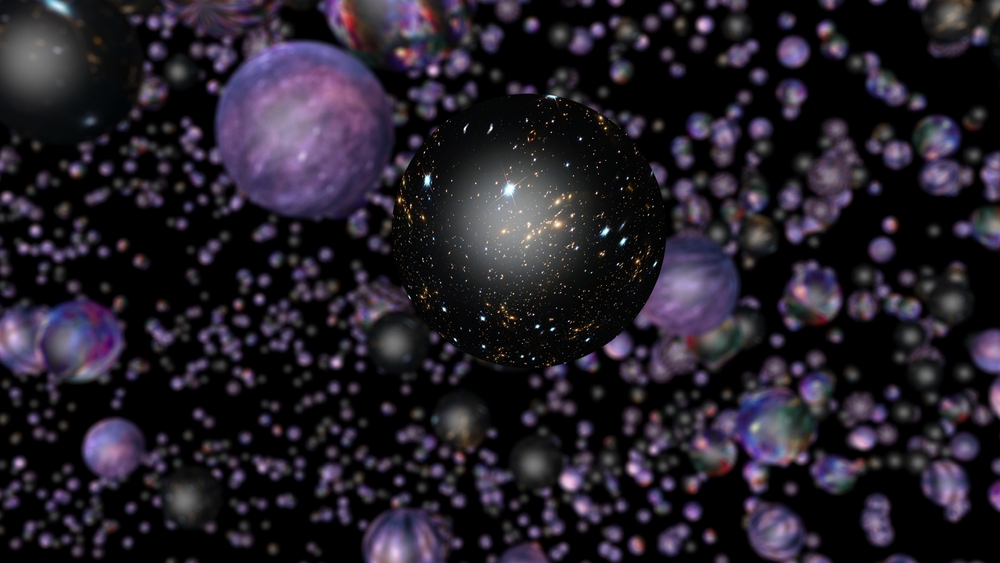
The idea that multiple versions of reality can exist at once sounds like science fiction, but it emerges from one of quantum mechanics’ most famous interpretations. According to Vedral, every interaction we have with the world could create a branching point where different outcomes continue independently. One version of you might take a new job, while another chooses to stay put. One catches the train on time, while another misses it. Each branch represents a different outcome that remains mathematically possible within quantum theory.
Even more intriguing is Vedral’s suggestion that these alternate branches may not always remain completely isolated. Under highly specific quantum conditions, different branches of reality can interfere with one another, a phenomenon scientists describe using quantum interference. While this does not mean another version of you can suddenly appear or communicate across universes, it does suggest that reality may be more interconnected than our everyday experiences reveal.
The possibility remains highly theoretical, and researchers continue debating exactly what these branching realities mean. Different interpretations of quantum mechanics offer different explanations for the same experiments, and there is still no universal agreement among physicists about which interpretation best reflects reality. Vedral’s argument builds upon existing quantum theory rather than introducing an entirely new law of physics.
For most people, these ideas remain impossible to observe directly. We only experience one continuous version of our lives, making it feel as though every decision produces a single outcome. Quantum theory suggests something far stranger could be happening beneath the surface, even if our senses never allow us to witness it.
Key Ideas Behind Vedral’s Theory
- Interactions matter more than observation. Physical interactions change quantum systems, not simply human awareness.
- Reality may branch constantly. Every interaction can produce multiple possible outcomes that continue separately.
- You change with reality. Each branch creates a slightly different version of you shaped by different experiences.
- Alternate realities may coexist. Quantum mechanics allows multiple outcomes to exist simultaneously within certain interpretations.
- Scientists are still debating the details. No experiment has definitively proven that parallel versions of ourselves influence our daily lives.
What the Theory Says About Free Will
One of the biggest questions raised by Vedral’s explanation concerns free will itself. If countless versions of reality branch off whenever quantum events unfold, it becomes difficult to think of life as following one fixed path. Every possible outcome may continue somewhere, meaning there could be many different versions of you making different choices at every stage of life.
That does not necessarily mean your decisions are meaningless. From your own perspective, every choice still feels genuine because you experience only one branch of reality. Your memories, emotions, successes, and failures all belong to the version of events unfolding before you, even if other possibilities continue elsewhere beyond your awareness.
Vedral argues that the more important shift is recognizing that reality influences us just as much as we influence it. Every encounter with light, matter, people, and the environment subtly changes who we become. Rather than imagining ourselves as creators standing outside the universe, quantum physics places us firmly inside it, constantly evolving alongside everything around us.
It is a perspective that replaces certainty with possibility. Instead of asking why you ended up in this version of reality, quantum theory encourages a different question: how have the countless interactions throughout your life shaped the person you are today?
Scientists Are Still Searching for the Answers
Quantum mechanics remains one of the most successful scientific theories ever developed, accurately predicting the behavior of particles and powering technologies from lasers to modern computers. Yet many of its deepest philosophical implications remain unresolved, leaving room for competing interpretations about what the mathematics actually means.
Vedral’s explanation does not prove that alternate versions of you are secretly controlling your destiny. Instead, it challenges one of the most common misunderstandings about quantum physics by arguing that consciousness is not the force collapsing reality into existence. The universe unfolds through physical interactions that occur continuously, whether humans observe them or not.
Even if alternate branches of reality do exist, scientists have yet to demonstrate any practical way to observe or communicate with them. For now, these ideas remain part of an ongoing scientific conversation rather than established fact. That uncertainty is precisely what makes quantum mechanics so captivating, because every new insight seems to reveal an even stranger question waiting just beyond it.
Whether the theory ultimately proves correct or not, it offers a powerful reminder that the universe operates on rules far more surprising than everyday experience suggests. The next time you wonder how a small decision changed your life, quantum physics leaves open the possibility that somewhere, another version of you is wondering exactly the same thing.
Sources:
- Vedral, V., & Vedral, V. (2026, April 30). Physics does not need observers. Vlatko Vedral. https://www.vlatkovedral.com/physics-does-not-need-observers/
- Marletto, C., & Vedral, V. (2017). Witness gravity’s quantum side in the lab. Nature, 547(7662), 156–158. https://doi.org/10.1038/547156a
alternate universe, consciousness, free will, many worlds interpretation, multiverse theory, observer effect, parallel realities, parallel universe, physics, Popular Mechanics, Quantum Mechanics, quantum physics, quantum theory, reality, Schrödinger’s cat, Science news, theoretical physics, universe, viral science, Vlatko Vedral