
Your cart is currently empty!
Robert Peston Says AI Boom Could End In Financial Turmoil
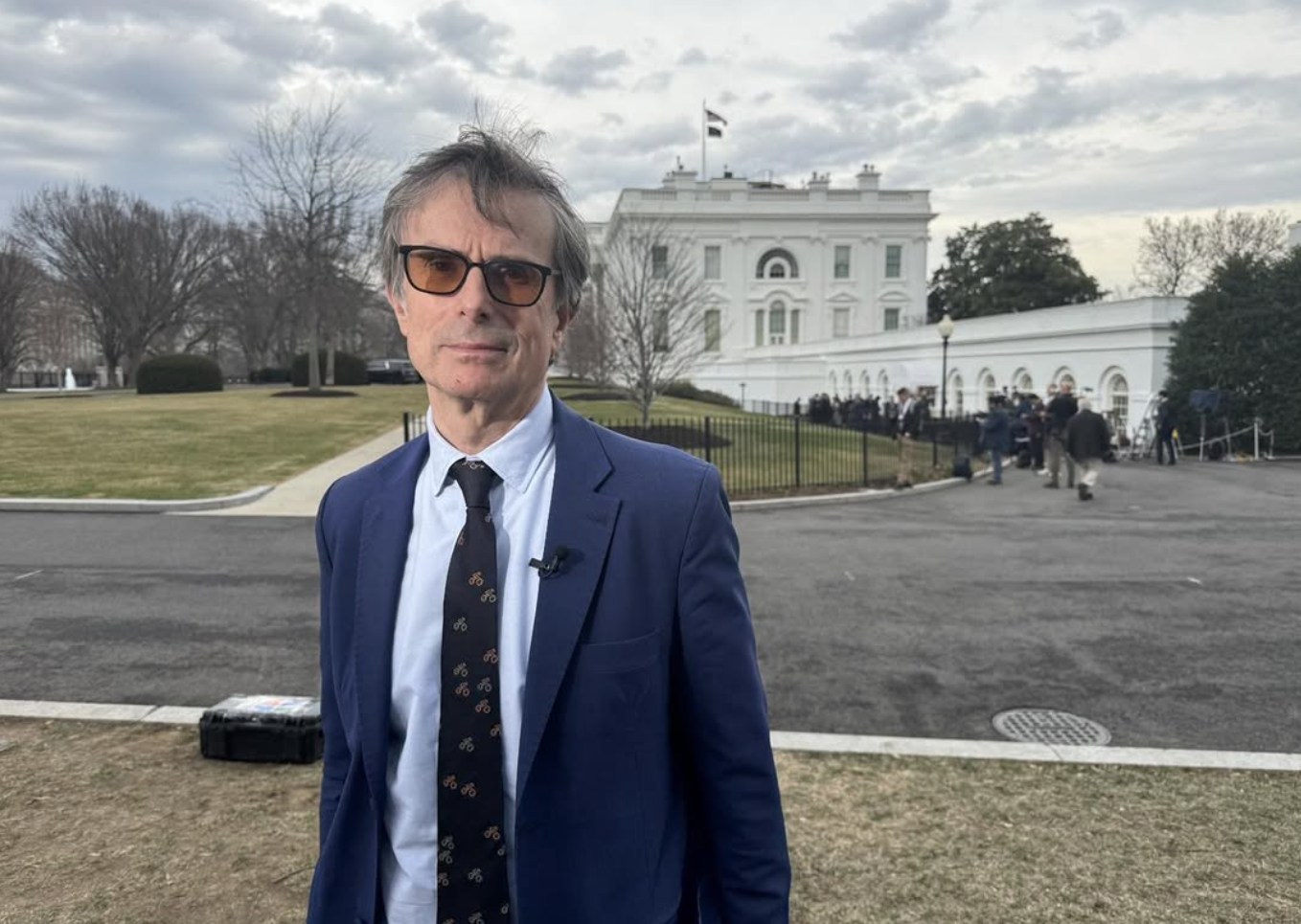
For nearly two decades, Robert Peston has earned a reputation for sounding the alarm before many others recognize the danger. He warned about cracks in the financial system before the 2008 banking collapse. Years later, when reports of a mysterious virus began emerging from Wuhan, he believed governments should have taken the threat far more seriously.
Contents
show
Now, the ITV News political editor says another crisis could already be taking shape. This time, it is not a virus or a collapsing banking sector keeping him awake at night. It is the explosive growth of artificial intelligence and the vast sums of money being poured into building the infrastructure behind it.
Speaking ahead of the release of his latest thriller, The Kill Switch, Peston argued that the world is racing toward an AI-driven future without fully considering the economic and political consequences. While many discussions around artificial intelligence focus on productivity and innovation, he believes the technology could also fuel financial instability, transform employment, and force governments to rethink how modern society functions.
Robert Peston’s Record Gives Weight to His Latest Warning
Predictions about economic collapse are nothing new. Markets have always attracted analysts willing to forecast the next downturn. What separates Peston from many commentators is that he can point to previous occasions when his concerns proved well founded.
Reflecting on the period before the global financial crisis, Peston recalled repeatedly warning that problems within the banking sector would eventually spread throughout the wider economy.
He told Radio Times: “In the spring and summer of 2007 I was warning that what was happening in the banking sector was going to cause enormous harm to us all, and lots of politicians and people in the City wrote to the BBC to say I was scaremongering and needed to be closed down.”
At the time, those warnings were often dismissed as exaggerated. Within months, however, financial institutions across the world began collapsing, leading to one of the worst economic crises in modern history.
Peston believes a similar pattern unfolded before the Covid-19 pandemic.
Having spent years producing documentaries about China and previously visiting Wuhan, he said he became concerned almost immediately when reports of an unfamiliar virus emerged at the end of 2019.
“A few years later, I’d made a ton of documentaries about China, and knew it well, and had been to Wuhan, so when this mysterious new virus turned up at the end of 2019 I said to anyone in government who would listen to me, ‘This looks serious.’”
His latest concerns, he says, deserve the same level of attention before events spiral beyond anyone’s control.
Why Artificial Intelligence Has Become His Biggest Concern
Unlike many technology critics, Peston is not arguing that artificial intelligence itself is inherently dangerous.
Instead, his concern focuses on the enormous financial expectations surrounding AI and whether reality can match the extraordinary levels of investment currently flowing into the industry.
Technology companies around the world are spending hundreds of billions of dollars constructing advanced data centres, purchasing specialist computer chips, expanding electricity infrastructure, and building the computing capacity needed to support increasingly powerful AI models.
Investors have rewarded many of these companies with soaring valuations, driven by expectations that artificial intelligence will reshape almost every industry.
Peston worries those expectations may have become detached from economic reality.
“I am genuinely anxious that we’re going to get a serious financial crash, globally, in the next year or two, because there is the most astonishing amount of money going into building the data centres and power plants for AI,” he said.
He also pointed to what he described as “a late-1920s degree of breathless excitement on the markets,” comparing today’s enthusiasm for AI investments with periods of speculative excess that have preceded previous financial crashes.
His concern is relatively straightforward.
If companies fail to generate profits large enough to justify the unprecedented investment currently taking place, confidence could disappear rapidly. Businesses heavily exposed to AI spending could struggle financially, investors might begin selling assets, and financial markets could experience a significant shock.
“I worry that the profits aren’t going to be delivered on a scale to justify all this, so businesses will go bust, investors will take fright and we will have a significant market shock.”
A Financial Crash Would Not Mean AI Has Failed

Despite those concerns, Peston does not believe artificial intelligence itself is a passing trend.
On the contrary, he sees AI as one of the most transformative technologies humanity has ever created.
“The AI industrial revolution will be possibly the most important one since the Steam Age,” he said.
His comparison reaches back to the Industrial Revolution, when steam power fundamentally changed manufacturing, transportation, agriculture, and daily life across much of the world.
That transformation was not smooth.
Railway expansion during the nineteenth century attracted enormous speculative investment. Many railway companies eventually collapsed, costing investors fortunes. Yet the physical railways remained, becoming essential infrastructure that transformed economies for generations.
Peston believes artificial intelligence could follow a remarkably similar path.
Even if markets suffer a severe correction because expectations prove unrealistic, the technology itself will remain. The massive data centres, computing systems, and energy infrastructure currently being built would continue supporting future AI development long after investors absorb financial losses.
His argument is that a market collapse would not necessarily represent the failure of artificial intelligence. Instead, it could mark the painful adjustment between inflated expectations and sustainable economic reality.
That possibility is one of the central themes explored in his new novel, The Kill Switch.
Fiction Inspired by Real-World Anxiety
Although The Kill Switch is a political thriller, Peston says the novel grew directly from concerns he has about the direction artificial intelligence is taking.
The story imagines a world where AI blurs the line between truth and deception while raising uncomfortable questions about power, accountability, and political stability.
He explained that two central questions run throughout the novel.
“In this new AI world, who and what can you believe, and who or what is in charge?”
Those themes have become increasingly relevant as generative AI systems become capable of producing convincing images, videos, voices, and written material that can be difficult to distinguish from authentic content.
Governments, technology companies, and researchers have all warned about the growing risks posed by deepfakes, sophisticated misinformation campaigns, and automated systems capable of influencing public opinion on an unprecedented scale.
Rather than presenting those ideas as distant science fiction, Peston deliberately grounds his novel in realistic political scenarios.
Its central character is a journalist with obvious similarities to Peston himself. The story begins with a British prime minister being assassinated during an appearance on a political podcast that closely resembles his own.
The dramatic opening serves as a fictional framework for exploring questions that Peston believes policymakers should already be discussing seriously.
“The thing that upsets me most is that this should be the stuff that we’re all debating. This should be the stuff that our leaders should be talking about more than anything else. And they’re not.”
The Jobs Question He Believes Governments Cannot Ignore
While financial markets dominate many headlines about artificial intelligence, Peston argues that employment may become the much bigger challenge.
Advances in AI have already changed how businesses handle customer service, software development, marketing, administration, and content creation. Companies continue experimenting with ways to automate tasks that were once carried out exclusively by human workers.
Peston believes that trend could accelerate dramatically over the coming years.
“AI and robots will displace incredibly large numbers of jobs, and there may not be conventional productive employment to replace those lost jobs.”
That possibility raises difficult questions extending well beyond unemployment figures.
Modern governments depend heavily on income tax collected from workers to fund healthcare, education, policing, defence, and countless other public services.
If millions of traditional jobs disappear without equivalent new employment opportunities emerging, governments may struggle to maintain existing tax revenues while simultaneously supporting growing numbers of unemployed citizens.
Peston argues that this issue deserves urgent political attention because it affects the long-term foundations of modern economies rather than simply individual industries.
His concern is not limited to whether AI can replace workers. It is whether governments have any credible plan for financing society if large sections of the workforce are permanently displaced.
Peston Says the Debate Has Barely Begun
Peston’s biggest frustration is not simply the speed at which artificial intelligence is advancing. It is the lack of serious political discussion about its long-term consequences.
He believes governments are focusing on today’s headlines instead of preparing for changes that could reshape labour markets, tax systems, and public finances over the coming decades.
“The thing that upsets me most is that this should be the stuff that we’re all debating,” he said. “This should be the stuff that our leaders should be talking about more than anything else. And they’re not.”
He argues that governments have repeatedly failed to prepare for low-probability but high-impact events, despite warning signs appearing well before disaster struck.
Looking back, he sees clear parallels between today’s AI boom and previous crises that caught policymakers off guard.
“We had the global financial crisis… We had another low-probability catastrophic event in Covid, which again we didn’t prepare for.”
His message is that artificial intelligence deserves the same level of attention before the consequences become impossible to manage.
Rather than reacting after problems emerge, he believes governments should already be discussing how economies will function if AI dramatically changes employment, taxation, and productivity.
Other Experts Have Also Raised Economic Alarm Bells
Peston is not the only prominent figure warning that financial markets may be underestimating future risks.
Economist Nouriel Roubini, widely known as “Dr Doom” after accurately predicting the 2008 financial crisis, has repeatedly argued that the global economy remains vulnerable to severe downturns driven by debt, inflation, and geopolitical instability.
Roubini has warned that even an ordinary recession could trigger steep declines across financial markets, while a more severe economic slowdown could prove significantly worse.
His concerns extend beyond traditional business cycles. He believes governments, corporations, and households have accumulated debt levels that leave many parts of the global economy exposed if borrowing costs remain elevated.
Roubini has also pointed to broader structural pressures, including ageing populations, geopolitical tensions, climate change, supply chain disruption, and future pandemics, arguing that these overlapping challenges could create prolonged economic weakness rather than a short-lived downturn.
Although his warnings focus on different economic drivers than Peston’s, both men share a common concern. They believe financial markets can become detached from underlying economic reality when optimism dominates investment decisions.
Another forecaster who has voiced similar concerns is Jesse Colombo, an analyst who identified the American housing and credit bubble before the 2008 crash.
Years before the Covid-19 pandemic disrupted global markets, Colombo argued that multiple asset bubbles had formed simultaneously across real estate, technology companies, corporate borrowing, household debt, and Chinese credit markets.
He described the post-2008 recovery as a “Bubblecovery,” suggesting much of the apparent economic strength had been fuelled by easy money, low interest rates, and expanding debt rather than sustainable long-term growth.
While Colombo’s warnings predated today’s artificial intelligence investment boom, they reflected a similar concern that prolonged periods of investor enthusiasm can inflate asset prices beyond their underlying value.
Peston’s fears about AI infrastructure investment echo that broader argument. Massive spending can accelerate innovation, but if financial expectations rise faster than real economic returns, markets may eventually face a painful correction.
The AI Boom Is Unlike Previous Technology Revolutions
History offers plenty of examples of technologies that sparked speculative investment before changing society permanently.
The railway expansion of the nineteenth century attracted enormous amounts of capital before many investors suffered heavy losses.
The dot-com boom of the late 1990s produced another wave of extraordinary optimism. Hundreds of internet companies disappeared after markets crashed, yet the internet itself went on to reshape commerce, communication, and everyday life.
Artificial intelligence appears to be following a comparable path, although on an even larger scale.
Technology companies are investing not only in software development but also in specialised computer chips, electricity generation, cooling systems, fibre-optic networks, and data centres capable of handling unprecedented computing demands.
Major corporations view AI as essential infrastructure rather than an experimental technology.
That distinction is one reason Peston remains optimistic about artificial intelligence itself, even while worrying about the financial risks surrounding it.
He believes the technology will continue transforming industries regardless of whether today’s investment boom ultimately proves excessive.
Instead of dismissing AI, he argues society should prepare for both its benefits and its disruptions.
“I am actually a great optimist,” he said.
“But I also think we need to look at possible dystopias in order to prevent them happening.”
That philosophy shapes both his journalism and his fiction.
Rather than predicting inevitable catastrophe, Peston says examining worst-case scenarios gives governments and businesses an opportunity to reduce the likelihood of those outcomes becoming reality.
A Journalist Who Has Seen Crises Up Close
Peston’s perspective has been shaped by decades covering politics, economics, and business during periods of extraordinary change.
As one of Britain’s best-known political journalists, he has interviewed multiple prime ministers and reported on events ranging from financial crashes to Brexit and the Covid-19 pandemic.
His latest novel draws heavily from that experience.
Although The Kill Switch is fictional, it reflects real debates surrounding technology, misinformation, political instability, and the growing influence of artificial intelligence.
Outside his professional life, Peston has also experienced significant personal changes.
He recently ended his long-term relationship with fellow journalist and writer Charlotte Edwardes, who is acknowledged in the book for her support during its creation.
He also spoke enthusiastically about his relationship with artist Nell Breyer, who lives in Brooklyn, joking that he might eventually spend more time in New York.
Despite the darker themes explored in his novel, he insists he has no desire to withdraw from public life or prepare for some technological apocalypse.
Instead, he sees discussion and preparation as the most practical responses to uncertainty.
Whether His Latest Prediction Comes True Remains to Be Seen
Warnings about future crises often attract scepticism, especially when the economy appears strong and technological innovation is generating excitement across global markets.
History also shows that not every gloomy forecast becomes reality.
What makes Peston’s latest warning noteworthy is the combination of his previous record and the scale of the questions he believes governments have yet to answer.
Artificial intelligence is already changing how businesses operate, how people work, and how information is created and shared. Investment continues to flow into the sector at a remarkable pace, with many of the world’s largest technology companies competing to build increasingly powerful AI systems.
Whether that investment ultimately produces sustainable economic returns remains uncertain.
Peston’s concern is that markets may be assuming an almost limitless future without fully considering the financial risks if expectations prove too optimistic.
At the same time, he believes the technology itself will continue reshaping society regardless of what happens on stock markets.
For him, the more pressing issue is whether governments can adapt quickly enough to protect workers, maintain public services, and preserve economic stability during one of the biggest technological transformations since the Industrial Revolution.
If his previous warnings are any indication, he hopes policymakers begin having those conversations before events force them to.
Feature Image from Instagram @robert_peston