
Your cart is currently empty!
Russia’s Bold Declarations: When Military Leaders Claim World War 3 Has Begun
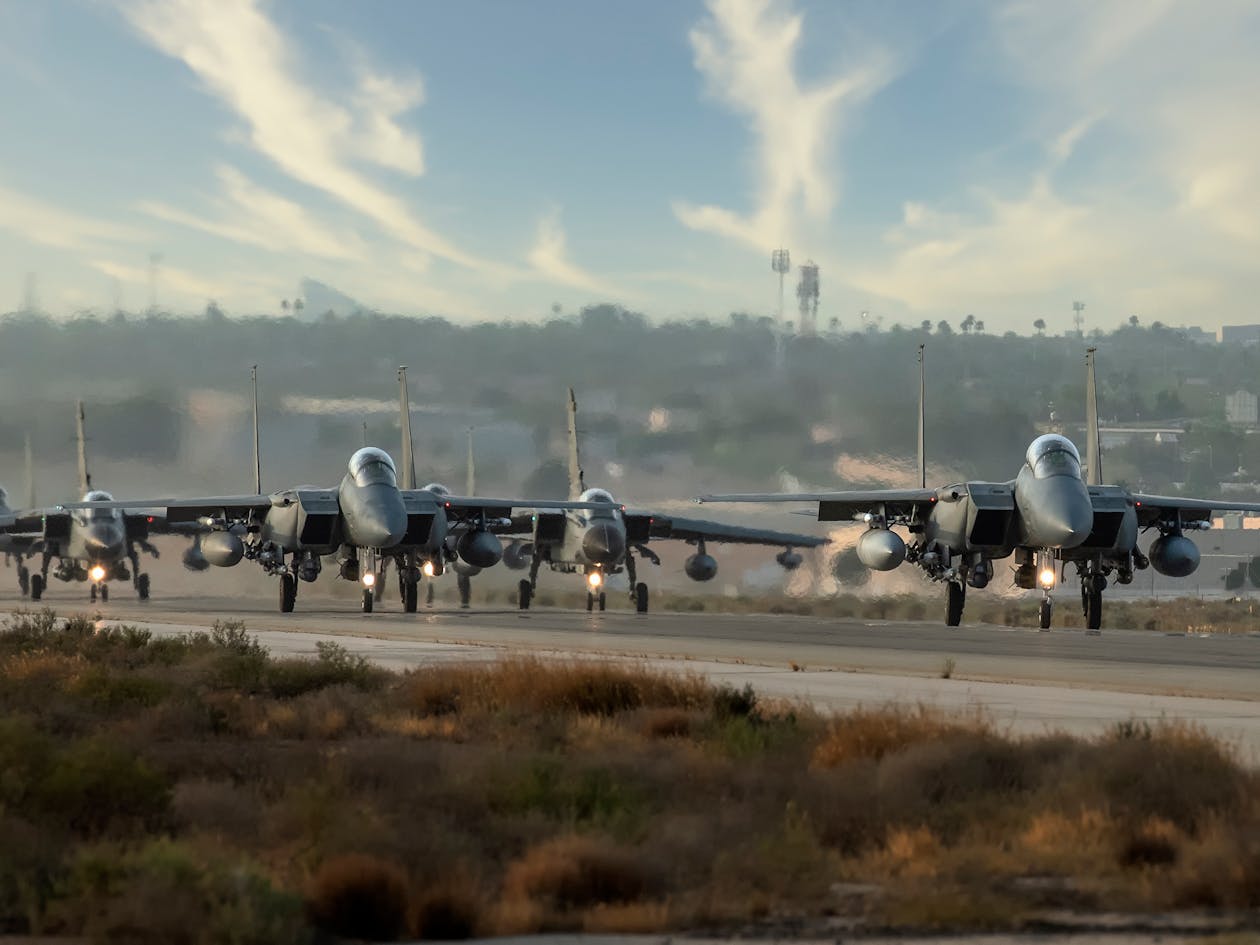
A chilling proclamation echoed through Russian military channels this summer, sending ripples across international diplomatic circles. Words that once belonged to history books suddenly emerged from the lips of active military commanders, while nuclear submarines quietly repositioned across the ocean depths. What began as tensions in the Middle East has morphed into something far more ominous, with former presidents issuing veiled nuclear threats and current generals demanding mass mobilization on an unprecedented scale.
Contents
show
As global markets wavered and diplomatic communications intensified behind closed doors, a question emerged that no world leader wanted to confront directly: Have we already crossed the threshold into a conflict that history will remember as the beginning of World War 3?
General Calls for Million-Strong Mobilization

Major General Apti Alaudinov, deputy chief of the Russian Armed Forces main military-political directorate, posted a stark message on Telegram that sent shockwaves through military analysis circles: “We need to declare mobilisation.” His words carried weight beyond typical military rhetoric, given his position overseeing indoctrination and propaganda within Russia’s military machine.
Alaudinov’s proposal was staggering in scope: “We need to prepare at least half a million people in advance. But realistically one million people.” Such numbers haven’t been discussed since the darkest days of the Ukraine conflict’s early phases, when Russia conducted its last major mobilization effort that proved deeply unpopular among the Russian population.
At 51, Alaudinov serves dual roles that make his statements particularly significant. Beyond his position in the Armed Forces directorate, he commands the Akhmat special forces unit based in his native Chechnya. Military analysts view him as a probable successor to pro-Putin Chechen leader Ramzan Kadyrov, whose health has reportedly been declining. His proximity to power circles gives his declarations unusual authority within Russian military discourse.
What triggered such an extraordinary call for mobilization wasn’t developments in Ukraine, where Russian forces have been grinding through a prolonged campaign. Instead, Alaudinov pointed to events unfolding thousands of miles away in the Middle East, where Israel and Iran had begun trading devastating blows.
The Military Assessment
Alaudinov’s assessment of current global conditions was unambiguous: “We need to call them up and start preparing them for the fact that the war has already begun, which we already know is happening – World War 3. But it has already taken on a new turn and a new momentum.”
His declaration reflected a shift in Russian military thinking about global conflict dynamics. Rather than viewing various regional tensions as separate conflicts, Alaudinov presented them as interconnected elements of a broader global war already in progress. His reference to recent events having taken “a new turn and a new momentum” appeared directly linked to escalating Middle East violence.
Alaudinov’s statement carried an implicit warning about Russian resilience: “And so that no one dares to play with us the way they played with all the other countries, and now with Iran. Believe me, we all need to unite, unite, unite at all levels.” His words suggested Russia viewed Iran’s situation as a potential preview of what Moscow might face if it appeared vulnerable to Western pressure.
Military experts noted Alaudinov’s involvement in Russia’s ongoing efforts to reclaim territory in the Kursk region, where Ukrainian forces have maintained positions since their surprise incursion. His firsthand experience with NATO-supplied weapons and tactics likely influenced his assessment of broader conflict trajectories.
Israel’s Nuclear Facility Strikes Drive Russian Response

Events that prompted Alaudinov’s dramatic assessment began before dawn on June 13, 2025, when Israeli forces launched what they called “Operation Rising Lion.” The operation targeted Iranian nuclear facilities, military bases, and key personnel across multiple provinces, using more than 200 fighter jets to drop more than 330 munitions on approximately 100 targets.
Israeli strikes focused on Iran’s most sensitive nuclear installations, including the Natanz enrichment facility, Isfahan conversion complex, and the heavily fortified Fordow underground site. Iran’s immediate retaliation included launching over 550 ballistic missiles and more than 1,000 suicide drones against Israeli targets.
Casualties mounted quickly on both sides. Israeli authorities reported two deaths and dozens injured, while Iran reported at least 78 killed, including senior military officials, with 320 wounded, mostly civilians. Among the Iranian fatalities were prominent nuclear scientists and Islamic Revolutionary Guard Corps commanders, losses that Tehran characterized as targeted assassinations.
Nine days later, the United States joined the campaign with “Operation Midnight Hammer,” deploying 125 aircraft including specialty B-2 bombers carrying 30,000-pound “Massive Ordinance Penetrators” designed specifically for destroying underground facilities. These bunker-busting weapons represented America’s most advanced capability for targeting deeply buried installations.
Military analysts viewed the American involvement as a significant escalation, transforming what had been a regional Middle East conflict into a broader confrontation involving major world powers. Russia’s assessment suggested Moscow interpreted these events as indicators of a new phase in global conflict dynamics.
Former President’s Nuclear Saber-Rattling
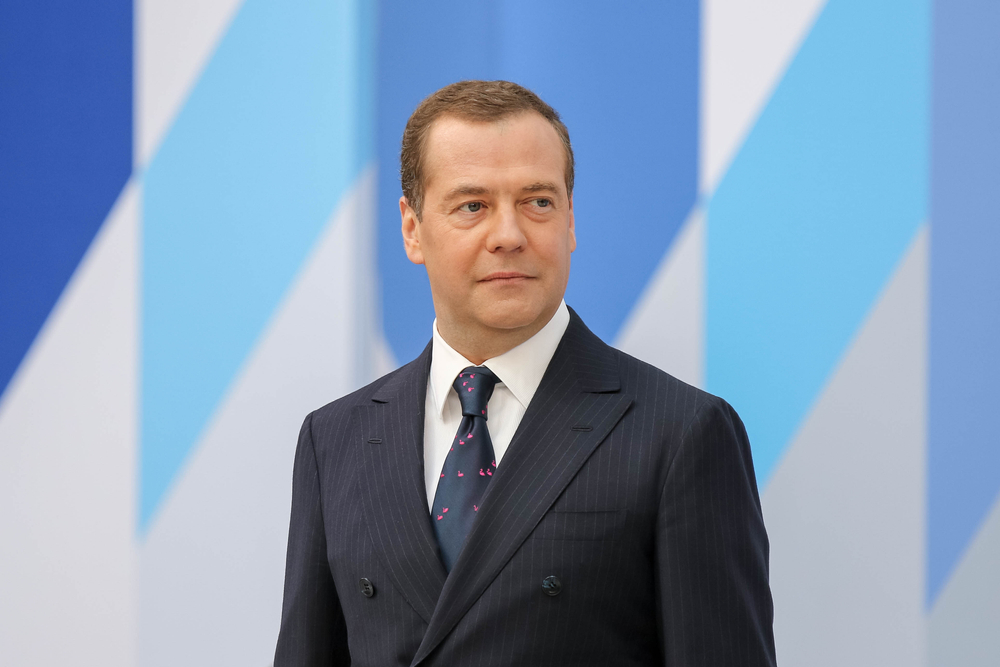
While Alaudinov focused on mobilization needs, another Russian voice emerged with far more ominous implications. Dmitry Medvedev, former Russian president and current deputy chairman of the Security Council, responded to American diplomatic pressure with increasingly aggressive rhetoric that caught Washington’s attention.
President Trump had issued Russia a stark ultimatum: agree to a Ukraine ceasefire within an abbreviated timeframe or face severe economic consequences. Trump’s initial 50-day deadline had been shortened to just 10-12 days, accompanied by threats of secondary tariffs against any nation purchasing Russian energy or goods.
Medvedev’s response carried unmistakable menace: “Trump’s playing the ultimatum game with Russia: 50 days or 10… He should remember 2 things: 1. Russia isn’t Israel or even Iran. 2. Each new ultimatum is a threat and a step towards war. Not between Russia and Ukraine, but with his own country.”
When Trump escalated his rhetoric, calling Russian and Indian economies “dead” and warning Medvedev to “watch his words,” the former Russian president’s response included veiled nuclear threats. He suggested Trump should “revisit his favourite movies about the living dead and recall just how dangerous the mythical ‘Dead Hand’ can be.”
The “Dead Hand” reference carried particular significance among nuclear experts. Russia’s automated nuclear retaliation system, developed during the Cold War, was designed to launch devastating counterstrikes even if Russian leadership was eliminated in a first attack. Medvedev’s invocation of this system represented a clear escalation in nuclear rhetoric.
Trump’s Nuclear Submarine Response
Trump’s reaction to Medvedev’s threats demonstrated how quickly diplomatic tensions could escalate into military posturing. The American president announced he had “ordered two Nuclear Submarines to be positioned in the appropriate regions, just in case these foolish and inflammatory statements are more than just that.”
Trump characterized Medvedev’s statements as “highly provocative,” adding that his submarine deployment was precautionary: “Words are very important, and can often lead to unintended consequences, I hope this will not be one of those instances.”
Military experts questioned the strategic value of Trump’s announced submarine repositioning. American nuclear submarines already patrol global waters continuously, armed with hundreds of nuclear warheads and missiles capable of striking targets thousands of miles away. Given Russia’s vast geography and existing American submarine presence, any repositioning is likely to carry more symbolic than tactical significance.
The Pentagon declined to comment on submarine deployments, which typically operate under strict secrecy. However, Trump later told conservative outlet Newsmax that he had sent submarines to “the region” and that “they’re closer to Russia.”
Escalating War of Words

Social media platforms became unlikely battlegrounds for nuclear-armed nations’ leaders. Trump used his Truth Social platform to issue increasingly harsh warnings, while Medvedev responded through Telegram posts that mixed geopolitical analysis with personal attacks.
Trump’s frustration with diplomatic failures became evident in his public statements. He had repeatedly attempted to negotiate with Putin, describing their conversations as respectful but ultimately fruitless. “He talks — we have such nice conversations, such respectful and nice conversation. And then, people die the following night,” Trump told reporters.
Medvedev dismissed American pressure tactics with characteristic bluntness, suggesting that ultimatums only pushed the two nuclear superpowers closer to confrontation. His warnings about avoiding “the Sleepy Joe road” — a reference to former President Biden — implied that Trump risked repeating his predecessor’s confrontational approach toward Moscow.
International observers noted the unprecedented nature of such public exchanges between leaders of nuclear-armed nations. Previous Cold War tensions typically played out through diplomatic channels rather than social media platforms accessible to global audiences.
Military Reality Check: Expert Analysis
Despite alarming rhetoric from both sides, military experts offered sobering assessments of actual capabilities and intentions. Secretary of State Marco Rubio downplayed Medvedev’s influence, noting that the former president “isn’t a decision-maker in Moscow anymore.” Many Russians view Medvedev as politically irrelevant, lacking the authority to implement the threats he articulates online.
America’s naval superiority remains overwhelming. The US Navy operates 71 nuclear-powered submarines, including 14 Ohio-class ballistic missile submarines carrying hundreds of nuclear warheads. Russia fields fewer than 30 nuclear-powered submarines, including approximately 10 strategic vessels with modern Borei and older Delta IV classes.
Military analysts suggested that Trump’s submarine announcement represented strategic messaging rather than operational necessity. American submarines already possessed the capability to strike Russian targets from existing positions, making repositioning more about political signaling than tactical advantage.
Watching the Deadlines

As Trump’s August 8 deadline approaches, multiple scenarios remain possible. Russian forces continue occupying approximately 20% of Ukraine, showing little indication of accepting American ultimatums. Putin has repeatedly set his deadlines for pushing Ukrainian forces from the Kursk region, yet those objectives remain unmet.
Iran’s promised “crushing response” to Israeli attacks hangs over Middle East stability, while Russia’s assessment of global conflict escalation suggests Moscow may view regional tensions as opportunities for broader geopolitical repositioning.
Alaudinov’s call for massive mobilization reflects Russian military thinking about potential global conflict expansion. Whether his assessment proves prescient or represents strategic posturing may depend on how current diplomatic deadlines resolve in coming weeks.
History may judge whether summer 2025 marked the beginning of a broader global conflict or simply another chapter in ongoing geopolitical tensions. For now, world leaders navigate carefully between firm positions and catastrophic escalation, while military commanders prepare for scenarios they hope never materialize.