
Your cart is currently empty!
Science Confirms Cats Only Help You When There’s Something In It For Them

Pop culture has long sorted our pets into two camps. If you fall into a well, the thinking goes, Lassie will race off to lead a rescue party back to you, while Garfield will regard your predicament with mild interest and wait to see whether any lasagna is involved. It is a tidy stereotype, the kind that feels true without anyone ever having proven it. As it turns out, a team of researchers decided to put that very assumption to the test, and what they found lands surprisingly close to the cartoon.
Contents
show
Scientists set out to answer a simple question about the animals that share our homes: when a human appears to need help, who steps in? The answer separated dogs and toddlers from cats in a clean line. But the more interesting discovery was not that cats hung back. It was the reason they did, which the researchers only uncovered by changing one detail of the experiment.
The Everyday Moment Behind The Research
Anyone who lives with both species has probably witnessed the contrast already. You drop something behind the couch, and your dog is instantly invested, watching your hands, perhaps nudging at the cushions as though preparing to dive in after it. Your cat, presented with the same situation, might observe the whole affair from a comfortable distance or simply leave the room.
For a long time, that difference has been chalked up to personality, the dog being the eager helper and the cat the aloof bystander. New research published in the journal Animal Behaviour suggests the divide runs deeper than temperament. Conducted by researchers at Eötvös Loránd University in Hungary, together with the HUN-REN–ELTE Comparative Ethology Research Group, the study found that dogs are far more likely than cats to spontaneously help a familiar caregiver, and that in certain situations, dogs behave less like cats than like human children.
How Researchers Designed The Test
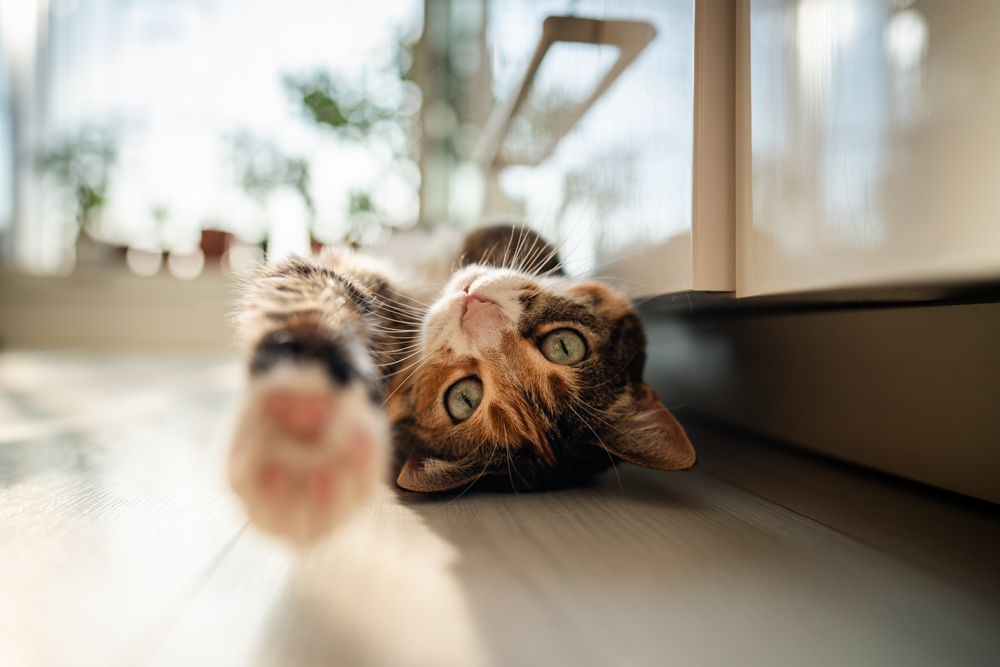
To measure something as slippery as the impulse to help, the team needed a scenario that felt natural to all three kinds of subjects. They recruited 19 toddlers between 16 and 24 months old, 38 untrained companion dogs, and 22 companion cats. The choice of these three groups was deliberate, since all of them live closely alongside humans yet arrive there from very different evolutionary starting points.
The setup itself was straightforward. A familiar caregiver, meaning the child’s parent or the pet’s owner, handled an object and then turned away. An experimenter then hid that object in full view of the watching subject. The caregiver began searching, repeating aloud, “I can’t find it. What should I do?” The crucial part was what the caregiver did not do, which was ask the subject directly for help. Any assistance offered would have to be entirely spontaneous.
The researchers ran the scene across three trials of decreasing difficulty. In the first, the object was both unreachable and covered. In the second, it was visible but still out of reach. In the third, it sat fully within reach. Throughout, the team tracked whether each subject looked back and forth between the object and the searching caregiver, approached it, handled it, or carried it over. The object at the center of all this was chosen precisely because no animal would care about it on its own merits. A humble dishwashing sponge, irrelevant to a cat or dog, ensured that any helping behavior reflected an interest in the human’s problem rather than in the item itself.
What The Dogs And Toddlers Did
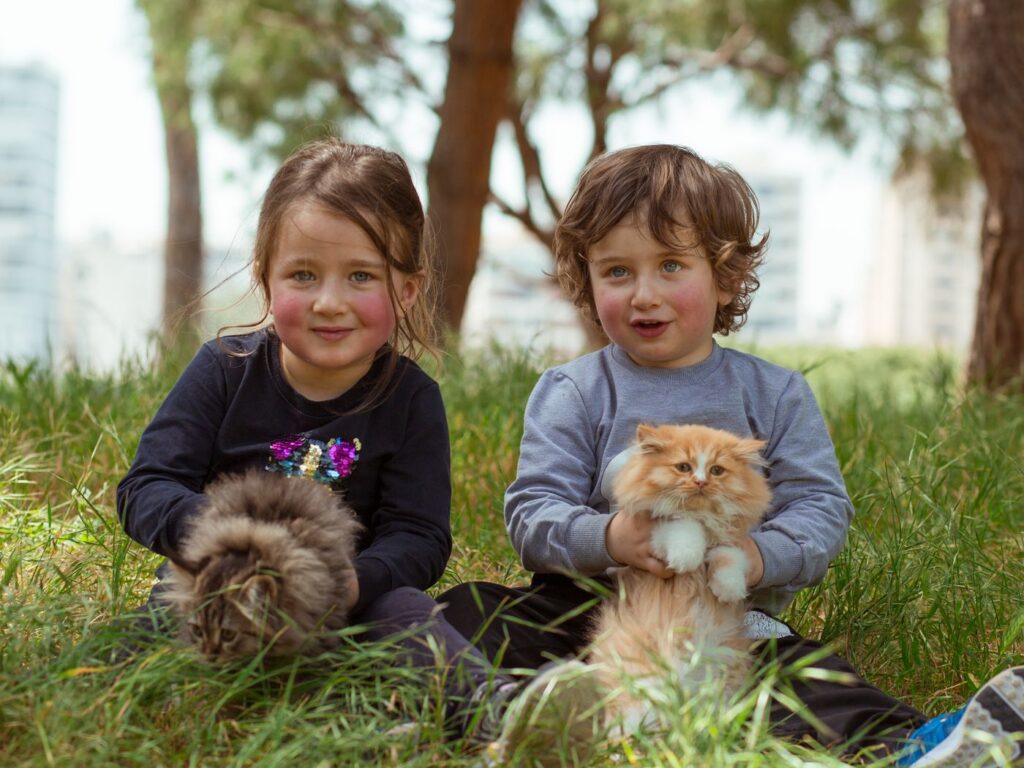
When it came to paying attention, the three groups were evenly matched. Cats, dogs, and toddlers alike noticed the caregiver’s search and attended to what was happening. The divergence appeared the moment attention had to translate into action.
Dogs and toddlers acted, and they did so at remarkably similar rates. They approached the object, indicated where it was, and in many cases retrieved it and brought it to the caregiver. By the final trial, more than half the dogs and nearly half the toddlers were pointing the way to the hidden object, and some delivered it directly. Taken across the study, more than 75 percent of the dogs and children either indicated or fetched the sponge despite having no training and no reward waiting for them.
“Interestingly, the majority of dogs and children showed similar behaviour patterns. They readily engaged with the situation, and more than 75% of them either indicated or retrieved the object, suggesting strong motivation to help — despite being untrained, receiving no reward, and the hidden object, a dishwashing sponge, being irrelevant to them,” said Melitta Csepregi, the study’s first author.
The researchers were careful here to separate two different kinds of behavior that can look alike from the outside. Some actions might simply reflect an attraction to movement or novelty, a phenomenon known as stimulus enhancement, where an animal approaches or paws at something merely because it is interesting. Other actions, such as alternating one’s gaze between the object and the person or actually fetching it, point more convincingly toward genuine prosocial intent. Dogs and toddlers displayed both types. That distinction matters because it is the difference between a pet that happens to wander toward a moving object and one that appears to grasp that a human needs something and means to provide it.
What The Cats Did, And The Question It Raised
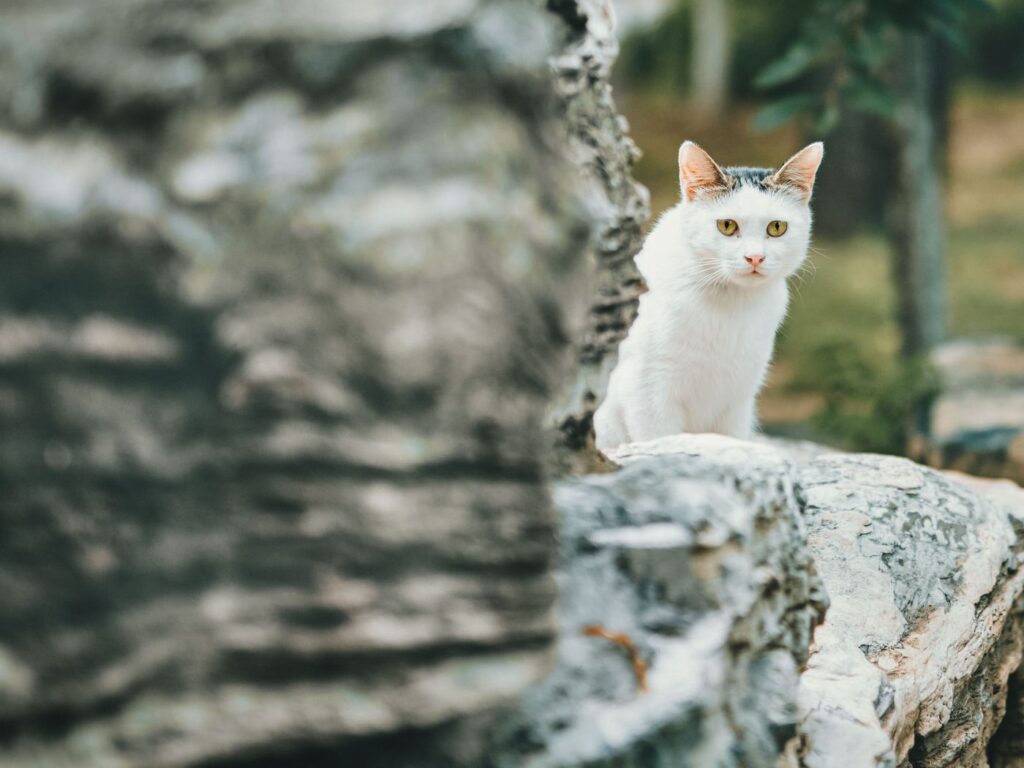
The cats told a different story. They watched the proceedings with as much attention as any dog, but watching was largely where it ended. They never approached the hidden object, and only occasionally did they alternate their gaze toward its location, the mildest of the helping-related behaviors. Even that gentle gesture appeared at a significantly lower rate than it did in the other two groups.
On its own, this result could be read in more than one way, and the researchers knew it. A skeptic might reasonably ask whether the cats had simply failed to understand what was being asked of them. Perhaps the whole scenario sailed over their heads, and their stillness reflected confusion rather than choice. The alternative explanation was that cats understood the situation perfectly well and just felt no particular pull to do anything about it. Distinguishing between these two possibilities became the hinge on which the study’s most interesting finding would turn.
The Twist: Cats Help When It Benefits Them
To settle the question, the researchers added one more trial, and they changed a single variable. Instead of the meaningless sponge, they hid something the subject actually wanted, a favorite toy or a treat. If the cats had been sitting out the earlier rounds because they didn’t comprehend the task, this change should have made little difference. If they had been sitting out because they saw no reason to participate, the new stakes might draw them in.
The cats engaged immediately. With something of their own on the line, they approached and indicated the hidden object as readily as the dogs and toddlers had throughout. The species difference that had defined the entire experiment simply evaporated. This was the proof the researchers were after. The cats had understood the situation all along. Their earlier restraint was never a matter of confusion or incapacity, but of motivation. When the outcome held nothing for them, they chose to observe. When it did, they acted without hesitation.
The finding reframes the familiar image of the indifferent cat. The animal is not failing to help because it cannot. It is declining to help because, in that particular moment, there is nothing in it for the cat, and the cat sees no compelling reason to pretend otherwise.
Why Evolution Explains The Divide
The explanation the researchers offer reaches back long before any of these animals entered a human household. Dogs descend from highly social ancestors whose survival depended on coordination and cooperation within a group. For those animals, paying attention to what others were doing and pitching in toward shared goals was simply how life worked. Thousands of years of domestication then sharpened that inheritance, with selection favoring dogs that were responsive to human cues and willing to treat a person’s problem as a joint enterprise.
Cats followed an entirely different path. Their ancestors were solitary hunters who had no need for group problem-solving and no tradition of collaborative effort. Rather than being deliberately bred for cooperative work, cats largely drifted into domestication on their own terms, settling near human settlements because it suited them. At no point were they selected for the kind of teamwork that defines the dog’s relationship with people.
That history, the researchers argue, is the real engine behind the behavior they observed. As senior author Márta Gácsi put it, the implication is that simply living in our homes and bonding with us is not enough to manufacture a helpful disposition. The capacity for spontaneous, human-like helping seems to require the particular evolutionary scaffolding that dogs inherited and cats never did.
What This Does And Doesn’t Say About Cats
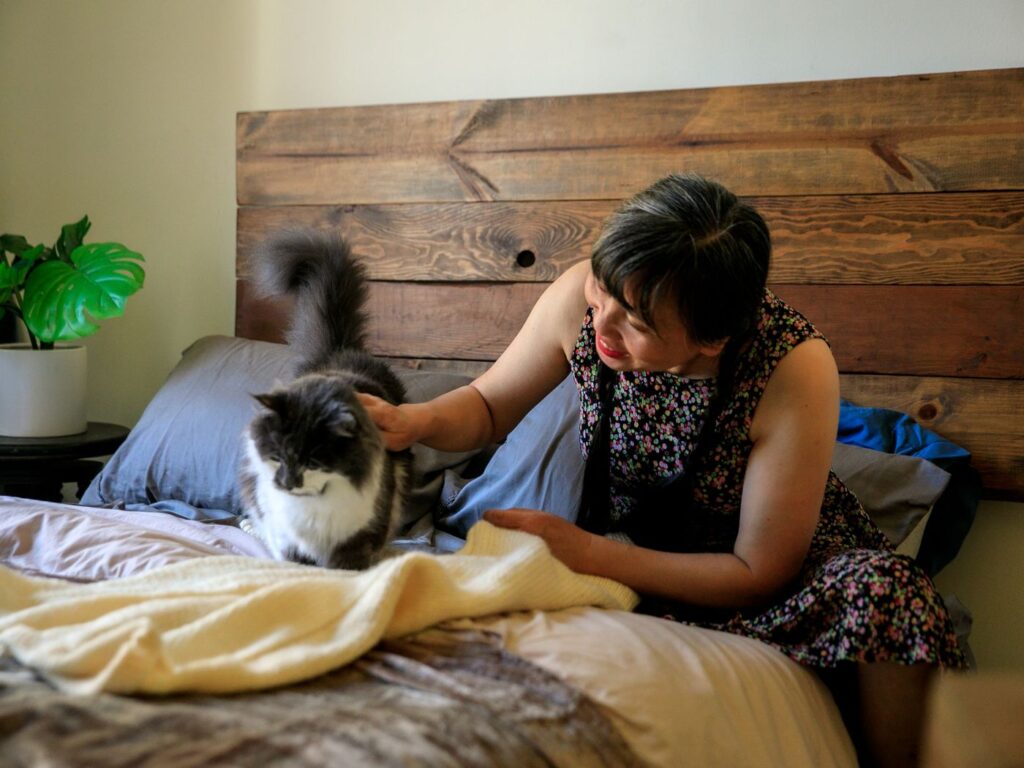
It would be easy to read all of this as a verdict against cats, and the researchers are at pains to head off that interpretation. The study does not suggest that cats are cold, indifferent, or incapable of forming deep attachments to the people they live with. What it identifies is something narrower and more precise: a difference in what triggers the urge to help. Dogs and toddlers engaged even when the situation offered them nothing. Cats engaged when the situation aligned with their own interests. That is a statement about autonomy, not affection.
Outside experts who reviewed the work landed in much the same place, treating the cat’s behavior as a feature of its nature rather than a flaw. Elisabetta Palagi, an ethologist at the University of Pisa who was not involved in the study, offered a particularly memorable summary of where cats fit in the animal world.
“This brilliant study puts hard data to show that cats aren’t mean but operate on a different evolutionary system,” Palagi said, noting that dogs and toddlers are hardwired to treat another’s problem as their own, while cats remain autonomous and intervene only when there is a benefit for themselves. “They truly are the efficient specialists of the animal kingdom.”
A Window Into How Cooperation Evolved
Beyond settling a long-running debate among pet owners, the research speaks to a much larger scientific question. Prosocial behavior, the willingness to act for another’s benefit without any obvious reward, has often been considered a hallmark of humanity. Studying it across species that share our daily lives offers a rare chance to see how such tendencies might have taken root in the first place, and which conditions encourage them to appear.
By placing toddlers, dogs, and cats in the same scenario and watching how each responded, the researchers were able to isolate the ingredients that seem to matter. Cooperation, their results suggest, is not a natural byproduct of cohabitation or affection. It grows from a specific kind of evolutionary past, one built on social living and collaboration, that some species carry and others do not. The next time your dog rushes to assist and your cat looks on without stirring, the difference you are watching was set in motion long before either of them ever curled up in your home.
Source: Csepregi, M., Moravcsik, A. Á., Miklósi, Á., & Gácsi, M. (2026). Dogs’ behaviour is more similar to that of children than to that of cats in a prosocial problem situation. Animal Behaviour, 233, 123488. https://doi.org/10.1016/j.anbehav.2026.123488
animal behavior, Animal Behaviour journal, animal cognition, animal evolution, cat behavior, cat vs dog study, cats, companion animals, comparative ethology, dog behavior, dogs, domestication, Eötvös Loránd University, Evolutionary Biology, helping behavior, Pet Psychology, prosocial behavior, toddlers and pets