
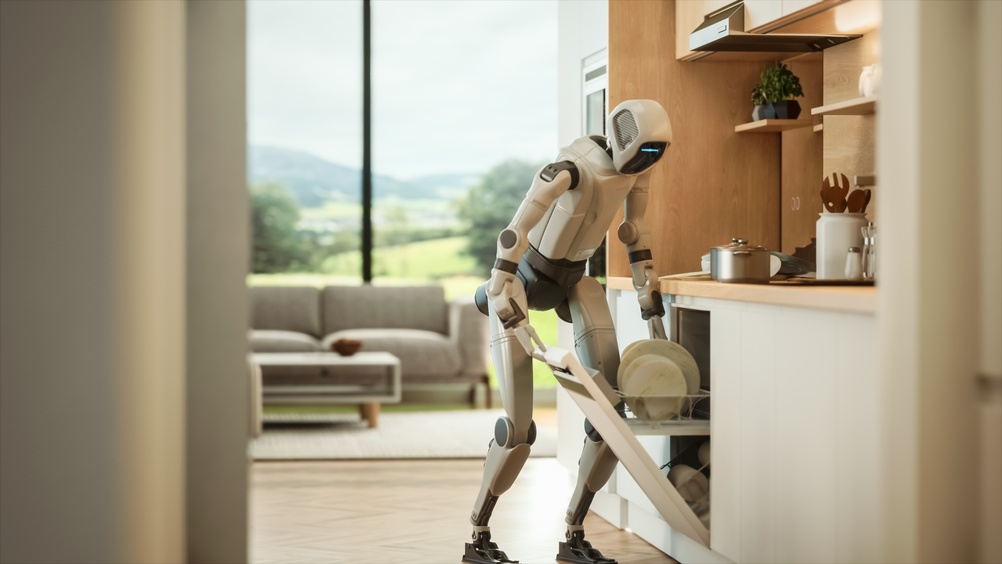
A piece of artificial muscle weighing just 1.13 grams has demonstrated the ability to support an astonishing 5-kilogram load. Developed by researchers in South Korea, the material could eventually help humanoid robots achieve something engineers have struggled with for years: combining impressive physical strength with the flexibility needed to move naturally. Its performance is already attracting attention because the tiny material can support approximately 4,400 times its own weight.
The researchers say their creation tackles a major weakness in existing artificial muscles, which typically sacrifice flexibility when designed for strength. Their new material can change its stiffness depending on what a task requires, becoming rigid enough to carry heavy loads while remaining flexible enough to contract and stretch. The findings, published September 7 in Advanced Functional Materials, could open new possibilities for soft robotics, wearable devices, and future machines designed to interact more naturally with humans.
Scientists Create Artificial Muscle With Extraordinary Strength
The research team, led by Professor Hoon Eui Jeong at the Ulsan National Institute of Science and Technology (UNIST), developed a material capable of delivering an unusual combination of strength and stretchability. The artificial muscle weighs just 0.04 ounces, equivalent to approximately 1.13 grams, yet it can support a load weighing 11 pounds, or 5 kilograms, when placed in its stiffened state. That is roughly 4,400 times its own weight, an impressive result for a material designed to mimic the behavior of biological muscle.
The researchers described their creation as a high-performance magnetic composite actuator. Its design addresses a problem that has limited artificial muscle development for years. Materials that stretch easily often struggle to generate sufficient force, while those capable of supporting substantial loads can become too rigid for delicate movements. Professor Jeong explained the challenge in a statement: “This research overcomes the fundamental limitation where traditional artificial muscles are either highly stretchable but weak or strong but stiff.”
He added: “Our composite material can do both, opening the door for more versatile soft robots, wearable devices, and intuitive human-machine interfaces.” The ability to combine these properties could give engineers greater freedom when designing machines that need to perform different physical tasks. A humanoid robot, for example, might need to lift a heavy object before carefully placing it somewhere else. Having a material that can adjust its stiffness could help make those contrasting movements easier to achieve.

Why Traditional Artificial Muscles Have Struggled
Artificial muscles are designed to reproduce certain functions of biological muscles, including contraction, expansion, and changes in shape. Researchers have investigated these materials as a way to make robots lighter and more adaptable. Conventional robotic systems often depend on motors, gears, and other mechanical components, which can make reproducing the softness and flexibility of natural movement difficult. Artificial muscles offer another approach because they can potentially provide movement through materials that respond to external stimulation.
However, one persistent obstacle has been the trade-off between flexibility and mechanical strength. A highly stretchable material might bend and extend easily but struggle when asked to generate enough force. A stronger material may withstand heavy loads but lack the flexibility needed for more complicated movements. This creates difficulties for machines expected to handle objects of different sizes and weights, particularly humanoid robots that need to imitate the varied movements of human limbs.
Another important measurement in this research is work density, which describes how much energy a material can deliver relative to its volume. High work density allows a relatively small amount of material to produce substantial mechanical output. Achieving that alongside considerable stretchability has been a major challenge for artificial muscle development. The South Korean researchers approached the problem by combining different structural mechanisms rather than relying on a single network to provide all the material’s mechanical properties.
The Clever Design Behind The Robotic Muscle
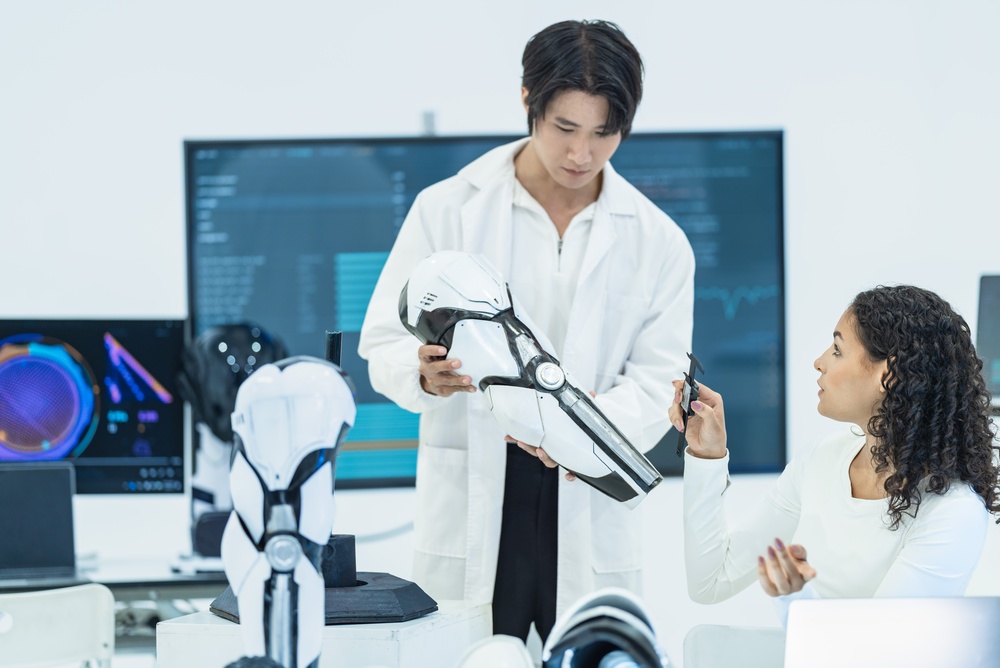
The artificial muscle is made from a composite material containing polymers and magnetic microparticles. Polymers are large molecules formed from repeating chemical units, and their structure can influence properties such as flexibility, durability, and stiffness. The researchers designed the material so that its mechanical behavior could be adjusted, allowing it to respond differently depending on the demands placed upon it. Magnetic functionality also gives the material another way to be controlled during operation.
A central feature of the design is its dual cross-linking architecture, which combines two distinct mechanisms. The first is a covalently bonded chemical network, in which atoms share electrons to form stable connections. The second is a reversible physical network that helps the material retain flexibility while contributing to its mechanical performance. By bringing these structures together, the researchers aimed to overcome the limitations associated with materials that become either too weak or too rigid.
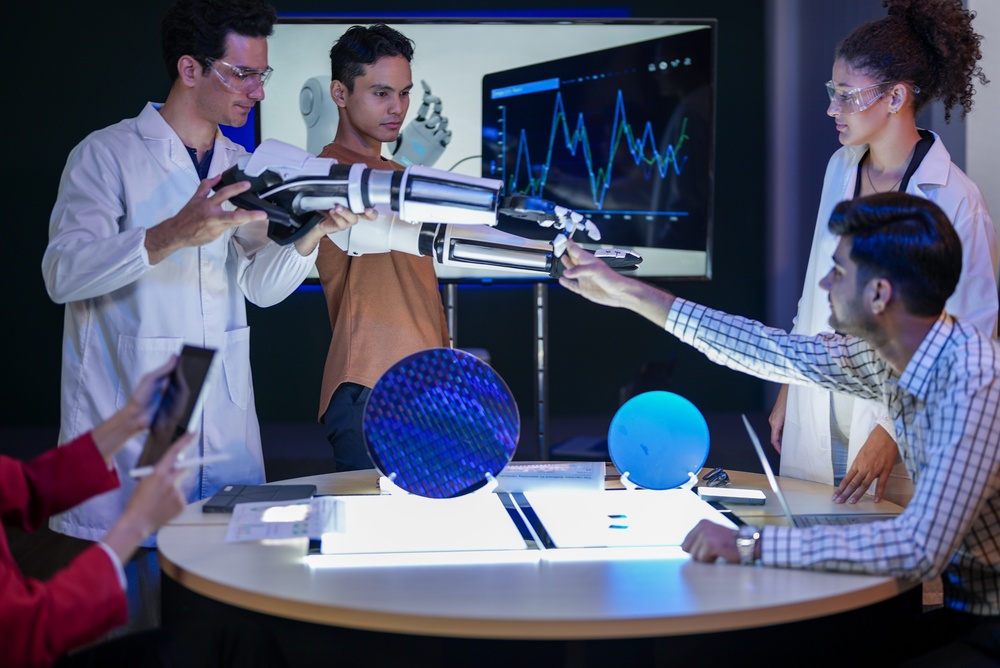
The team also incorporated neodymium-iron-boron (NdFeB) microparticles into the polymer matrix. Their surfaces were treated using a chemical called octadecyltrichlorosilane, allowing the particles to function within the composite material. These magnetic microparticles contribute to the muscle’s response to external magnetic control, while the polymer networks provide the structure needed for strength and stretchability. The combination gives the artificial muscle its unusual ability to change stiffness while maintaining the properties required for movement.
The Artificial Muscle Can Stretch More Than Human Tissue
The researchers reported another striking result when comparing the synthetic material’s stretching ability with human muscle. According to the study, human muscle contracts at approximately 40% strain, while the artificial muscle achieved a strain of 86.4%. That is more than double the human muscle comparison used by the researchers. The result demonstrates how much the synthetic material can stretch while retaining the structural characteristics needed for its intended mechanical applications.
Its work density was also calculated at 1,150 kilojoules per cubic meter. According to the research team, this is approximately 30 times higher than the work density of human muscle tissue. Work density provides a way to compare how much mechanical energy different materials can deliver relative to their volume. For robotics engineers, a material with high work density could be particularly useful because it may allow smaller structures to produce substantial mechanical output.
To evaluate the material’s mechanical performance, the researchers conducted a uniaxial tensile test. This involves applying a pulling force to a sample while measuring how much it elongates under increasing stress. The measurements help establish how a material responds to mechanical loading and identify its ultimate tensile strength. Combined with the load-bearing demonstration, these results gave the researchers evidence that their artificial muscle could deliver both substantial strength and considerable stretchability.
Humanoid Robots Could Benefit From The Technology
Humanoid robots are designed to reproduce movements and physical abilities associated with the human body. Many existing systems rely on motors and mechanical joints to control their limbs, but creating movements that combine strength, flexibility, and adaptability remains a significant engineering challenge. The new artificial muscle could eventually offer another way to build robotic systems by allowing their mechanical properties to change according to the task being performed.
One potential application involves robotic hands. Human hands can grip heavy objects, hold fragile items, and perform movements requiring very different levels of force. A robotic hand needs to manage similar demands if it is expected to perform useful tasks around people. An artificial muscle that becomes stiff when supporting a heavy load and softens when contracting could give engineers another tool for developing adaptable gripping systems. The study does not establish that the material can already reproduce the full range of human hand movements, but its mechanical properties offer an interesting starting point.
The researchers also identified wearable devices and intuitive human-machine interfaces as possible applications. Lightweight artificial muscles could eventually contribute to assistive robotic equipment designed to interact with the human body. Their ability to change stiffness could also help engineers develop devices that respond more naturally to physical movements and external input. These possibilities remain future applications, however, and further engineering work will be needed before the material can be incorporated into practical products.
Five Potential Advantages Of The New Artificial Muscle
The material’s performance gives researchers several reasons to investigate its potential in future robotic systems. Its combination of mechanical strength and flexibility could prove useful in applications where conventional rigid components have limitations.
- Exceptional load-bearing ability: A sample weighing approximately 1.13 grams demonstrated the ability to support a 5-kilogram load.
- Adjustable stiffness: The material can become stiff when carrying heavy loads and soften when it needs to contract.
- High stretchability: Its reported strain of 86.4% exceeds the human muscle comparison presented in the study.
- High work density: Researchers calculated a work density of 1,150 kilojoules per cubic meter, approximately 30 times the human tissue comparison.
- Potential versatility: The team identified soft robotics, wearable devices, and human-machine interfaces as possible areas of future application.
These characteristics could help engineers investigate robotic systems that need to combine physical strength with adaptable movement. However, laboratory measurements are only one part of developing a practical robotic component. The material must also work reliably when integrated into complete machines.
There Are Still Challenges Before Robots Can Use It
Despite the impressive laboratory results, the artificial muscle remains a research-stage technology. Demonstrating that a material can support a heavy load during testing does not automatically mean it is ready to power a working humanoid robot. A practical system must operate reliably through repeated movements while maintaining its mechanical properties. Engineers will also need to investigate how the material performs under different environmental conditions and how effectively its stiffness can be controlled during continuous operation.
Integrating the muscle into a functioning robot presents additional challenges. Robotic systems require power sources, sensors, control mechanisms, and mechanical connections that work together. Even if an artificial muscle can produce substantial force, it must be incorporated into a system capable of coordinating movements safely and accurately. Humanoid robots also need to balance their bodies, walk, manipulate objects, and respond to their surroundings. The new material addresses one important part of that challenge, but it cannot solve every problem involved in building human-like machines.
Durability will also be an important consideration as research continues. Robotic components may need to perform thousands or millions of movement cycles, depending on their intended use. Researchers must establish whether the artificial muscle can maintain its strength and flexibility over extended periods. Its performance outside controlled laboratory conditions will also need further investigation before engineers can determine how suitable it is for everyday applications.
A Tiny Muscle Could Change How Engineers Build Robots
The South Korean researchers have demonstrated a way to combine considerable strength and stretchability within a single artificial muscle. Its ability to support approximately 4,400 times its own weight makes it an interesting development for the future of soft robotics. The findings also offer a possible direction for engineers trying to create machines that move with greater flexibility while retaining the strength needed for physical tasks.
The next challenge is turning those laboratory results into reliable technology that can operate inside complete robotic systems. If further research succeeds, materials like this could help humanoid robots lift heavy objects, handle delicate items, and perform movements with greater adaptability. For now, the achievement belongs in the laboratory, but a muscle weighing just over one gram has already demonstrated a remarkable level of mechanical performance.