
Your cart is currently empty!
The Billion-Dollar Race to Build AI Robots for Future Battlefields Has Begun
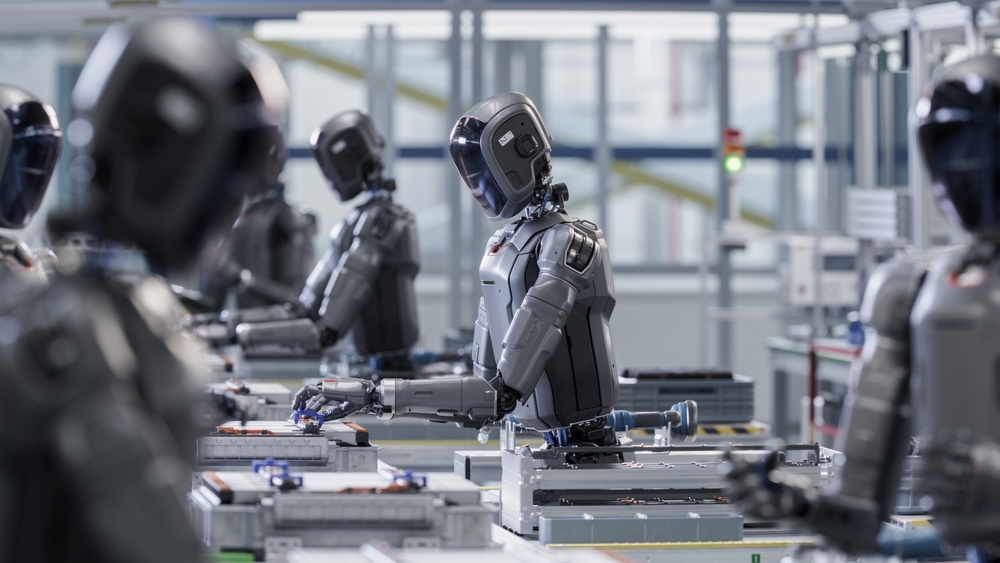
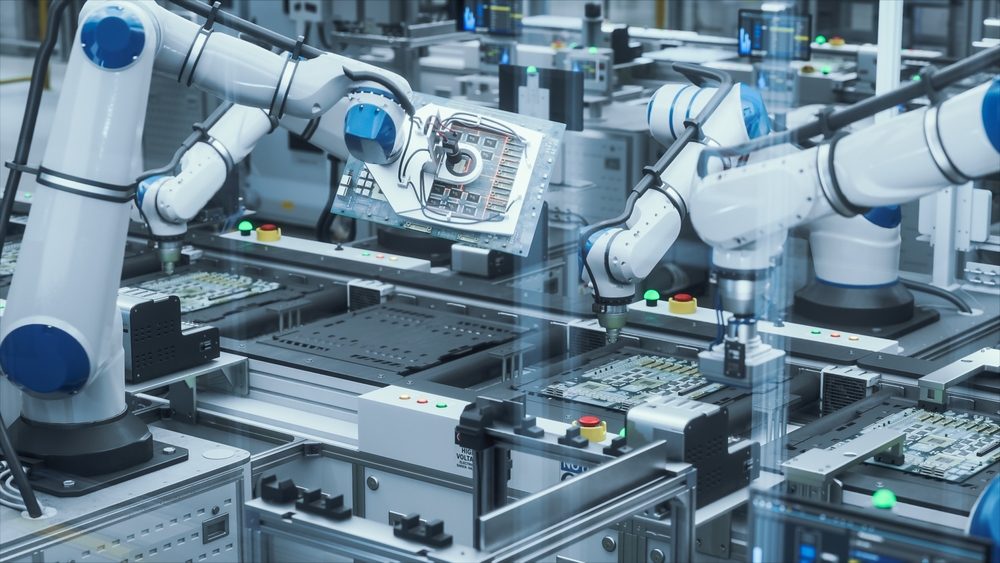
The race to build smarter humanoid robots has taken another significant step, and this time the technology is heading beyond factory floors. Foundation Future Industries, a robotics startup backed by Eric Trump, has announced a partnership with Advanced Micro Devices (AMD) that will power its next generation of autonomous humanoid robots. While the company says the machines are designed to help manufacturers tackle labor-intensive work, it has also revealed plans to develop specialized versions for military operations, highlighting how rapidly artificial intelligence is reshaping industries that once relied almost entirely on human workers.
Contents
show
The announcement comes as governments and technology companies pour billions into autonomous systems capable of performing increasingly complex tasks without constant human oversight. Humanoid robots are no longer viewed as futuristic concepts confined to research laboratories. Instead, they are becoming serious commercial products that companies hope will transform manufacturing, logistics, and eventually defense. With AMD providing the computing power and Foundation planning a dramatic expansion in production, the latest partnership signals that the competition to dominate the emerging humanoid robotics market is accelerating faster than many expected.
AMD’s AI Chips Will Power Foundation’s Next Generation of Robots
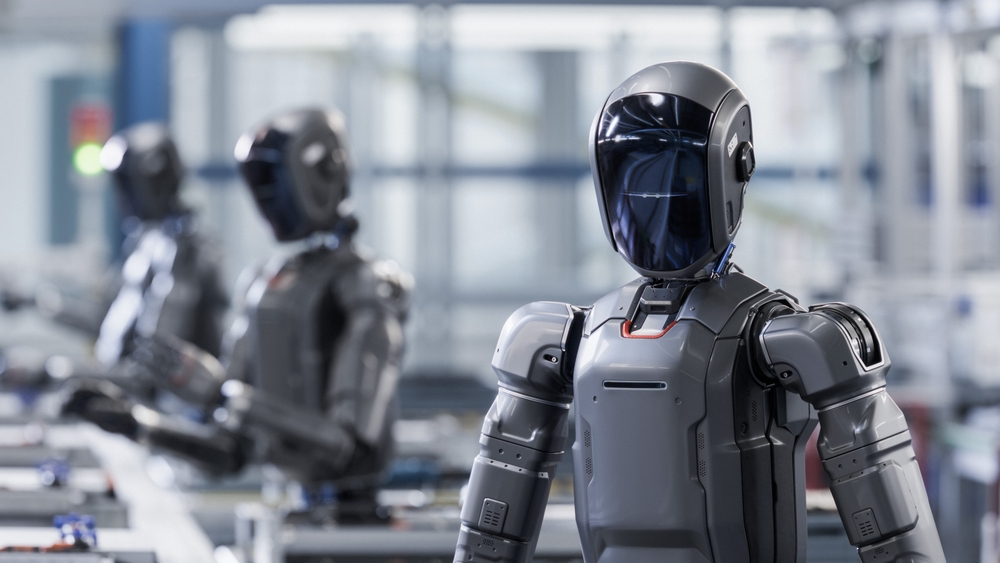
Foundation Future Industries announced that its upcoming Phantom MK-2 humanoid robot will be powered by AMD’s Ryzen AI Embedded X100 Series processors. According to Reuters, the chips have been specifically designed for autonomous systems that need to make rapid decisions while operating independently in real-world environments. Unlike traditional cloud-based AI systems, the processors allow robots to perform complex calculations directly on the machine, reducing delays and enabling faster responses to changing conditions.
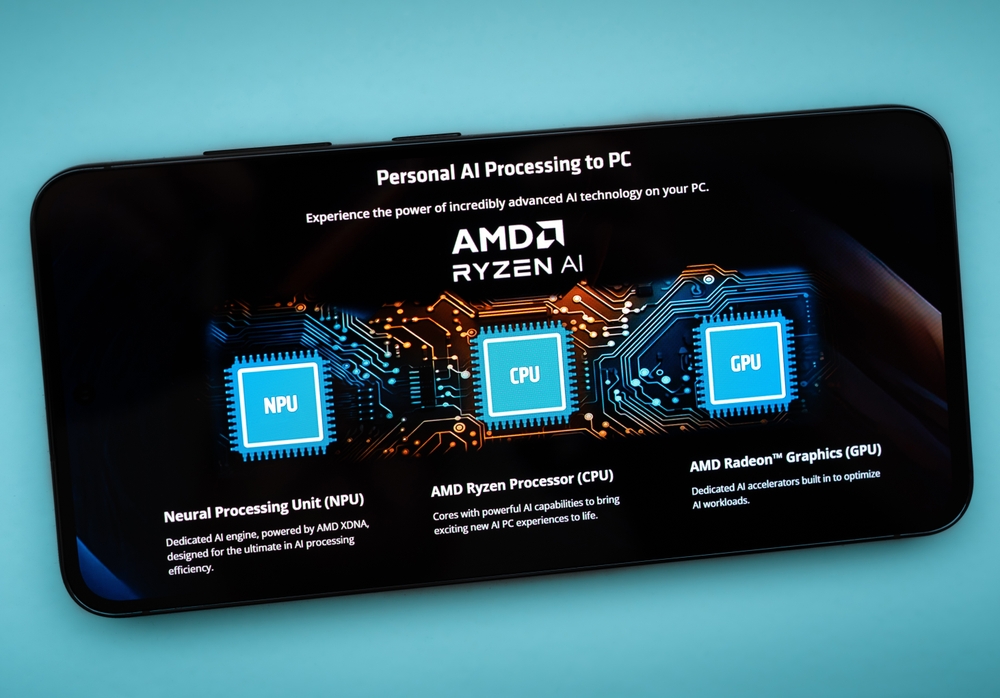
AMD introduced the Ryzen AI Embedded X100 family earlier this year as part of its growing push into embedded artificial intelligence. The processors combine Zen 5 CPU cores, RDNA 3.5 graphics technology, and AMD’s XDNA 2 neural processing unit into a single platform capable of handling perception, reasoning, and movement simultaneously. The company says the hardware is intended for “physical AI for autonomous systems, including humanoid robotics,” giving developers a powerful computing platform without relying on constant internet connectivity.
That capability could become increasingly valuable in environments where split-second decisions matter. Robots working on manufacturing lines, warehouses, or hazardous industrial sites often need to process camera feeds, sensor information, and movement calculations instantly. Local AI processing allows those decisions to happen within the robot itself rather than sending data to remote servers, reducing latency while improving reliability in situations where network access may be limited or unavailable.
The agreement also strengthens AMD’s position beyond its traditional markets. While the company has become one of the biggest competitors in AI data centers and personal computing, embedded AI represents another rapidly expanding sector. By supplying processors for humanoid robotics, AMD is positioning itself at the center of an industry expected to grow substantially over the next decade as businesses seek more capable autonomous machines.
Foundation Plans an Aggressive Production Expansion
Although Foundation Future Industries was only established in 2024, the company has outlined ambitious plans to become one of the largest manufacturers of humanoid robots. CEO Sankaet Pathak told Reuters that the company’s first-generation Phantom MK-1 robots were already involved in helping build more than 24,000 vehicles during 2025, demonstrating that the technology has begun moving beyond testing environments into commercial manufacturing.
To meet anticipated demand, Foundation says it will open a dedicated production facility in October capable of manufacturing approximately 5,000 Phantom robots each year. That expansion represents only the first stage of a much larger strategy. Company executives also revealed plans to begin construction of a second manufacturing plant early next year, dramatically increasing production capacity as adoption of humanoid robots continues to grow across multiple industries.
If both facilities reach full capacity, Foundation estimates it could eventually manufacture as many as 55,000 robots annually. Despite those ambitious projections, the company has not publicly identified major customers or disclosed confirmed purchase agreements that would support production at that scale. Like many emerging robotics companies, Foundation appears to be investing heavily in manufacturing capacity ahead of what it believes will become rapidly expanding demand for autonomous industrial workers.
The company also outlined its business model for commercial customers. Rather than selling robots outright, Foundation plans to lease each industrial humanoid robot for approximately $100,000 per year, allowing manufacturers to adopt the technology without making a massive upfront investment. The subscription-style approach mirrors business models increasingly used throughout the software and artificial intelligence industries, potentially lowering barriers for companies interested in automation.
Defense Robots Could Become Foundation’s Next Major Business
While industrial automation remains Foundation’s primary focus, the company has made it clear that defense applications are becoming an equally important part of its long-term strategy. Alongside the Phantom robots designed for factories, Foundation is developing specialized military variants that will be offered to government agencies. According to Reuters, these advanced machines are expected to lease for approximately $300,000 per year, reflecting the additional hardware and capabilities required for defense environments.
Rather than placing humanoid robots directly into frontline combat, the company says the first generation of military machines will concentrate on support roles that are often dangerous for human personnel. Planned applications include moving heavy materials across difficult terrain, transporting supplies, and carrying out reconnaissance missions where gathering information without risking soldiers is a priority. These tasks have become a growing focus for defense organizations looking to combine artificial intelligence with robotics to improve operational efficiency.
Military interest in autonomous technology has expanded rapidly over the past several years. Governments around the world are investing billions of dollars in drones, robotic vehicles, and AI-powered surveillance systems capable of operating with minimal human intervention. Humanoid robots represent the next phase of that evolution, offering machines that can move through environments originally designed for people while performing physically demanding or hazardous work.
Foundation’s decision to pursue defense contracts places it among a growing list of companies competing in one of technology’s fastest-growing markets. As advances in artificial intelligence continue to improve robotic perception, movement, and decision-making, defense agencies are increasingly exploring how autonomous machines can reduce risks for personnel while expanding operational capabilities.
Eric Trump’s Role Draws Fresh Attention
Eric Trump has become one of Foundation Future Industries’ most prominent backers after investing in the company earlier this year. In addition to providing financial support, he now serves as the company’s chief strategy adviser, helping guide its long-term direction as it expands into both industrial automation and defense technology.
Foundation is not the only robotics or defense-related business connected to the Trump family. Reuters noted that Eric Trump and his brother, Donald Trump Jr., have also backed companies including drone manufacturer XTEND, robotics businesses, and defense technology firms such as Unusual Machines Inc. and Powerus. Earlier this year, Eric Trump also invested in XTEND ahead of its planned $1.5 billion public listing in the United States.
Those investments reflect growing private-sector interest in autonomous defense technologies as governments continue increasing spending on artificial intelligence and robotics. Companies capable of supplying advanced autonomous systems are attracting substantial investor attention as military organizations modernize equipment and explore new applications for AI-powered machines.
At the same time, the expanding network of investments has generated renewed discussion about the relationship between political figures, private investors, and defense contractors. As artificial intelligence becomes a larger component of national security strategies, companies operating in this space are likely to face continued public scrutiny over transparency, oversight, and procurement decisions.
The Future of Humanoid Robotics May Arrive Faster Than Expected
Only a few years ago, humanoid robots were largely viewed as experimental projects demonstrated at technology conferences or research laboratories. Today, several companies are racing to move those machines into factories, warehouses, hospitals, and eventually military operations. Improvements in artificial intelligence, battery technology, and computing hardware have dramatically increased what these robots can accomplish outside controlled environments.
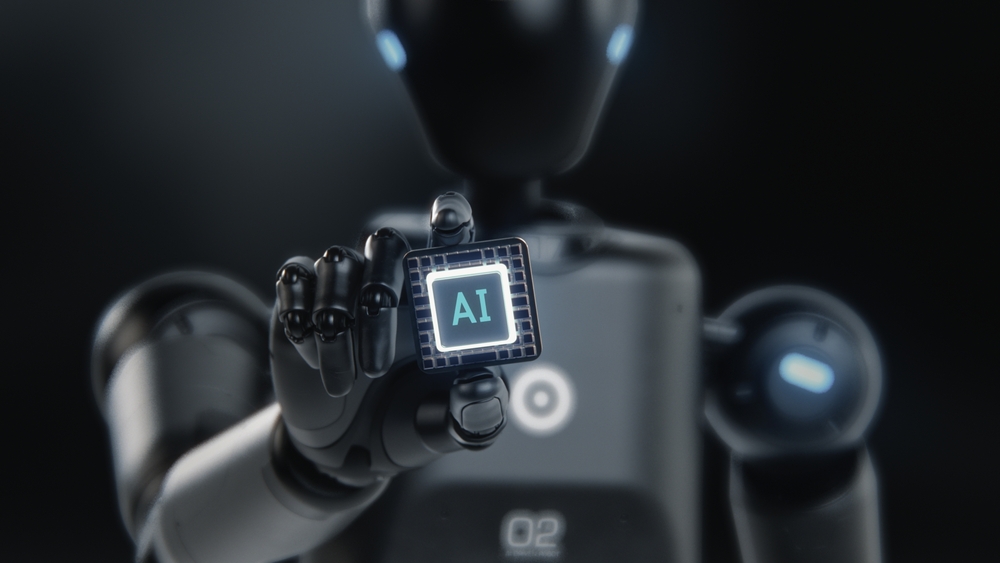
Foundation’s partnership with AMD highlights how essential powerful onboard computing has become to that transformation. By processing information locally instead of depending on cloud servers, autonomous robots can respond more quickly to obstacles, changing conditions, and complex tasks that require continuous decision-making. That capability is expected to become increasingly important as robots begin working alongside humans in busy industrial settings.
Whether Foundation ultimately reaches its ambitious production targets remains to be seen. The company has yet to announce confirmed customer orders capable of supporting production of tens of thousands of robots each year, and competition within the humanoid robotics industry continues to intensify. Major technology companies and startups alike are investing heavily in similar systems, all hoping to establish themselves before widespread adoption accelerates.
Even so, the direction of the industry is becoming increasingly difficult to ignore. Humanoid robots are steadily moving beyond demonstrations and prototypes into practical commercial applications, with manufacturing leading the way and defense close behind. As artificial intelligence continues advancing, the question is no longer whether autonomous humanoid robots will become part of everyday industries, but how quickly businesses and governments will integrate them into work that has traditionally depended on people.
Advanced Micro Devices, AI Chips, AI Robots, AMD, artificial intelligence, automation, Autonomous Robots, Defense Technology, Embedded AI, Eric Trump, factory automation, Foundation Future Industries, Future Technology, Humanoid Robots, Industrial Robots, military technology, Phantom MK-2, Reuters, robotics, Robotics Industry, tech news, trending news