
Your cart is currently empty!
Scientists Discover a Cellular Switch That Stops Fat Storage and Could Change Obesity Treatment

What would it take to make a body stop building fat in the first place? Not shrink it. Not punish it off in some grim January. Stop it at the source, before a single fat cell ever exists.
Contents
show
That is the question Sabita Chourasia carried into a lab at the Weizmann Institute of Science in Rehovot, Israel.
Her way of chasing it was patient to the point of stubbornness. She deleted one protein from human cells, then watched their chemistry change on a clock. “After deleting Mitch, we examined, every few hours, the effect that had on more than 100 substances taking part in metabolism in human cells,” she said.
More than a hundred readouts. Every few hours. Waiting for the moment a cell changed its mind about fuel.
It came. And what she found is stranger, and more careful, than the headline that carried it around the world.
The Protein Everyone Just Calls Mitch
Its formal name is mitochondrial carrier homolog 2. MTCH2. Around Prof. Atan Gross’s lab, it is just Mitch.
Mitch sits on the outer membrane of your mitochondria, the small compartments that turn your breakfast into everything you do with your day. A gatekeeper, posted where fuel meets fire. It had been on the suspect list for years without anyone catching it in the act.
The Mice That Would Not Get Fat
Geneticists had already flagged the neighborhood: the MTCH2 locus is associated with higher body mass index in people. So in 2016, Gross’s group took Mitch out of mouse muscle. The results read like a wish list.
Those mice were protected from diet-induced obesity. They burned more energy. Their muscle fibers converted from the glycolytic kind to the oxidative, endurance kind. Their capacity for endurance exercise climbed. So did heart function.
Leaner, fitter animals, eating a high-fat diet, and shrugging.
That is where the word “immune” entered this story, and it has been travelling ever since. Hold on to where it came from: mouse muscle, not a human being.
A Cell That Cannot Stop Eating
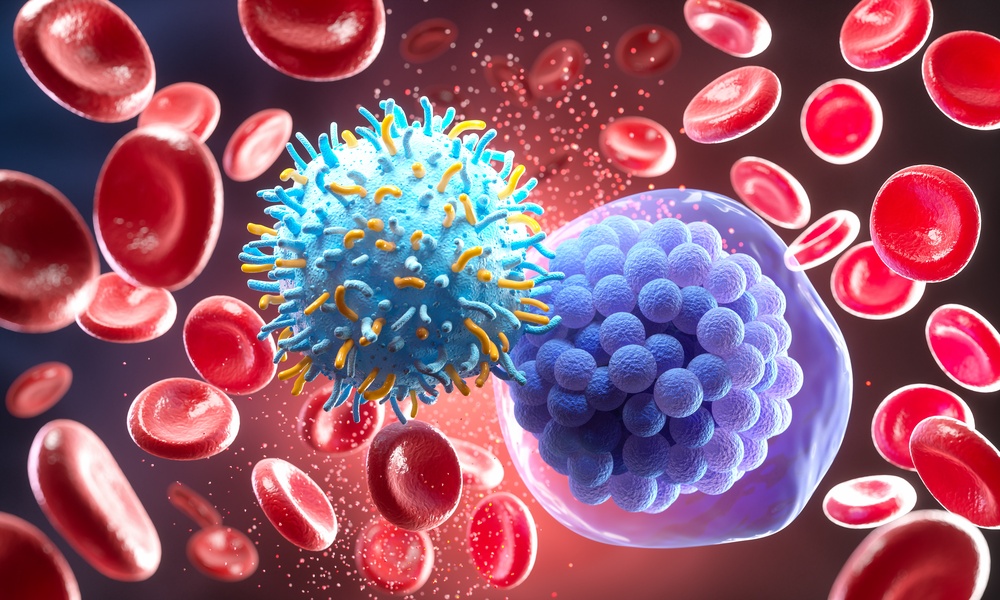
The mechanism is oddly beautiful.
Your mitochondria normally fuse into long connected networks, and fused, they run efficiently. Take Mitch away and the network breaks into separate pieces. The efficiency goes with it.
A cell in that state has one move left. It eats.
The EMBO Journal paper puts it in the language of metabolism: deleting MTCH2 produced “a high ATP demand, an oxidized cellular environment, and elevated utilization of lipids, amino acids, and carbohydrates.” Fat, sugar, even amino acids, pulled in and burned against a debt that never closes.
“We saw an increase in cellular respiration, the process in which the cell produces energy from nutrients, such as carbohydrates and fats, using oxygen,” Chourasia said.
And the membranes thinned. “We discovered that deleting Mitch led to a major drop in fats in membranes,” Gross said.
That quiet detail turned out to matter most of all.
The Fat Cells That Never Showed Up

Because a fat cell is not simply filled. It has to be built, and building is expensive.
The team ran the same deletion in progenitor cells, the immature cells that wait around for the signal to become fat-storing cells. Given that signal, normal ones take it up eagerly: 80 to 90 percent had matured by day six.
The ones missing Mitch reached 5 to 10 percent.
They had not been killed. They simply could not afford the project. “Reducing the ability to synthesize membranes prevents the cells from growing, developing and reaching the point where differentiation is possible,” Gross said.
A cell that cannot make membrane cannot make a fat cell. And a cell living in permanent energy debt cannot make membrane.
Why a Dish Is Not a Body
Now the fine print, which deserves every bit of the attention the headline got.
The hour-by-hour metabolic work ran in HeLa cells: human, yes, and the most-used cell line in biology, but a cervical cancer line, not a fat cell. The progenitor experiment, the one that produced the immune-to-obesity line, used NIH3T3L1 cells, which are mouse.
So no person was made immune to anything. A cell cannot be obese.
What this single study delivers is a mechanism, traced with real care, in glass. That is not a disappointment. It is the honest distance between a promising finding and a medicine, and knowing that distance is how you keep hope pointed somewhere useful.

The Muscle Problem This Was Meant to Solve
There is a reason the excitement ran so hot, and the reason is GLP-1 drugs.
They work. They also tend to take some lean tissue along with the fat, which is why a switch that burns fat and leaves your muscle alone sounded like the obvious next generation.
Except that worry is more argued over than the headlines let on. The SEMALEAN study followed 106 patients on semaglutide for a year. Total fat mass fell 18.9 percent. Lean mass dropped 3.0 kilograms by month seven, then held steady. Handgrip strength rose 4.1 kilograms. Sarcopenic obesity, the overlap of low muscle and high fat, fell from 49 percent of the group to 33 percent.
Smaller, and by that measure stronger. Results still vary from person to person, and what any of it means for you belongs in a conversation with your doctor, not in an article.
The Trade-Off Written Into the Gene
There is a harder objection, and it comes from human genetics.
A healthy heart runs mostly on fat. A failing one shifts toward glucose. In 2022, researchers tracking unusual allele frequencies in cardiomyopathy found the low-MTCH2 haplotype overrepresented among cases, and wrote it plainly: “MTCH2 reduction may be favorable when fatty acids are the major fuel source, favoring lean body mass. However, in settings like heart failure, where the heart shifts toward using more glucose, reduction of MTCH2 is maladaptive.”
The same setting that keeps weight off may be the wrong setting for a sick heart.
Gross’s own lab found another edge. When they deleted Mitch from the forebrain neurons of mice in 2017, those animals showed impaired spatial memory and weakened long-term potentiation, the cellular groundwork of learning.
Mitch is not only a fat switch. It has a hand in cell death, mitochondrial behavior, and development. Any real drug would have to find it in fat tissue and leave the rest of you untouched.
The Molecule That Does Not Exist Yet
That is the work now. Gross’s lab is with Bina, the Weizmann’s translational unit, and Yeda, its technology transfer arm, on “a novel small molecule that inhibits Mitch and may serve as an effective treatment for obesity.”
No such molecule exists yet. There is a target, a mechanism, and a long list of everything it must not break on the way through.
But something happened in Rehovot that had never happened before. Someone watched a human cell, hour after hour, as it decided what to do with fat, and wrote down every one of the hundred-odd steps in that decision.
That map is on the table now. The next thing to build is small enough to fit inside a pill, and in a lab in Rehovot the search for it has already begun.