
Your cart is currently empty!
Scientists Followed Nearly 4,000 People For 3 Years And Their Brains Kept Improving

Imagine reaching your 80s or even your 90s and being told that your brain could still improve. That possibility is attracting attention after researchers followed 3,966 adults between the ages of 19 and 94 for three years, measuring their brain health every six months. The results did not show a simple pattern of older people declining while younger people stayed ahead. Participants across the age groups improved, including people in their 80s, and researchers did not identify a clear point where those gains stopped.
Contents
show
The study, published in Scientific Reports on May 7, 2026, involved people from all 50 U.S. states and more than 60 countries. Participants completed short daily activities through a brain health platform, with sessions generally lasting between five and 15 minutes. The exercises focused on attention, processing information, managing stress, sleep habits and other everyday behaviors. Sandra Bond Chapman, who leads the Center for Brain Health at the University of Texas at Dallas, said, “For too long, we’ve operated under the outdated notion that we need to wait until something bad happens to our brain before we do anything for it.”
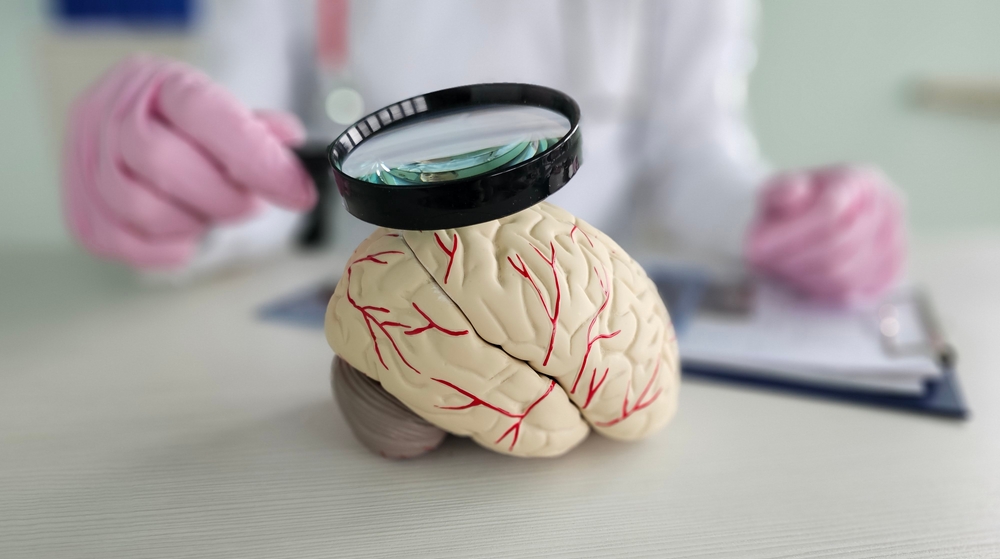
Nearly 4,000 People Were Followed For Three Years
Researchers collected seven measurements from participants over more than 1,000 days, creating a rare long-term picture of how brain health scores changed over time. The group included adults from every decade between 19 and 94, giving researchers an unusually wide age range to examine. The participants also came from all 50 U.S. states and more than 60 countries, making the study much larger than a typical small brain-training experiment.
The assessment itself was broader than simply checking whether someone could remember information. The BrainHealth Index examined three areas: clarity, connectedness and emotional balance. Clarity covered thinking skills, connectedness included social ties and a sense of purpose, while emotional balance reflected how well people handled difficult circumstances.
Participants completed the same assessment every six months, producing seven measurements during the study period. That repeated testing allowed researchers to look at whether scores changed gradually rather than relying on a single before-and-after comparison. The study therefore captured a pattern over three years, although its design still leaves questions about exactly what caused those changes.
The scale of the research is one reason the findings stand out. Nearly 4,000 people remained part of the analysis across a period lasting more than 1,000 days, while the oldest participants were still being measured alongside adults several decades younger. The researchers were able to examine whether age eventually became a barrier to improvement, and the data did not reveal an obvious cutoff.

The Daily Brain Training Was Surprisingly Simple
The intervention did not involve supplements, expensive equipment or a complicated daily routine. Participants used self-paced modules lasting roughly five to 15 minutes, with short video lessons, knowledge checks and small habits to practice. The lessons focused on filtering distractions, synthesizing information instead of simply collecting it and concentrating on one task rather than constantly switching between activities.
Other parts of the program targeted everyday behaviors that most people already recognize as important. Participants were encouraged to protect uninterrupted periods of attention, manage stress and improve sleep habits. Optional virtual coaching was also available every three months, but the core routine was designed to fit into ordinary life rather than require hours of specialized training.
That simplicity is part of what makes the results interesting. Someone could complete a short session in roughly the amount of time it takes to make coffee, then return to their normal day. The researchers were testing whether consistent cognitive strategies and behavior changes could be associated with measurable improvements over a much longer period.
Lori Cook, the center’s director of clinical research, said, “Every brain is as unique as a fingerprint and has potential for growth.” The program was therefore built around a personalized approach rather than assuming that every participant needed the same exercise or strategy. The study’s results suggest that engagement with those strategies was closely linked with changes in the BrainHealth Index.
The People With The owest Scores Improved The Most
Participants who entered the study with the lowest scores recorded the largest gains. That result is partly expected because people starting from a lower baseline have more room to improve. The more surprising finding came from participants who were already performing relatively well when they began.
Those higher-scoring participants continued to improve as well. Researchers did not identify a clear point where the gains flattened out, meaning the strongest performers did not appear to reach an obvious ceiling during the three-year observation period. The same broad pattern appeared across the different age groups.
Age also failed to predict who would improve. The researchers reported gains across every age band, including participants in their 80s. Gender and education level also did not predict which participants would experience improvement, although the limited demographic diversity of the sample means those findings should be interpreted carefully.
Chapman said, “This study reminds us that our brain is not defined by age, it is defined by possibility.” The statement captures the most attention-grabbing part of the research, but the data support a more measured conclusion. The study found continued improvement in brain health scores among participants of different ages, rather than proving that age has no effect on brain function.

Signing Up Was Not Enough To See The Same Pattern
One of the clearest differences appeared when researchers looked at how much participants actually used the program. People who stayed at low engagement showed no change in their brain health scores during the first year. Simply enrolling in the program did not produce the same pattern seen among people who consistently completed the activities.
Many low-engagement participants increased their use of the platform after the first six months. Once their participation increased, their scores also rose. That pattern does not prove that the program directly caused the improvement, but it provides an important clue about the relationship between sustained effort and the results.
Atri Chatterjee, an associate professor of neurology at Vardhaman Mahavir Medical College and Safdarjung Hospital in Delhi who was not involved in the research, described the findings as rational. “Sustained cognitive effort improves cognitive reserve and preserves brain health,” Chatterjee said.
The finding also strips away some of the mystery surrounding the program. There was no secret supplement or high-tech device that participants had to use every day. The routine depended heavily on repeated practice, attention and behavior changes, suggesting that consistency was a major part of the pattern researchers observed.

The Study Has A Major Limitation
The findings have an important limitation that prevents researchers from claiming the program caused the improvements. This was a single-arm trial, meaning every participant received access to the training and there was no separate control group that completed the assessments without receiving the intervention.
Without a control group, researchers cannot cleanly separate the effect of the program from other explanations. Repeatedly taking the same assessment could affect performance, for example. People who volunteered for a long-term brain health study may also have been more motivated to improve their cognitive habits than people who never signed up.
The participant group had another limitation. Most participants were white, female and college educated, while fewer than 15% had less than a college degree. That means the findings cannot automatically be assumed to represent every demographic group equally.
Cook acknowledged the issue directly, saying, “We have room to grow when it comes to representation for different demographic groups.” The most accurate reading is therefore that engagement and improvement moved together across three years in a large and motivated group of participants. The research provides a strong signal, but it does not establish that five minutes of daily training will produce the same outcome for everyone.
Researchers Say The Story Starts Long Before Old Age
Chapman’s interpretation of the findings reaches well beyond people in their 80s and 90s. She has argued that the trajectory of cognitive decline can begin in the early 30s, decades before many people would normally start thinking seriously about brain aging. That shifts the focus toward maintaining brain health earlier rather than waiting for noticeable problems to appear.
The habits tested in the program are also far removed from the dramatic image many people have of brain training. Protecting focused time, reducing distractions, managing stress and improving sleep are ordinary behaviors. Their potential value comes from repeating them consistently rather than performing an occasional intensive exercise.
Chapman said, “Humans have already expanded how long we live. Now, we are expanding how long the brain can continue to improve, disrupting the trajectory of decline that often begins in our early 30s.” That is her interpretation of what the research could mean, rather than proof that cognitive decline can be permanently prevented.
The study does, however, provide an unusual three-year observation period in which improvements appeared across age groups. That makes the findings relevant to a much wider audience than older adults alone. The researchers are effectively asking whether brain health should be treated as something people actively maintain throughout adulthood.
The Oldest Participants May Be The Most Important Detail
The hypothetical 94-year-old imagined at the beginning of the story was not a specific participant from the study. The real older adults involved in the research are more interesting because their scores continued to improve during the follow-up. Researchers measured participants repeatedly over three years and did not find a clear age at which improvement automatically stopped.
That does not prove that the brain can improve forever. The study was not designed to establish an upper limit, and the absence of a control group leaves open several possible explanations for the results. Future research with controlled comparisons and more representative participants will be needed to determine how much of the improvement can be attributed directly to the intervention.
Still, the study complicates one of the most deeply rooted assumptions about aging. A birthday did not mark the point where improvement suddenly disappeared in this group. Participants who stayed engaged continued to show changes, including people who were already well into old age.
After seven assessments and more than 1,000 days of follow-up, the researchers still had not identified a clear ceiling. That does not mean there is no ceiling. It means that, in this study, the data had not found it yet.
Souces:
- New Nature Scientific Reports Study Challenges the Inevitability of Cognitive Decline and Proves Brain Gain is Possible at Any Age. (2026, May 7). New Nature Scientific Reports Study Challenges the Inevitability of Cognitive Decline and Proves Brain Gain Is Possible at Any Age. https://centerforbrainhealth.org/article/nature-scientific-reports-study-challenges-inevitability-of-cognitive-decline
- New Nature Scientific Reports Study Challenges the Inevitability of Cognitive Decline and Proves Brain Gain is Possible at Any Age. (2026, May 7). New Nature Scientific Reports Study Challenges the Inevitability of Cognitive Decline and Proves Brain Gain Is Possible at Any Age. https://centerforbrainhealth.org/article/nature-scientific-reports-study-challenges-inevitability-of-cognitive-decline