
Your cart is currently empty!
Scientists Found That City Birds Are More Afraid Of Women Than Men, And Nobody Knows Why
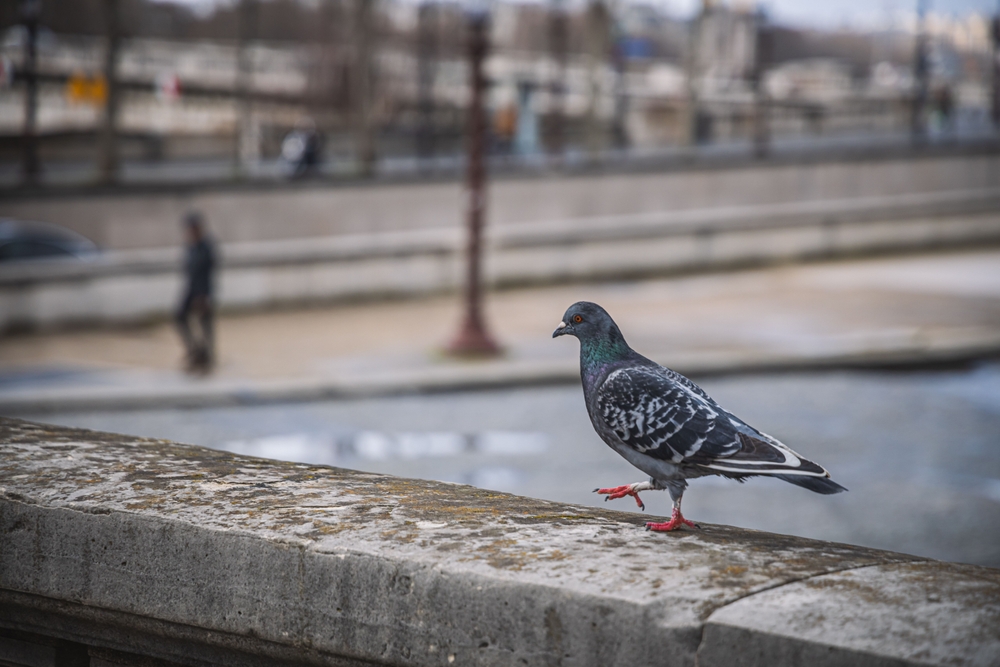
Anyone who has ever tried to sneak up on a pigeon knows birds are constantly judging the people around them. One wrong move, one step too close, and they’re gone. But a new study suggests birds may be making much more specific judgments than anyone realized. Across several European cities, researchers found that urban birds consistently allowed men to get closer than women before deciding to fly away. The pattern appeared again and again across different countries, different bird species, and thousands of separate encounters, leaving scientists with an unexpected mystery that they still cannot explain.
Contents
show
The finding sounds almost too strange to be real. Researchers took extensive steps to eliminate obvious explanations, matching participants by height, clothing, and behavior while ensuring everyone approached birds in the same way. Even after controlling for those variables, the results remained remarkably consistent. Whether the bird was a common city pigeon or a much more cautious woodland species living in urban green spaces, women generally triggered an earlier escape response. The birds clearly noticed something. The problem is that nobody knows exactly what that something is.

Researchers Tested Birds Across Five Countries
The study was conducted in seven cities spread across the Czech Republic, France, Germany, Poland, and Spain. A team of experienced ornithologists spent months observing how birds reacted when approached by humans in parks and other urban environments. Between April and July 2023, the researchers recorded nearly 2,600 interactions involving 37 different bird species, creating one of the largest datasets of its kind.
To measure bird behavior, the team focused on what scientists call “flight initiation distance.” This refers to the moment a bird decides a potential threat has come too close and takes off. By carefully measuring that distance, researchers can estimate how tolerant different species are toward human activity.
The experiment itself was surprisingly simple. Observers walked directly toward birds at a consistent pace while recording the exact distance at which the animals fled. Four male and four female researchers participated in the project, and all were experienced bird experts familiar with fieldwork procedures.
What emerged from the data surprised the people collecting it. On average, birds allowed men to get about three feet closer than women before flying away. More importantly, the pattern showed up repeatedly regardless of location, species, or local environmental conditions.
The Scientists Tried To Remove Every Obvious Difference
One of the first questions raised by the study is whether birds were actually reacting to gender or simply responding to other visible characteristics. The research team anticipated that criticism and designed the experiment accordingly.
Male and female participants were selected with similar heights and body sizes whenever possible. They wore comparable clothing and followed identical procedures during every observation session. Hair was concealed to reduce obvious visual differences, and all participants were instructed to approach birds at the same speed and from the same direction.
Those controls were important because researchers wanted to eliminate the possibility that birds were simply reacting to larger individuals, brighter clothing, or unusual movements. The goal was to make the observers appear as similar as possible from a bird’s perspective.
Despite those efforts, the difference remained. The birds still responded differently depending on whether a man or woman was approaching. That consistency is one reason the researchers believe they uncovered a genuine behavioral pattern rather than a statistical accident.

The Discovery Surprised The Researchers Themselves
The findings were unexpected even for the scientists involved in the project. Many behavioral studies assume that human observers function as neutral participants who simply record animal responses without influencing them in meaningful ways.
“As a woman in the field, I was surprised that birds reacted to us differently,” said study co-author Yanina Benedetti, an ecologist at the Czech University of Life Sciences Prague.
She explained why the results could have broader implications beyond simple curiosity. “This study highlights how animals in cities ‘see’ humans, which has implications for urban ecology and equality in science. Many behavioral studies assume that a human observer is neutral, but this wasn’t the case for urban birds in our study.”
That possibility has attracted attention because countless wildlife studies rely on human observers collecting data in the field. If animals respond differently depending on who is watching them, researchers may need to consider that factor more carefully in future work.
The study does not suggest previous research is invalid, but it does raise questions about how animals perceive the people studying them.

Some Birds Were More Nervous Than Others
Although the overall pattern remained consistent, different species displayed very different levels of comfort around humans. Some birds appeared relatively relaxed, while others seemed determined to maintain a substantial buffer zone.
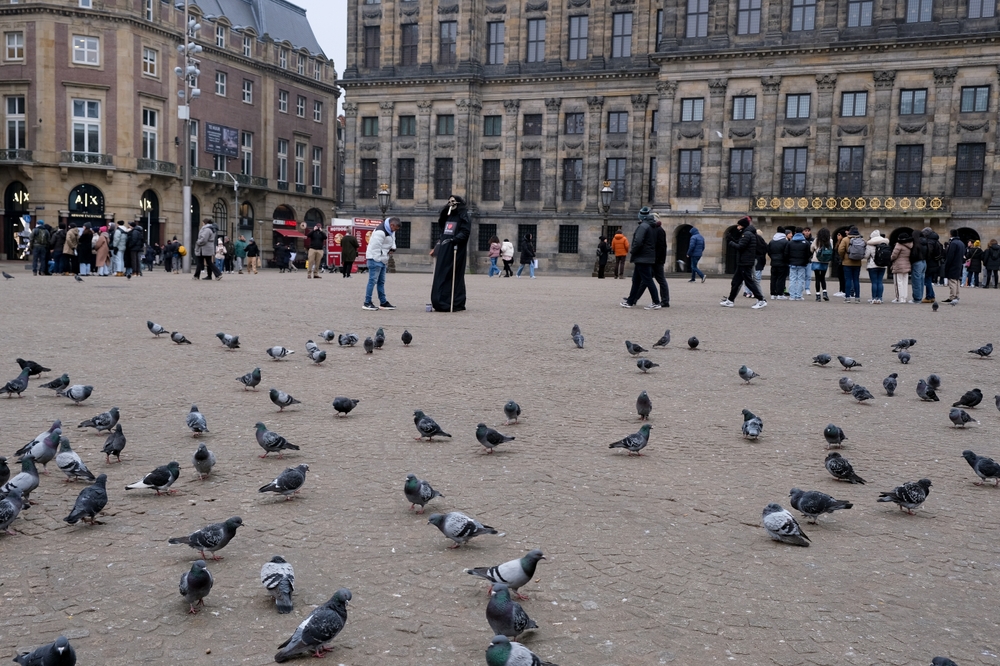
Common pigeons were among the most tolerant species examined during the study. On average, they allowed people to approach within roughly 11.5 feet before taking flight. Anyone who has walked through a city square has probably witnessed that confidence firsthand.
At the opposite end of the spectrum were European green woodpeckers. These birds tended to flee much earlier, often taking off when observers were still more than 50 feet away. Their cautious behavior reflects a very different survival strategy compared with highly urbanized species.
Yet despite those differences, the same pattern persisted. Pigeons were more comfortable with men than women. Woodpeckers showed the same preference. The consistency across species is one of the strongest reasons researchers believe the effect deserves further investigation.
Scientists Have Several Theories But No Answers
The most fascinating part of the study may be the fact that researchers still cannot explain their own findings. The data appears solid, but the mechanism behind the behavior remains unclear.
One possibility involves movement. Men and women often walk differently due to variations in posture, balance, and stride length. Birds may be sensitive to subtle movement patterns that humans barely notice. If so, they could be reacting to differences in gait rather than gender itself.
Another theory focuses on scent. For years, birds were thought to have relatively weak senses of smell compared with mammals. More recent research has challenged that assumption, suggesting some species may be far better at detecting odors than previously believed. If birds can identify chemical differences between men and women, scent could potentially influence their behavior.
The challenge is that neither theory answers the larger question. Even if birds can distinguish between men and women through movement or smell, scientists still do not know why they would perceive women as a greater threat. That missing piece is what keeps the mystery alive.
Not Everyone Is Ready To Accept The Explanation
Some experts believe the findings are intriguing but remain cautious about drawing broader conclusions. Because the study raises such unusual questions, many researchers want to see additional evidence before embracing specific explanations.
“We need to increase the number of human observers, thereby increasing the robustness of the results,” said study co-author Federico Morelli, an ecologist at the University of Turin.
Other scientists agree that further investigation is necessary. John Marzluff, an ecologist at the University of Washington who was not involved in the research, questioned whether there is currently enough evidence to explain the phenomenon.
“Until we have a good reason to hypothesize such differences, I remain a bit skeptical,” Marzluff said. “But I am not at all skeptical that birds pay a lot of attention to us and respond to humans in ways that are important. We just need more research here to better understand why this effect was so consistent.”
That balance between confidence and uncertainty is common in science. Researchers believe they observed a real pattern, but understanding the reason behind it may take years.
Birds May Be Paying More Attention To Us Than We Realize
The study’s authors remain convinced they uncovered something genuine, even if the explanation remains frustratingly out of reach. The consistency across countries, habitats, and species makes the findings difficult to dismiss as coincidence.
“I fully believe our results, that urban birds react differently based on the sex of the person approaching them, but I can’t explain them right now,” said study co-author Daniel Blumstein, a biologist at UCLA. “We used bleeding-edge comparative analysis techniques that showed our findings were consistent across cities and species, but we simply don’t have a conclusive explanation yet.”
For now, the mystery remains unsolved. The next time a pigeon sidesteps someone on a busy sidewalk or a robin disappears into a nearby tree, there may be a complex decision unfolding behind those tiny eyes. Scientists thought they understood the basic rules of how birds react to people. This study suggests there is still plenty left to learn.