
Your cart is currently empty!
Scientists Issue Stark Warning As Earth’s Oceans Undergo Major Changes
The world’s oceans are changing at a pace that scientists say is becoming increasingly difficult to ignore. A new international assessment has delivered its “starkest warning yet” about the condition of the planet’s seas, pointing to rapidly rising temperatures, accelerating sea levels, increasing acidity and growing damage to marine ecosystems. The changes are happening across a system that covers most of Earth’s surface, with consequences that extend far beyond the water itself.
Contents
show
More than 100 scientists contributed to the latest assessment, drawing on more than four decades of measurements from satellites, buoys and underwater sensors. Their findings arrive as a powerful El Niño develops in the Pacific, adding another source of heat to oceans that are already carrying an enormous amount of excess energy. The combination has raised fresh concern about what the coming months could reveal.
Scientists Say The Ocean Is Changing Before Our Eyes
The tenth Copernicus Ocean State Report describes a planet whose oceans are undergoing several major changes at the same time. The assessment examines decades of observations to track shifts in ocean temperatures, sea levels, chemistry and marine ecosystems. Rather than pointing to one isolated event, the findings describe a collection of long-term trends that are becoming increasingly visible across different parts of the world’s oceans.
Pierre Bahurel, Director General of Mercator Ocean International, said the changes are closely connected. “The ocean is transforming before our eyes: warming, rising seas and ecosystem degradation are interconnected signs of significant and long-term change,” he said. The statement captures the central concern running through the assessment: individual ocean problems cannot always be separated because changes in one part of the system can affect another.
The oceans have absorbed roughly 90% of the excess heat generated by human activities involving fossil fuels. That enormous heat absorption has helped prevent even more warming from appearing immediately in the atmosphere, but it has also transformed the marine environment. Warmer waters can contribute to marine heatwaves, affect ecosystems and add energy to some weather systems.
The latest findings suggest the ocean’s transformation is no longer something scientists can describe only through isolated records or unusual events. Temperature records, rising seas, acidification and ecosystem stress are appearing together. The result is a marine environment that is becoming substantially different from the conditions experienced by previous generations.
Ocean Warming Has Accelerated Over The Past Two Decades
The rate of ocean warming has doubled over the past 20 years, according to the assessment. Sea surface temperatures reached record levels in 2023, 2024 and again in 2026, showing how persistent the recent period of exceptional warmth has been. Each new record adds to a longer pattern rather than standing alone as a single unusual year.
The amount of heat entering the oceans is enormous. During 2025, the world’s oceans absorbed an additional 23 zettajoules of heat, marking the ninth consecutive year in which a new record was set. To put that figure into perspective, the amount of energy has been compared with roughly 12 Hiroshima bombs exploding every second for an entire year, or about 40 times the energy consumed by the entire world during 2025.
That stored heat can influence conditions throughout the marine environment. Marine heatwaves can place intense stress on animals and plants that have evolved within relatively narrow temperature ranges, while warmer water can also contribute to the expansion of seawater. That expansion is one of the factors contributing to rising global sea levels.
The effects can also reach the atmosphere. Warm ocean water provides heat and moisture that can influence weather systems, while extreme ocean temperatures have been associated with damaging conditions along coastlines. Scientists are therefore watching the temperature of the seas not simply as an environmental measurement, but as an indicator of changes that can affect people far from the water.

Rising Seas Are Putting Coastal Areas Under Greater Pressure
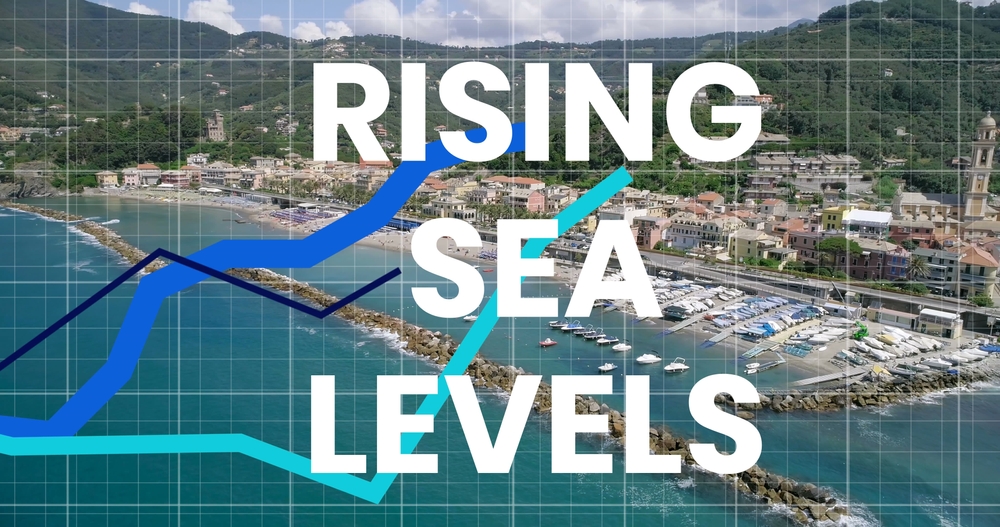
Global average sea levels have risen by roughly 0.15 inches per year, equivalent to 3.8 millimeters, since 1999. Over that period, the total increase has reached nearly four inches, while the rate of rise has accelerated since 2012. For communities built around coastlines, even relatively small changes in average sea level can increase the consequences of storm surges and coastal flooding.
Two major processes are contributing to the rise. Melting ice adds additional water to the oceans, while warmer seawater expands and occupies more space. As temperatures continue to rise, both processes can contribute to higher seas, creating additional pressure for low-lying coastal regions.
Hundreds of millions of people live in coastal areas, where homes, roads, ports, businesses and other infrastructure can be exposed to rising water and stronger coastal flooding. The risk becomes particularly serious when higher baseline sea levels combine with powerful storms. A storm does not need to become dramatically stronger to cause greater damage if it is pushing water onto a coastline that already sits higher than it did decades earlier.
Recent extreme events show how quickly ocean conditions can become a practical problem. Storm Louis in 2024 produced waves reaching around 26 feet along parts of Spain’s coastline, resulting in one death, widespread power outages and damage to infrastructure. In the Bothnian Bay between Sweden and Finland, intense and prolonged winds temporarily pushed so much water away that sea levels fell by around 60 inches, forcing ferries to stop operating for 18 hours.

The Oceans Are Also Becoming More Acidic
Temperature is only one part of the transformation taking place beneath the surface. The oceans have become around 17% more acidic since 1985 as they absorb increasing amounts of carbon pollution from the atmosphere. This chemical change can be difficult to see, but it can have significant consequences for organisms that depend on specific conditions to survive.
Ocean acidification can make it harder for marine animals such as oysters, lobsters and corals to build and maintain shells or skeletons. These organisms depend on minerals in seawater to create their structures, and changes in ocean chemistry can make that process more difficult. The effects can then spread through ecosystems that depend on those species.
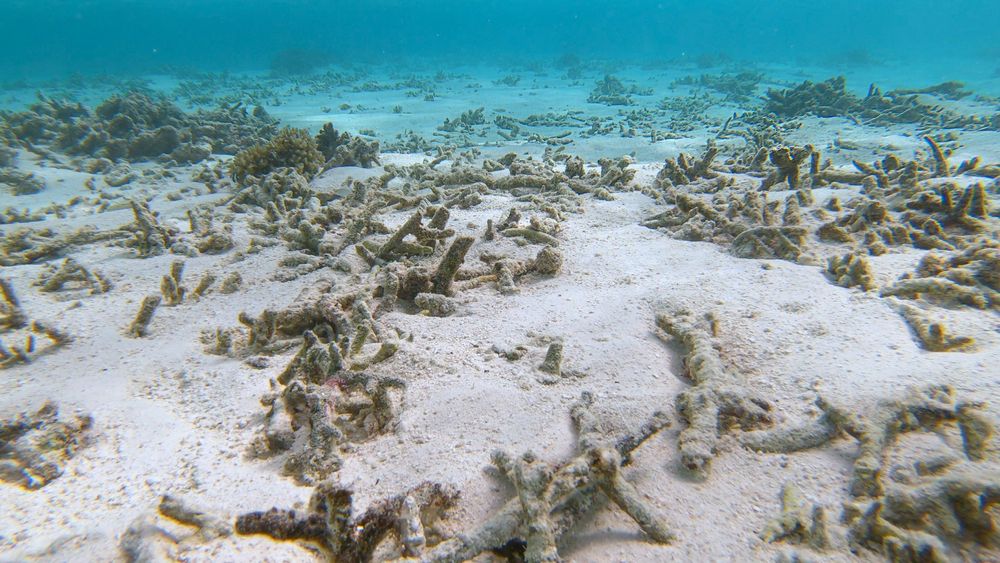
Coral reefs face particular pressure because they are sensitive to changes in temperature and chemistry. When ocean temperatures become too high, corals can experience bleaching, a process in which they lose the microscopic algae that live within their tissues. Severe or prolonged bleaching can leave reefs weakened and less capable of supporting the marine life that depends on them.
The combination of warming and acidification creates a difficult environment for marine ecosystems. An organism may face thermal stress while also dealing with chemical changes in the surrounding water. These pressures can occur alongside pollution, fishing pressure and habitat loss, creating multiple challenges for marine life at the same time.
Europe Has Already Experienced Extreme Marine Heatwaves
Some regions have experienced particularly severe ocean extremes. European seas have come under what report author and Mercator Ocean International senior advisor Karina von Schuckmann described as “intense pressure.” The Mediterranean and Black Seas experienced record-breaking marine heatwaves in 2024, with some events lasting more than 30 days.
Temperatures in affected areas rose more than 8.3 degrees Fahrenheit, or 4.6 degrees Celsius, above average. A marine heatwave of that intensity can place organisms under prolonged thermal stress, particularly when temperatures remain elevated for weeks rather than days.
Blanca Fernández-Álvarez, a report author and researcher at the Mediterranean Institute for Advanced Studies, said the events need to be understood within the longer warming trend. “These are not isolated hot spells; they are occurring against a backdrop of sustained ocean warming that is changing the conditions marine ecosystems experience,” she said.
That distinction is important because an individual heatwave eventually ends, while the underlying temperature trend can continue. If unusually warm events repeatedly occur on top of a warmer baseline, marine ecosystems may have less time to recover between periods of extreme stress.
A Powerful El Niño Is Adding More Pressure
The long-term warming documented by scientists is now occurring alongside a major natural climate pattern. El Niño develops when ocean temperatures become unusually warm across parts of the equatorial Pacific, and the resulting changes can influence weather patterns across large parts of the world.
The developing El Niño is on track to become the most intense on record, according to the reference material. That does not mean El Niño itself is responsible for the long-term warming trend. El Niño is a natural climate phenomenon that occurs periodically, while the broader rise in ocean temperatures has developed over decades.
The concern is the combination of the two factors. A naturally occurring period of unusual Pacific warmth is developing while the global ocean is already carrying record amounts of heat. That creates another period for scientists to monitor closely as they measure temperatures, marine heatwaves and other changes.
El Niño can also affect weather far beyond the Pacific. Its influence can alter rainfall patterns, drought conditions, storms and temperatures in different parts of the world. The precise effects vary by region, but the ocean conditions created by the phenomenon can have consequences that reach well beyond the areas where the warm water is concentrated.
Four Ocean Changes Are Raising Particular Concern
The latest assessment identifies a series of interconnected changes that are reshaping marine conditions. Each one can create its own problems, but their effects can also overlap and intensify pressure on ecosystems and coastal communities.
- Record ocean heat: The rate of ocean warming has doubled over the past 20 years, with sea surface temperature records continuing to be broken.
- Rising sea levels: Global average sea levels have increased by nearly four inches since 1999, with the rate accelerating since 2012.
- Increasing acidity: Ocean acidity has risen by around 17% since 1985 as seawater absorbs more carbon pollution.
- More extreme marine heat: Prolonged periods of unusually warm water are creating additional stress for marine ecosystems in several regions.
These changes are closely connected. Warmer water expands and contributes to sea level rise, while excess atmospheric carbon contributes to ocean acidification. Rising temperatures can also trigger marine heatwaves that place additional pressure on ecosystems already experiencing long-term changes.
The scale of the ocean means that these changes can unfold across thousands of miles while remaining largely invisible to people on land. A temperature record in the middle of an ocean does not look dramatic from a beach or city. Its consequences can become visible later through damaged ecosystems, altered fisheries, coastal flooding or extreme weather.
That is why decades of monitoring are so important. Scientists can compare today’s conditions with historical measurements and identify whether an event is an isolated anomaly or part of a persistent trend.
Scientists Are Watching What Happens Next
The developing El Niño will provide another major test for an ocean that is already unusually warm. Researchers will be watching how temperatures evolve, where marine heatwaves develop and how different regions respond to the additional pressure.
The assessment also demonstrates why scientists rely on many different forms of observation. Satellites can monitor huge areas of the ocean, while buoys and underwater sensors provide measurements from within the water itself. Together, those systems create a much clearer picture of how the ocean is changing over time.
The biggest concern is not one exceptionally hot day or one powerful storm. It is the persistence of multiple changes across decades. The ocean has continued absorbing record amounts of heat, sea levels have continued rising and its chemistry has continued shifting.
The next measurements will show how these trends develop through another period of extreme ocean conditions. For coastal communities and marine ecosystems, those measurements could provide an early indication of what is coming next.
The Ocean Is Sending A Warning From Beneath The Surface
Much of the planet’s climate story is being written somewhere most people cannot see. The ocean absorbs enormous amounts of heat, changes chemically and responds to shifting climate conditions long before many of those changes become obvious on land.
The latest assessment puts those changes into numbers that are increasingly difficult to dismiss as isolated events. Record heat, rising seas, greater acidity and prolonged marine heatwaves are now part of the same picture.