
Your cart is currently empty!
The Mushroom That Makes Nearly Everyone See Tiny People

Every year in southwestern China, hospitals receive patients who arrive with one of the most unusual complaints doctors can imagine. After eating a local wild mushroom, they begin seeing tiny people climbing across furniture, marching through rooms, or dancing in front of them.
Contents
show
For decades, the stories sounded more like folklore than science. Now researchers have uncovered evidence suggesting something even stranger. The mushroom responsible does not appear to contain any of the known psychedelic compounds scientists expected to find, raising the possibility that it uses an entirely different form of chemistry that has never been identified.
A Mushroom With A Remarkably Consistent Reputation
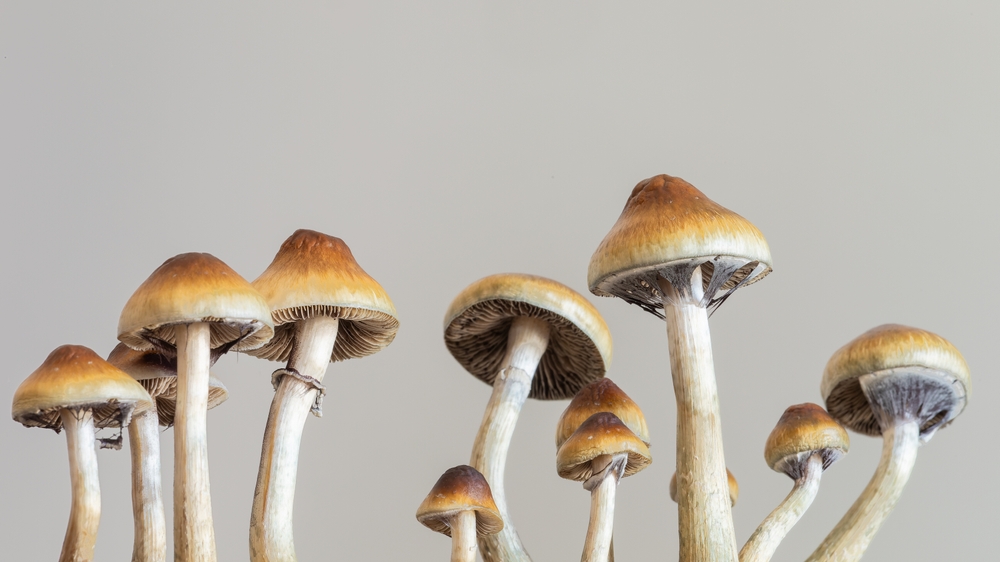
The mushroom at the center of the mystery is Lanmaoa asiatica, a wild bolete commonly sold in markets throughout China’s Yunnan Province. Unlike the familiar “magic mushrooms” that belong to the Psilocybe genus, this species is considered part of an entirely different branch of the fungal family tree.
Boletes are easy to recognize because they have a sponge-like layer of pores beneath their caps instead of the thin gills found on many common mushrooms. Some species, including prized porcini mushrooms, are highly valued as food. Lanmaoa asiatica is also sold as an edible mushroom, but locals know it comes with an unusual warning.
In Yunnan, vendors often remind customers to cook the mushrooms thoroughly before eating them. Undercooked specimens have developed a reputation for producing vivid hallucinations that locals call “xiao ren ren,” which translates to “little people.”
The warning is taken seriously.
University of Utah doctoral researcher Colin Domnauer recalled visiting a mushroom hot pot restaurant where staff set a timer before anyone was allowed to eat. The message was simple. Wait until the mushrooms were fully cooked or risk seeing tiny people.
Despite those warnings, people still underestimate the mushroom.
Every year, enough cases reach hospitals for doctors to recognize the syndrome almost immediately.
The Same Hallucination Appears Across Different Cultures
Hallucinations are usually unpredictable.
Whether caused by illness, medication, or psychedelic drugs, what someone experiences often depends on their memories, emotions, surroundings, and expectations. Two people taking the same psychedelic substance rarely describe identical visions.
That is why Lanmaoa asiatica has attracted so much scientific attention.
Instead of producing random experiences, people from very different backgrounds repeatedly report seeing miniature human figures.
Doctors describe these experiences as Lilliputian hallucinations, a rare neurological phenomenon named after the tiny inhabitants of Jonathan Swift’s classic novel Gulliver’s Travels.
Hospital records from Yunnan reveal just how consistent these reports have become.
According to Domnauer, approximately 96 percent of patients seeking medical treatment after eating the mushroom reported seeing little people. Some described them dancing across tables. Others watched them climb furniture or interact with objects around the room as though they were physically present.
One professor in China reportedly looked beneath a tablecloth after eating the mushrooms and claimed he saw hundreds of tiny figures marching in formation like soldiers.
These visions are not vague flashes or distorted shadows.
Witnesses consistently describe three-dimensional figures wearing colorful clothing, moving independently through their surroundings, and behaving almost like ordinary people.
That level of consistency is highly unusual in neuroscience.
Reports Stretch Back Nearly A Century

The mystery did not begin in China.
Historical accounts suggest remarkably similar experiences were documented long before scientists knew which mushroom species was responsible.
During the 1930s, missionaries working in the highlands of Papua New Guinea described Indigenous communities consuming certain wild mushrooms before experiencing unusual psychological effects.
Later investigations during the 1960s linked several bolete mushrooms to these reports.
Researchers at the time attempted to isolate any psychoactive chemicals inside the mushrooms, hoping to discover something similar to psilocybin.
They found nothing.
Without chemical evidence, many assumed the stories reflected local traditions rather than biology.
Then reports began emerging from China during the 1990s.
Once again, people who had no connection to Papua New Guinea described remarkably similar encounters with tiny human figures after eating local bolete mushrooms.
The same pattern has since appeared in reports from the Philippines and several other regions where related mushrooms grow naturally.
For Domnauer, that geographical separation became one of the strongest reasons to believe something biological was happening.
Different cultures with different beliefs were describing almost the same hallucination.
That consistency suggested the mushroom itself deserved much closer investigation.
Looking Beyond Traditional Psychedelics

The obvious explanation seemed straightforward.
Scientists assumed Lanmaoa asiatica must produce one of the psychoactive compounds already known from other mushrooms.
The leading suspect was psilocybin, the naturally occurring chemical responsible for the effects of so-called magic mushrooms.
Another possibility involved ibotenic acid, the compound found in Amanita muscaria, the bright red mushroom commonly associated with fairy tales and video games.
Both substances are well studied.
Researchers understand the genes required to manufacture them and know how they affect the human brain.
If Lanmaoa asiatica produced either chemical, scientists expected to find clear genetic evidence.
Instead, they found something completely unexpected.
Researchers sequenced the genomes of 53 mushroom specimens representing the wider Lanmaoa genus. Their analysis examined more than 1,500 genes shared across different species while specifically searching for the biosynthetic pathways responsible for known psychoactive compounds.
Those pathways simply were not there.
The mushrooms lacked the genetic machinery needed to produce psilocybin.
They also lacked the genes required to manufacture ibotenic acid.
Chemical analyses performed in earlier studies reached the same conclusion.
Scientists searched the mushrooms themselves.
They examined blood samples from affected patients.
Neither investigation uncovered any known hallucinogenic substance capable of explaining the bizarre experiences reported by patients.
Rather than solving the mystery, every new study made it deeper.
A Completely New Form Of Mushroom Chemistry May Be Waiting To Be Discovered
Finding nothing can sometimes become the biggest discovery.
Instead of confirming the presence of familiar psychedelic compounds, the new genomic research suggests Lanmaoa asiatica may rely on an entirely different biochemical pathway.
That possibility carries major scientific implications.
If the hallucinations genuinely originate from compounds produced by the mushroom, researchers could be looking at a completely unknown class of naturally occurring psychoactive chemicals.
Scientists have proposed several possibilities.
The mushroom may produce a molecule that has never been identified before.
The active compound could form only after cooking, digestion, or interaction with bacteria inside the human body.
Another possibility is that no single chemical is responsible. Instead, multiple compounds could work together to trigger the distinctive hallucinations.
For now, researchers cannot say which explanation is correct.
What they can say with confidence is that Lanmaoa asiatica does not appear to behave like any previously studied hallucinogenic mushroom.
That alone makes it one of the most intriguing fungal mysteries scientists are currently investigating.
The discovery also shifts attention toward questions extending beyond mushrooms themselves.
If an unknown compound is influencing the brain in a completely different way, understanding its mechanism could eventually reveal new details about perception, consciousness, and neurological function that current psychedelic research has yet to uncover.
Rebuilding The Family Tree Revealed Even More Surprises
The latest research was never intended to focus only on hallucinations.
Before scientists could search for an unknown psychoactive compound, they first had to answer a more basic question. Which mushroom species were they actually studying?
For years, the Lanmaoa genus had been difficult to classify. Many species looked almost identical despite being genetically different. Some names had been carried over from decades-old collections, while others had never been compared using modern genomic techniques.
That uncertainty created problems beyond academic research.
Lanmaoa mushrooms are collected and sold commercially across Asia. If edible species are confused with poisonous or psychoactive relatives, the consequences can become serious for consumers as well as medical professionals trying to identify cases of mushroom poisoning.
To solve that problem, Domnauer and his colleagues carried out the most comprehensive genetic analysis of the group to date.
The team sequenced whole genomes from 53 specimens collected across the genus and compared 1,515 shared genes to reconstruct the mushrooms’ evolutionary relationships.
The results significantly reshaped scientists’ understanding of the group.
Researchers formally recognized four species that had not previously been identified and officially described two entirely new species, Lanmaoa fallax and Lanmaoa carbonilivor. They also proposed several taxonomic revisions that reorganized existing classifications.
The revised family tree now recognizes 17 species within the Lanmaoa genus.
Although scientists have not yet determined whether every member of the group shares the same hallucinogenic properties, the new genomic framework provides a much clearer roadmap for future research.
Instead of investigating dozens of poorly defined mushrooms, researchers can now compare closely related species and search for genes they may have in common.
That dramatically narrows the search for whatever unusual chemistry lies hidden inside these fungi.
Why These Hallucinations Stand Apart From Ordinary Psychedelics
Perhaps the most puzzling aspect of Lanmaoa asiatica is not simply that it causes hallucinations.
It is the type of hallucination it produces.
Classic psychedelic drugs such as psilocybin, LSD, and mescaline often create vivid visual distortions, enhanced colors, shifting geometric patterns, emotional changes, or encounters that users describe in highly personal terms.
Researchers have long explained these experiences through the concept of “set and setting.” A person’s expectations, mood, personality, and surroundings all shape what they experience.
That pattern does not seem to apply here.
People who consume undercooked Lanmaoa asiatica frequently report almost the same scene.
Instead of abstract shapes or dreamlike visions, they see miniature human figures moving naturally through the environment.
These tiny figures often appear fully three-dimensional.
Witnesses describe them climbing chairs, running across tables, hiding beneath furniture, dancing together, or interacting with objects in ways that obey ordinary physical rules.
Neurologists classify these experiences as Lilliputian hallucinations, an exceptionally rare phenomenon that has historically been linked to conditions such as alcohol withdrawal, severe delirium, certain neurological disorders, and age-related vision problems.
Even in those medical conditions, the syndrome remains uncommon.
Until recently, mushrooms were not considered a reliable trigger.
The apparent ability of one species to repeatedly produce this distinctive neurological effect makes it unlike any other known hallucinogenic fungus.
Researchers believe understanding why this happens could eventually provide new insights into how the brain constructs visual reality.
Scientists Are Now Hunting For An Unknown Molecule
The latest study ruled out several possibilities, but it did not identify what actually causes the hallucinations.
That search is still underway.
Domnauer’s research combines comparative genomics with laboratory chemistry to isolate the mushroom’s active ingredients.
Field collections have provided researchers with fresh specimens that are now being processed into chemical extracts.
Those extracts undergo multiple forms of analysis, including laboratory testing designed to identify molecules that interact with the nervous system.
Researchers are also examining how the compounds behave under different conditions.
One possibility is that the active substance only forms after cooking or digestion.
Another is that the mushroom produces an unstable molecule that rapidly breaks down before scientists can detect it using conventional techniques.
There is also the possibility that no single compound is responsible.
Instead, several naturally occurring chemicals could work together to produce the unusual neurological effects.
While these theories remain speculative, they reflect how little scientists currently understand about the mushroom’s chemistry.
For now, researchers know far more about what the mushroom does not contain than what it actually does.
That uncertainty has transformed Lanmaoa asiatica from an unusual food poisoning case into one of the most intriguing unanswered questions in modern mycology.
A Discovery That Could Reach Beyond Mushrooms
The implications of this research extend well beyond fungal biology.
Natural compounds found in plants, fungi, and microorganisms have repeatedly transformed medicine over the past century. Antibiotics, cholesterol-lowering drugs, cancer treatments, and immunosuppressants all trace their origins to chemicals first discovered in nature.
Scientists cannot yet say whether Lanmaoa asiatica will eventually join that list.
However, if researchers uncover an entirely new class of psychoactive compounds, it could open fresh avenues for neuroscience research.
Understanding how the mysterious chemical interacts with the brain may help explain why the human mind sometimes generates remarkably specific visual experiences.
It could also reveal previously unknown neurological pathways that conventional psychedelic research has never explored.
Even if the compound never becomes medically useful, solving the mystery would expand scientists’ understanding of how fungi evolve and produce complex chemical defenses.
Nature continues to demonstrate that it still holds biochemical surprises capable of challenging long-held assumptions.
Lanmaoa asiatica may become another example of how much remains hidden beneath the forest floor.
The Mystery Is Only Beginning
For generations, stories about people seeing tiny humans after eating wild mushrooms sounded like local folklore passed between families and market vendors.
Modern genetics has changed that perception.
Scientists have confirmed that the mushroom belongs to a distinct evolutionary group, ruled out every known mushroom hallucinogen they expected to find, and uncovered evidence pointing toward chemistry that may be entirely new.
The question now is no longer whether something unusual is happening.
The challenge is discovering exactly what that “something” is.
As researchers continue isolating compounds and comparing genomes across the Lanmaoa family, they hope to identify the molecule responsible for one of the world’s most unusual hallucinations.
Until then, the little people of Yunnan remain one of biology’s strangest unsolved mysteries.
The next major breakthrough may not come from discovering another psychedelic mushroom. It may come from understanding one that refuses to follow any of the rules scientists thought they already knew.