
Your cart is currently empty!
Scientists Say 16 Parts of Earth Could Trigger A Chain Reaction We Can’t Easily Stop

For decades, scientists have tracked Earth’s climate like a doctor monitoring a patient’s vital signs. Now, one team of researchers says several of those vital signs are showing warning signs that the planet may be moving away from the unusually stable conditions that allowed human civilization to flourish. Their February 2026 paper does not predict that Earth will suddenly become unlivable, but it raises a more unsettling possibility: some of the natural systems that have helped regulate the climate could begin reinforcing the warming already underway.
Contents
show
Oregon State University ecologist William Ripple and seven colleagues examined 16 critical Earth system tipping elements in a paper published in One Earth. These include the Greenland and West Antarctic ice sheets, Arctic permafrost, the Amazon rainforest, mountain glaciers, boreal forests and the Atlantic Meridional Overturning Circulation. Ripple’s warning is blunt. “Earth’s climate is now departing from the stable conditions that supported human civilization for millennia,” he said.
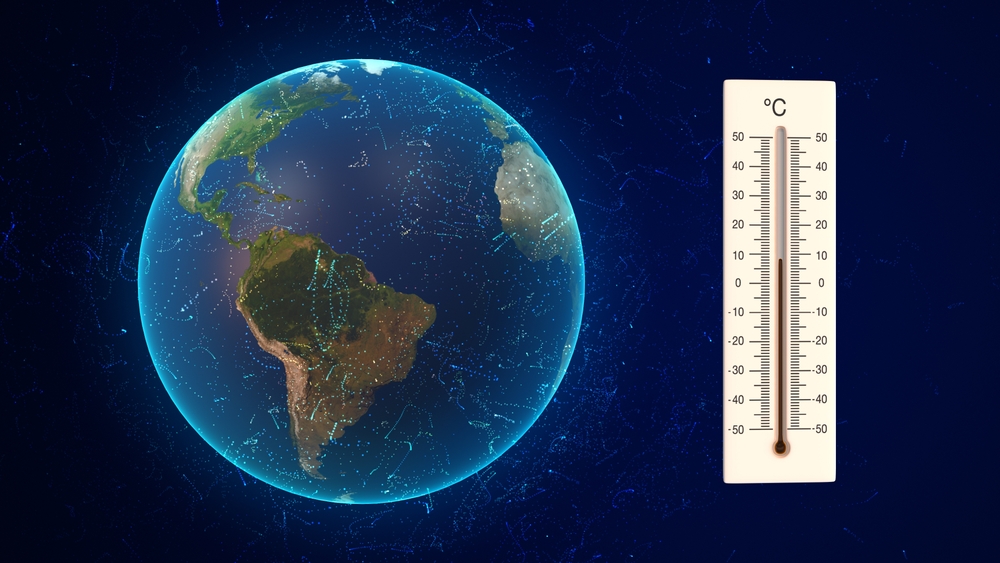
Scientists Have Identified 16 Systems That Could Shift
The researchers’ concern centers on what are known as tipping elements. These are major parts of the Earth’s climate and ecological systems that can undergo large changes once certain conditions are reached. Unlike a simple temperature increase, a tipping event can create feedback that pushes the system further in the same direction.
Ripple’s team identified 16 such systems and found that 10 are capable of amplifying warming once they begin to shift. That distinction is important because the planet’s climate does not operate as a collection of isolated parts. Ice sheets, forests, oceans, atmospheric circulation and frozen soils interact constantly, meaning a major change in one system can affect conditions elsewhere.
The researchers wrote that crossing critical thresholds “may trigger self-reinforcing feedbacks and tipping dynamics that amplify warming and destabilize distant Earth system components.” In other words, some changes could make additional changes more likely.
Christopher Wolf, one of the paper’s co-authors, described the potential consequences in stark terms. Crossing some of these thresholds, he said, “could commit the planet to a hothouse trajectory with long-lasting and possibly irreversible consequences.”
Carbon Dioxide Has Climbed Above 420 Parts Per Million
Two numbers help explain why the researchers believe the situation deserves urgent attention. Atmospheric carbon dioxide has now climbed above 420 parts per million, roughly 50% higher than before the Industrial Revolution. At the same time, global temperatures have remained above 1.5°C over preindustrial levels for 12 consecutive months.
The 1.5°C figure has become one of the most important numbers in climate policy because governments adopted it as a key target for limiting the risks associated with rising temperatures. Passing that threshold for an extended period does not mean every dangerous climate consequence suddenly appears. It does, however, indicate how far current conditions have moved from the climate humans experienced for most of civilization.
Ripple said the change is already visible in the broader stability of the climate system. “We’re now moving away from that stability and could be entering a period of unprecedented climate change,” he told reporters.
The researchers estimate that current warming likely matches or exceeds anything Earth experienced during the past 125,000 years. That is a period encompassing the development of agriculture, cities and modern civilization, making the comparison particularly striking.
Melting Ice Could Set Off A Dangerous Feedback Loop
One of the easiest climate feedbacks to understand involves ice and sunlight. Bright surfaces such as sea ice reflect a large amount of solar energy back into space. When that ice disappears, it exposes much darker ocean water, which absorbs more heat.
That creates a feedback loop. More heat contributes to additional ice loss, and less ice leaves more dark water exposed. The process does not mean every square mile of missing sea ice automatically triggers a runaway climate disaster, but it illustrates how natural systems can amplify changes that have already begun.
The effects can also travel far beyond the Arctic. Freshwater released by melting land ice can influence ocean circulation, including the Atlantic Meridional Overturning Circulation. That enormous system helps move heat through the Atlantic and plays a major role in the climate of surrounding regions.
A major disruption could alter rainfall and weather patterns thousands of miles away. That matters for places such as the Amazon, where heat and drought can increase wildfire risk and place additional stress on forests already affected by human activity.
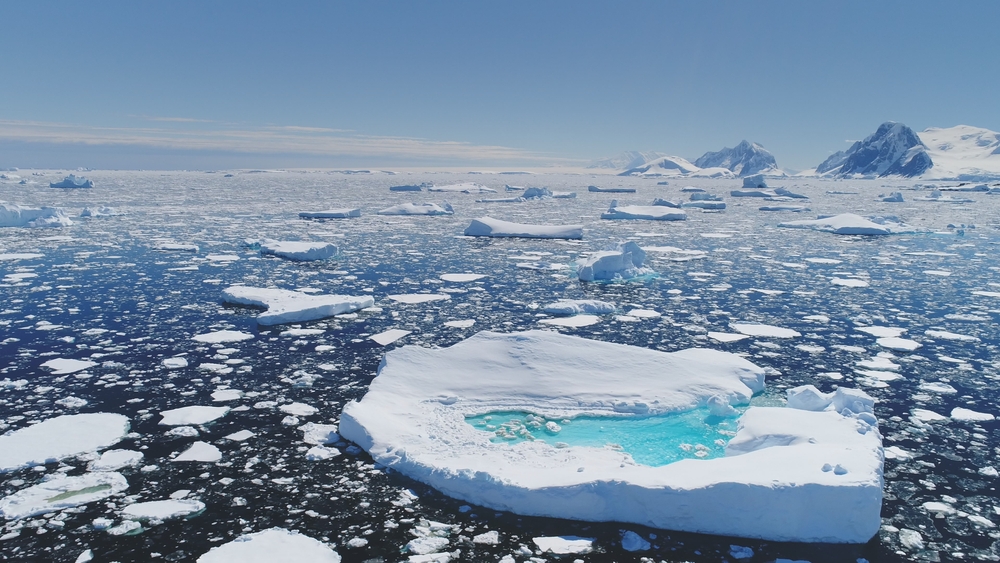
Greenland Is Losing Millions Of Tons Of Ice
Greenland is one of the clearest examples of the scale of the changes being measured. One estimate cited alongside the research puts the island’s ice loss at roughly 30 million tons every hour. The Greenland ice sheet contains enough frozen water to raise global sea levels by roughly 23 to 24 feet if it were eventually lost entirely.
That does not mean sea levels are about to rise by 23 feet. Ice sheets respond over much longer periods, and the researchers are not predicting an overnight collapse. The concern is that continued warming could eventually push the system toward a state in which substantial ice loss becomes increasingly difficult to reverse.
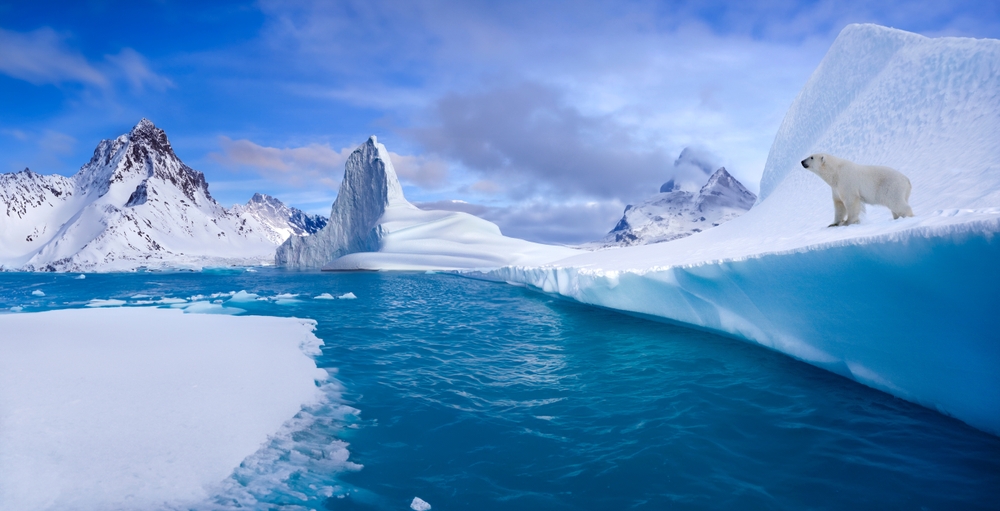
The problem extends beyond Greenland. Arctic permafrost is also changing as temperatures rise. The frozen ground contains carbon that accumulated over thousands of years, and thawing can release some of that carbon into the atmosphere.
Permafrost thaw is already creating practical problems across parts of the Arctic, including damage to roads, buildings and other infrastructure. Johan Rockström, director of the Potsdam Institute for Climate Impact Research, described the broader situation as “cracks in the resilience of the Earth’s systems.”
Coral Reefs Could Be Among The First Major Systems To Tip
Not every climate tipping point operates on the same timeline. Tropical coral reefs are already showing some of the clearest signs of severe stress, with separate research placing their thermal tipping point at roughly 1.2°C of warming.
The planet has already passed that level. The 2025 Global Tipping Points Report estimated that tropical reefs face a 99% chance of crossing a tipping threshold at 1.5°C of warming. Some researchers believe major reef degradation is already underway.
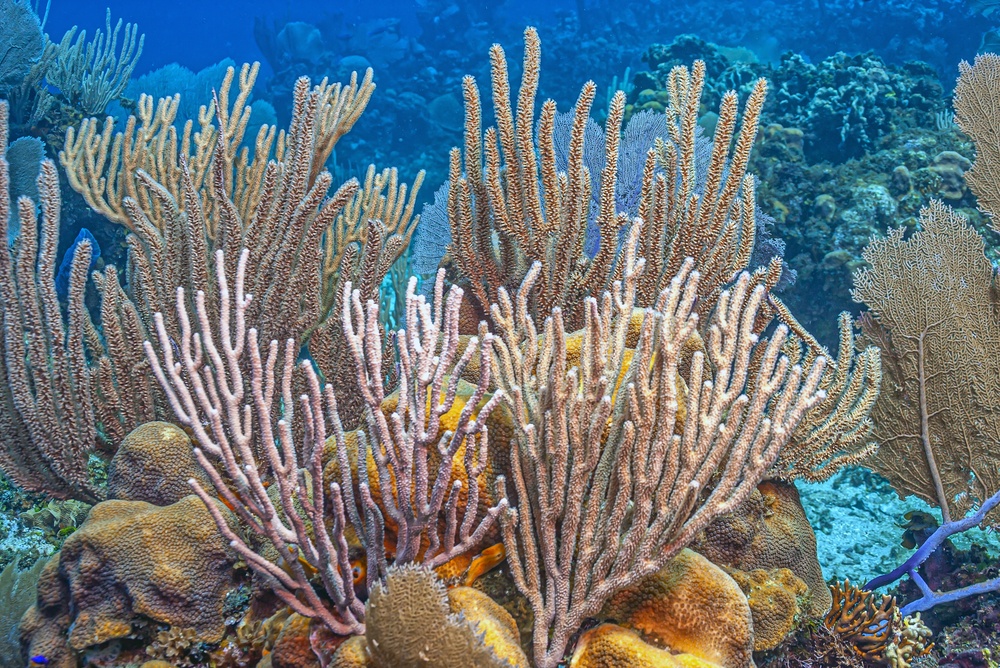
Coral loss would have consequences well beyond the underwater ecosystems themselves. Reefs provide habitat for marine species and help protect coastal communities from waves and storm surge. Millions of people also depend directly or indirectly on reef ecosystems for food and income.
That makes coral reefs an unusually visible example of what a climate tipping point can look like in practice. There is no single dramatic moment when the reef suddenly disappears. Instead, increasing heat stress can produce repeated bleaching events, weaken coral and reduce its ability to recover.
The Amazon Faces Pressure From Heat, Drought And Deforestation
The Amazon rainforest presents another major concern because it is both highly valuable to the global climate system and vulnerable to multiple pressures at once. Researchers estimate that nearly half of the Amazon could face overlapping heat, drought and wildfire stress by 2050.
A major shift in the forest could release billions of tons of carbon dioxide into an atmosphere already containing elevated levels of greenhouse gases. That creates a particularly worrying feedback because a forest that becomes less capable of storing carbon can contribute to the problem that is making the forest more vulnerable.
The Amazon’s vulnerability is also influenced by human activity. Deforestation removes trees directly and can lower the threshold at which parts of the forest become vulnerable to heat and drought. That means the forest’s future depends on more than global temperature alone.
There is also a more hopeful implication in the research. Protecting existing forests can preserve some of the resilience that remains. Every area of forest left standing represents carbon storage that does not have to be rebuilt after destruction.
Scientists Cannot Give A Date For A Climate Collapse
Despite the alarming language surrounding tipping points, the researchers are not predicting that Earth will suddenly cross a single line on a specific date. There is no scientific countdown clock showing exactly when Greenland, the Amazon or the Atlantic circulation will reach an irreversible state.
Climate tipping points are better understood as ranges of risk than precise switches. Different studies produce different estimates, and scientists still face major uncertainty over exactly how individual systems will respond to continued warming.
For Greenland, for example, estimates of the temperature range associated with irreversible destabilization vary substantially. Other research suggests that several tipping points could potentially be triggered if global warming reaches 2°C.
That uncertainty does not eliminate the risk. It makes the problem more difficult because policymakers cannot simply wait for a precise warning signal before acting. By the time scientists can say with certainty that a threshold has been crossed, some changes may already be difficult or impossible to reverse.
Sixteen Systems Are Now Part Of The Climate Warning
Ripple’s research highlights a broad collection of systems that scientists are watching because their behavior could influence the planet’s future climate.
Among the most significant are:
- Greenland Ice Sheet: Continued ice loss contributes to long-term sea-level rise and changes freshwater entering the North Atlantic.
- West Antarctic Ice Sheet: Instability could eventually contribute substantially to global sea-level rise.
- Arctic Permafrost: Thawing can release carbon that has remained frozen for thousands of years.
- Amazon Rainforest: Heat, drought and deforestation could weaken its ability to store carbon.
- Mountain Glaciers: Continued melting threatens freshwater supplies while contributing to rising seas.
- Atlantic Meridional Overturning Circulation: Major changes could disrupt heat transport and influence weather patterns across large regions.
The important point is that these systems do not exist independently. A change in one can alter the conditions experienced by another, creating a network of connected risks.
That is why scientists increasingly examine climate change as a system-wide problem rather than simply measuring whether the global temperature rises by another fraction of a degree.
Every Fraction Of A Degree Still Changes The Odds
Ripple’s team does not present the research as proof that a catastrophic climate future is inevitable. Instead, the paper argues for rapid action to reduce the chances of crossing dangerous thresholds.
The researchers call for faster renewable energy deployment, a fossil fuel phaseout that accounts for social equity, stronger protection for ecosystems that store carbon and improved monitoring of climate tipping elements.
The distinction is important. The research does not say that humanity has reached a point where nothing can be done. It says the risks increase as warming continues and that some changes could become harder to reverse once critical thresholds are crossed.
“It is increasingly likely that global warming will exceed 1.5 °C in the late 2020s or 2030s,” said Dr. Paul Ritchie of the University of Exeter’s Global Systems Institute.
Nico Wunderling of the Potsdam Institute summarized the challenge in simple terms: “We need to anticipate the dangerous outcomes and take action to prevent them.”
Earth is not approaching one giant switch that will suddenly turn the planet into an uninhabitable wasteland. The warning is more complicated than that. Multiple systems can weaken at different times, each adding pressure to the next. That makes the choices made now far more consequential than any single temperature number suggests.
Sources:
- Ripple, W. J., Wolf, C., Rockström, J., Richardson, K., Wunderling, N., Gregg, J. W., Westerhold, T., & Schellnhuber, H. J. (2026). The risk of a hothouse Earth trajectory. One Earth, 9(2), 101565. https://doi.org/10.1016/j.oneear.2025.101565
- Jessica-Corbett. (2026, February 14). Earth hurtling toward “Hothouse trajectory,” scientists warn in Tipping points analysis. Common Dreams. https://www.commondreams.org/news/climate-tipping-points
Amazon rainforest, Arctic permafrost, Atlantic Meridional Overturning Circulation, Carbon Dioxide, climate change, Climate Crisis, Climate research, climate risks, Climate Science, climate tipping points, coral reefs, Earth climate, Earth systems, Environmental News, environmental warning, Global Warming, Greenland ice sheet, hothouse Earth, scientists