
Your cart is currently empty!
Scientists Stunned After Bumblebees Use Tools To Solve Puzzle They Were Never Taught

Most people would never put bumblebees in the same category as animals known for intelligence. When conversations about problem-solving in the animal kingdom come up, attention usually turns to chimpanzees using sticks, crows bending wires into hooks, or dolphins working together to catch prey. Bumblebees are often viewed as simple insects driven almost entirely by instinct, carrying out the same routines day after day as they move between flowers, collecting nectar. A new experiment is forcing scientists to rethink that assumption after a group of bumblebees successfully solved a complicated challenge that required them to use tools in a way they would never encounter in nature.
Contents
show
The findings surprised researchers for another reason. The bees were not trained to solve the task, nor were they shown how to complete it beforehand. They had to work out the solution themselves through exploration and experimentation. Even more remarkably, a few of the insects discovered shortcuts that allowed them to bypass the intended challenge altogether. Their behavior is adding to a growing body of evidence suggesting that intelligence and flexible decision-making can emerge in creatures with brains far smaller than scientists once believed possible.
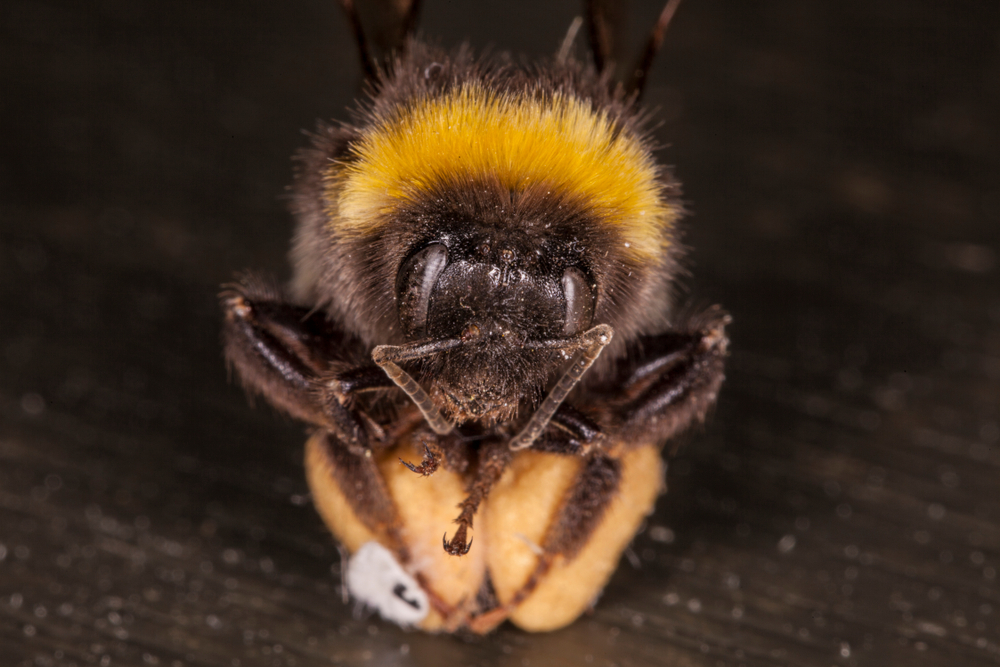
The Puzzle Was Unlike Anything Found In Nature
Researchers created a chamber containing several pits in the floor and a fake flower mounted on the ceiling. The flower contained a sugary reward, but reaching it was impossible from the ground. At the same time, the design prevented the bees from hovering beneath the flower and drinking while in flight.
Inside the chamber sat a lightweight Styrofoam ball that could be moved around. The only way to access the reward was to roll the ball into the correct pit and then climb on top of it. Once elevated, the bee could finally reach the flower and collect the sugar.
The setup was deliberately designed to remove instinct from the equation. The goal was not to observe behaviors that bees might naturally perform while searching for food. Scientists wanted to see whether the insects could adapt to a completely unfamiliar situation and discover a solution on their own.
As Olli Loukola explained, “We weren’t interested in instincts in their behavior; we were interested in their flexibility in decision-making.” He added, “You need to have something that’s not natural for them. They don’t really need to roll any objects when they’re foraging.”
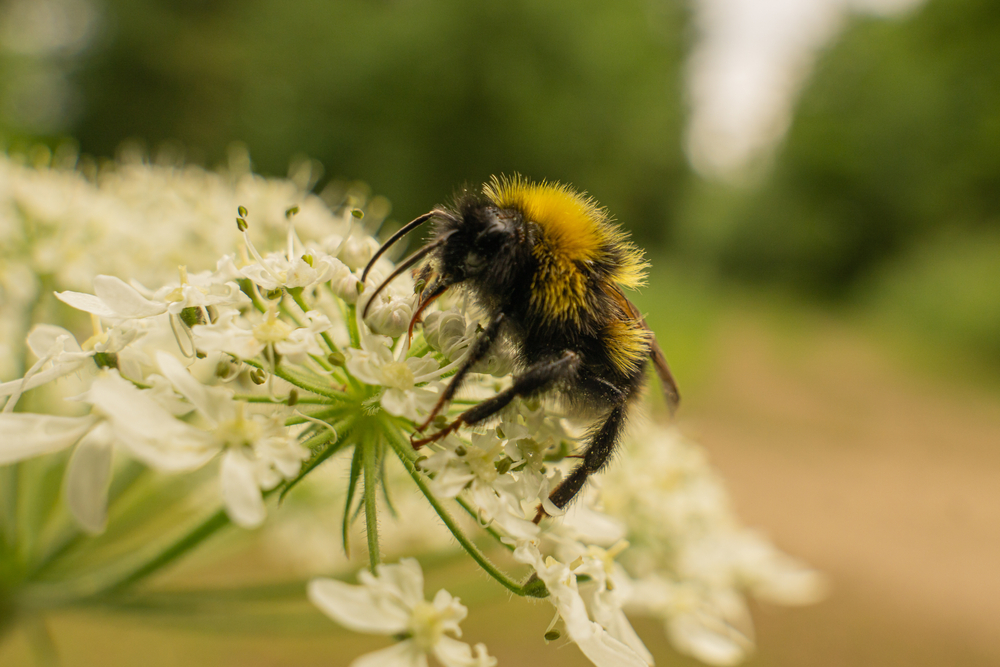
Most Of The Bumblebees Worked Out The Solution
The insects entered the experiment with very little information. They knew that the flower contained a reward, and they could interact with the ball. Everything else had to be learned through trial and error.
Many quickly began exploring their surroundings. Some pushed the ball around the chamber, while others investigated the pits and flowers. Over time, several individuals connected the pieces of the puzzle and started moving the ball toward the correct location.
Out of 22 bees tested, 16 successfully rolled the ball into the right pit and used it as a platform to reach the sugary treat above. The task required multiple steps and a clear understanding that moving one object could create an opportunity to reach another.
For researchers, the result demonstrated a level of flexibility that many people would not expect from an insect. The bees were not repeating a memorized action. They were responding to a novel problem and discovering a workable solution.
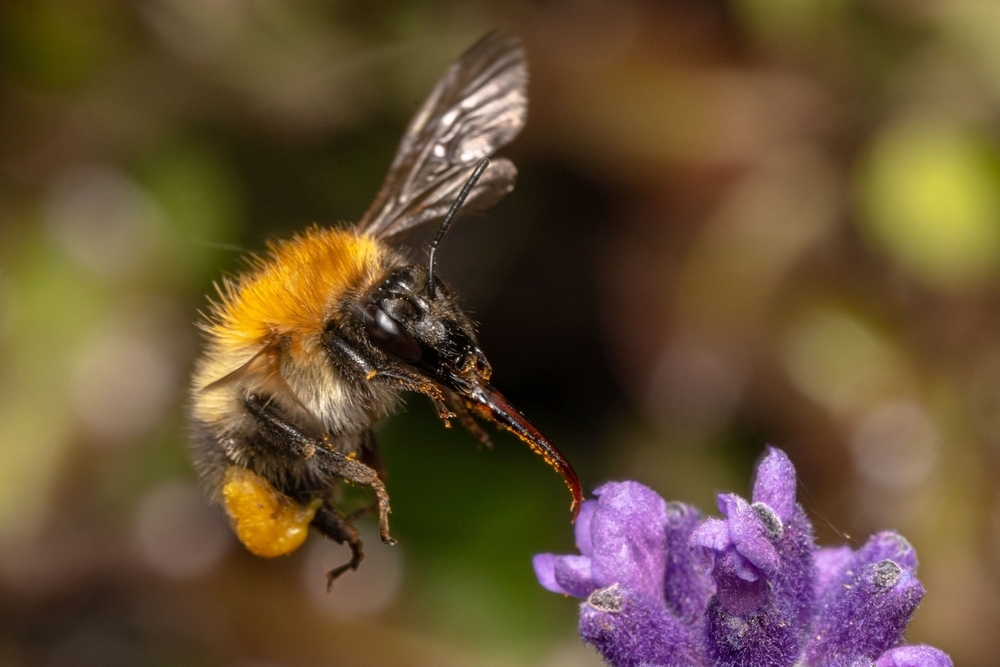
Tiny Brains Continue To Challenge Assumptions
One reason the findings have attracted so much attention is the size of a bumblebee’s brain. Humans possess roughly 86 billion neurons, while bumblebees have around one million. Traditional thinking often linked advanced problem-solving abilities with larger brains and greater numbers of neurons.
The latest observations suggest that the relationship may not be as straightforward as once believed. Despite their tiny nervous systems, bumblebees repeatedly demonstrated behaviors associated with flexible thinking and adaptation.
“The number of neurons is not correlating with cognitive abilities,” Loukola said. He suggested that larger brains may sometimes be connected to body size or long-term memory demands rather than intelligence alone.
Researchers believe the constantly changing environments bees inhabit may help explain their abilities. Flowers bloom and disappear, weather conditions shift rapidly, and food sources can become unavailable with little warning. Animals living in those conditions may benefit from being adaptable rather than relying solely on fixed behaviors.
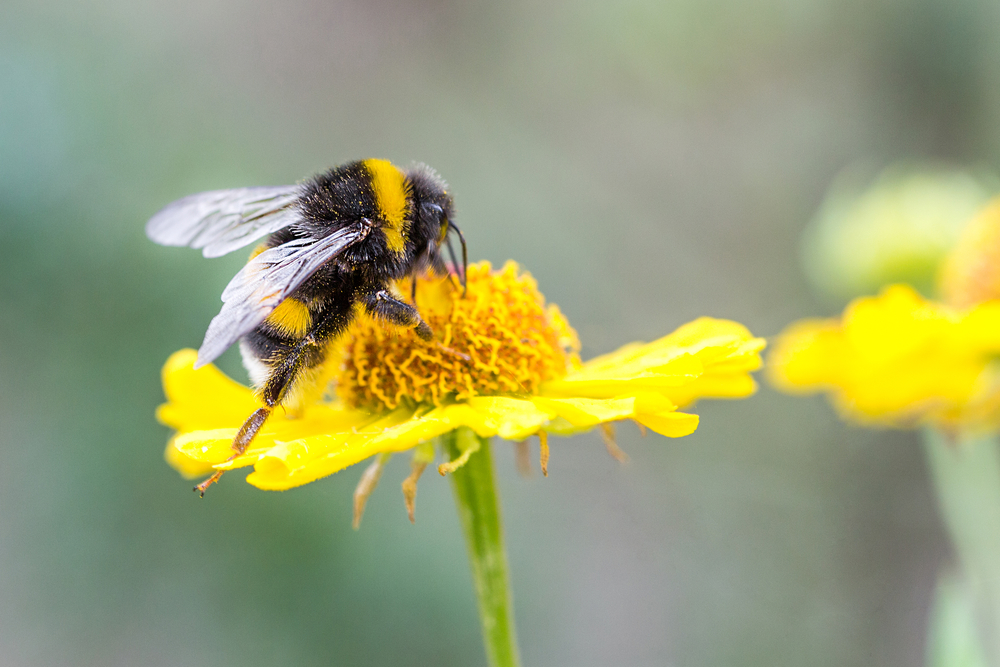
Some Bees Found A Way To Cheat
One of the most fascinating observations came from bees that technically failed the experiment. Rather than solving the puzzle as intended, they discovered an entirely different route to the reward.
The chamber had been designed so the insects would need to use the Styrofoam ball. Most participants followed that path. A handful of individuals, however, approached the challenge from another angle.
Instead of rolling the ball, they learned they could cling to the ceiling and position themselves close enough to drink from the flower. While this behavior did not count as a successful completion of the task, it still allowed them to access the reward.
“We didn’t report this in the paper, but one very cool thing we observed that couldn’t be recorded as a success was: we found some individuals cheating,” said Akshaye Bhambore. He added, “A very few individuals figured out that they don’t need to use the ball at all and that they could just hang off the ceiling and try to drink from the flower.”

Bees Have Been Surprising Scientists For Years
The latest experiment is part of a growing list of discoveries that suggest bees are capable of far more than many people realize. Previous research has shown that bumblebees can learn to pull strings to access rewards and that untrained individuals can acquire the behavior simply by watching others perform it.
Those findings challenged long-standing assumptions about insect learning. The new observations push that discussion even further by demonstrating that bees can tackle unfamiliar problems without prior instruction.
Scientists are increasingly interested in understanding how these insects process information and make decisions. Their brains may be tiny, but the behaviors they display often appear far more sophisticated than their size would suggest.
Each new experiment seems to reveal another layer of complexity. What once looked like simple instinctive behavior is beginning to resemble something much more flexible and adaptive.
Researchers Want To Know How Far Bee Intelligence Goes
The puzzle experiment answered one question while opening the door to many others. Researchers are now planning additional tests to determine how deeply bees understand the physical world around them.
One area of interest involves object properties. Scientists want to know whether bees recognize that certain objects are useful while others are not. They are also interested in whether insects understand why one tool works better than another.
Bhambore believes future experiments could provide insight into how bees evaluate different options when facing a challenge. As he explained, the goal is “to see if they really understand the physical properties of the objects themselves” and “to see if they can understand that this object differs from others and that they need to use one object to perform the task versus other, nonfunctional ones.”
For creatures often dismissed as simple insects, bumblebees continue to raise difficult questions about intelligence. The next breakthrough may reveal that some of the smallest brains on Earth are capable of much more than anyone imagined.