
Your cart is currently empty!
Scientists Thought They Had Found the World’s Only Cold-Blooded Mammal. The Truth Was Even Stranger
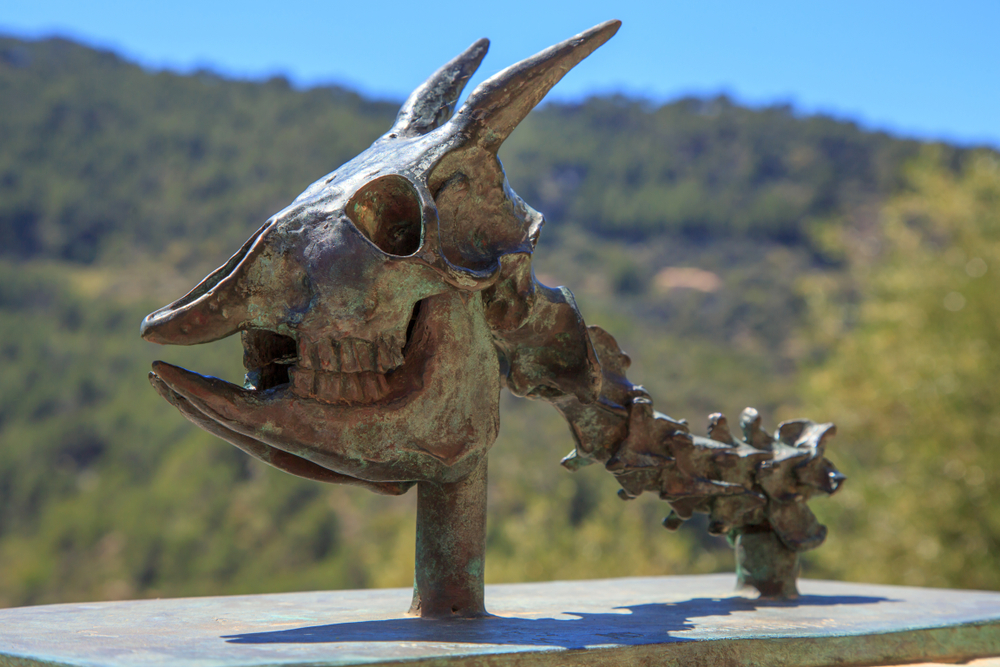
For years, one extinct animal carried a title that sounded almost impossible. Scientists studying fossils from the Mediterranean island of Mallorca believed they had discovered the world’s only cold-blooded mammal, a bizarre goat-like creature whose bones appeared to grow more like those of a crocodile than any living mammal. The claim spread around the world, turning an obscure prehistoric species into one of evolution’s most fascinating mysteries.
Contents
show
The real story, however, turned out to be even stranger. As researchers continued studying the animal over the following years, they discovered that the famous “cold-blooded mammal” label wasn’t entirely accurate. Instead, the fossils revealed something far rarer: a warm-blooded mammal that evolved to survive by slowing its entire life to an extraordinary pace. It grew for more than a decade, lived far longer than animals its size should have, and adapted so perfectly to life on an isolated island that it ultimately became defenseless when humans finally arrived.

An Island Created One of Evolution’s Oddest Experiments
Around seven million years ago, the ancestors of Myotragus balearicus became isolated on what would eventually become the Balearic Islands. According to genetic research published in 2019, the animal’s closest living relative is the takin, a large mountain-dwelling mammal found in the eastern Himalayas. Although they share a common ancestor, millions of years of separation sent the two species down dramatically different evolutionary paths.
The isolation began during the Messinian Salinity Crisis, a period when the Mediterranean Sea largely dried up and exposed land bridges connecting islands with mainland Europe. Animals were able to migrate freely across these temporary routes. When the sea later returned, those bridges disappeared, leaving populations stranded on islands with no way back.
For Myotragus, Mallorca became an entire world. There were no wolves, no large cats, and virtually no predators capable of hunting it. At the same time, food was scarce and seasonal, forcing the animals to survive on limited vegetation year after year. Instead of evolving greater speed or stronger defenses, natural selection favored animals that needed less energy and could endure long periods when food was difficult to find.
Over millions of years, those pressures transformed the species into something unlike almost any other mammal. Adults stood only about 45 to 50 centimeters at the shoulder, making them much smaller than their mainland ancestors. Their eyes gradually shifted toward the front of the skull, giving them better binocular vision rather than the wide-angle awareness that prey animals usually rely on to spot predators approaching from behind.
Built for Survival, Not Speed
The changes didn’t stop there. Studies of the skull revealed that regions of the brain associated with vision became smaller over time, matching a lifestyle where constantly scanning the horizon for danger was no longer necessary. On an island without predators, maintaining highly developed visual systems simply cost more energy than they were worth.
Its teeth also evolved in remarkable ways. Instead of developing the typical set of lower incisors found in goats and other hoofed mammals, Myotragus possessed a single continuously growing incisor on each side of its lower jaw, more closely resembling the teeth of rodents. The unusual adaptation allowed it to process the tough, abrasive vegetation that dominated Mallorca’s landscape.
Each of these features reflected the same evolutionary theme. Rather than becoming stronger or faster, the animal became more economical. Every adaptation reduced the amount of energy needed to survive another season on an island where resources were always limited and opportunities to escape hardship simply didn’t exist.
The Fossils That Shocked Scientists
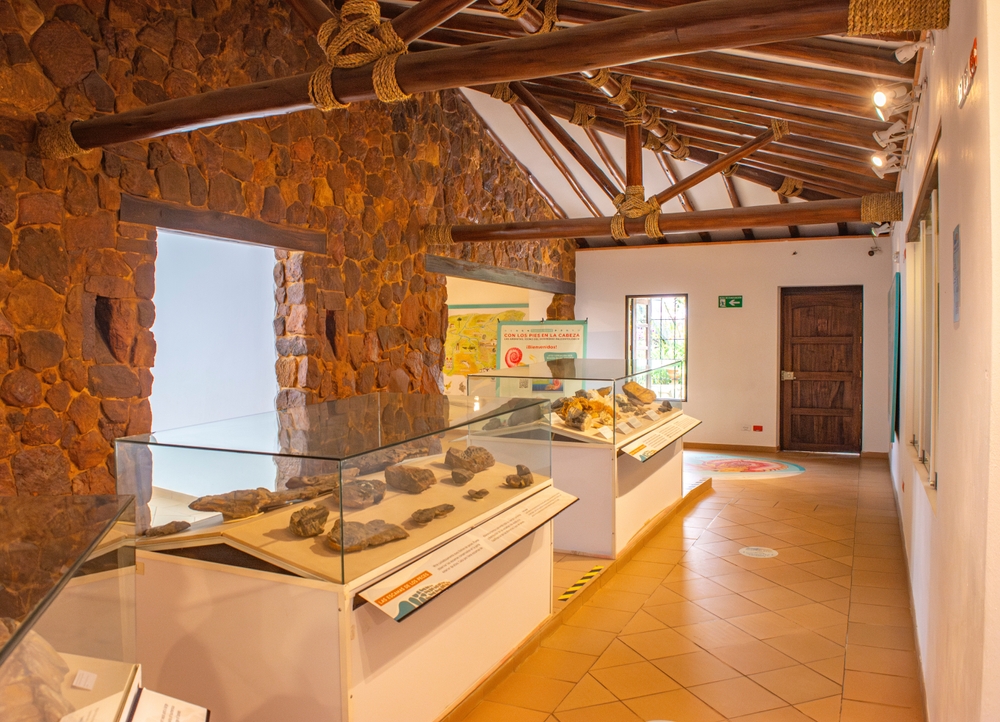
Thousands of years after Myotragus disappeared, its fossilized bones began revealing an extraordinary story. Among the most important discoveries were dozens of incredibly thin slices cut from the long bones of the extinct animal. Under a microscope, those samples displayed dark rings running through the bone, resembling the annual growth rings seen inside tree trunks.
Researchers expected mammal bones to show continuous, rapid growth. Instead, every sample told a different story. The dark bands indicated repeated periods when growth stopped almost completely before beginning again later. This type of tissue, known as lamellar-zonal bone, is commonly found in reptiles such as crocodiles, turtles, and lizards rather than mammals.
In 2009, paleontologists Meike Köhler and Salvador Moyà-Solà examined 57 separate bone sections from Myotragus. Every specimen showed the same unusual pattern. Their findings suggested that the extinct animal synchronized its growth with changing environmental conditions, slowing or even halting development during periods when food became scarce before resuming growth when resources returned.
The discovery immediately attracted worldwide attention because it challenged one of biology’s basic assumptions. Mammals are warm-blooded, maintaining relatively stable body temperatures through constant metabolic activity. Reptiles, by contrast, often reduce their metabolism dramatically when environmental conditions become unfavorable. Seeing reptile-like growth patterns preserved in mammal bones led many people to describe Myotragus as the world’s only cold-blooded mammal.
A Discovery That Challenged Long-Held Ideas
The claim captured imaginations because it seemed to blur one of the clearest distinctions between mammals and reptiles. If an extinct goat-like animal had truly evolved cold-blooded physiology, it would represent one of the most dramatic evolutionary transformations ever discovered in the fossil record.
Yet even the researchers behind the study were careful with their wording. Rather than declaring the animal fully cold-blooded, they proposed that it had evolved an exceptionally flexible metabolism, allowing it to reduce energy demands in ways rarely seen among mammals. That distinction would later become crucial as additional evidence emerged.
It Took More Than a Decade Just to Grow Up
One of the most astonishing discoveries about Myotragus wasn’t hidden in its teeth or skull. It was found in the pace of its life. Researchers estimated that the animal needed roughly 12 years to reach full physical maturity, an extraordinary figure for a mammal about the size of a large dog. Modern goats typically complete most of their growth within their first year, making Myotragus an extreme outlier.
Its slow development was matched by an unusually long lifespan. Studies examining tooth cementum, the tissue that records yearly growth, suggested many individuals lived for around 27 years, while bone evidence indicated some may have survived for as long as 34 years. Few hoofed mammals of comparable size come close to that longevity.
Those numbers paint the picture of an animal living according to a completely different biological schedule. Instead of growing rapidly and reproducing early, Myotragus invested in patience. Every stage of its life unfolded slowly, allowing it to conserve precious energy on an island where food shortages were a regular part of existence.
This strategy proved remarkably successful for millions of years. Rather than competing through speed or strength, the species endured difficult seasons by lowering its energy demands. In an environment with few predators but limited resources, survival favored efficiency over urgency.
A Lifestyle Unlike Any Living Mammal
Scientists believe the animal’s metabolism operated at a much lower level than that of modern hoofed mammals. During periods of scarce food, its growth could slow dramatically before accelerating again when conditions improved. This flexible rhythm helped the species survive repeated environmental fluctuations without exhausting its limited energy reserves.
Combined with its specialized teeth, reduced body size, and unusual skull structure, the slow metabolism formed part of a complete survival strategy. Every adaptation pointed toward the same evolutionary solution: use as little energy as possible while waiting for better conditions to return.
Scientists Revisited the Famous “Cold-Blooded” Claim
The headline that made Myotragus famous did not remain unchallenged. Three years after the groundbreaking 2009 study, Meike Köhler and her colleagues returned to the question with a much larger investigation involving 115 femurs from nearly 100 living species of hoofed mammals.
The results changed how scientists interpreted the famous growth rings. Researchers discovered that deer, antelope, reindeer, and many other unquestionably warm-blooded mammals also developed seasonal growth arrest lines in their bones. During colder months or periods of limited food, these animals experienced temporary reductions in body temperature, metabolism, and growth before resuming normal development.
The findings showed that growth rings alone could not be used as proof that an animal was cold-blooded. While Myotragus displayed reptile-like growth patterns, those patterns were no longer considered unique evidence of ectothermy. The feature reflected an unusual lifestyle rather than a complete transformation into a reptile-like mammal.
Instead of weakening the original discovery, the later research made the animal even more fascinating. Rather than breaking the rules of mammalian biology, Myotragus demonstrated just how flexible those rules could become under millions of years of evolutionary pressure.
More Remarkable Than the Original Headline
Researchers now believe the extinct species remained warm-blooded but evolved to operate at the lowest practical metabolic level. It could dramatically reduce growth when resources disappeared before restarting the process once conditions improved.
Even the scientists behind the original research acknowledged the limitations of interpreting extinct physiology. Without a living equivalent for comparison, many aspects of the animal’s metabolism remain impossible to confirm directly. Its fossils preserve clues, but not every answer.
Five Million Years of Success Ended in Just a Few Centuries
The same adaptations that allowed Myotragus to survive for millions of years ultimately became fatal once its world changed. A body built for slow movement and low energy consumption was perfectly suited to an island without predators, but it offered little protection against new threats.
According to Köhler, the skeleton shows the animal “was not able to run, jump, or move fast around,” making it easy prey when unfamiliar predators finally appeared. Humans eventually reached Mallorca, bringing domesticated animals such as sheep and transforming an ecosystem that had remained remarkably stable for millions of years.
Radiocarbon studies published in 2016 indicate that the last known Myotragus fossils date to around 4,500 years ago. Sheep appeared on the island within only a few centuries of those final remains, suggesting the extinction was closely linked to human arrival rather than changes in climate.
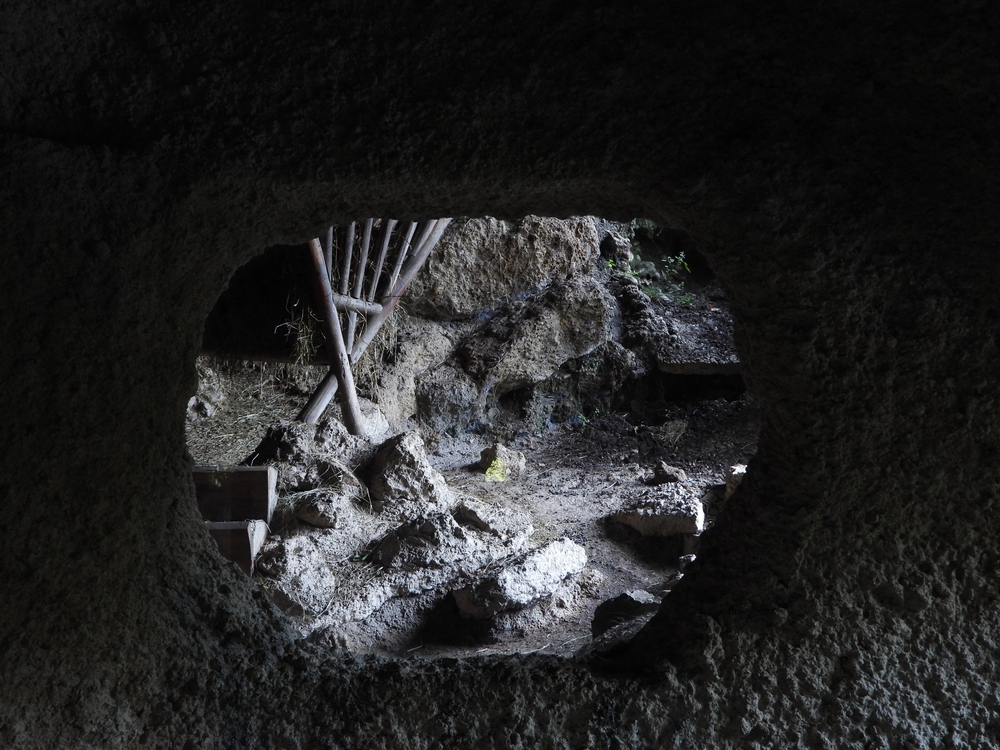
Recent archaeological discoveries continue to reshape the timeline. A 2024 study of a submerged stone bridge inside Mallorca’s Genovesa Cave suggests people may have reached the island at least 5,600 years ago. Whether humans and Myotragus coexisted peacefully for centuries before something triggered the species’ disappearance remains an unanswered question.
What the Bones Still Teach Scientists Today
Although Myotragus balearicus vanished thousands of years ago, its fossils continue to reshape scientists’ understanding of evolution. The animal was never simply a goat with reptile-like bones. It represented one of nature’s most extraordinary examples of how isolation can transform a species when survival depends on conserving every possible ounce of energy.
Its microscopic growth rings remain one of the most valuable records preserved in the fossil record. Each dark band marks another season survived, another difficult year endured, and another chapter in a life shaped entirely by the demands of a remote Mediterranean island.
The world’s “only cold-blooded mammal” may not have been cold-blooded after all. Yet the truth turned out to be even more remarkable. Myotragus evolved a lifestyle unlike anything living today, surviving at an exceptionally slow pace for nearly five million years before disappearing within only a few human generations. Long after the species itself vanished, the notebook it left behind in its bones continues to reveal new chapters of one of evolution’s most unusual stories.
ancient animals, Animal adaptations, archaeology, Balearic Islands, cold-blooded mammal, crocodile, evolution, Evolutionary Biology, extinct mammals, extinct species, fossil bones, fossil discoveries, goats, island evolution, Mallorca, Mediterranean, Myotragus, Myotragus balearicus, natural history, paleontology, prehistoric animals, Science news, warm-blooded mammals, wildlife