
Your cart is currently empty!
Scientists Watched Dying Corals Turn Colorful Again After One Unexpected Discovery
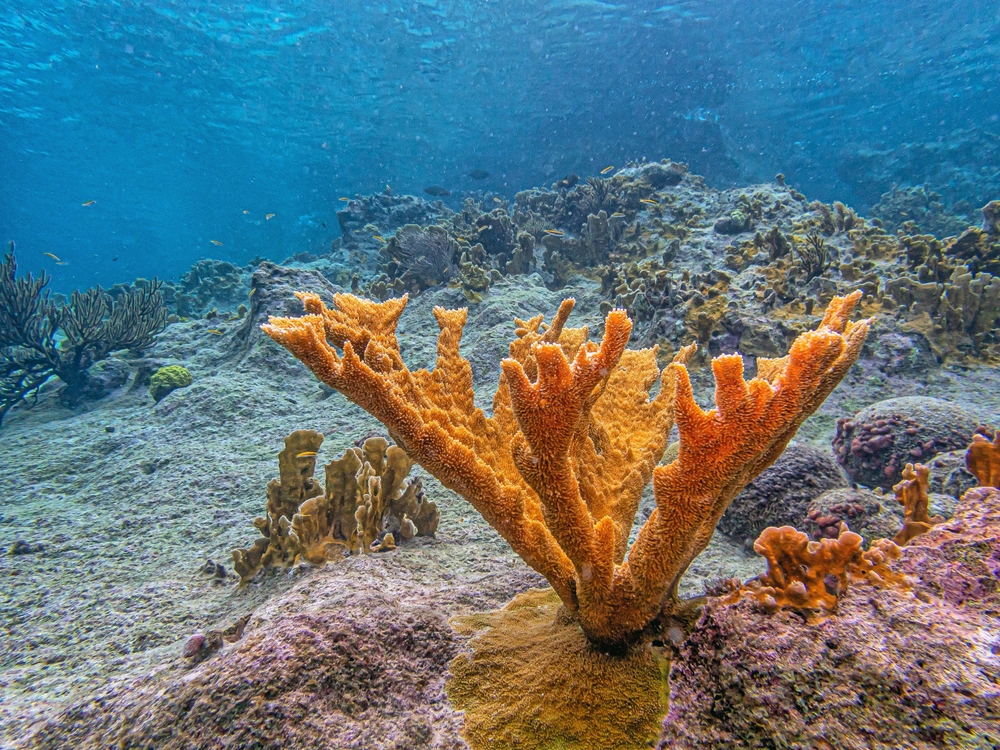
Corals that have turned ghostly white from heat stress are often considered to be on the road to death. But Stanford researchers have discovered something surprising: bringing a bleached coral into contact with a healthy genetic twin can help it recover its color within weeks.
Contents
show
The finding could open a new path for rescuing damaged coral reefs, which face growing pressure from rising ocean temperatures. The technique still needs further development before it can be used widely in the wild, but the results have challenged what scientists thought was possible for struggling corals.
A Strange Laboratory Discovery Changed Everything
For years, scientists have watched coral reefs lose their vivid colors as warming oceans put marine life under increasing pressure. When corals become severely stressed, they can expel microscopic algae living inside their tissues, leaving them pale or completely white.
The process, known as coral bleaching, can leave the animals without a crucial source of nourishment. If the stressful conditions continue, the coral may starve and die.
However, researchers at Stanford University recently discovered that some bleached corals can recover much faster than expected when placed in contact with healthy genetic clones.
According to the SFGATE report, a bleached coral fragment completely recovered within seven weeks after being placed against a healthy fragment from the same animal. The study was published in the journal Science Advances.
Danny Collins, the study’s lead author and a doctoral researcher at Stanford’s Doerr School of Sustainability, told SFGATE: “These bleached corals are often treated as a lost cause.”
The experiment suggests that scientists may have underestimated the ability of damaged corals to recover when given access to the resources they need.
How Two Coral Fragments Helped One Recover
The discovery began with an observation in a laboratory rather than a planned rescue experiment.
Researchers were studying coral health when a coral sample tipped over in a tank. A healthy fragment came into contact with a bleached fragment, and the damaged coral began regaining its color where the two touched.
That unexpected observation prompted researchers to investigate whether the contact itself could be responsible for the recovery.
They tested the idea with additional coral samples and found that healthy and bleached fragments from the same genetic clone could fuse their tissues. This created a pathway through which the healthy coral could transfer beneficial algae to its struggling counterpart.
The results surprised the research team. Color began returning within days, while full recovery occurred over seven weeks.
The team also found that the fragments did not need to remain in contact throughout the entire recovery period. A relatively brief period of contact could initiate the process.
That detail could prove useful as researchers investigate ways to adapt the discovery for conservation work.
The Science Behind Coral Bleaching
To understand why the experiment worked, it helps to know how corals survive in the first place.
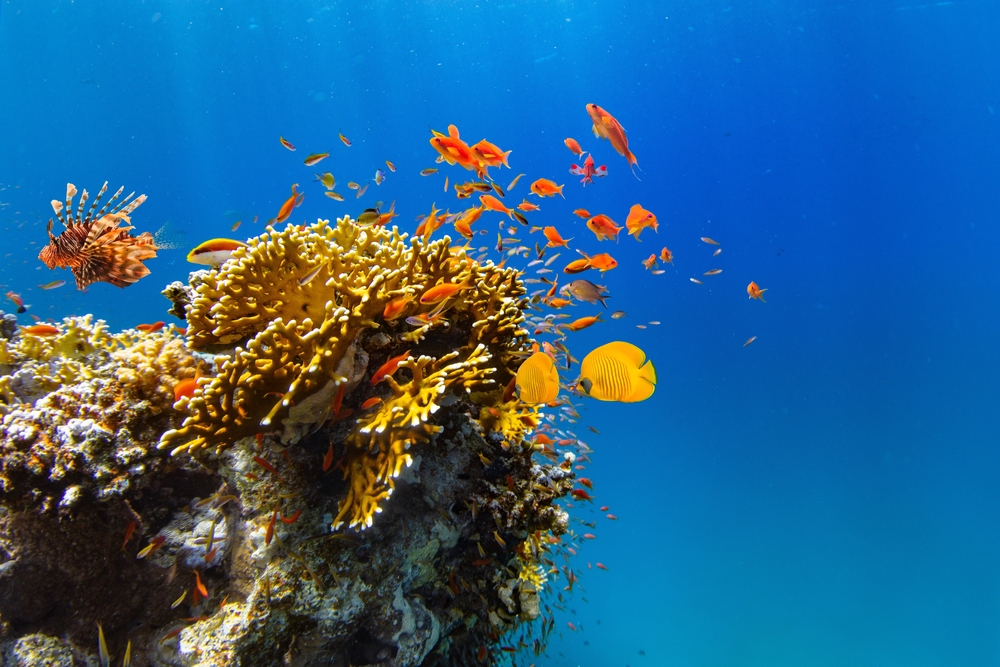
Although coral reefs resemble underwater gardens, corals are animals. Many reef-building species rely on a close relationship with microscopic algae that live within their tissues.
The algae use sunlight to produce energy through photosynthesis. In return, the coral provides the algae with a protected place to live and access to nutrients.
This relationship helps sustain the growth of coral reefs and supports the wider ecosystems that depend on them.
What Happens When Oceans Become Too Warm?
When ocean temperatures rise beyond what corals can tolerate, the relationship can break down.
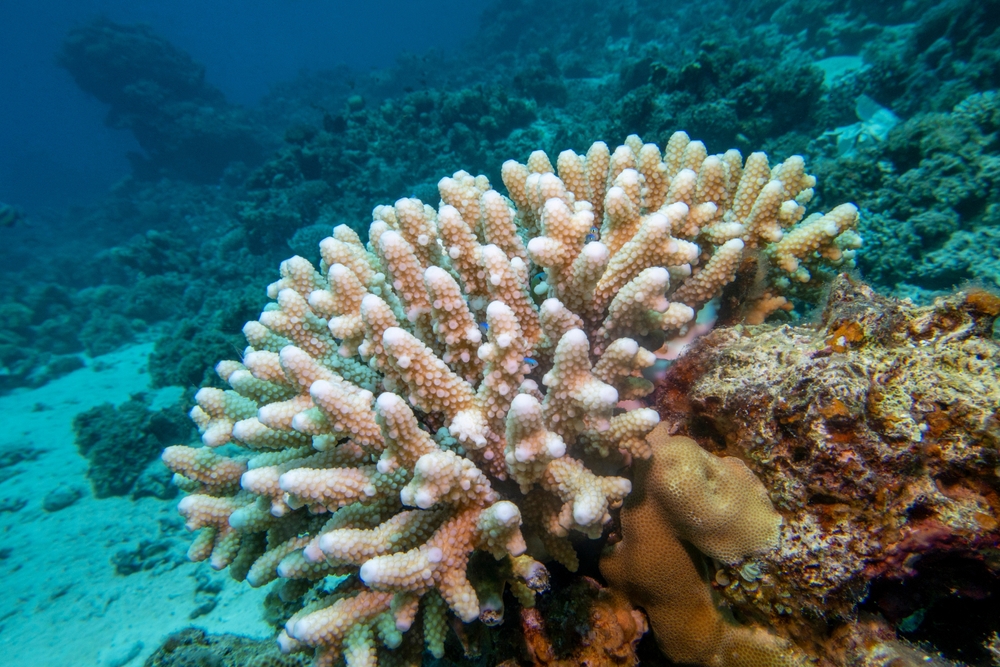
Stressed corals may expel their beneficial algae, exposing the pale skeleton visible through their tissue. Without enough algae to provide nourishment, the animals become vulnerable to starvation and disease.
Bleaching does not always mean a coral is dead. If conditions improve, some corals can regain their algae and recover. Others suffer lasting damage or die.
The Stanford findings add another possibility to that recovery process: healthy coral tissue may provide a route for restoring the algae that bleached corals have lost.
Why Genetic Clones Matter
Many coral species can reproduce by producing genetically identical copies of themselves.
When fragments from the same clone meet, their tissues can fuse. Researchers believe this compatibility allowed the healthy and bleached fragments in the experiment to form a connection through which beneficial algae could pass.
Steve Palumbi, a Stanford professor and study co-author, explained the process in a statement: “Their tissues fuse if they are from the same clone.”
The comparison helps explain why the experiment relied on matching coral fragments rather than simply placing any healthy coral beside a bleached one.
Why The Findings Matter For Threatened Reefs
Coral reefs occupy a tiny fraction of the ocean floor, yet they support a vast range of marine life. They also help protect coastlines from waves, flooding and erosion.
Communities around the world depend on reefs for fisheries, tourism and other economic benefits. When coral ecosystems deteriorate, the consequences can extend far beyond the water.
The new research offers a possible way to accelerate the recovery of corals that still have the capacity to survive.
Here are three reasons scientists are paying attention to the discovery:
- Faster recovery: The experimental corals recovered fully within seven weeks, offering a shorter timeline than recovery can sometimes take in the wild.
- A new restoration approach: The research suggests that restoring access to beneficial algae could help damaged corals recover, potentially informing future conservation techniques.
- A better understanding of coral resilience: The results show that bleached corals may retain a greater capacity for recovery than researchers previously appreciated.
The research is particularly relevant as ocean warming continues to threaten coral habitats around the globe.
However, the experiment remains an early step. Scientists still need to establish how the method performs across different species and under real ocean conditions.
Scientists Still Face A Major Challenge
Despite the encouraging laboratory results, researchers have warned against assuming the method can immediately restore entire reefs.
The experiment relied on healthy coral fragments that were genetically identical to the bleached fragments they helped revive. Finding or producing a suitable healthy clone for every damaged coral would be difficult on a large scale.
Maintaining the right contact between fragments also presents practical challenges in natural reef environments, where waves, currents, disease and changing temperatures can complicate restoration efforts.
Scientists would also need to establish how well the approach works across different coral species and environmental conditions.
A method that succeeds in a controlled aquarium setting does not automatically produce the same results across a vast, damaged reef.
The researchers therefore see the discovery as a starting point for further investigation rather than a complete solution to coral bleaching.
What Researchers Want To Try Next
The Stanford team’s findings have raised an important question: could scientists recreate the benefits of healthy coral contact without needing a genetic twin for every damaged fragment?
That is one of the possibilities now being investigated.
Researchers are exploring ways to extract beneficial algae, reproduce them in laboratory conditions and introduce them to bleached corals. The aim is to find a more practical route to delivering the algae that damaged corals need to recover.
The team has also discussed testing future approaches at field sites in Hawaii and Palau. Such work could help researchers determine whether the laboratory findings can translate into useful conservation techniques.
Several questions remain unanswered:
- Can beneficial algae be delivered effectively without direct contact between matching coral fragments?
- Will the approach work across a wider range of coral species?
- Can researchers maintain successful recovery under the variable conditions found on natural reefs?
- How can restoration efforts help corals survive when ocean temperatures remain dangerously high?
Answering those questions will help establish whether the discovery can contribute to reef restoration on a meaningful scale.
Coral Recovery Does Not Remove The Threat Of Warming Oceans
The research offers a new reason to investigate coral recovery, but it does not remove the underlying pressure facing reefs.
When water temperatures remain too high, corals can bleach again even after recovering. Restoration techniques will have limited long-term success if marine heat stress continues to overwhelm the animals.
Reducing greenhouse gas emissions and protecting vulnerable marine habitats remain essential parts of efforts to preserve coral ecosystems.
Researchers can investigate ways to help damaged corals survive, but conservation also depends on addressing the conditions that cause bleaching in the first place.
The Stanford experiment provides an encouraging example of what may be possible when scientists understand how a living organism repairs itself. A chance encounter between two coral fragments has opened a new research direction.
The next challenge is turning that laboratory discovery into a method that works in the ocean, where coral reefs need help most.
Sources:
- Collins, D. S., Sipkova, J., Mollica, N. R., Rolander, T., Klepac, C. N., Calistro, G. F., Barone, V., Micheli, F., & Palumbi, S. R. (2026). Rapid coral bleaching recovery via symbiont transfer from healthy corals. Science Advances, 12(42). https://doi.org/10.1126/sciadv.aeh1580