
Your cart is currently empty!
Teacher Says Her Third Graders Cannot Do These 10 Everyday Things, And Parents Are Being Asked To Step In
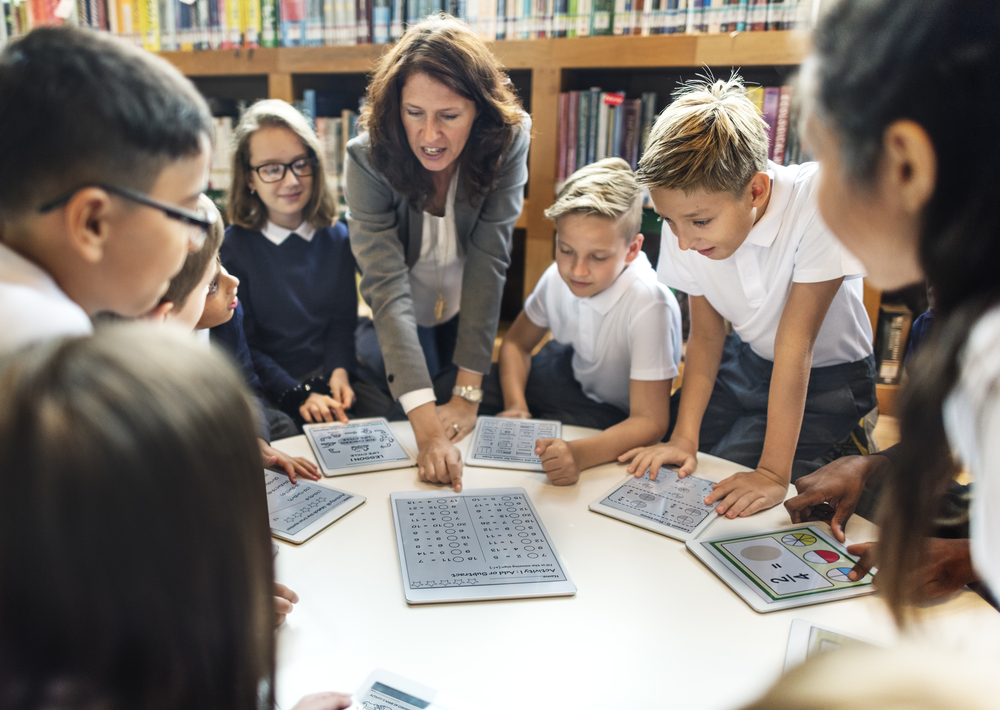
A third grade teacher has sparked a huge online conversation after revealing a list of ten everyday skills she says many of her students can no longer manage. The teacher, who posts on TikTok as @mommy_n_zachy, says some children struggle with things as basic as tying their shoes, remembering a parent’s name, counting money, following multi-step instructions, and even knowing their home address.
Contents
show
The video reportedly attracted nearly five million views, turning one teacher’s classroom frustration into a much bigger debate about what children are expected to know before they reach school. Her message was less about blaming parents or teachers and more about asking families to help with the practical skills that can easily disappear when children grow up surrounded by technology.
The Ten Skills That Started The Debate
The teacher’s list included ten everyday abilities that she said her third graders were struggling with: reading an analog clock, writing in cursive, memorizing a phone number, knowing their home address, counting money, tying their shoes, knowing a parent‘s name, knowing their birth year, using a dictionary or putting words in alphabetical order, and following directions that involve more than one step. Some of those skills have become less common simply because technology has made them less necessary. Phones display the time, contact lists store numbers, digital payments have reduced children’s exposure to cash, and many schools no longer emphasize cursive in the way they once did.
Other items on the list are harder to dismiss as outdated. A child knowing their home address or a parent’s name can become important in an emergency. Remembering a phone number can matter if a child becomes separated from their family and cannot access a contact list. The teacher’s concern was therefore not simply about bringing back old-fashioned habits. She was pointing toward basic information and practical abilities that children may need when a device cannot do the work for them.
Her Message Was A Plea For Help At Home
The teacher‘s tone was notably more pleading than angry. Rather than presenting the issue as a failure of schools or parents, she asked families to work alongside teachers so children could develop these abilities outside the classroom. “We’re going to do our part as teachers, but we just need a little extra help at home,” she said, before adding, “Please, please, please. We’re a community. We work together. So let’s set our kids up for success.”
Her most memorable line was simple: “If y’all can help us out, we need to go back to basics.” That sentence became the central message of the video because it shifted the focus away from who was responsible and toward what children actually need to learn. The teacher was not suggesting that parents should take over academic instruction. She was asking them to practice ordinary life skills that can be difficult for one teacher to teach to an entire classroom at once.
Other Educators Say The Problem Goes Beyond One Classroom
The concerns raised in the video also appear in a broader survey of educators working with young children. A January 2026 survey of 1,163 early educators and administrators working with children from pre-K through third grade found that 75% believed students were struggling more with basic skills than in previous years. The survey also found that 72% reported greater difficulty with following instructions, while 54% reported problems with shoe-tying.
More than half of those surveyed reported declines in fine motor skills, while 59% said behavior had worsened over a two-year period. Ian Knox, principal at Hamagrael Elementary School in New York, described another part of the problem: “We’ve seen a large increase in the inability for students to cope when things don’t go their way.” The findings do not prove that every child is experiencing the same difficulties, but they suggest the TikTok teacher’s experience is not necessarily isolated.

Screens May Be Replacing Everyday Practice
Screens were identified by 77% of educators in the survey as one possible factor behind the decline in basic skills. Children between five and eight years old average three hours and 28 minutes of screen media each day, according to the 2025 Common Sense Census. The same research found that 40% of children have a tablet by age two, while nearly one in four have their own phone by age eight.
The issue is not simply that children use screens. Technology can be useful, educational, and entertaining. The bigger question is what children are doing less often because a device now handles the task automatically. A phone remembers an address, stores a parent’s number, tells the time, and performs calculations that previous generations had to complete themselves. When children rarely need to remember or practice something, they naturally get fewer opportunities to develop that skill.
That difference becomes particularly noticeable when technology is unavailable. A child who has always relied on a phone for contact information may suddenly be expected to remember a parent’s number during an emergency. A child who has rarely handled coins and bills may struggle when asked to calculate change. The technology works perfectly, but the underlying skill can still disappear.

Schools Have Not Simply Stopped Teaching These Skills
One assumption surrounding the viral discussion needs some clarification. Schools have not universally abandoned skills such as telling time. The Common Core’s first grade mathematics standards still require students to tell and write time using both analog and digital clocks. The problem may be less about whether children are introduced to a skill and more about whether they continue using it afterward.
That distinction matters because learning something once does not guarantee that it will become permanent. A child can successfully complete a worksheet about analog clocks and still struggle to read one months later if they never encounter an analog clock again. The same principle applies to alphabetical order, counting money, handwriting, and other skills that have become less central to daily life.
Technology has changed the environment in which children practice these abilities. That does not automatically make the technology harmful, but it does mean parents and educators may need to create opportunities for children to use skills that no longer arise naturally.
Cursive May Have A Bigger Role Than People Think
Cursive was probably the easiest item on the teacher’s list for people to debate because many adults no longer use it regularly. Yet research into handwriting has produced some interesting findings. A 2024 study published in Frontiers in Psychology recorded EEG activity from 36 university students while they wrote by hand and typed on a keyboard.
The researchers found that handwriting produced more widespread brain connectivity, particularly across theta and alpha frequency bands. “When writing by hand, brain connectivity patterns were far more elaborate than when typewriting on a keyboard,” the study authors wrote. That finding has attracted attention because it suggests handwriting may engage the brain differently from typing.
There are important limitations, however. The participants were university students in their early twenties rather than children, and the study measured brain activity rather than directly measuring memory or academic performance. A later commentary also noted that the research did not directly test memory. The findings are therefore interesting, but they do not establish that every child needs to learn cursive to improve cognitive ability.
One Teacher Cannot Do Everything For 25 Children
There is also a practical problem behind the entire debate: time. A classroom teacher may have around 20 to 25 students while simultaneously teaching academic material, managing behavior, supporting children with different needs, and accommodating students with individualized education plans.
A former teacher who posts as @fitpeanut explained the pressure in blunt terms: “She’s got 20 to 25 kids in that class. She is trying to teach curriculum, manage some behaviors, support and accommodate the IEP students.” She then added, “Your teacher doesn’t even have a chance to go pee, let alone tie your child’s shoes.”
That does not mean teachers should never help children with practical skills. Young students will always need assistance sometimes. But if a classroom contains 25 children who all need individual help learning something that can be practiced at home, the teacher quickly runs out of time. A few minutes spent helping one child tie their shoes can become a much larger problem when several students need the same assistance.
The Good News Is That These Skills Can Be Learned
There is one encouraging part of the teacher’s complaint that can easily get lost in the argument. None of the skills on her list is beyond a child’s ability to learn. They are practical abilities that improve through repetition, patience, and regular use.
Parents can turn many of them into ordinary household routines:
- Phone numbers: Practice one important family number until the child can say it without looking at a screen.
- Addresses: Have children repeat their street, city, and state during everyday routines.
- Money: Let children handle coins and bills during appropriate purchases and practice identifying their values.
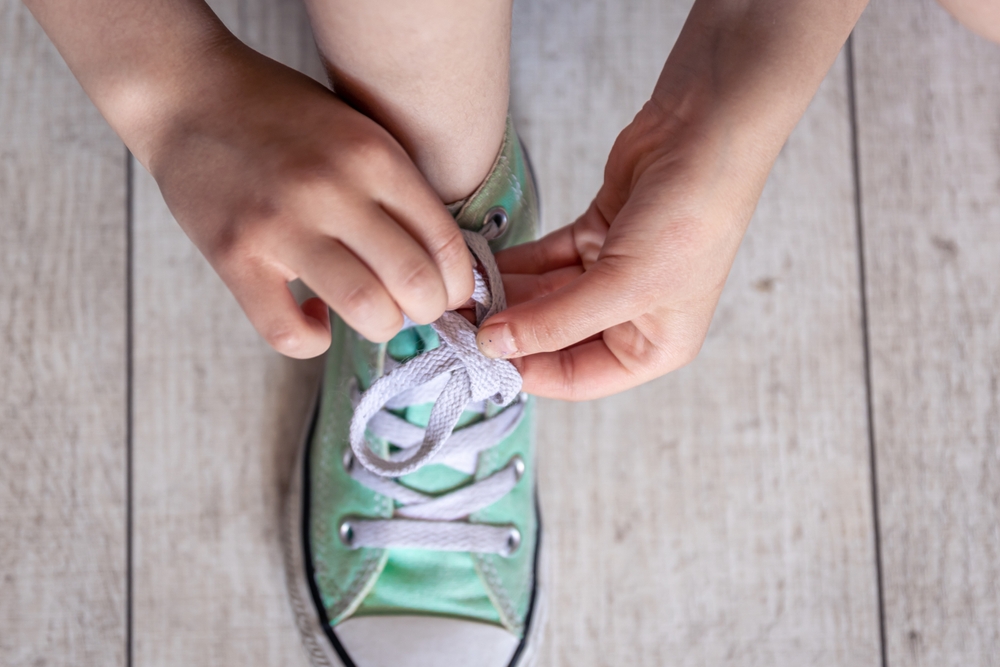
- Shoes: Give children time to practice tying their own laces instead of automatically doing it for them.
- Directions: Ask children to complete two-step or three-step tasks around the house.
- Alphabetical order: Use books, pantry items, or simple word games to make sorting practical.
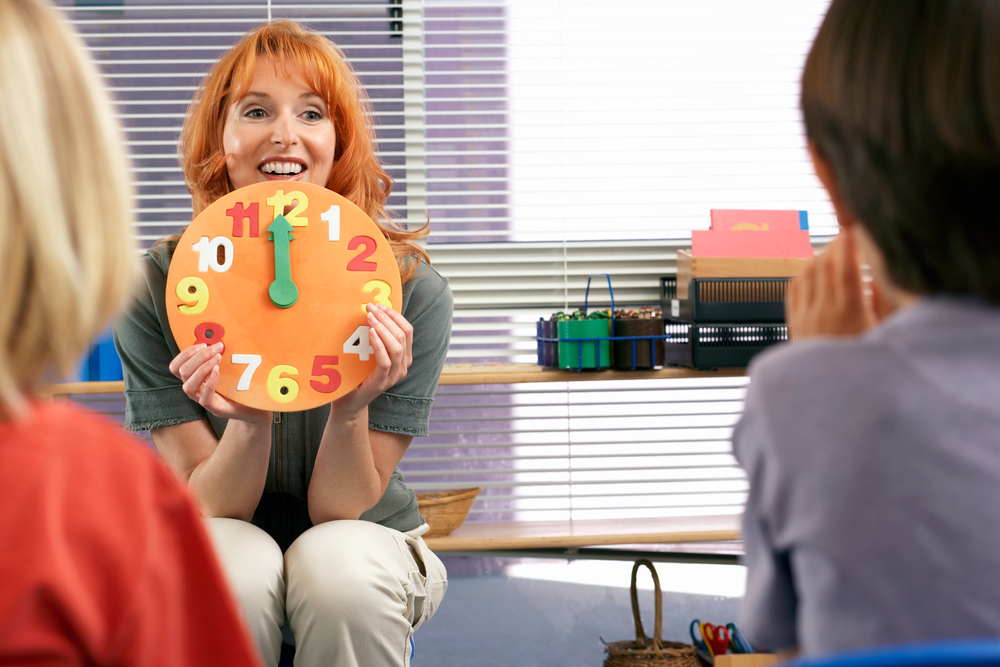
- Time: Let children regularly read an analog clock alongside the digital time shown on a phone.
These activities do not require expensive programs or complicated lesson plans. They can happen while getting ready for school, making dinner, cleaning up, shopping, or preparing for bed. The important part is giving children repeated chances to do the task themselves.
Somebody Still Has To Kneel Down
The image behind the teacher’s entire argument is remarkably ordinary: a child standing with untied shoelaces while an adult bends down to fix them. That moment can happen because a parent is rushing, a teacher is busy, or a child simply has not been shown enough times.
There is no reason to turn that moment into a judgment about an entire generation. Children learn the skills their environments give them opportunities to practice. When technology changes those environments, adults have to decide which old skills still deserve a place in everyday life.
The shoelaces will keep dragging across the classroom floor until somebody stops, sits down, and teaches the child how to tie them. Sometimes the most useful lesson really does start with something that simple.