
Your cart is currently empty!
Teen Can Recall Every Moment of Her Life — Inside Her Mind, a “White Room” Stores Every Memory She’s Ever Known

Imagine being able to recall every single day of your life, not just the milestones or heartbreaks, but the tiny moments that most of us forget without even realizing it. You could remember the smell of your childhood classroom, the sound of rain on your window on a random Tuesday ten years ago, or the exact taste of the meal you ate on your fifth birthday. For most people, this would be impossible. Memory is built to fade so that we can stay grounded in the present. Forgetting allows us to heal, to adapt, and to move forward. Yet for one 17-year-old girl, known to researchers as TL, every moment of her life remains vividly alive within her.
Contents
show
Researchers at the Paris Brain Institute and Paris Cité University have been studying TL’s astonishing mind. She possesses what is known as hyperthymesia, or highly superior autobiographical memory. While most people’s recollections are blurred by time, TL can recall even the smallest details with extraordinary precision. Her memories are so vivid that she describes them as being stored in a place inside her mind she calls “the white room.” It is a mental archive where every event, every emotion, and every sensory impression from her life is carefully arranged. TL’s story is not just about the wonder of perfect memory but also about how the human mind can construct meaning, identity, and balance through memory.
I built Iris, a wearable that gives you infinite memory of your life.
— Advait Paliwal (@advaitpaliwal) September 24, 2024
It takes a picture every minute, captions and organizes them into a timeline, and uses AI to help you remember forgotten details.
Iris also has a focus mode. It notices when you get distracted and proactively… pic.twitter.com/fQxzpBRmIA
The Architecture of an Extraordinary Mind
TL’s inner world is organized with astonishing clarity. She describes her memory as a physical space that exists inside her imagination. In the center of that space is the white room, a place with a low ceiling where her memories are stored in binders arranged by date and theme. Each binder holds a period of her life, from family gatherings to school moments, from holidays to quiet afternoons. When she wishes to revisit a moment, she mentally enters the room, opens a binder, and experiences the memory as if it were happening again. The details are not vague impressions but vivid experiences filled with color, sound, texture, and emotion.

TL divides her memories into two distinct categories. The first type she calls black memories. These contain information and facts, such as what she learns in school or from books. They are precise but emotionally neutral. The second type she calls white memories. These are personal and emotional, filled with the richness of lived experience. A white memory might hold the laughter of a friend, the warmth of summer air, or the sadness of a family loss. This distinction allows TL to navigate her mind intentionally, choosing what to recall and what to leave in the background.
Her mental world is not limited to the white room alone. TL has created additional rooms, each with its own emotional purpose. There is a pack ice room, a mental landscape she enters to cool her anger and regain calm. There is a problem room where she visualizes the challenges she faces and works through them step by step. There is even a military room filled with soldiers, which she says appeared when her father joined the army. These imagined rooms are more than fantasies. They are her way of managing emotion, memory, and identity all at once.
5. AURELIAN HAYMAN
— Heisjayy 𝕏 (@Jayysein) October 13, 2022
…
He lost his ability to forget at the age of 11 and so can describe any moment of his life as an adult. He’s got super memory. pic.twitter.com/f1hhfBbDqi
The Science of Remembering Too Much
Hyperthymesia is one of the rarest known conditions in cognitive science. Only a few confirmed cases exist around the world, and each one provides researchers with insight into how the brain constructs and retrieves personal memories. People with this condition can recall the details of nearly every day of their lives, often down to the weather, the clothes they wore, and their exact thoughts at the time. The brain regions involved in autobiographical memory and visual processing appear to be highly active in such individuals, but surprisingly, brain scans have revealed no structural differences from the general population. TL’s brain, in other words, looks normal, yet it functions like an unending library.

Laurent Cohen, neurologist and co-head of the PICNIC Lab at the Paris Brain Institute, explains that studying individuals like TL helps scientists understand how memory forms the basis of identity. Our autobiographical memory gives us what is known as autonoetic consciousness, which allows us to mentally travel through time, to re-experience our past and imagine our future. This awareness creates a sense of self that connects our present to our history. TL’s ability magnifies this process far beyond ordinary limits. She can move backward and forward in her timeline with such ease that her memories feel like living experiences rather than distant recollections.
What sets TL apart from many others with hyperthymesia is the control she exerts over her recall. Many individuals with the condition describe feeling trapped by an endless flood of memories that surface without warning. TL, however, has developed a sophisticated mental system that allows her to decide when and how to access her memories. For instance, when she thinks of her grandfather’s death, she visualizes the memory stored safely in a chest within her white room. She can open it when she chooses, but otherwise, it remains undisturbed. This deliberate separation of emotion from memory demonstrates a rare level of self-awareness and emotional intelligence.
A teenager in France can mentally time travel to her past and future.
— Massimo (@Rainmaker1973) September 8, 2025
She’s known as TL, and she has hyperthymesia, or highly superior autobiographical memory. Fewer than 100 people worldwide are thought to have this condition, first described in 2006.
Unlike most of us,… pic.twitter.com/8gCJXQkfue
When Memory Becomes a Burden
Although TL’s ability is fascinating, it is also a reminder that memory can be as heavy as it is beautiful. Many people with hyperthymesia describe their condition as emotionally overwhelming. Every painful or embarrassing moment remains as vivid as the day it occurred. There is no relief in forgetting, no blurring of the past. The emotional intensity can lead to exhaustion and even distress. For most of us, forgetting is a kindness. It allows us to move through grief, to forgive, and to find peace. TL’s case shows what happens when the mind remembers too much.
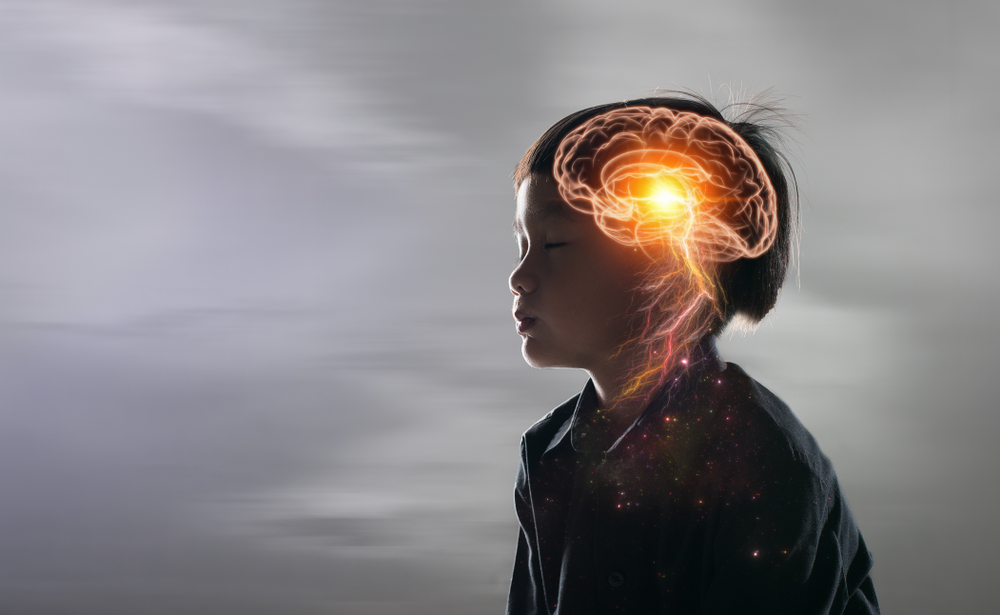
Valentina La Corte, research professor at the Memory, Brain, and Cognition Laboratory at Paris Cité University, emphasizes that memory does more than record the past. It helps us create a coherent narrative about who we are. “Having memories of our lives allows us to construct a narrative of ourselves and stabilize our sense of identity,” she explains. Yet when every memory remains sharp and alive, that narrative can become overwhelming. The mind becomes crowded, its story too detailed to edit. TL’s white room allows her to bring structure to that flood. Her mental filing system helps her live with her memories without being consumed by them.
Where many people with hyperthymesia struggle to control their constant recollections, TL has built a psychological framework that grants her power over her own mind. She can visit her white room when she wants to relive joy or seek comfort, but she can also close the door when she needs rest. This ability to manage her extraordinary recall shows a remarkable balance between cognitive ability and emotional strength. In her case, imagination serves as both a sanctuary and a tool for survival.
The Border Between Memory and Imagination
To better understand TL’s memory, researchers conducted two tests: the Episodic Test of Autobiographical Memory and the Temporal Extended Autobiographical Memory Task. These assessments measure how vividly a person can recall past events and imagine future ones. TL’s results astonished the researchers. Not only could she recall the past with incredible clarity, but she could also imagine future events with the same sensory richness. When asked to picture an event that had not yet occurred, she described it as though she were already living it, complete with color, sound, and emotion.
This phenomenon supports a growing idea in neuroscience that remembering and imagining rely on the same brain mechanisms. The mind uses similar processes to reconstruct the past and to simulate the future. For TL, these two acts are almost indistinguishable. Her imagination and memory exist on the same plane, both equally vivid and emotionally real. This raises profound questions about the nature of consciousness. If our memories and imagined experiences are created in the same way, then memory is not merely a record of what happened. It is an act of creation, a way the mind builds meaning out of experience.
TL’s ability suggests that memory is far more fluid than we once believed. Each time she retrieves a memory, she does not simply replay it like a film. Instead, she reconstructs it, blending perception, emotion, and imagination. The past in her mind is alive and ever-present. Her case reveals that the distinction between remembering and imagining may be thinner than science once thought, and that our perception of reality might be as much about creation as it is about recollection.
A Family of Unusual Minds
Another fascinating aspect of TL’s case is that several members of her family experience synesthesia, a condition in which sensory perceptions overlap. A person with synesthesia might see colors when they hear music or associate specific tastes with words. TL herself does not have synesthesia, but researchers suspect that her family’s neurological traits may be connected to her memory ability. Both conditions involve unusual patterns of sensory processing and heightened connectivity in the brain. Though no direct link has been proven, TL’s family offers valuable clues about how the brain integrates senses and memories in extraordinary ways.
Laurent Cohen believes there is still much to learn. Are people like TL born with this ability, or does it emerge through a unique combination of genetics and experience? Does aging affect their memories? Can they learn to further control the intensity of their recall? So far, studies have revealed no structural differences in their brains, which makes the mystery even more compelling. TL’s mind seems to follow the same biological blueprint as everyone else’s, yet her way of experiencing life is entirely different. Her white room is both metaphor and mechanism, a mental creation that allows her to keep order in a world of endless recollection.
The Gift and the Cost of Perfect Recall
TL’s life challenges what it means to have a good memory. In a world where many people struggle to remember small details and rely on technology to store their experiences, her mind functions as an infinite archive. Yet her story shows that the ability to forget is just as important as the ability to remember. Forgetting is not a flaw; it is a form of healing. It allows us to adapt, to change, and to continue living. Without forgetting, life could become a constant replay of the same scenes, leaving no space for the new.
For TL, memory is both gift and responsibility. Her white room is a symbol of balance as much as ability. By organizing her memories, she has created a way to live peacefully with her past. She has learned to curate her experiences rather than be trapped by them. Her story reminds us that intelligence is not only about how much we know or remember, but about how we manage what we carry inside our minds.
Reflection: What TL Teaches Us About Ourselves
TL’s story is ultimately about more than memory. It is about being human. Memory and forgetting work together to create who we are. Remembering gives us identity, while forgetting gives us freedom. TL’s white room may exist only in her imagination, but it mirrors something within all of us. Each person has mental spaces where we store joy, sorrow, and lessons learned. Some rooms we revisit often. Others we keep locked.
Scientists like Valentina La Corte and Laurent Cohen see TL’s case as an important step in understanding how memory, imagination, and emotion shape human consciousness. Yet beyond the science, her story invites reflection on the beauty of imperfection. Life is not meant to be remembered in perfect detail. It is meant to be lived, experienced, and sometimes, mercifully, forgotten.