
An 18-year-old high school student has developed a water filtration system that could offer households a new way to tackle one of the world’s growing pollution problems. Her invention uses magnetic liquid to capture tiny plastic particles, achieving a removal rate of 95.52% during testing.
Mia Heller, a student from Virginia, developed the prototype after noticing how difficult and expensive conventional water filtration systems could be to maintain. Her unusual approach has since earned recognition at an international science competition, although researchers say several important questions must be answered before the technology reaches people’s homes.
A Household Water Problem Inspired Her Invention
Heller’s invention began with concerns about the quality of drinking water in her local community. Several years ago, she came across an article in her local newspaper discussing water contamination problems in Warrenton, Virginia, where residents faced concerns involving PFAS and microplastic pollution.
The article also reported that government agencies would not provide funding for filtration programs to address the issue. Residents were therefore left to consider their own solutions for improving the quality of their household water.
Speaking to Smithsonian Magazine, Heller explained the situation by saying, “It was up to people to provide their own filtration.” Her family eventually decided to invest in an advanced water filtration system, hoping it would provide a practical solution to the contamination concerns.
However, the equipment came with a maintenance problem that Heller found particularly frustrating. She noticed how frequently her mother had to replace the system’s membrane filters, which act as physical barriers that trap contaminants as water passes through them.
Replacing these membranes repeatedly could add to the expense and effort involved in maintaining the equipment. Watching her mother deal with the process encouraged Heller to consider whether a filtration system could work without relying on replaceable membranes.
“It inspired me to design a filter without the use of membranes, to decrease the costs and maintenance needs associated with water filtration,” Heller said. That idea eventually became a research project that would earn her recognition at one of the world’s largest science competitions for high school students.
How Her Magnetic Water Filter Actually Works

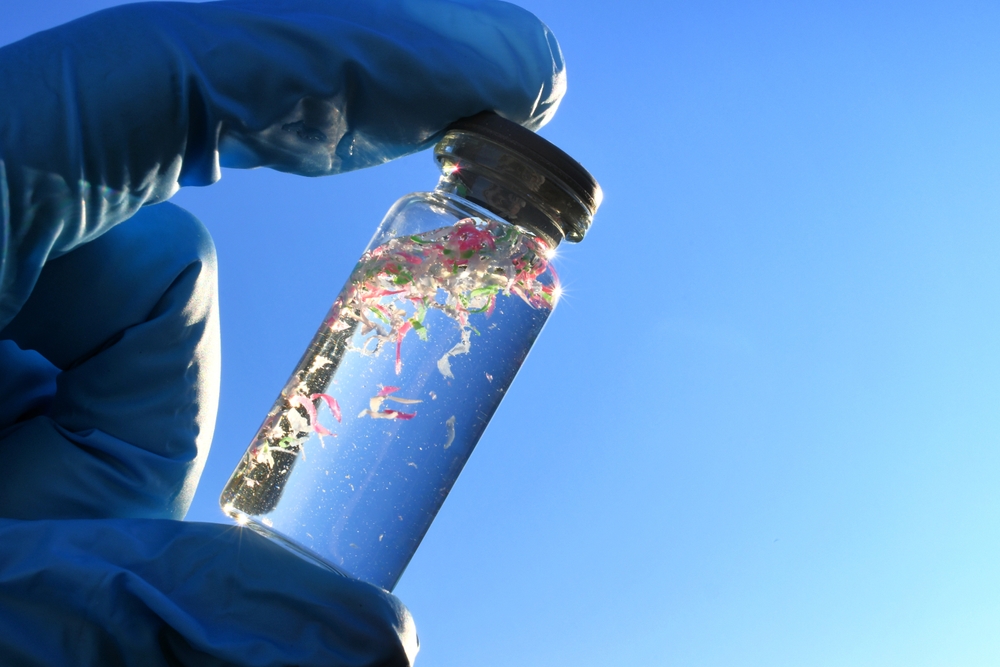
Heller’s design takes a different approach from traditional filtration systems by using a magnetic liquid known as ferrofluid. Instead of forcing contaminated water through a physical membrane, the system introduces this specialised liquid to capture microplastic particles.
Ferrofluid is an oil-based liquid containing magnetic particles, allowing it to respond to an external magnetic field. Heller used this property to develop a process in which the liquid attaches itself to microplastics as contaminated water moves through the filtration system.
Once the particles have attached to the ferrofluid, a magnetic field separates the mixture from the water. The captured contaminants can then be removed, while much of the magnetic liquid is recovered for reuse.
The design addresses two problems Heller wanted to solve from the beginning. It eliminates the need for a solid membrane and reduces the amount of filtration material that must be replaced during operation.
The Three Modules Inside Her Prototype
Heller’s current design consists of three separate modules and is approximately the size of a standard bag of flour. The system can process around one liter of water at a time, making it suitable for small-scale filtration rather than treating an entire household supply at once.
The first module holds the contaminated water, while the second stores the magnetic liquid required for the process. The third module contains the main filtration and separation mechanism, where the magnetic field helps remove the captured particles and recover the ferrofluid.
Each component has a specific purpose within the system:
- The water chamber: Holds approximately one liter of contaminated water before the filtration process begins.
- The ferrofluid storage unit: Contains the magnetic liquid that attaches to microplastic particles as the water moves through the system.
- The separation module: Uses a magnetic field to separate the captured contaminants and recover the ferrofluid for reuse.
The system operates through a closed-loop process designed to reduce waste and limit the need for frequent maintenance. This feature became particularly important during Heller’s experiments because her earlier design successfully captured microplastics but could not automatically recycle the ferrofluid.
She realised that recovering the magnetic liquid would be essential to making the invention more practical. After several rounds of experimentation, she developed a system that could combine filtration, magnetic separation and material recovery within one design.
Her Tests Showed A 95.52% Microplastic Removal Rate

The most impressive part of Heller’s project emerged when she began measuring how effectively her prototype worked. Rather than relying on visual observations, she developed a custom turbidity sensor to measure suspended particles in the water.
Turbidity describes how cloudy a liquid appears because of particles suspended within it. By measuring these particles, Heller could assess the filtration process and calculate the weight-based percentage of microplastics removed by her invention.
Her testing produced two significant figures. The prototype removed 95.52% of microplastics from the water, while the system also recovered 87.15% of the ferrofluid for potential reuse.
These results suggested that the magnetic filtration approach could compete with established methods under the conditions tested. For comparison, conventional drinking water treatment plants can remove approximately 70% to more than 90% of microplastic components, depending on the treatment process.
However, the figures should be understood within the context of Heller’s prototype testing. They do not establish that the device will deliver identical results in every household or under all water conditions, and independent research will be needed to verify its performance.
The recovery rate also reveals an area that could benefit from further development. Although most of the ferrofluid was recovered, some was not, making additional testing necessary to establish whether the remaining material could introduce unwanted residues into treated water.
Heller described the result as “an affordable, low-waste filtration system without the use of a solid membrane.” Her design therefore offers an alternative worth investigating, particularly for households looking for filtration equipment with fewer replaceable components.
Why Scientists Are Concerned About Microplastics

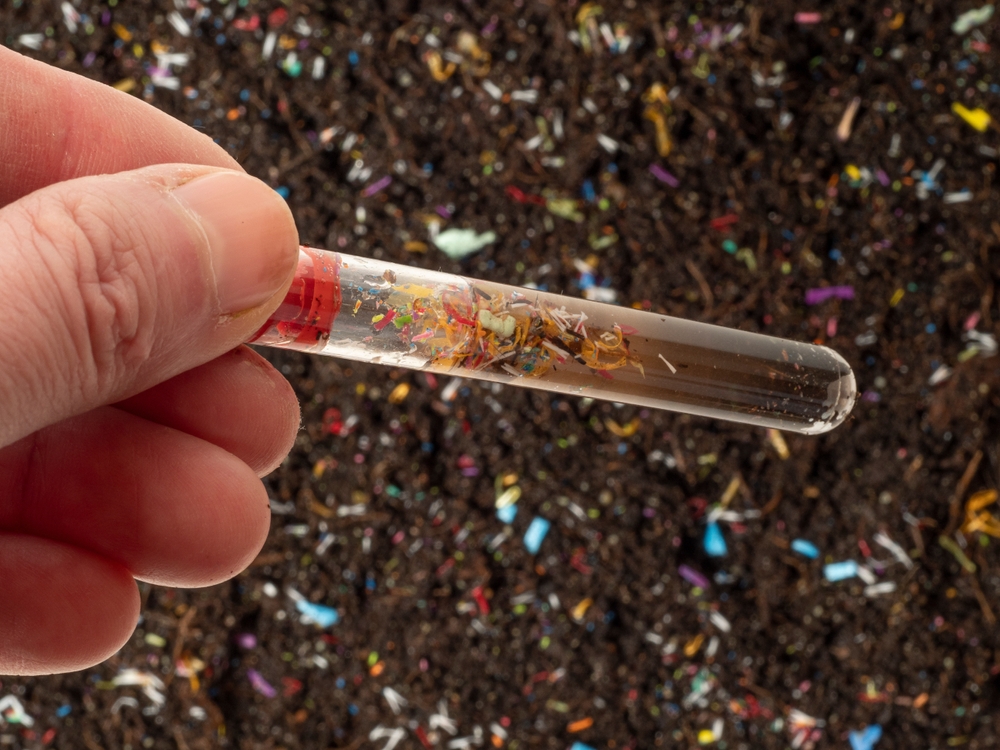
The problem Heller is trying to address has attracted increasing attention from researchers around the world. Microplastics are tiny plastic particles measuring approximately one nanometer to five millimeters in size, according to the environmental definition referenced in the research coverage.
They can originate from two main sources, depending on how the particles enter the environment. Some are manufactured at microscopic sizes for particular products, while others form when larger plastic objects gradually break down.
- Primary microplastics: Tiny plastic particles manufactured for products such as certain cosmetics and biomedical applications.
- Secondary microplastics: Smaller plastic pieces created when larger plastic products and debris deteriorate over time.
These particles have become widespread environmental contaminants, appearing in oceans, drinking water and different ecosystems. Researchers have also detected microplastics in more than 1,300 species, including humans.
Studies have reported their presence in different parts of the human body, including the brain, lungs, blood and reproductive tissues. Researchers have also investigated their presence in the placenta, raising questions about potential exposure during pregnancy.
A 2025 University of New Mexico study co-authored by toxicologist Matthew J. Campen reported that microplastic concentrations in human brain tissue had increased by approximately 50% in less than a decade. The findings added to concerns about how exposure to these particles may be changing as plastic production and environmental pollution continue.
What Do Researchers Know About The Health Risks?

Despite growing concern, scientists are still investigating exactly how microplastics affect human health. Their presence in human tissues has been documented, but researchers have not established the full consequences of long-term exposure.
Campen has cautioned against drawing firm conclusions before stronger evidence becomes available. Speaking to Smithsonian Magazine, he said, “There are still a lot of questions as to whether these plastics are really impacting our health at this point.”
He also pointed to evidence suggesting possible links with cardiovascular and neurological diseases. Other research has investigated potential associations with respiratory problems, hormonal disruption and other health conditions.
However, these associations do not establish that microplastics directly cause those diseases. Researchers still need to determine how different particle sizes, exposure levels and routes of entry influence potential health effects.
The uncertainty has made reducing unnecessary exposure an important area of scientific interest. Drinking water is one possible route of exposure because some smaller plastic particles can pass through existing treatment processes.
Her Invention Earned Recognition At A Major Science Competition
Heller’s project eventually attracted attention beyond her school and local community. The teenager attends Kettle Run High School in Virginia and also participates in a half-day program focused on mathematics, science and technology at Mountain Vista Governor’s School.
Her work became a finalist at the 2025 Regeneron International Science and Engineering Fair. The competition brings together young researchers from around the world to present scientific investigations and innovative projects.
Heller also received a special $500 award from the Patent and Trademark Office Society for her filtration technology. The recognition acknowledged the project’s potential as a low-cost and efficient approach to addressing microplastic contamination.
The achievement followed months of experimentation, including several changes to the original design. Heller had to work through technical difficulties involving the movement of ferrofluid, the positioning of the different modules and the recovery process.
One particularly difficult challenge involved moving the magnetic liquid into the water chamber without allowing it to become clogged. Ferrofluid is thicker than water, which made controlling its movement through the system more complicated.
She also needed to make sure the magnetic separation process and the recovery mechanism worked together. After approximately five design iterations, she arrived at the three-module arrangement used in her current prototype.
Toxicologist Matthew Campen also expressed enthusiasm about the underlying idea. He described Heller’s work as a “really great idea” and recognised the importance of developing new approaches to microplastic removal.
Scientists Have Important Questions About Safety
Despite the encouraging test results, Heller’s invention still faces several challenges before it can become a commercially available household product. One of the biggest concerns involves what happens to the contaminants after they have been removed from the water.
Campen explained that researchers need to establish whether the captured microplastics can be safely discarded or destroyed. Simply collecting the particles would not solve the environmental problem if they could eventually escape and re-enter the surroundings.
There is also the question of whether any ferrofluid remains in the filtered water. Since the magnetic liquid is part of the filtration process, researchers must establish that it can be separated reliably without leaving unwanted residues behind.
Several areas require additional investigation before the technology can be considered ready for widespread household use:
- Independent testing: Other researchers need to verify the reported microplastic removal results under controlled conditions.
- Ferrofluid recovery: Testing must establish whether the magnetic liquid can be reliably separated from drinking water.
- Safe disposal: Captured microplastics must be handled without allowing them to re-enter the environment.
- Long-term performance: The system needs repeated testing to determine how reliably it works over extended periods.
- Production costs: Researchers and manufacturers must examine whether the technology can remain affordable as production increases.
These questions are particularly important because drinking water filtration directly affects people’s health. A system designed to remove one type of contaminant must also be checked for the possibility of introducing another.
Campen has also raised questions about whether the technology could eventually be scaled up. While the prototype demonstrates an interesting approach, a successful household device would require more testing before its performance could be established in everyday use.
Could Her Invention Eventually Be Used In Homes?

For now, Heller believes household filtration is the most realistic application for her technology. She has explained that producing ferrofluid on a much larger scale could be expensive, potentially making widespread municipal applications difficult.
Her current prototype can process approximately one liter of water at a time. This makes it more comparable to a standalone household filtration device than equipment designed to treat water for an entire city.
An under-the-sink installation could eventually provide a practical way for individual households to use the technology. Such an arrangement would also fit the original motivation behind Heller’s project, which began with her family’s experience maintaining a conventional filtration system.
However, expanding the invention would require additional engineering and a closer examination of production costs. The device would also need professional validation to establish whether its reported removal and recovery rates remain consistent outside the conditions of its initial experiments.
Heller understands that commercial production will take time. She has indicated that her immediate priority is obtaining professional confirmation of the results she achieved during her own testing.
Speaking about her ambitions, she told Smithsonian Magazine, “I would love to eventually bring it out to market. I think that would be something that would be really interesting.”
For now, the technology remains a prototype rather than a commercially available product. Its future will depend on further testing, improvements to the recovery process and evidence that the filtration method can operate safely over repeated use.
A High School Project Tackling A Global Pollution Problem
Heller’s invention began with a problem inside her own home, where repeated membrane replacements encouraged her to look for a different approach to water filtration. Through experimentation, she developed a system that uses magnetic separation to capture microplastics and recover much of the liquid involved in the process.
The reported removal rate of 95.52% makes the prototype worth further investigation, particularly because it avoids conventional solid membranes. Its recognition at an international science competition has also brought attention to a research project developed by a teenager working with materials and equipment at home.
Microplastic pollution remains a difficult environmental challenge, and scientists still have much to learn about its long-term effects on human health. Heller’s invention has not solved that problem, but it has introduced another possible method for removing these particles from drinking water.
The next test will be whether independent researchers can confirm her results and establish that the magnetic filtration process is safe enough for everyday household use.