
Your cart is currently empty!
The Atlantic’s ‘Monster Web’ of Currents Could Be Heading Toward a Dangerous Collapse
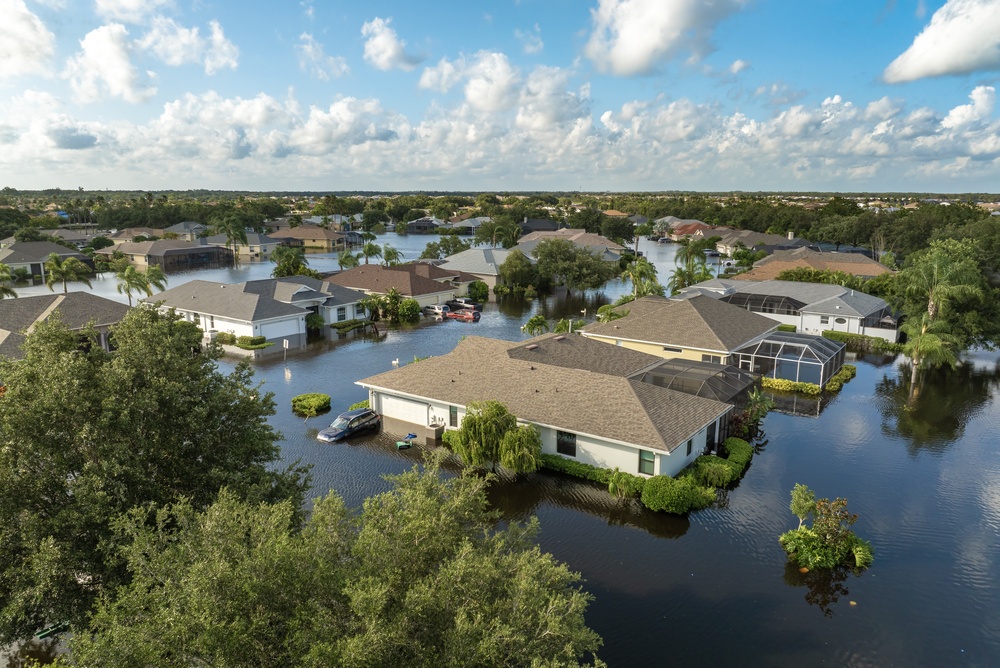
Far beneath the surface of the Atlantic, a gigantic network of ocean currents is constantly moving heat, salt, carbon and oxygen around the planet. Now scientists are racing into some of the most hostile waters on Earth to determine whether this enormous system is becoming dangerously unstable, with consequences that could eventually reach the United States.
Contents
show
The system is known as the Atlantic Meridional Overturning Circulation, or AMOC, and researchers are increasingly concerned that warming seas, melting ice and increasing freshwater could interfere with the process that keeps it moving. A full collapse is not established as an imminent event, but scientists are investigating whether the circulation could weaken substantially or cross a tipping point that would reshape weather, sea levels and temperatures across several continents.
Scientists Are Watching A Massive Ocean Circulation System
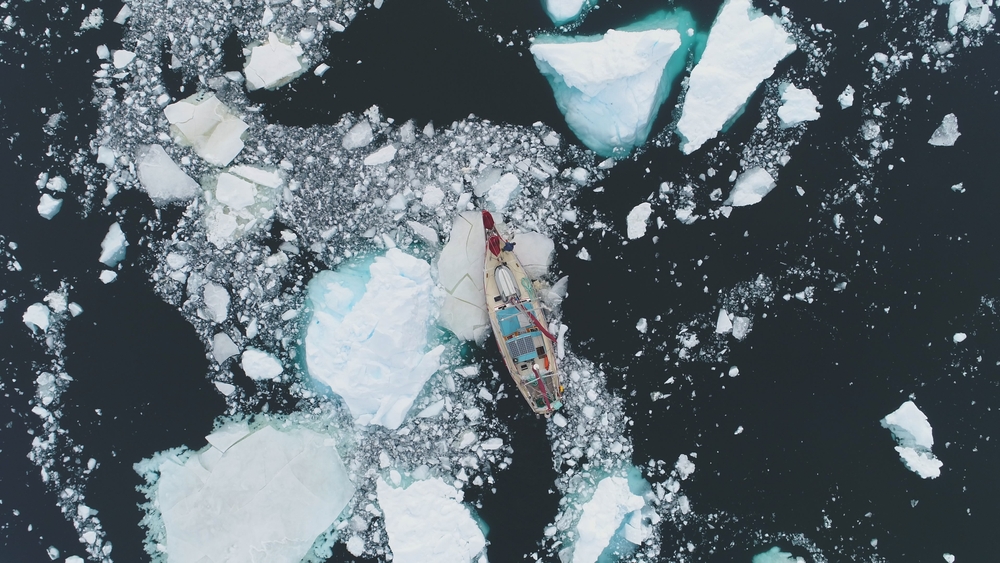
In February 2025, researchers aboard the Norwegian polar research vessel Kronprins Haakon entered the Greenland Sea during the polar night. The ship was operating more than 1,000 kilometres north of the Arctic Circle, where temperatures can fall below -30°C and thick sea ice makes winter research exceptionally difficult. The expedition focused on collecting measurements from waters along Greenland’s east coast, an area scientists believe could hold important clues about the future of the AMOC.
The AMOC is not a single current but a huge interconnected circulation system stretching across the Atlantic. Warm, salty water travels northward from tropical regions before cooling in the far North Atlantic. When that water becomes sufficiently cold and dense, it sinks into the deep ocean and begins a southward journey, forming part of a vast circulation that connects surface and deep waters.
That movement has enormous consequences for Earth’s climate. The northward flow transports heat toward Europe, helping give countries at similar latitudes a much milder climate than parts of eastern Canada. The circulation also helps move carbon from the atmosphere into the deep ocean and carries oxygen into waters where sunlight cannot penetrate.
Scientists therefore have a major reason to monitor any significant change. If the AMOC weakens substantially, the consequences would not be confined to one patch of the Atlantic. Changes in the circulation could influence temperatures, rainfall, sea levels and ecosystems across multiple regions.
Warming And Freshwater Are Changing The Equation
The AMOC depends heavily on a simple physical process: dense water needs to sink. In the northern Atlantic and Nordic Seas, cold winter conditions normally allow surface water to lose heat, become denser and sink into the deep ocean. That sinking helps drive the large-scale circulation.
Climate change is making that process more complicated. Warmer ocean and atmospheric temperatures can reduce winter heat loss, leaving surface waters less dense. At the same time, melting Arctic sea ice and the Greenland ice sheet add freshwater to the North Atlantic, while changing precipitation patterns can contribute even more freshwater to the region.
Freshwater matters because it is less dense than salty seawater. If enough freshwater accumulates near the surface, it can make it harder for the underlying ocean to sink and form deep water. That could weaken one of the processes that helps maintain the AMOC.
Professor Henk Dijkstra, a physical oceanographer at Utrecht University, has warned of a potential feedback process. A weaker AMOC transports less salty water northward, which can further reduce the density of surface waters near Greenland. If such a cycle accelerates, the circulation could become increasingly difficult to maintain.
The US Could Face A Major Coastal Problem
An AMOC collapse would not produce the instant deep freeze portrayed in disaster movies. The real consequences would unfold through a complicated mixture of ocean and atmospheric changes, and different regions would experience very different effects. For the United States, one of the major concerns involves the Atlantic coastline, where changes in ocean circulation could contribute to additional sea-level pressure.
The Eastern US is already vulnerable to coastal flooding because of rising seas, land subsidence and increasingly frequent high-tide flooding in some communities. Changes in Atlantic circulation can alter the distribution of ocean water along the coast, potentially adding another factor to an already difficult problem.
The implications could extend beyond flooded streets and damaged buildings. Coastal wetlands, fisheries, infrastructure and communities could all be affected by changes in sea level and ocean conditions. Major population centres along the Atlantic would have to contend with a climate system behaving differently from the one on which existing infrastructure was designed.
The important point is that an AMOC disruption would not necessarily make every part of America colder. Its effects would depend on location and on how the circulation interacted with atmospheric circulation, sea-level patterns and other aspects of the climate system.
Europe Could See An Extraordinary Temperature Shift
While the US could face serious coastal consequences, parts of Europe could experience a very different problem. The AMOC carries enormous quantities of heat northward, and weakening that transport would reduce one of the factors helping to moderate European temperatures.
Climate models examining a major AMOC disruption have produced scenarios involving severe cooling across parts of Northern and Western Europe. The research described by scientists aboard the Greenland expedition included modelling in which annual average temperatures fell by 10°C to 15°C across Scandinavia and Western Europe following a major circulation collapse.
Such a change would have enormous implications for agriculture, energy consumption, transportation and ecosystems. Areas accustomed to relatively mild winters would face conditions far outside the climate range around which modern societies have developed.
The contrast is one reason the AMOC is so difficult to understand through a simple warming narrative. Global temperatures can continue rising while individual regions experience sharp cooling if major ocean and atmospheric circulation patterns change. A weakened AMOC could therefore create climate extremes that appear contradictory until the underlying ocean physics is considered.
Scientists Still Do Not Know If Collapse Is Imminent
Despite the alarming scenarios, there is an important uncertainty. Direct observations have not established that the AMOC is currently undergoing a straightforward, sustained collapse. Measurements taken since the early 2000s have shown substantial variability, but natural fluctuations make it difficult to identify a long-term trend from a relatively short observational record.
Eleanor Frajka-Williams, a physical oceanographer at the University of Hamburg, has cautioned against thinking of the AMOC as a simple conveyor belt in which every part moves at a constant speed. The circulation naturally changes over time, and scientists need long-term observations to distinguish those fluctuations from a persistent weakening.
Other research has nevertheless produced warning signs. Scientists have examined ocean properties, including the age of deep waters, salinity patterns and other indicators that can reveal changes in how efficiently surface water is reaching the deep ocean. Some studies have reported evidence consistent with a weakening circulation, while other research has found a more stable system.
That leaves researchers with a difficult question: how close is the AMOC to a tipping point, if it is approaching one at all? Different studies produce different estimates, and the answer depends partly on future greenhouse gas emissions and how accurately climate models capture complex processes around Greenland and the Arctic.
A Strange Arctic Effect Could Actually Help
The research expedition in the Greenland Sea is investigating a possibility that sounds almost counterintuitive. As sea ice disappears, larger areas of ocean are exposed directly to the cold winter atmosphere. That open water can lose heat rapidly, potentially making seawater denser and encouraging it to sink.
Researchers led by Professor Kjetil Våge of the University of Bergen are studying the East Greenland Current to understand whether this process could partly offset the effects of warming and freshwater input. Their measurements include temperature and salinity observations collected using drones, underwater robotic gliders and instruments deployed in the region.
“The East Greenland Current is a major source to the deep return flow of the overturning circulation,” Våge said in the supplied research material. His team believes that stronger winter heat loss from expanding ice-free areas could potentially enhance dense-water formation in the Nordic Seas.
If that mechanism proves significant, it could mean some climate models are missing an important source of resilience within the AMOC. The team is collecting longer-term measurements to determine whether the effect persists through multiple winters and whether it is large enough to influence the circulation as a whole.
That does not mean scientists have discovered a safety net. The process remains an area of active investigation, and other research points toward substantial weakening under continued warming. The Greenland Sea could therefore provide either another warning sign or evidence that the circulation has more capacity to adapt than some models suggest.
Researchers Are Considering Extreme Solutions
The stakes are high enough that scientists have begun examining interventions that would once have sounded impossible. Some proposals focus on removing carbon dioxide from the atmosphere, while others involve reflecting a small amount of sunlight back into space or altering the chemistry of seawater to increase carbon storage.
More radical proposals target glaciers directly. Scientists have investigated structures that could potentially prevent warm ocean water from reaching vulnerable ice, including enormous underwater curtains or barriers built around glacier systems. Such projects would face extraordinary engineering challenges and could have major effects on marine ecosystems.
There is also an even more startling proposal involving the Bering Strait. A modelling study described in the supplied research examined what could happen if an enormous dam were constructed across the roughly 80-kilometre-wide waterway between Alaska and Russia.
The idea is based on the fact that relatively fresh Pacific water enters the Arctic through the Bering Strait. Blocking that flow could increase salinity in the North Atlantic under certain conditions, potentially strengthening the AMOC. But the same intervention could have the opposite effect if the circulation had already weakened too much, making timing crucial.
A Dam Between Alaska And Russia Comes With Huge Risks
Even if such a structure could be engineered, building it would create problems of its own. The Bering Strait is an important marine environment supporting fisheries, wildlife and Indigenous communities, and changing the movement of water between the Pacific and Arctic could have consequences that stretch far beyond the AMOC.
The proposal also illustrates the enormous difficulty of trying to manipulate a global climate system. Ocean currents are interconnected, meaning a change designed to solve one problem could create another somewhere else.
The researchers themselves do not present a Bering Strait dam as an easy solution. The modelling is useful because it tests how sensitive the AMOC is to changes in freshwater and salinity, while also revealing how complicated interventions could become.
For now, reducing greenhouse gas emissions remains the central approach to limiting the warming and ice loss that are driving concern about the circulation. Geoengineering proposals are being studied partly because scientists want to understand what options might exist if climate risks become more severe, not because these enormous interventions are ready to deploy.
The Real Warning Is The Uncertainty
There is no confirmed date for an AMOC collapse, and scientists are not in agreement that a complete shutdown is inevitable this century. Some research suggests the circulation could cross a tipping point under high-emissions conditions, while other studies indicate that a total collapse is unlikely and that a weakened circulation could persist instead.
The uncertainty makes monitoring even more important. Researchers cannot wait for a dramatic shutdown before studying the system, because many of the changes associated with tipping behaviour could become much harder to reverse once they are underway.
The instruments being deployed around Greenland are therefore doing something surprisingly simple: collecting better measurements. Scientists need to know how much heat is leaving the ocean, how salty the water is, how much dense water is forming and how those processes change from one winter to the next.
The ocean may be changing slowly enough that people barely notice it from the shore. But thousands of metres below the surface, a massive circulation system is moving heat around the planet. Finding out how stable that system really is could determine how much warning humanity gets before the consequences become impossible to ignore.
AMOC, Arctic, Arctic sea ice, Atlantic Meridional Overturning Circulation, Atlantic Ocean currents, Bering Strait, climate change, Climate Science, climate tipping point, Environmental Science, extreme weather, Global Warming, Greenland, Greenland ice sheet, Gulf Stream, ocean circulation, Ocean Warming, sea level rise, US coastal flooding