
Your cart is currently empty!
Ghost the Giant Pacific Octopus Captures Hearts in Her Final Moments

In the dim, blue light of the Aquarium of the Pacific in Long Beach, California, a quiet farewell is unfolding. Behind a glass pane once alive with graceful, swirling arms, the water now shimmers empty. The star of this story, a giant Pacific octopus named Ghost, is hidden away from public view, tending to thousands of eggs that will never hatch. Visitors once stood in awe of her intelligence and charm. Children pressed their faces to the glass to watch her stretch her vibrant, ruby-colored arms, while adults marveled at how she seemed to recognize familiar faces. Now, the crowd gathers online instead, united in grief and fascination as Ghost nears the final stage of her life.
Contents
show
Ghost’s story has spread far beyond the walls of the aquarium. Fans share photos, memories, and even tattoos of the beloved cephalopod. Some describe her as a muse, a creature that bridged the mysterious gap between human emotion and marine instinct. Ghost’s tale is one of devotion and inevitability, a biological destiny so absolute that it feels like poetry. She is dying not because of illness or age alone, but because she has given herself over completely to the care of her eggs, unfertilized though they are. It is a story of nature’s strange symmetry: life given to protect life that will never come.
The Life of a Brilliant Creature
When Ghost first arrived at the aquarium in May 2024, she weighed just three pounds, a curious traveler from the cold waters off British Columbia. Marine biologists had collected her for research, later entrusting her to the care of the Long Beach facility. Over the months that followed, Ghost grew into a fifty-pound marvel of color and intelligence. Staff describe her as “super active” and “very physical,” an animal who enjoyed both challenges and companionship. She wasn’t just a display specimen; she was a personality, a living being who engaged, learned, and even played.
Nate Jaros, the aquarium’s vice president of animal care, recalls how Ghost would sometimes push food aside just to interact with her caregivers longer. She was trained to crawl into a basket voluntarily for weigh-ins, showing a remarkable understanding of routine and reward.

The aquarium team created elaborate puzzles for her toys with hidden food, mazes that tested her memory and coordination. Once, after the staff spent hours building a large acrylic maze, Ghost solved it almost immediately. Jaros laughed about it later, describing her as “one step ahead of everyone in the room.”
Visitors noticed the same spark. Marine biology students, inspired by Ghost, spoke about pursuing ocean studies because of the bond they felt watching her. Children pointed and gasped as her tentacles unfurled like silk ribbons underwater. To see Ghost was to see something that challenged the line between instinct and intelligence, between animal and awareness. She became an ambassador not just for her species, but for the entire hidden world of marine life.
A Mother’s Final Act

Then came the moment that changed everything. Earlier this September, Ghost laid her eggs in a shimmering constellation of small, pearly orbs clinging to the rocks in her private den. It was beautiful, and heartbreaking. In the wild, this act marks the beginning of an octopus mother’s final chapter, a period known as senescence. The female stops eating and begins devoting all her energy to caring for her eggs, blowing fresh water over them to keep them clean and oxygenated. Over time, her body begins to weaken; her skin dulls, her reflexes slow, and she loses the desire to feed. Her entire being is consumed by the instinct to protect the next generation.
But in Ghost’s case, the eggs are unfertilized. Giant Pacific octopuses are solitary and territorial; pairing a male and female for long periods is dangerous and often deadly. So Ghost, like many of her kind in aquariums, will die caring for young that will never emerge. It’s an ancient biological rhythm, one that science can explain but not soften. Her caretakers moved her behind the scenes so she could live out her final days in peace, away from the curious eyes of the public.
Her fans, however, haven’t stopped watching. Messages flood the aquarium’s social media accounts: words of love, gratitude, and grief. Some express sorrow that Ghost never got to see her eggs hatch; others find comfort in the beauty of her dedication. “She’s doing what she was born to do,” wrote one admirer. “Even if her babies never hatch, she’s teaching us what love looks like.”
The Science of Senescence
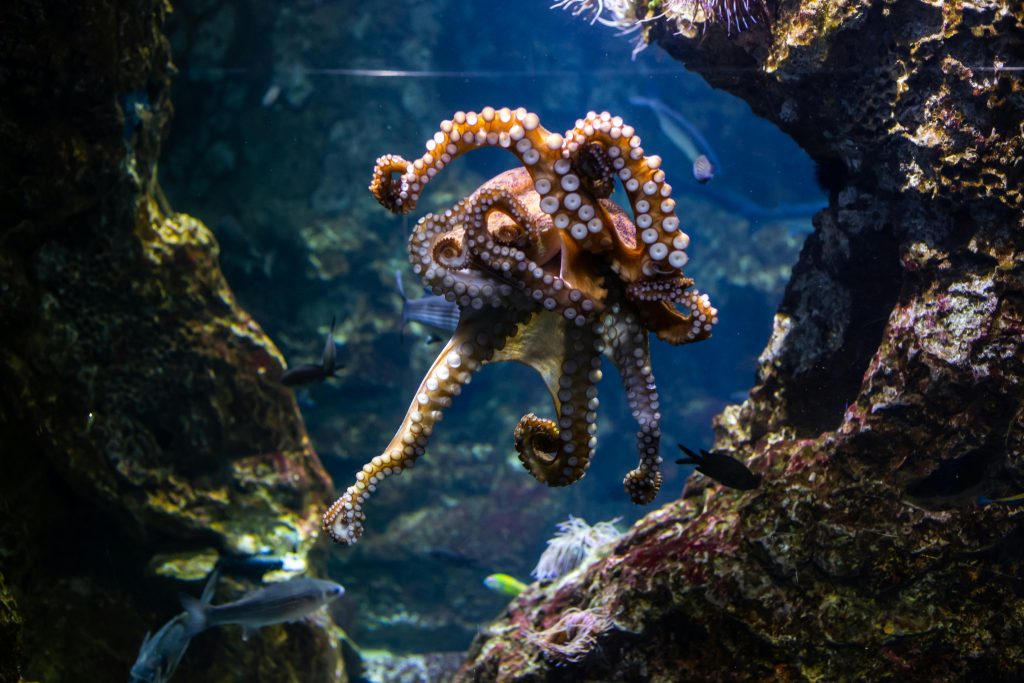
Senescence, the final stage of an octopus’s life, is as mysterious as it is tragic. Once a female lays her eggs, her body undergoes dramatic hormonal changes. Her optic glands, organs similar in function to the human pituitary gland, release a cocktail of chemicals that signal her body to shut down. Scientists have discovered that these hormones redirect energy away from survival and toward the care of her eggs. It is, quite literally, a biological sacrifice.
This process has fascinated marine biologists for decades. In 2018, researchers at the University of Chicago identified key molecules in the octopus’s optic glands that trigger self-destructive behavior. These include steroids and peptides that suppress appetite, promote aging, and eventually lead to tissue breakdown. The phenomenon is often compared to programmed cell death in humans, a kind of cellular altruism that ensures the next generation can thrive. Except, in Ghost’s case, there will be no next generation. Her life’s final purpose has been fulfilled in gesture, not in outcome.
From a human perspective, it seems unbearably sad. But from nature’s point of view, it is balance. The giant Pacific octopus lives fast and dies young, evolving intelligence and adaptability at the cost of longevity. In her short life, Ghost experienced a world few creatures ever do, from the icy depths of the Pacific to the loving attention of the humans who cared for her. Her death is not a tragedy of cruelty, but a cycle closing with grace.
Ghost’s Human Family
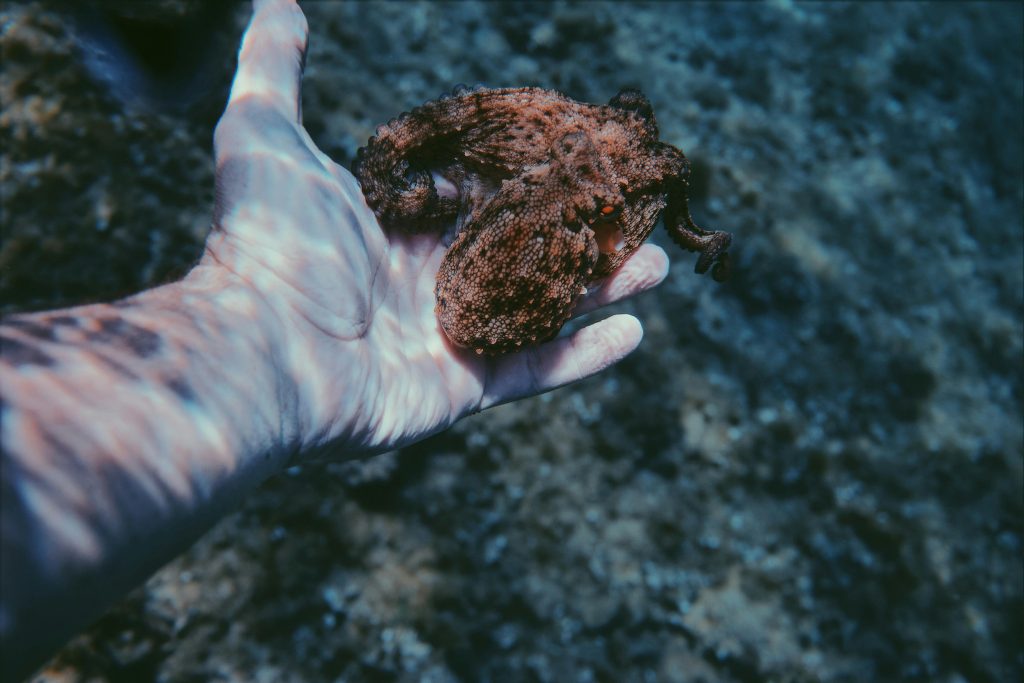
To the aquarium staff, Ghost is more than a specimen. She’s family. Caretakers hand-fed her restaurant-quality seafood, built enrichment toys by hand, and spent hours designing habitats that mimicked her natural home. Even after moving her off public display, they continue to visit her daily, whispering words of affection while she hovers over her eggs. Jaros says the team has mixed emotions: sorrow, pride, and awe. “You form bonds with these animals,” he explained. “Octopuses are incredibly special. They seem to understand you, and in some way, they let you know when they’re content.”
Visitors feel it too. One fan, Marla Husovsky, recalled that Ghost seemed to recognize when people were there to see her. The octopus would stretch her tentacles wide and turn toward the glass, as if to greet her audience. Another visitor, Josie Li, described a behind-the-scenes meeting where Ghost wrapped her arms around the guests’ hands, tasting the world through her touch. For a five-year-old girl named Aurora, Ghost was simply her favorite creature in the whole aquarium. “She’s like a very, very pretty strawberry,” Aurora told reporters, clutching a plush octopus from the gift shop.
Ghost’s story has even inspired art murals, tattoos, and jewelry created by fans who feel deeply connected to her. Social media is flooded with tributes: sketches, poems, and letters addressed to the dying cephalopod. The Aquarium of the Pacific has promised to continue its legacy through education programs about marine conservation and animal intelligence. Another young octopus has already arrived at the aquarium, described by staff as “curious” and “outgoing,” but Ghost’s shadow looms large. She is irreplaceable.
Lessons from an Eight-Armed Teacher
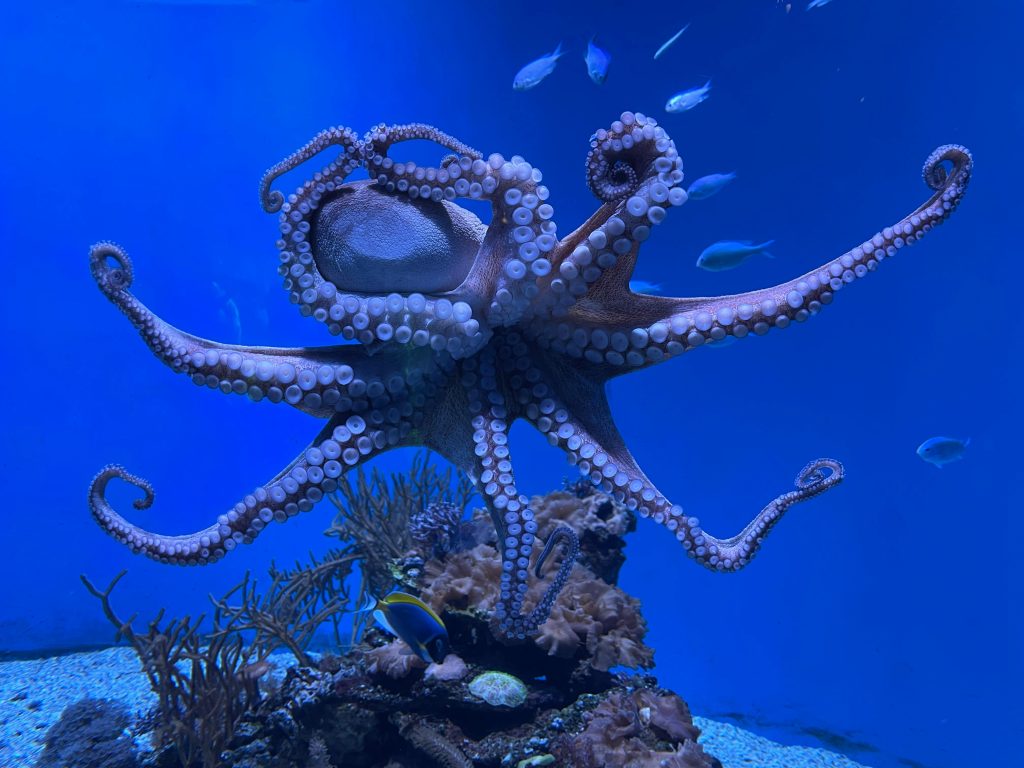
Ghost’s final days raise questions that reach far beyond the aquarium glass. Why does such intelligence come with such a short life span? What can humans learn from a creature that devotes itself so completely to an act that seems futile? Her life challenges the way we measure meaning not by longevity or success, but by the depth of connection and purpose.
The octopus, with its alien form and immense intelligence, has long fascinated philosophers and scientists alike. They use tools, solve puzzles, and even appear to dream. Some biologists argue that octopuses represent a separate evolutionary path to intelligence, one that evolved not from mammals but from mollusks. To watch Ghost is to glimpse a mind utterly unlike our own, yet strangely familiar. She demonstrates empathy through gesture, curiosity through action, and perhaps, love through devotion.
There’s also a profound environmental message in Ghost’s story. Giant Pacific octopuses are considered indicator species; their health reflects the state of the ecosystem they inhabit. As ocean temperatures rise and pollution spreads, their populations face new threats. Ghost’s quiet death reminds us that even the most resilient creatures are vulnerable to human impact. Her story invites reflection not just on mortality, but on stewardship. We are, after all, the caretakers of the planet’s oceans, and the choices we make will decide how many more Ghosts will live to enchant future generations.
A Legacy Beyond the Glass
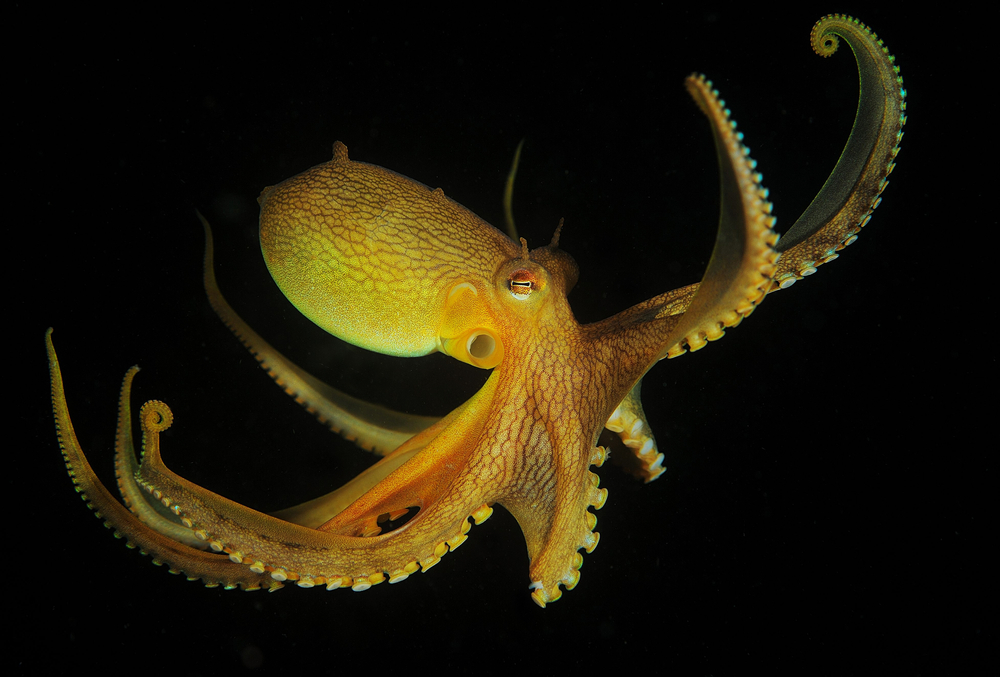
The Aquarium of the Pacific has handled Ghost’s final chapter with tenderness. They released a public statement calling her “a wonderful octopus who has made an eight-armed impression on all of our hearts.” They thanked the community for its outpouring of love, acknowledging that while senescence is natural, the sadness is real. The team will continue to monitor her closely, ensuring she remains comfortable in her final days.
For her fans, Ghost’s passing is more than the loss of an aquarium attraction. It feels like saying goodbye to a friend. The reactions online have been strikingly personal, full of empathy and wonder. One comment summed it up perfectly: “Ghost made me believe that intelligence isn’t something humans own. It lives in the ocean too.”
As she lingers beside her eggs, Ghost is surrounded by the quiet hum of the aquarium’s pumps and the steady care of those who love her. Each day, she continues her silent vigil, her life winding down in perfect rhythm with nature’s design. And in that, there is a strange kind of peace.
What Ghost Leaves Behind
Ghost’s story is both deeply personal and profoundly universal. It speaks to the love a mother feels for her young, even when that love can never be returned. It speaks to the way humans project meaning onto the natural world, finding mirrors of ourselves in creatures vastly different from us. And it reminds us that beauty often comes intertwined with impermanence.
Ghost will not see her eggs hatch, but she will leave behind something just as enduring a legacy of curiosity, compassion, and connection. She reminds us that intelligence and emotion can take many forms, and that our understanding of life is richer when we look beyond our species.
In the end, Ghost’s final act is not tragic. It is a testament. She embodies the quiet truth that every life, no matter how small or strange, carries within it the capacity to inspire awe and empathy. And as she spends her last days protecting eggs that will never hatch, Ghost continues to teach us the most human lesson of all: that love, in its purest form, asks for nothing in return.