
Your cart is currently empty!
America’s AI Boom Has Triggered A Wave Of Multi Million Dollar Heists

America’s artificial intelligence boom is creating fortunes for technology companies, but it has also opened an unexpected opportunity for organized criminals. Instead of targeting banks or luxury stores, thieves are intercepting trucks carrying millions of dollars worth of equipment destined for AI data centers.
Contents
show
Some of the operations sound like scenes from an action movie, involving deliberately staged highway collisions, stolen identities, hacked freight accounts, and manipulated GPS tracking systems. According to NBC News, more than $100 million worth of data center equipment has been stolen since June 2026, with investigators warning that the problem could become worse.
Criminals Are Targeting America’s Most Valuable Technology Shipments
The growing theft problem comes as technology companies race to construct enormous data centers across the United States. These facilities require expensive servers, semiconductor chips, copper wiring, fiber-optic cables, and specialized power equipment. Consequently, thousands of valuable components are travelling along American highways to support the rapidly expanding AI industry.
Criminal groups have recognized that these shipments offer enormous financial rewards. A single truck can contain equipment worth millions of dollars, making it an attractive target for organized operations capable of identifying valuable loads and intercepting them before delivery.
NBC News identified nearly two dozen incidents involving stolen high-end technology cargo across states including California, Texas, and Utah since last year. Industry leaders and investigators reported more than $100 million in losses involving data center freight since June 2026 alone.
The figures reveal an unusual development in the cargo theft industry. Traditional thefts have increasingly been accompanied by sophisticated operations targeting specific shipments, with criminals combining digital deception and physical attacks to secure expensive equipment.
Keith Lewis, head of operations at cargo risk-assessment firm Verisk CargoNet, compared the stolen technology to precious metals. Speaking to NBC News, he explained that some individual shipments have involved losses exceeding $30 million.
“It’s like stealing pure gold bars,” Lewis said. He also described why criminals might prefer these operations to conventional robberies, adding, “It’s so much easier to steal this than to rob a bank.”
A $13 Million Highway Heist Involved A Deliberate Collision

One of the most extraordinary incidents involved a trailer transporting approximately $13 million worth of computer server equipment toward Fayetteville, Georgia. The destination was a major data center development, where the valuable hardware was expected to become part of the infrastructure supporting artificial intelligence operations.
The shipment was travelling east after leaving California, accompanied by an unmarked sedan carrying two off-duty law enforcement officers. They had been hired to escort the equipment because of its enormous value and the potential risks associated with transporting it across the country.
Several hours into the journey, another vehicle accelerated and struck the escort sedan. The collision forced the security vehicle to stop, leaving the expensive shipment without its protection. The trailer then continued along the highway and disappeared from the intended route.
Investigators eventually discovered the abandoned trailer at a truck yard in Stockton, California, not far from where the equipment had originally been collected. However, the pallets containing several hundred pounds of server equipment were missing, and the valuable cargo had vanished.
Gerardo Pachuca, a private investigator and former Los Angeles County sheriff’s deputy, had spent nearly two decades investigating cargo theft before establishing his private investigation firm. He told NBC News that the collision was deliberately arranged to remove the shipment’s protection.
“The accident was not an accident. The bad guys wanted that load, so they intentionally took out the escorts,” Pachuca explained.
The circumstances made the incident particularly concerning for cargo security professionals. A carefully timed collision had allowed criminals to separate the shipment from its security team, giving them an opportunity to take equipment worth millions without needing to overpower an entire transport operation.
Another $10 Million Shipment Disappeared Weeks Later

The incident involving the Georgia-bound shipment was followed by another major theft approximately three weeks later. This time, a trailer carrying server rack components worth around $10 million was travelling from San Jose, California, toward a data center project in Texas.
The shipment had a security escort from a different company and was also being monitored through a tracking application. Its journey appeared to be protected by multiple security measures, although the criminals involved apparently found a way around them.
During the trip, an SUV struck the security vehicle in a hit-and-run-style collision. The impact disabled the escort car, allowing the trailer to continue travelling without its security team.
However, the tracking application presented another problem. Investigators believe the shipment’s GPS coordinates had been spoofed, meaning the displayed location did not accurately reveal where the trailer was travelling.
The equipment was never delivered to its intended destination, and investigators have not recovered the missing shipment. Together, the two incidents demonstrate how criminals can combine physical interference with digital manipulation to target extremely valuable cargo.
Experts described the highway attacks as particularly unusual because of the deliberate collisions used against security escorts. Although they represent a small portion of the reported thefts, the incidents suggest that organized groups are becoming increasingly aggressive when targeting high-value technology shipments.
How Criminals Hack Their Way Into The Freight Industry

The highway robberies are only one part of the growing problem. According to NBC News, many organized cargo theft operations now begin online, with criminals attempting to gain access to the accounts used by freight brokers and trucking companies.
These accounts can provide access to shipment information, including details about valuable cargo and the companies responsible for transporting it. Once criminals obtain legitimate credentials, they can exploit the trust built into the freight industry’s digital systems.
The process can involve several stages, allowing criminals to arrange the collection of valuable equipment while disguising their involvement.
Some of the methods described by investigators include:
- Compromising freight broker accounts: Criminals access legitimate accounts on shipment-listing websites to obtain information and impersonate established businesses.
- Posting fraudulent shipping opportunities: Stolen accounts are used to advertise fake loads that attract legitimate trucking companies looking for work.
- Sending malicious links: Criminals send links designed to install software that gives them access to company accounts and sensitive information.
- Using fraudulent driver identities: Fake driver’s licenses and stolen credentials help accomplices pose as legitimate transport workers.
- Manipulating shipment tracking: GPS coordinates and tracking applications can be manipulated to conceal the actual location of stolen cargo.
- Redirecting valuable equipment: After legitimate drivers collect the goods, shipments can be transferred to accomplices who move the equipment for resale.
One particularly troubling aspect is that legitimate trucking companies and drivers can become involved without immediately realizing they are participating in a fraudulent operation. Criminals may arrange apparently genuine transportation before transferring the goods to another driver working with the theft network.
Los Angeles County Sheriff’s Department Sgt. David Pantoja, who leads the department’s cargo criminal apprehension team, discussed the increasing use of these tactics with NBC News.
“That’s how most of it is being done,” Pantoja said.
The FBI also raised concerns about cyber-enabled strategic cargo theft in an April warning. The agency identified digital methods such as compromised carrier accounts, manipulated tracking applications, and fraudulent driver identities as part of the growing nationwide threat.
Copper, Servers And Semiconductor Chips Are Becoming Prime Targets
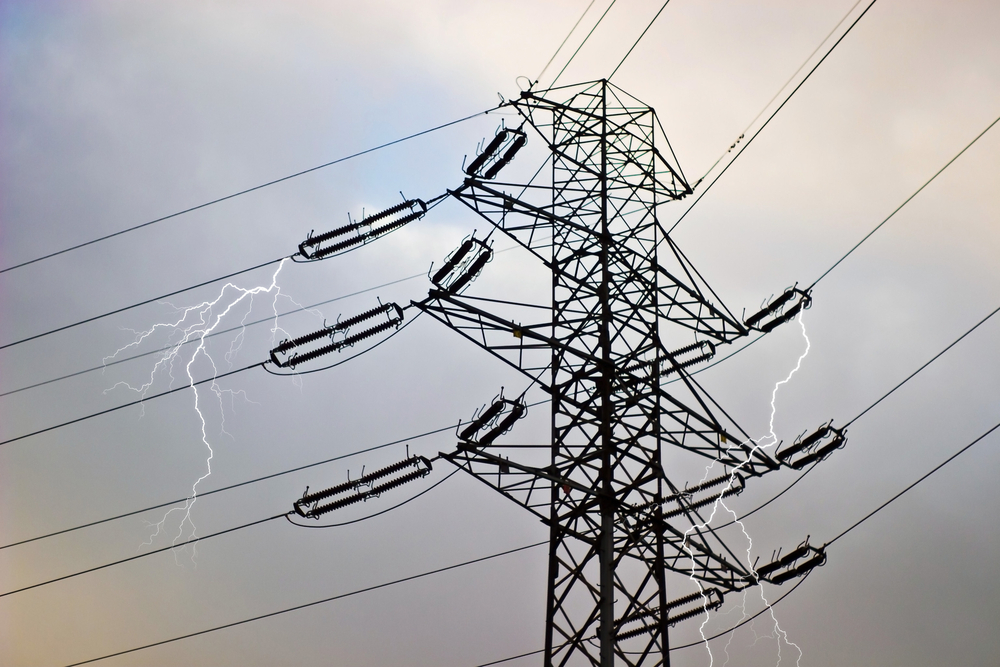
The AI construction boom has increased demand for the specialized equipment required to build and operate modern data centers. This includes everything from computing hardware to the electrical infrastructure needed to supply enormous amounts of power.
Some components have become particularly attractive to organized criminals because of their value and potential resale opportunities. Copper wiring, enterprise servers, memory modules, and fiber-optic equipment are among the products increasingly appearing in reported theft incidents.
The problem also extends beyond equipment specifically designed for artificial intelligence. Data center construction involves several interconnected industries, meaning valuable power systems, cooling equipment, and networking components can all become targets.
In June, Cook County Sheriff’s Office investigator Michael Kruzel received information about a trailer containing stolen merchandise in northern Illinois. The investigation eventually led him to another trailer parked nearby, where authorities discovered approximately $1.3 million worth of stolen equipment.
The recovered goods included copper wire spools and custom-made modular power solutions designed for data center infrastructure in Texas. The discovery demonstrated how criminals can target multiple categories of equipment within the same supply chain.
Another incident involved approximately $38 million worth of cables and cartridges stolen in Reno, Nevada, during July. According to individuals assisting with the investigation, the shipment was taken by drivers using fake licenses and was scheduled to be transported overseas to Asia.
Last year, separate incidents also involved tens of millions of dollars in enterprise hardware intended for an AI data center. The stolen equipment included server racks, routers, and memory modules after leaving shipping facilities in Salt Lake City.
Lewis explained that the growing demand for infrastructure components has attracted criminals looking for expensive goods.
“Things that are precursors for the AI data centers: copper, server racks and RAM. Those are the things that are the precursors to build one, so that’s what we’re seeing the big increase in,” he told NBC News.
Stolen AI Equipment Can Enter International Gray Markets

Recovering stolen equipment presents another major challenge for investigators. Unlike televisions or ordinary consumer electronics, specialized data center components are not necessarily easy to sell through conventional online marketplaces.
Instead, investigators believe organized groups sometimes identify potential buyers before stealing the equipment. This gives criminals a possible route to move expensive components through networks willing to purchase them outside legitimate distribution channels.
Some stolen shipments are reportedly dismantled, allowing individual components to be sold separately through gray markets. This approach can make it harder to identify the original shipment because the stolen equipment may no longer remain together as one identifiable load.
International resale is another concern. Investigators have raised questions about stolen American technology reaching overseas markets, including countries where access to certain advanced AI equipment may be restricted by US export controls.
China has been identified as one potential destination for stolen technology. However, investigators have not established that every missing shipment has reached that country.
The international connections also make it harder for American authorities to identify the people organizing these operations. Individuals caught transporting stolen goods may be only one part of a much larger network operating across several countries.
Scott Cornell, chair of the Transported Asset Protection Association Americas, told NBC News that these criminal operations involve sophisticated international networks. He emphasized that the people physically moving stolen shipments may not be the individuals controlling the wider operation.
His assessment highlights a major weakness in the investigation process. Arresting drivers and recovering individual trailers can disrupt an operation, but identifying the people coordinating the thefts remains considerably more difficult.
Cargo Theft Is Becoming A Much Bigger Financial Problem
Although AI infrastructure has attracted particular attention, cargo theft affects a much wider range of American industries. Food, beverages, metals, agricultural products, and consumer goods continue to be targeted by criminals.
According to the National Insurance Crime Bureau, cargo theft costs the US economy an estimated $35 billion annually. The organization also estimated that cargo theft losses reached nearly $725 million in 2025, representing a 60% increase compared with 2024.
Verisk CargoNet’s analysis found that the number of reported theft incidents declined 26% during the second quarter of 2026 compared with the same period a year earlier. However, the estimated value of cargo losses more than doubled, reaching $304.6 million compared with $135.7 million in the second quarter of 2025.
The increase was driven by several exceptionally expensive thefts involving technology freight. Food and beverage products and metals remained among the leading categories of stolen commodities.
The American Trucking Associations has also reported that cargo theft has increased 1,500% since 2021. These figures illustrate the financial pressure facing companies responsible for moving valuable products across the country.
Donna Lemm, chief strategy officer at logistics company IMC Logistics, previously experienced the consequences of organized cargo theft firsthand. She told NBC News that seven cars stormed the company’s gates in the middle of the night in May 2024.
The incident was particularly alarming because the company had not experienced similar thefts across its 54 terminals. Lemm subsequently testified before the Senate and advocated for stronger federal action.
She also warned that cargo theft affects ordinary consumers, even when they never directly encounter the criminals involved.
“People are stealing from us, and we got to stop it,” Lemm told NBC News.
Authorities Are Trying To Stop Organized Theft Networks
The growing number of incidents has prompted federal and state authorities to consider stronger measures against organized cargo theft. Investigators increasingly believe that individual arrests are insufficient when criminal operations involve stolen identities, compromised digital accounts, and international connections.
Congress is considering the Combating Organized Retail Crime Act, legislation intended to strengthen the federal response to organized theft. The proposed measures include establishing a coordination center within Homeland Security Investigations, improving intelligence sharing, and expanding prosecutors’ ability to pursue interstate criminal networks.
The legislation was approved by the House in May and is under consideration by the Senate Judiciary Committee, according to the supplied NBC News reporting.
Several states have also established or expanded specialized cargo theft task forces. Arizona, California, Tennessee, and Illinois are among those bringing together police departments, prosecutors, and private industry representatives to investigate theft operations.
Security companies are also providing additional protection for expensive shipments. Mike Duffy, co-founder and CEO of Southern California-based Solutions Group International, told NBC News that logistics companies have increasingly requested security services.
His company escorts hundreds of shipments every month, many of them associated with data center construction. The security teams document stops during interstate journeys and monitor valuable cargo as it travels from distribution facilities to its final destination.
Duffy explained that shipments requiring security escorts typically begin around $800,000 in value. However, the growing cost of AI infrastructure has encouraged manufacturers and insurance companies to recommend or require additional protection for certain loads.
Even with these measures, experts believe improvements in driver verification and digital security will be essential. Cornell specifically emphasized the importance of properly checking drivers and transportation companies before allowing them to handle valuable shipments.
The challenge is particularly difficult when the people organizing the thefts operate overseas, beyond the immediate reach of American investigators.
The AI Boom Has Created A New Target For Organized Crime
The race to build artificial intelligence infrastructure has created enormous opportunities for technology companies, construction businesses, and equipment manufacturers. However, the same demand has also created a lucrative market for criminal groups looking to exploit weaknesses in the supply chain.
A shipment containing millions of dollars worth of specialized equipment can become a target before its truck even leaves the distribution facility. Criminals can research loads, compromise business accounts, impersonate legitimate carriers, and arrange transfers before investigators realize something has gone wrong.
The highway collisions involving $13 million and $10 million shipments show how far some groups are willing to go. Meanwhile, the wider theft figures reveal that these incidents are part of a much larger problem affecting American freight transportation.
As data center construction continues, protecting the equipment travelling toward these facilities will become an increasingly expensive responsibility. The companies building the future of artificial intelligence now have another problem to solve: keeping their most valuable hardware out of criminals’ hands.