
Your cart is currently empty!
Steve Cohen Files 26 Articles Of Impeachment Against Trump
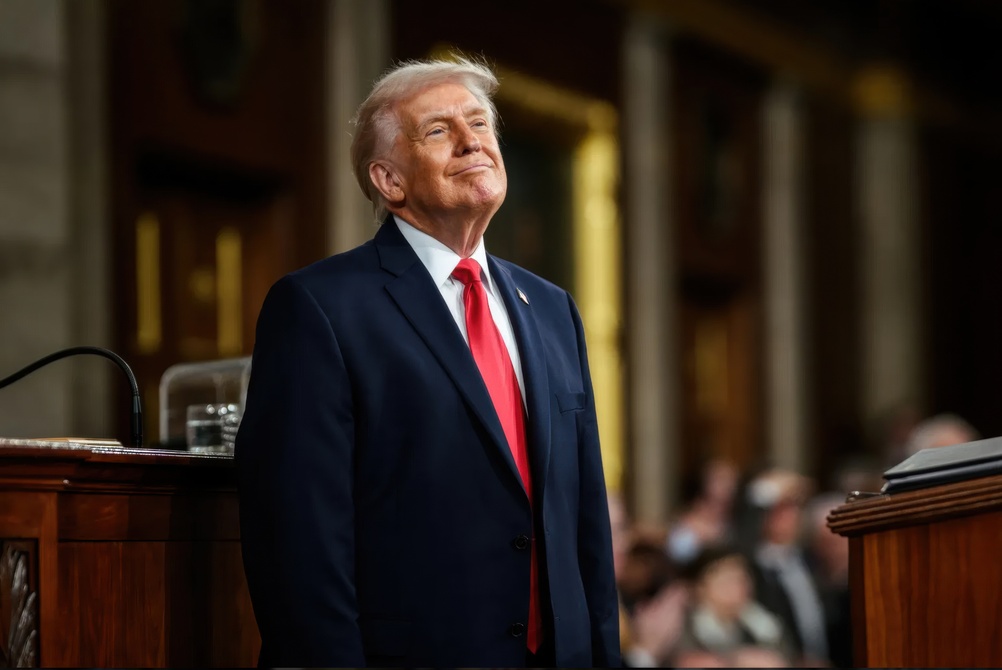
Donald Trump has been hit with a sweeping new impeachment effort in Congress, with a House Democrat filing 26 articles that accuse the president of abuses of power and other alleged misconduct. The resolution covers a huge range of issues, including military operations, immigration enforcement, presidential pardons, federal spending, press freedom and Trump’s financial interests.
Contents
show
Rep. Steve Cohen, a Tennessee Democrat and senior member of the House Judiciary Committee, introduced the articles on September 24. His filing came just nine days after the House voted to table a separate impeachment resolution introduced by Rep. Al Green, highlighting the growing disagreement among Democrats over how and when to pursue impeachment.
Steve Cohen Files 26 Articles Against Trump
Cohen’s resolution is one of the broadest impeachment efforts directed at Trump, bringing 26 separate allegations into a single filing. According to Cohen’s office, the articles cite alleged abuses of power, violations of the president’s oath of office, misuse of the pardon power and alleged violations of the Constitution’s emoluments provisions.
The filing also marks a continuation of Cohen’s long-running opposition to Trump. While serving as ranking member of the House Judiciary Subcommittee on the Constitution and Civil Justice during Trump’s first presidency, Cohen introduced five articles of impeachment against him in November 2017.
Cohen said his latest effort was driven by his interpretation of his constitutional responsibilities. In his statement announcing the resolution, he said, “I took an independent oath to support and defend the Constitution. That commitment compels me to introduce this resolution today.”
The congressman also acknowledged the political difficulty facing the resolution, while arguing that filing it was still necessary. He said the measure was intended to provide a record of his position and the actions he believes Congress should examine.
The Articles Cover Military Action And Immigration

Several of the 26 articles focus on Trump’s use of presidential and military authority. The resolution accuses him of waging war on Iran without congressional approval, alleged extrajudicial killings in international waters near Venezuela and deploying military forces against American cities.
The military allegations are among the most consequential claims in the filing because they concern the constitutional division of authority between the president and Congress. Cohen’s resolution argues that certain presidential actions exceeded the authority granted to the executive branch.
Immigration is another major focus of the filing, with multiple articles addressing policies and enforcement actions taken by the Trump administration. Cohen specifically targets Trump’s birthright citizenship executive order, the administration’s use of the Alien Enemies Act and the deportation of Kilmar Abrego Garcia to El Salvador.
The resolution also raises allegations concerning conditions at El Salvador’s CECOT prison and claims that the administration defied court orders connected to immigration enforcement. Those claims form a substantial part of the filing and overlap with issues raised during the earlier impeachment effort from Green.
Other Articles Target Federal Power And Pardons

The allegations extend well beyond foreign policy and immigration. Cohen’s resolution also accuses Trump of unlawfully withholding funds that Congress had appropriated, imposing loyalty requirements on federal workers and improperly terminating inspectors general.
Another article addresses the use of presidential pardon authority. Cohen characterizes the alleged use of the pardon power as corrupt, placing the issue among the broader claims that he believes warrant congressional scrutiny.
The resolution also includes allegations concerning political prosecutions involving James Comey, Letitia James and Adam Schiff. Cohen describes those actions as an abuse of presidential power, while the filing presents his allegations rather than an independent congressional finding.
The breadth of the filing means the 26 articles cover different categories of presidential conduct rather than focusing on one central incident. Some concern decisions involving federal agencies, while others focus on actions involving individuals, institutions and the use of executive authority.
Press Freedom And Universities Are Also Included
The media is another major target of Cohen’s resolution. Two articles accuse the Trump administration of attacking press freedom, including allegations that reporters were excluded from the White House because of unfavorable coverage.
Another article alleges that Trump coerced CBS and ABC to change editorial content. The press-related accusations come amid wider disputes over White House access and the administration’s treatment of news organizations.
Cohen’s filing also addresses executive actions involving universities and law firms. One article alleges violations of the president’s oath through actions involving law firms and free speech, while another concerns universities and the withholding of federal funds.
These allegations place institutions outside the traditional areas of presidential policy within the impeachment resolution. Cohen argues that the executive actions involved the use of federal power against organizations and individuals in ways that should be examined by Congress.
The Final Article Targets Trump’s Financial Interests
The 26th and final article focuses on the Constitution’s emoluments provisions. Cohen alleges that Trump has violated those provisions by “profiting personally and directly from the presidency.”
The emoluments issue concerns constitutional restrictions on certain financial benefits involving federal officeholders. Cohen’s filing places Trump’s alleged personal financial interests within the same impeachment resolution as the military, immigration and executive-power allegations.
The claim is presented by Cohen as an impeachment allegation, rather than a judicial determination that Trump has violated the Constitution. Whether any particular allegation constitutes an impeachable offense would require congressional consideration and, potentially, further proceedings.
The final article also gives the resolution a different dimension from the earlier allegations involving military operations and immigration. It focuses directly on the relationship between the presidency and Trump’s personal financial interests.
The House Rejected Another Impeachment Push Days Earlier
Cohen’s resolution arrived at a particularly significant moment because the House had already voted on another Trump impeachment measure earlier in September. Rep. Al Green introduced that resolution, which focused primarily on Trump’s immigration crackdown and allegations concerning federal enforcement operations.
The House voted 232-147 to table Green’s resolution on September 15, with 47 members voting present. The official House tally showed 213 Republicans voting to table the measure, along with 18 Democrats and one independent, while 147 Democrats voted against tabling it.
The vote demonstrated that Democrats were not united behind another impeachment effort. Some lawmakers supported moving forward, while others voted to table the measure or voted present rather than taking a position on the motion.
Democratic leaders had previously indicated that impeachment should follow investigations and hearings establishing a stronger factual record. The disagreement over strategy has therefore become part of the political backdrop surrounding Cohen’s new filing.
Cohen Knows The Resolution Faces A Difficult Path
Cohen has acknowledged that his impeachment effort is unlikely to advance through the Republican-controlled House. He told Nexstar, “I know they won’t go anywhere, but I’m not going to stop standing up for my constituents and for democracy.”
That statement reflects the immediate political reality surrounding the filing. Introducing articles of impeachment and successfully moving them through the House are two very different stages of the constitutional process.
Cohen’s resolution can therefore serve as a formal record of the allegations he wants Congress to consider without necessarily producing a House impeachment vote. The filing itself does not establish that Trump committed any of the alleged offenses.
The White House was contacted for comment, according to the supplied reporting, but no response was included in the material provided for this article.
Trump Has Already Been Impeached Twice
The latest filing also needs to be distinguished from Trump’s two previous impeachments. During his first presidency, the House impeached Trump in December 2019 on articles accusing him of abuse of power and obstruction of Congress in connection with Ukraine.
The Senate acquitted Trump on both articles in February 2020. The following year, the House impeached him again after the January 6 attack on the U.S. Capitol, this time on a charge of incitement of insurrection.
The Senate again acquitted him, meaning neither of those House impeachments resulted in Trump’s removal from office. Cohen’s 2026 resolution represents a separate effort and does not itself constitute a third impeachment.
That distinction is especially important because headlines about “26 articles of impeachment” can easily be mistaken for an announcement that Trump has already been impeached again. At this stage, Cohen has introduced the articles, but the House has not approved them.
What The 26 Articles Actually Mean
The filing brings together an unusually wide collection of disputes involving Trump’s presidency. The allegations concern several broad areas of government activity, including:
- Foreign policy and military power: Cohen’s resolution addresses alleged unauthorized military action involving Iran, alleged killings in international waters near Venezuela and military deployments inside U.S. cities.
- Immigration enforcement: Several articles focus on birthright citizenship, deportations, the Alien Enemies Act, CECOT and alleged violations of court orders.
- Executive authority: The filing includes allegations involving federal spending, inspectors general, political prosecutions and the presidential pardon power.
- Press and free speech: Cohen accuses the administration of restricting reporters and attempting to influence editorial decisions at major television networks.
- Institutions and funding: Universities and law firms appear in articles concerning federal funding and executive actions.
- Financial interests: The final article alleges that Trump personally profited from the presidency in violation of constitutional emoluments provisions.
Each category raises different factual and constitutional questions. The articles place Cohen’s allegations before Congress, but they do not independently prove those allegations or establish that any particular conduct meets the constitutional standard for impeachment.
The Democratic Party Remains Divided On Strategy

The timing of Cohen’s resolution has also exposed a strategic divide among House Democrats. Green’s earlier resolution received 147 votes to advance, but 18 Democrats joined Republicans in voting to table it, while 46 Democrats voted present.
Among those voting present were House Democratic leaders Hakeem Jeffries, Katherine Clark and Pete Aguilar, according to the supplied reporting. Their votes illustrated the reluctance among some Democratic lawmakers to move immediately toward another impeachment proceeding without a more extensive investigative process.
Cohen has taken a different approach by filing a much broader collection of articles. His resolution includes some of the same immigration-related concerns raised by Green, but expands the allegations into military policy, federal spending, presidential pardons, media access, universities, law firms and financial interests.
The result is a new impeachment effort that reflects Cohen’s individual position rather than a unified congressional strategy. Whether other Democrats ultimately support the resolution is a separate question from Cohen’s decision to introduce it.
Cohen And Green Have Pursued Trump Impeachment Before
The latest effort also has a history stretching back to Trump’s first term. Cohen introduced five articles of impeachment in 2017, while Green separately pursued impeachment during Trump’s first year in office.
Green’s 2017 effort was tabled by the House in a 364-58 vote. Democratic leaders at the time argued that impeachment was premature, illustrating that disagreements over the timing of impeachment are not new within the Democratic caucus.
Trump was eventually impeached twice during his first presidency, but neither proceeding resulted in a Senate conviction. The current resolution therefore enters a political environment shaped by two previous impeachment trials and several additional attempts to initiate proceedings.
Cohen’s latest filing is broader than his 2017 effort and substantially broader than Green’s September resolution. It attempts to place a long list of alleged actions under the constitutional impeachment process at the same time.
The Filing Does Not Guarantee A House Vote
For Cohen’s articles to become an actual impeachment of Trump, the House would have to approve at least one article. That has not happened with this resolution, and the recent vote on Green’s measure shows how difficult it may be for another impeachment effort to move forward.
The 26 articles therefore represent allegations formally submitted by a House member rather than completed findings against the president. They also do not automatically trigger a Senate trial.
For now, Cohen’s filing adds another major chapter to the continuing congressional fight over Trump’s use of executive power. The immediate question is whether House lawmakers will take up any of the allegations, while the broader debate remains over how Congress should respond to the conduct described in the resolution.