
Your cart is currently empty!
Trump Praises Massive Gold Statue Installed at Doral Golf Resort
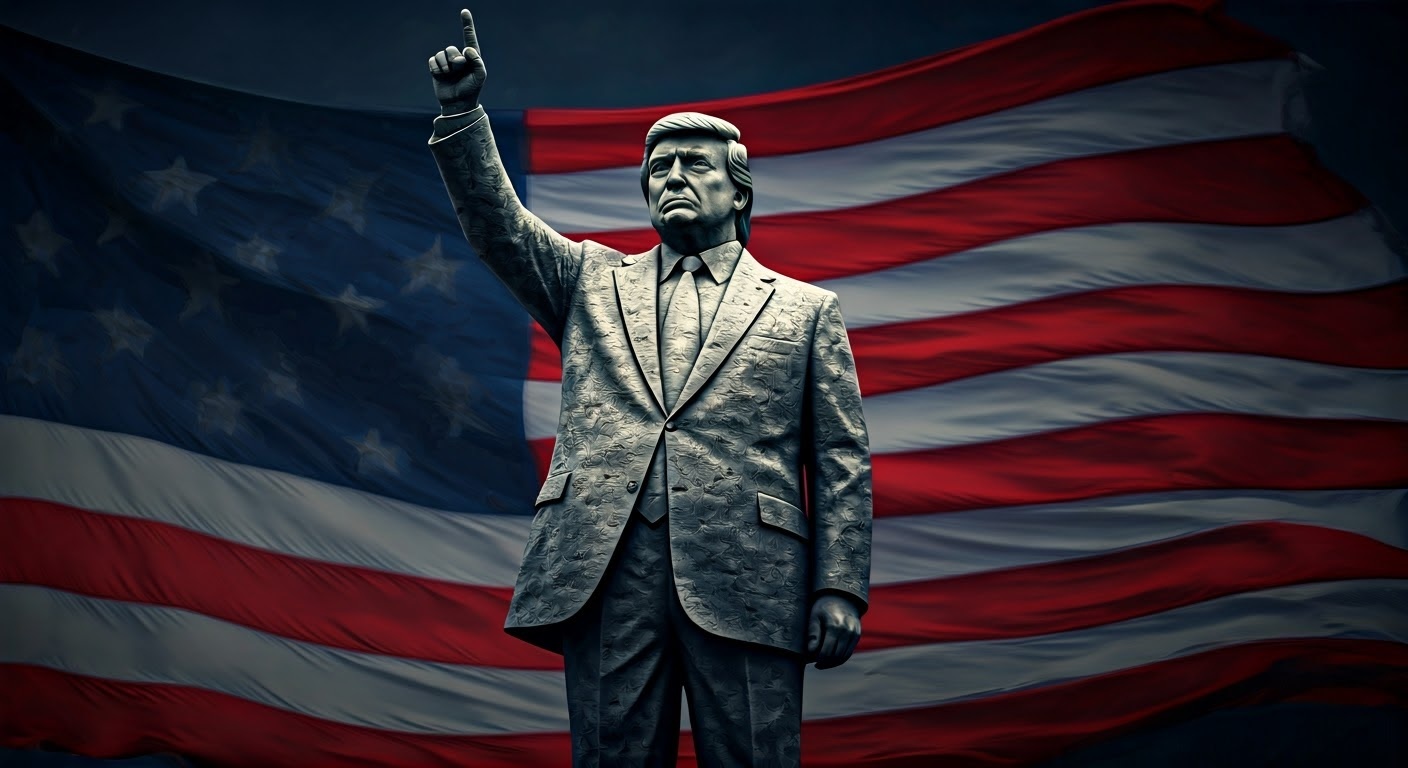
A towering gold statue of Donald Trump standing outside his own golf course already sounded like satire before people learned who paid for it.
Contents
show
Then came the prayer circle, the crypto investors, the presidential phone call, and the pastor publicly insisting that the statue was “not a golden calf.” Within hours, the ceremony exploded across social media for reasons that had little to do with golf.
The Statue That Turned a Golf Course Into a Viral Spectacle
Guests arriving at Trump National Doral Miami earlier this month were greeted by something difficult to ignore.
Standing high above the palm trees was a 22-foot statue of President Donald Trump covered in gold leaf. The sculpture shows Trump raising his fist in the air, recreating the now-famous gesture he made after the assassination attempt at a Pennsylvania rally in July 2024.
The bronze statue itself stands 15 feet tall and sits on a seven-foot pedestal. According to reports, the sculpture weighs more than three tons.
A dedication ceremony soon followed.
Dozens of attendees gathered around the statue while Pastor Mark Burns, one of Trump’s longtime evangelical allies, addressed the crowd from a podium. White and blue fabric draped around the base of the monument gave the unveiling an almost theatrical feel.
Burns described the event as “an unforgettable moment” and insisted the statue represented “resilience, freedom, patriotism, strength, and the will power to keep fighting for the future of America.”
At one point during the ceremony, Burns held his phone to the microphone so Trump himself could address the crowd.
“I want to thank everybody there,” Trump said during the call. “I know it was done from love.”
The president later shared a photo of the statue on Truth Social.
“The Real Deal – GOLD,” Trump wrote. “Put there by great American Patriots!!!”
That single post pushed the story far beyond golf circles and political media.
Within hours, videos of the ceremony were circulating across X, Threads, TikTok, Instagram, and Reddit, where many users struggled to decide whether the entire thing was serious.
The Crypto Group Behind the Statue
The story became even stranger once details emerged about who financed the monument.
The statue was not funded by the Republican Party or the Trump Organization. Instead, it was reportedly commissioned by cryptocurrency investors promoting a meme coin called $PATRIOT.
The investors hired Ohio sculptor Alan Cottrill to create the massive bronze figure.
According to multiple reports, Cottrill was paid around $300,000 for the sculpture itself, along with another $60,000 to cover the gold leaf finish. The crypto group also allegedly paid $150,000 for the rights to use images of the statue while marketing their digital token.
That arrangement quickly became messy.
Cottrill later claimed the investors began using promotional images of the sculpture before he had been fully paid. The disagreement escalated into a copyright dispute, with the sculptor accusing the group of using his work to sell crypto tokens online.
For a period of time, Cottrill reportedly refused to release the statue and kept it stored in a warehouse until payment issues were resolved.
The investors disputed some of those claims and insisted the statue had been paid for in full.
Still, the controversy added another bizarre layer to an already surreal story.
What began as a giant monument to a former and current president was suddenly tied to meme coin marketing, intellectual property disputes, and online crypto promotion.
That connection became impossible to ignore after social media users discovered that the same images being used to celebrate Trump were also being used to advertise a speculative cryptocurrency.
Why People Immediately Compared It to a “Golden Calf”
The internet reaction focused less on the statue itself and more on the symbolism surrounding it.
The comparisons to the biblical golden calf appeared almost immediately after images from the ceremony surfaced online.
In the Book of Exodus, the Israelites famously melt down gold and create a calf to worship while Moses is away on Mount Sinai.
That story has become one of the most recognizable biblical warnings about idolatry.
Because of that, many online critics found the imagery surrounding the Trump statue impossible to separate from the religious symbolism.
An enormous gold monument.
A prayer ceremony.
Evangelical leaders blessing the statue.
A president being praised while supporters gathered around the base.
Pastor Mark Burns addressed the comparisons directly in social media posts following the event.
“Let me be clear: this is not a golden calf,” Burns wrote.
He repeated similar comments on Instagram after criticism intensified.
“What amazes me is how quickly some people have compared this beautiful statue to a golden calf or idol worship,” he posted.
He then added: “But you are in gross error if you think for one second that I worship this magnificent statue or anything made by human hands.”
The fact that Burns felt the need to repeatedly deny accusations of idol worship only fueled more online commentary.
One widely shared Threads post mocked the distinction.
“It is not a golden calf,” the user wrote. “It is a golden statue of a man they idolize, believe can do no wrong, and follow without question.”
The criticism quickly expanded beyond partisan politics.
Even some religious conservatives questioned whether the optics of the event crossed a line.
Others defended the ceremony and argued critics were intentionally misrepresenting a symbolic tribute.
The debate soon became one of the most discussed political culture stories online.
The Timing Made the Entire Situation Even Stranger
Part of what pushed the story viral was the timing.
Just days before the unveiling, Amazon’s satirical superhero series “The Boys” aired an episode featuring a giant golden statue of Homelander, the show’s authoritarian superhero character.
Social media users immediately noticed the similarities.
Side-by-side images of the fictional Homelander statue and Trump’s real-life monument spread rapidly online.
The comparisons became impossible to avoid once Eric Kripke, creator of “The Boys,” joined the conversation himself.
Kripke reposted both images on Instagram with a short caption.
“Seriously what the f***?” he wrote.
He later told Polygon that modern politics had become difficult to satirize because reality keeps overtaking fiction.
“It’s just really hard to out-satire this world,” Kripke said.
For many people online, the overlap between fictional authoritarian imagery and an actual gold statue ceremony involving clergy and crypto investors felt almost too perfectly scripted.
Memes flooded social media within hours.
Some users joked that the event looked like a deleted scene from a dystopian television show. Others compared the statue to monuments associated with authoritarian leaders throughout history.
Supporters pushed back and argued critics were deliberately exaggerating a celebratory event.
Still, even neutral observers admitted the imagery was extraordinary.
A giant gold statue standing outside a president’s own golf course would already attract headlines under normal circumstances.
Adding evangelical blessings, meme coin investors, and television satire comparisons transformed it into one of the internet’s most surreal political moments of the year.
Golfers and Visitors Had Their Own Reactions
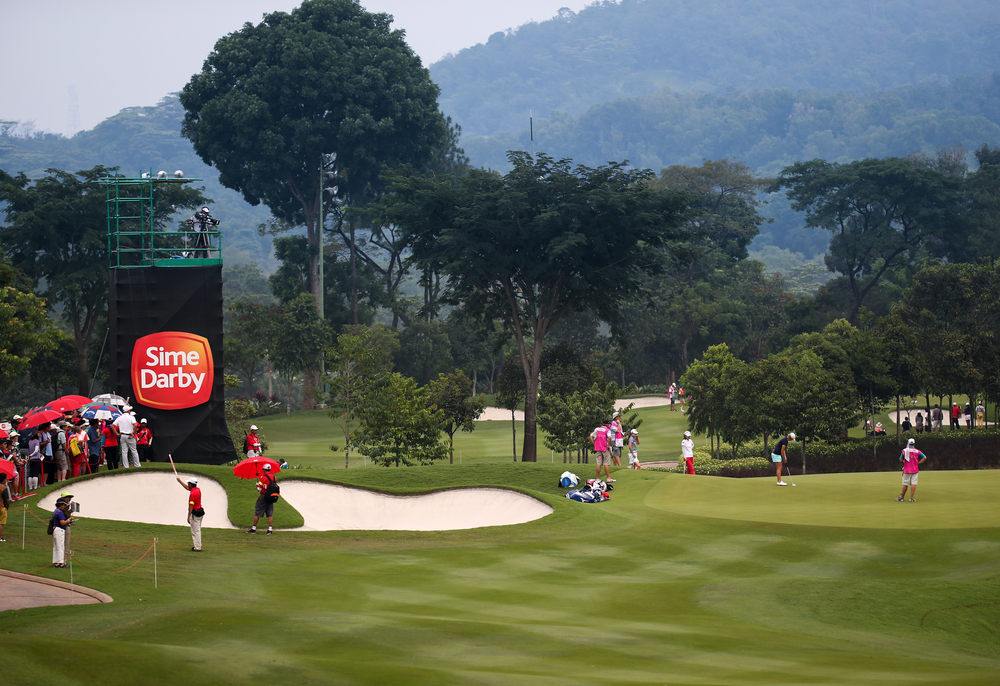
The statue quickly became a major attraction at Trump National Doral during the PGA Tour’s Cadillac Championship.
Fans stopped to take photos in front of the monument while recreating Trump’s raised-fist pose.
Professional golfers also weighed in after reporters began asking about the installation.
Rickie Fowler summed up the statue in a short comment that quickly circulated online.
“It’s big and gold,” he told reporters.
Gary Woodland compared the monument to the trophy awarded at The Players Championship.
Tommy Fleetwood responded with humor when asked about the sculpture.
“If I have my own resort one day, maybe I’ll put a big gold statue of me on it,” he joked.
Online reactions ranged from praise to disbelief.
Some Trump supporters celebrated the monument as a patriotic tribute and applauded the symbolism connected to the assassination attempt.
Others questioned why the statue did not depict Trump holding a golf club despite being installed at a golf resort.
Several social media posts joked that the statue looked less like a golf landmark and more like something from Las Vegas.
A few critics also pointed out that while Trump praised the “great American Patriots” responsible for the sculpture, members of the Trump Organization had previously attempted to distance themselves from the $PATRIOT cryptocurrency project.
Earlier this year, Eric Trump reportedly posted on X that the Trump Organization had “no association of any kind” with the meme coin.
That statement became harder to ignore after the same coin’s investors funded a massive statue placed directly on Trump property.
The contradiction became one of the most heavily discussed parts of the story.
The Long History of Trump Statues and Political Branding
While the Doral monument may be the most dramatic example yet, it is far from the first statue connected to Donald Trump.
Over the years, artists and activists across the political spectrum have used Trump sculptures to make statements about power, celebrity, wealth, and politics.
Some were supportive.
Others were openly mocking.
Recent installations near the Capitol included protest sculptures portraying Trump alongside Jeffrey Epstein. Another featured a Titanic-inspired pose involving both men.
Those pieces were quickly removed.
The Doral statue is different because it exists as a celebratory monument placed directly on Trump-owned property.
That distinction matters.
The statue is not positioned as political protest art.
It is intended as admiration.
That reality has reignited broader conversations about celebrity politics and personality-driven movements in the United States.
Trump has long cultivated a political identity centered on branding and spectacle.
His name appears on skyscrapers, golf courses, hotels, airplanes, merchandise, and licensing deals around the world.
The gold statue fits naturally into that visual style.
For supporters, the monument symbolizes survival after multiple assassination threats and years of political attacks.
For critics, the imagery reinforces concerns about personality worship in modern politics.
Either way, the statue achieved something many political events fail to accomplish.
People who normally ignore golf tournaments, cryptocurrency projects, or political ceremonies suddenly could not stop talking about all three.
The Strange Relationship Between Politics and Meme Coins
The involvement of cryptocurrency investors opened another major conversation.
Meme coins have exploded in popularity during the last few years, often using internet humor, celebrity culture, and viral marketing to attract attention.
Unlike traditional investments, many meme coins gain value almost entirely through hype and online visibility.
That explains why a giant gold Trump statue became such valuable promotional material.
The crypto investors behind $PATRIOT were not simply funding public art.
They were creating a viral marketing machine.
The strategy worked.
Within days, countless media outlets covered the statue and mentioned the cryptocurrency connected to it.
That level of publicity would normally cost millions of dollars through conventional advertising.
The Doral ceremony effectively merged three powerful internet ecosystems:
- Political fandom
- Religious symbolism
- Viral crypto culture
Each of those communities already thrives on emotional engagement, online loyalty, and social media amplification.
Combining all three guaranteed attention.
Some financial commentators warned that meme coin projects tied to political movements can create risky situations for investors.
Others argued the entire episode represented the next phase of internet-driven political branding.
The overlap between crypto promotion and political identity has already become increasingly common online.
Trump himself has previously embraced digital collectibles and NFT projects tied to his image.
The Doral statue pushed that relationship into physical space.
Suddenly, a cryptocurrency meme campaign was no longer just existing online.
It had become a 22-foot monument standing outside a luxury golf course.
Why the Story Spread So Quickly Across the Internet

The viral success of the story came from how many different audiences reacted to it at the same time.
Political commentators focused on the symbolism.
Religious communities debated the golden calf comparisons.
Crypto users discussed the marketing strategy.
Pop culture fans linked the ceremony to “The Boys.”
Late-night comedians turned the statue into material almost immediately.
Even sports coverage picked up the story because of the PGA Tour connection.
Very few modern news events hit so many corners of the internet simultaneously.
The visual element also mattered.
A giant gold statue is instantly shareable.
People did not need to read a long political analysis to understand why the images were attracting attention.
The pictures alone carried the story.
That visual power explains why social media platforms became flooded with memes, edited videos, and reaction posts.
Some users inserted the statue into movie scenes.
Others edited dramatic music behind footage from the unveiling ceremony.
Political supporters posted patriotic tributes.
Critics compared the imagery to scenes from authoritarian governments.
The conversation became so widespread that many people first encountered the story through memes before reading actual news coverage.
That is increasingly how viral political moments spread in the modern internet era.
The line between political news, entertainment, internet culture, and advertising continues to blur.
The Doral statue managed to sit directly in the center of all four.
Trump’s Image Has Always Been Built Around Spectacle
Long before entering politics, Trump understood the value of visual branding.
Gold interiors, massive buildings, luxury aesthetics, and oversized public displays became central parts of his image during his years as a real estate developer and television personality.
The Doral statue follows that same pattern.
It is impossible to separate the monument from Trump’s larger public identity.
The scale matters.
The gold finish matters.
The raised fist matters.
Every part of the sculpture is designed to communicate strength, victory, and survival.
That approach has helped Trump maintain one of the most recognizable political brands in the world.
Supporters often see those displays as confidence and patriotism.
Critics see ego and theatrical excess.
The statue debate reflects that larger divide.
For many Americans, the monument feels like a perfect symbol of the Trump era itself.
Large.
Loud.
Impossible to ignore.
And somehow always one step beyond what people expected politics to become.
The Statue Became Bigger Than the Ceremony Itself
The unveiling ceremony lasted only a short time.
The internet reaction may last much longer.
What started as a tribute at a golf resort quickly evolved into a broader cultural argument about politics, religion, celebrity branding, and online influence.
Some people saw inspiration.
Others saw excess.
Many simply saw one of the strangest political visuals in recent memory.
The most revealing part of the entire story may be how naturally all the pieces fit together.
A gold monument.
A meme coin.
A prayer ceremony.
A viral internet backlash.
A president praising the spectacle online.
Ten years ago, the combination might have sounded too absurd for a television writer to pitch seriously.
Now it is sitting outside a golf course in Florida, covered in gold leaf, while tourists line up to take selfies beside it.