
Your cart is currently empty!
Trump Reads Scripture From the Oval Office as His Bond With American Christians Shows Cracks
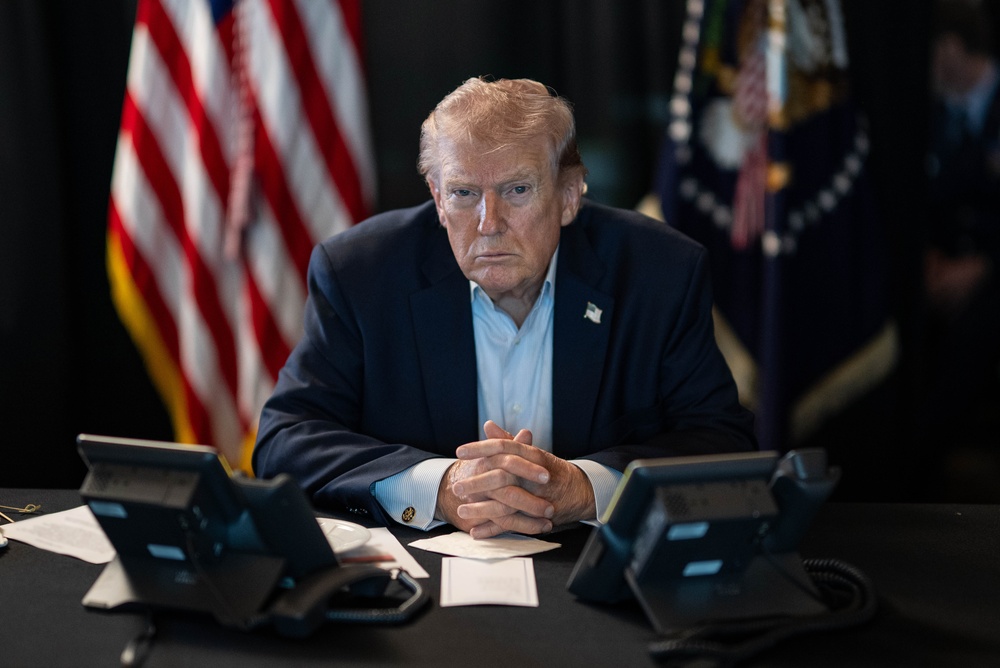
Behind the Resolute Desk on Tuesday evening, a familiar figure opened a Bible and began to read. Viewers who tuned in through the Museum of the Bible’s livestream, or caught the broadcast carried by the faith-based Pure Flix platform, watched President Donald Trump deliver a passage long cherished by conservative Christians in America.
Contents
show
His contribution ran barely three minutes. What surrounded it, however, had been building for weeks, a sequence of public spats, deleted social media posts, and theological quarrels that have left even some of his evangelical backers asking pointed questions. Why this passage, of all passages? Why this moment? And what does an Oval Office Bible reading really tell us about a president whose bond with American Christians has rarely looked so tangled?
A Sermon Taped Behind the Resolute Desk
Trump recorded his reading last week, and organizers scheduled its release for Tuesday evening. Nearly 500 participants are taking part in “America Reads the Bible,” a weeklong scripture marathon that began on April 18 and covers every book from Genesis to Revelation. Most readers appeared in person at the Museum of the Bible in Washington, while Trump and a handful of others contributed virtual segments filmed elsewhere.
Other voices on the lineup include Defense Secretary Pete Hegseth, Secretary of State Marco Rubio, White House chief of staff Susie Wiles, Texas Gov. Greg Abbott, Sen. Ted Cruz of Texas, Sen. Joni Ernst of Iowa, and Sen. Chuck Grassley of Iowa. Organizers timed the project to mark America’s 250th anniversary, framing it as a spiritual observance of the country’s founding ideals and a call back to its religious beginnings. Trump’s portion was filmed inside the Oval Office on two cameras and then edited together, a production detail that says much about how presidential imagery now mingles with religious broadcasting.
A Verse That Carries the Weight
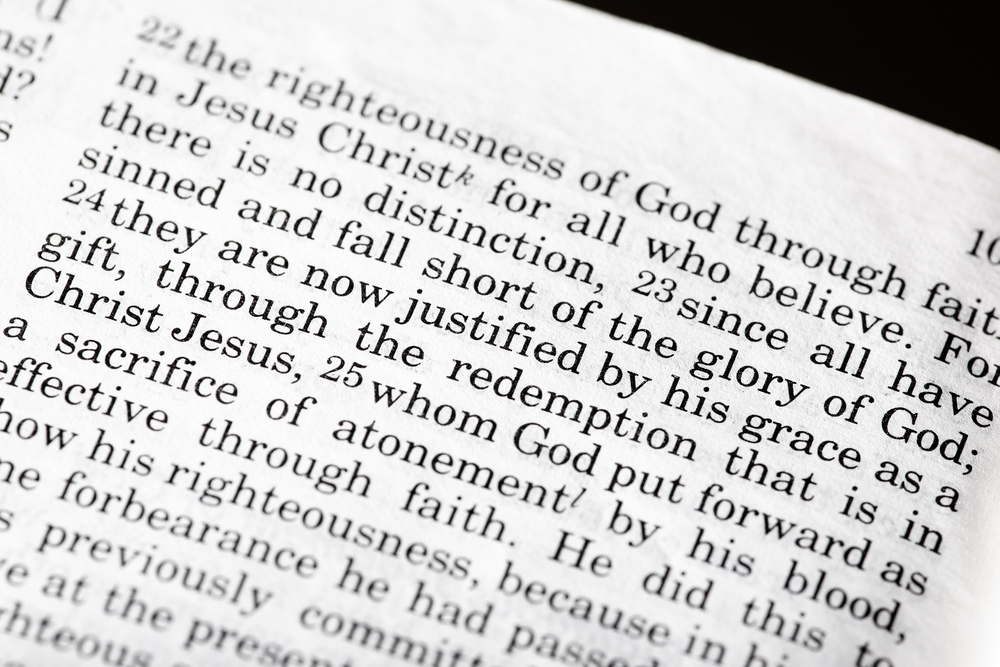
Trump’s section was no accident of scheduling. Bunni Pounds, a former political consultant who now leads the nonprofit Christians Engaged, told CNN she had set aside 2 Chronicles chapter 7, verses 11 to 22, specifically for an elected official, and prayed that Trump would agree to read it.
“asking the Lord to move to allow our president to pray this prayer” was how she described her petition to reporters. Pounds drew on connections from her earlier career in politics, working with White House Faith Office Director Jennifer Korn, senior adviser Paula White-Cain, and Domestic Policy Council Director Vince Haley to extend an invitation to the president and several members of his Cabinet.
Set Inside Solomon’s Temple, Recited in the Oval Office

Situated during King Solomon’s dedication of the temple in ancient Jerusalem, 2 Chronicles 7 contains one of the most quoted verses in American conservative Christianity. In it, God promises forgiveness to a future generation that strays and then repents. A portion of the passage has been chanted at evangelical rallies, recited at Republican events, and invoked at the 2024 Republican National Convention. Trump read the relevant line from behind his desk, the one that asks God’s people to humble themselves, pray, seek his face, and turn from their wicked ways, with the promise of divine healing for their land.
Margaret Susan Thompson, professor of history and political science at Syracuse University’s Maxwell School, told CNN many Evangelical Christians read the verse as a call upon God to bless their nation.
A Rocky Stretch Leading Up to the Reading
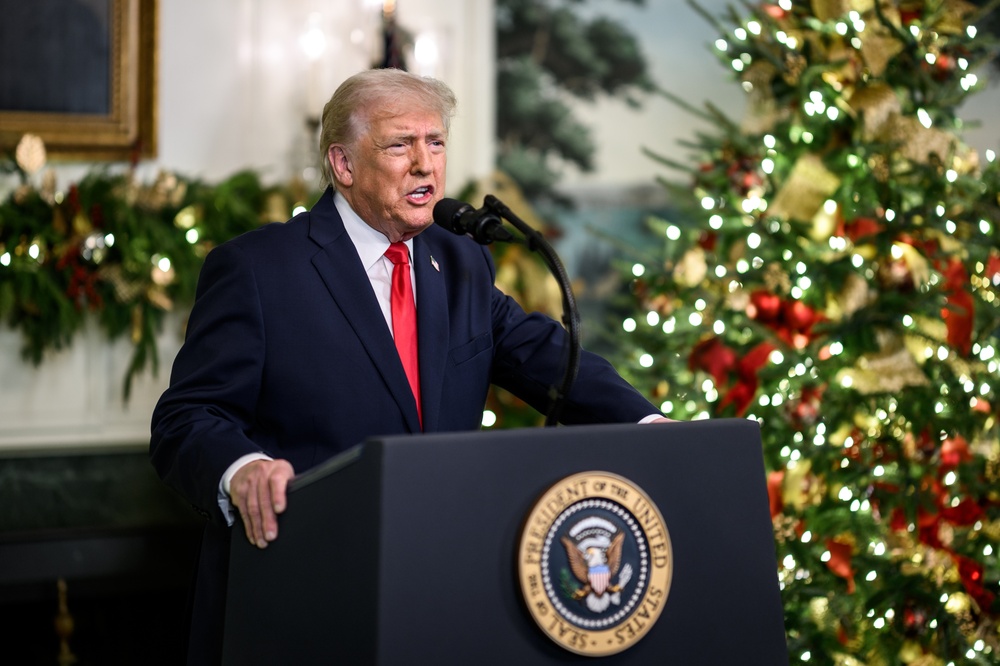
Trump’s Tuesday sermon arrived at what Pounds, political watchers, and historians alike describe as a delicate juncture for his ties to American Christians.
A week earlier, Trump had circulated an AI-generated image depicting himself as a white-robed, Jesus-like healer surrounded by American flags, bald eagles, and the Statue of Liberty. Rare pushback followed from key figures on the Christian right who saw the imagery as blasphemous. Trump deleted the post and claimed he had thought the picture portrayed him as a doctor tied to the Red Cross, not the Christian savior. Soon after, he put up a second AI image, this one showing Jesus embracing him beside a caption aimed at his political opponents.
Pounds told reporters that Trump’s decision to pull the original image down was moving, and she stressed that his participation in the Bible reading had been booked well before the image went up.
Quarreling With Pope Leo XIV
Compounding the moment was Trump’s running feud with Pope Leo XIV, the first American-born pontiff. Leo has condemned the U.S.-led war in Iran on several occasions and, during a recent official visit to Cameroon, warned against those who use faith for military, economic, and political gain.
Trump fired back with a 334-word Truth Social post in which he branded Leo weak on crime and terrible on foreign policy. He accused the pontiff of being comfortable with Iran possessing a nuclear weapon, and suggested Leo had won the papacy because cardinals wanted an American in the role to manage him. Speaking to reporters on Friday, Trump said he had a right to disagree with the pope, and he added that he had no plans to apologize.
For his part, Leo has said he will not be silenced. He has promised to keep speaking up for peace, dialogue, and multilateral diplomacy. “Too many innocent people are being killed,” he said last week, arguing that someone had to stand up and say there was a better way.
Religion’s Growing Footprint Across the Federal Government
Trump’s second term has already pushed religion deep into federal operations. In February 2025, he signed an order creating several faith-based offices, among them the White House Faith Office, led by televangelist Paula White-Cain, who has compared him to Jesus. A July 2025 memo from the Office of Personnel Management cleared federal workers to encourage colleagues toward religious expression, including prayer. Employees across many agencies have since reported proselytizing emails, invitations to worship services held inside government buildings, and religious undertones woven through major policy decisions.
Nowhere has the change been more visible than at the Pentagon. Hegseth cites scripture in his press briefings and leads prayers within the Department of Defense. During a service held shortly after the Iran war began, the defense secretary asked God to let every round find its mark against the enemies of righteousness and the American nation. Last week, he drew coverage for reciting an air rescue group’s prayer that borrowed language from a scene in Pulp Fiction.
Rise of the ‘MAGA Jesus’ Movement
Beyond these policy changes, a theological current has gained momentum within segments of American fundamentalism and evangelicalism. Some followers cast Trump as a chosen one anointed by God, a framing that drew fresh scrutiny after the deleted AI post. That image, however fleeting online, brought into public view a branch of belief that had been circulating in private prayer meetings and online sermons for years.
Pounds, for her part, argued that Trump’s installation of people of faith across the administration reflects authentic belief. She said his heart is tender and open toward the Lord, and that he would not have agreed to read scripture if he did not mean it.
Applause, Skepticism, and a Viral Split
Reaction to the Tuesday reading broke along familiar lines. Supporters flooded X with messages praising Trump for reading scripture in public and reminding the country of what they consider its religious origins. Pounds told the Associated Press that his decision to read the passage made a powerful statement.
Critics, by contrast, dismissed the event as political theater. Online skeptics called it a stunt and mocked the idea that Trump has ever read the Bible. Photographers still remember the June 2020 scene outside St. John’s Episcopal Church in Washington, when Trump held up a Bible for cameras during the George Floyd protests, a moment that continues to divide opinion.
Scholars Push Back on the Political Reading

Beyond the partisan noise, a growing body of scholars has questioned how the passage has been applied to American politics. Brian Kaylor, author of “The Bible According to Christian Nationalists: Exploiting Scripture for Political Power,” told the Associated Press, “This verse is not about the United States.” He argued that the passage was a promise made to one person in one particular moment, and that lifting it from its ancient setting to apply to any modern nation distorts its meaning.
Kaylor’s critique pairs with Thompson’s academic reading. Together, their work sketches a portrait of a biblical verse doing enormous political work in 2026 while bearing limited relation to the circumstances it once addressed.
Trump’s Long Self-Styled Role as Christianity’s Defender
Trump has cast himself as Christianity’s chief protector for years. In 2021, he told a radio host that nobody had done more for Christianity, evangelicals, or religion itself than he had. In 2024, his campaign began selling Trump-branded “God Bless the USA” Bibles. He remains an irregular churchgoer who used this year’s National Prayer Breakfast to attack political enemies rather than pray.
Those paradoxes have never prevented him from claiming the mantle of America’s most religious president. What has changed, in his second term, is how far he has wound faith language into federal policy, military briefings, and White House communications.
What the Oval Office Reading Really Signals
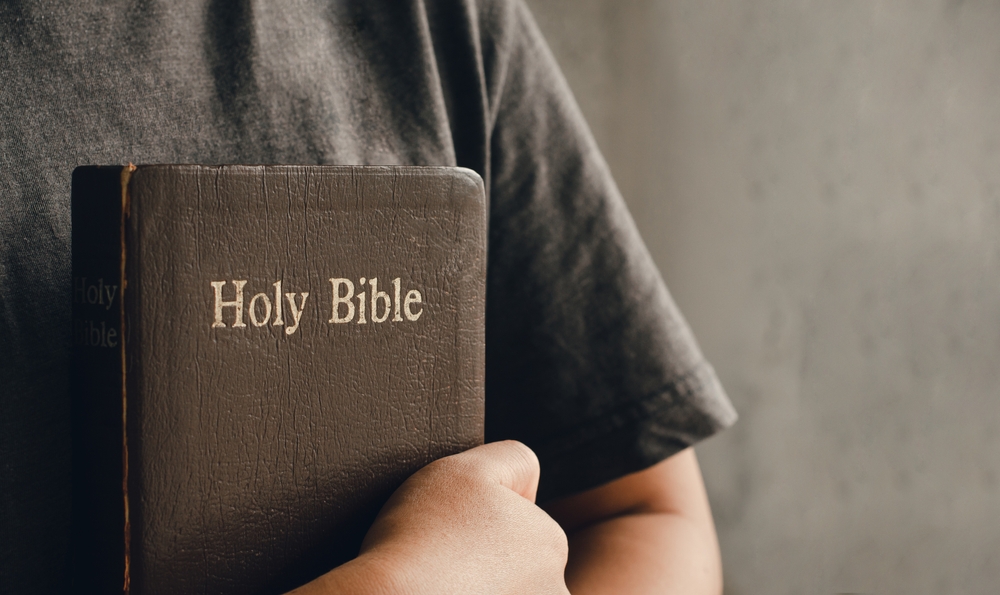
Tuesday night’s broadcast capped a stretch in which Trump has continued to wear down the wall between church and state. A faith-based federal workforce, a pontiff locked in open argument with the White House, an AI image mocked by some of his own supporters, and a Bible passage beloved by the Christian right now read into the record from the Resolute Desk.
Whether the reading marks a genuine spiritual turn, a calculated bid to shore up a restless base, or something harder to classify will depend on what the president does next. For now, the voice that filled Pure Flix screens on Tuesday belonged to a politician who has spent his second term folding scripture into statecraft, and who still has many of his own believers asking what, exactly, he believes.