

President Donald Trump has rejected responsibility for a nationwide aviation shutdown that disrupted thousands of flights, leaving passengers stranded and airlines struggling to restore normal operations. The president instead blamed ageing technology, decades of infrastructure problems, and decisions made under his predecessor, Joe Biden.
Speaking outside the White House on Monday, November 16, Trump described the equipment responsible for Friday’s disruption as having suffered a “heart attack.” He also praised Transportation Secretary Sean Duffy for his response, insisting that everyone remained safe despite the extraordinary disruption. His remarks have now opened another political dispute over who should answer for the condition of America’s aviation infrastructure.
Trump Says He Takes No Responsibility for Nationwide Flight Shutdown
Trump addressed the aviation crisis in person for the first time on Monday as he prepared to leave Washington for a week-long trip to Asia. Reporters questioned the president about the disruption, which forced authorities to halt departures across the United States and created significant problems for airlines and passengers.
ABC News reporter Rachel Scott asked Trump what personal responsibility he accepted for the nationwide ground stop. His response was direct, with the president refusing to accept blame for the incident.
“I don’t take any responsibility,” Trump told Scott.
Rather than accepting responsibility for the disruption, Trump pointed towards the condition of the Federal Aviation Administration’s (FAA) infrastructure. He argued that the equipment involved was extremely old and had been neglected for decades, leaving the country dependent on technology that needed complete replacement.
“Essentially what you saw on Friday was very, very old equipment that had a heart attack,” Trump explained.
The president also defended Duffy, who had been involved in the response while the aviation shutdown was unfolding. Trump said he had met with the transportation secretary at the White House on Friday and praised the department’s handling of the emergency.
“They did a great job, Secretary Duffy, they acted incredibly. Everybody was safe, nobody was hurt. No crashes, no nothing,” Trump said.
He also reassured Americans that flying remained safe, despite the technical problems that had affected air traffic operations. Trump maintained that the shutdown was a necessary response to ageing equipment and argued that the incident demonstrated why a major infrastructure overhaul was needed.
His comments came after he had remained largely silent about the disruption following Friday’s incident. On Sunday, he addressed the matter through his social media platform, blaming the Biden administration for leaving the country’s aviation system in a worse condition than it had inherited.
What Happened During Friday’s Nationwide FAA Ground Stop?
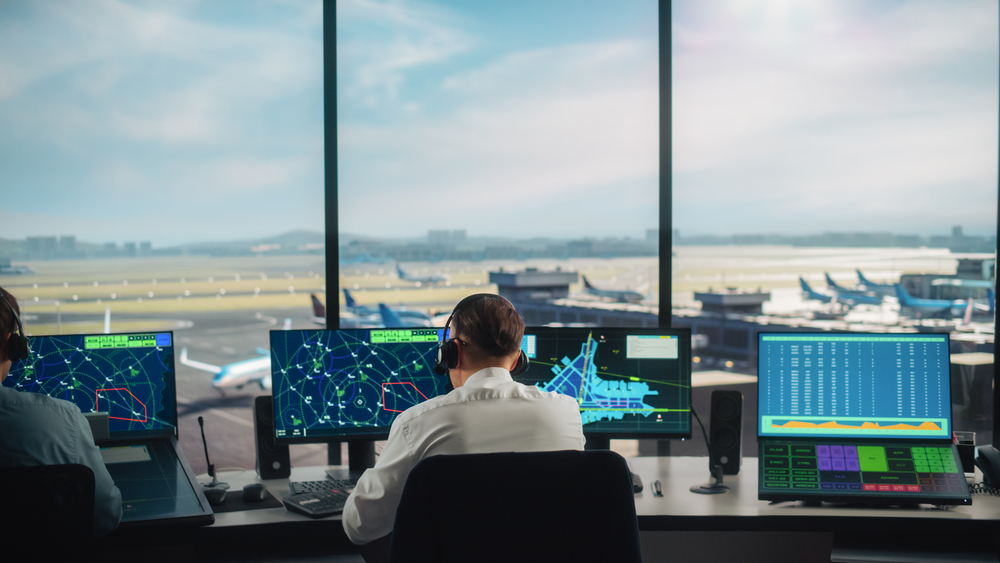
The disruption began on Friday, November 13, when a communications failure affected equipment used by air traffic controllers. The technical problem created instability across parts of the FAA’s network, prompting authorities to halt departures while engineers worked to identify and isolate the issue.
The ground stop began at approximately 3:30 p.m. Eastern Time and remained in place until around 8:20 p.m. During that period, domestic flights were prevented from taking off, creating immediate problems at airports throughout the country.
Air traffic controllers rely on interconnected communications systems to coordinate aircraft movements and maintain contact with pilots. Any disruption affecting those systems can create serious operational difficulties, particularly when officials cannot establish whether the network is functioning reliably.
The FAA therefore faced a decision between allowing flights to continue amid uncertainty or temporarily stopping departures until the affected equipment could be assessed. Authorities chose the latter approach, with Duffy later defending the decision as necessary to protect passengers and aviation personnel.
“I’m very concerned about the safety of the American people. I’d rather have a conversation about delays or cancellations as opposed to an air crash,” Duffy told Fox News.
The shutdown was particularly significant because nationwide ground stops are extremely unusual. Friday’s incident was reported as only the second nationwide FAA ground stop since the September 11, 2001, terrorist attacks.
The consequences extended well beyond the hours when departures were suspended. Aircraft and crews were left out of position, while airlines had to reorganise schedules and manage the backlog of disrupted journeys. Thousands of passengers experienced cancellations and delays that continued into the weekend.
According to the figures cited in the reports, more than 20,000 flights were cancelled between Friday and Sunday, while over 25,000 experienced delays. The disruption continued into Monday, with FlightAware reporting hundreds of additional cancellations and thousands of delayed flights during the afternoon.
Although the FAA eventually restored normal operations, the incident raised questions about how a problem involving a limited number of communications systems could disrupt aviation across the country.
Old Copper Wiring and Router Overload Suspected in Technical Failure

Transportation Secretary Duffy provided further details about the technical problems during an appearance on ABC’s This Week on Sunday. He explained that the disruption occurred while work was underway to replace outdated copper wiring with modern fibre-optic cables at an FAA facility in El Dorado, Arkansas.
The replacement project was intended to improve the communications infrastructure used by the aviation network. However, problems emerged when a router was switched on during the installation process, creating an unexpected flow of data that affected another part of the system.
Duffy explained that the initial problem in Arkansas appeared to trigger instability in Amarillo, Texas. The equipment in Amarillo had reportedly been replaced approximately three weeks earlier, but the network began experiencing an excessive amount of communication traffic when the Arkansas router was activated.
According to the FAA’s explanation, the system experienced a flood of excessive data at a rate of approximately 1,000 connection attempts every four to five seconds. The resulting instability affected communications and radar feeds that controllers rely on to manage aircraft movements.
The incident demonstrated how interconnected infrastructure can create problems beyond the location where a technical failure first occurs. A network may contain newer equipment alongside older components, but those systems still need to communicate reliably as a single operational unit.
ABC News aviation expert John Nance described the country’s air traffic control infrastructure as a collection of upgrades and adjustments introduced over several decades.
“The U.S. air traffic control system has been a patchwork quilt of modernization here and there and a few tweaks over here and different software, et cetera, over the last number of decades,” Nance explained.
He also questioned whether the network had sufficient redundancy to isolate a technical failure without affecting the wider system. According to Nance, individual components may contain safeguards, but the overall network must also be capable of identifying problems and preventing them from spreading.
The precise technical cause remains subject to investigation. The FAA and its contractor have been examining the affected equipment to establish what happened during the installation and why the network experienced such extensive instability.
Trump Blames Biden and Pete Buttigieg for Aviation Infrastructure Problems
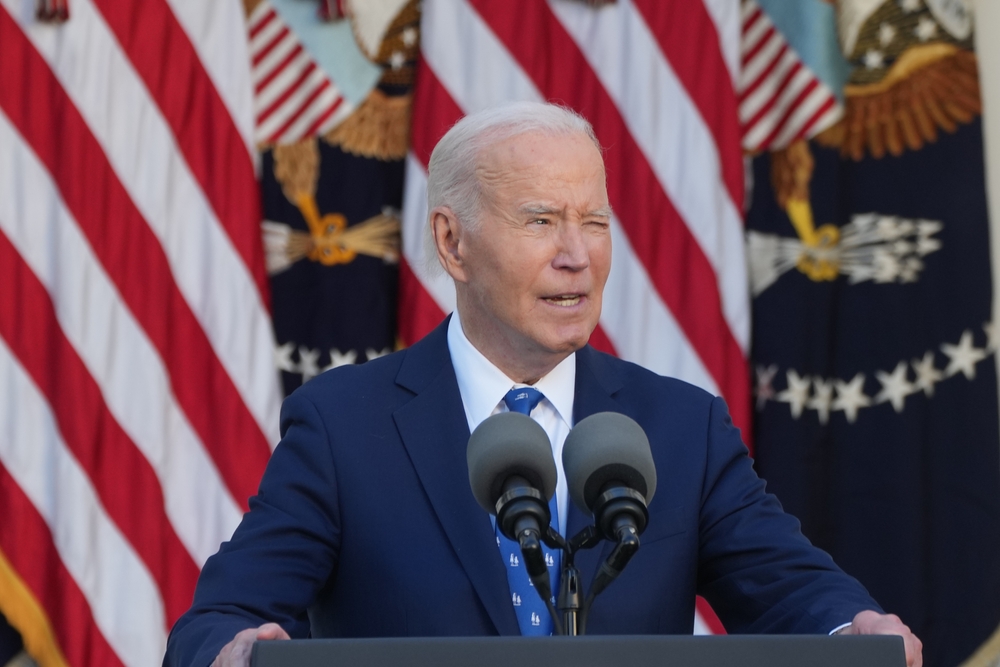
Trump also used his Monday appearance to criticise the previous administration, arguing that its infrastructure decisions contributed to the problems experienced on Friday. His comments specifically targeted former President Joe Biden and former Transportation Secretary Pete Buttigieg.
The president questioned the effectiveness of previous efforts to replace copper communications wiring with fibre-optic technology. He claimed that money had been wasted during the process and suggested that the work had left the aviation system in a vulnerable condition.
“The Biden administration hooked up a lot of copper into glass. And copper, if you know anything about electrical engineering, you cannot hook up copper into glass,” Trump told reporters.
His comments appeared to refer to the transition from older copper telecommunications infrastructure to fibre-optic cables, which use light to transmit information. Fibre-optic technology is widely used in modern communications networks because it can support high-speed data transmission over long distances.
Trump argued that the country’s existing equipment was too old to be adequately maintained through occasional repairs. He said some components were more than 50 years old and insisted that replacing the system entirely was necessary.
The president also singled out Buttigieg, who served as transportation secretary during the Biden administration. Trump accused him of damaging the aviation system and claimed that his administration had spent two years trying to secure funding for repairs.
“We’ve been trying to get the money for two years to fix it, and Buttigieg ruined the system. He totally ruined it,” Trump said.
Buttigieg responded to the accusations in a post on X on Monday, defending his record and pointing towards improvements made during his time at the department.
“As secretary, I made sure to leave air travel in better condition than when we arrived,” Buttigieg wrote.
He said his administration had reversed a decade of decline in air traffic controller staffing, reduced runway safety incidents, and achieved lower flight cancellation rates before leaving office.
Buttigieg also explained that the Biden administration had launched a project to transition the FAA’s communications infrastructure from copper wiring to a modern network. He said he welcomed the continuation of that work but questioned why its implementation under the current administration had triggered such a serious communications failure.
He further called on the Trump administration to explain how it had used previously authorised funding and what steps were being taken to prevent another disruption.
The exchange has placed responsibility for the aviation system’s condition at the centre of a political dispute. Trump points towards decades of underinvestment and previous Democratic leadership, while Buttigieg argues that the current administration must explain the failure that occurred during its own infrastructure work.
Billions in Aviation Funding Have Already Been Approved

The dispute over responsibility has also brought renewed attention to the billions of dollars allocated to modernising America’s aviation infrastructure. Both the Biden and Trump administrations have supported funding for improvements, although their spending plans have differed in scope and timing.
The bipartisan infrastructure legislation signed by Biden included approximately $25 billion for airport and aviation infrastructure improvements over five years. Around $5 billion was specifically earmarked for upgrading the foundation of the FAA’s air traffic control infrastructure.
However, the funding covered several different types of projects, including airport improvements, runways, taxiways, terminals, and communications infrastructure. Consequently, the full allocation was not exclusively dedicated to replacing the country’s air traffic control network.
After Trump returned to the White House in 2025, Republican lawmakers approved another $12.5 billion for aviation infrastructure modernisation through the One Big Beautiful Bill. That funding included $4.75 billion specifically allocated for telecommunications infrastructure modernisation and systems upgrades.
Despite those allocations, Duffy has argued that considerably more money will be needed to complete the replacement programme. His request for at least $50 billion has attracted attention because it represents a substantial additional commitment for the federal government.
The administration argues that the existing network requires more extensive reconstruction than previous funding programmes could provide. Trump has also suggested that Friday’s disruption could encourage lawmakers to approve the additional money.
“We want to make it beyond safe. We want to have the best system in the world, and for that we need Congress,” Trump said.
The president also claimed that his administration had been requesting the necessary funding for two years. He expressed confidence that lawmakers would become more willing to approve the investment after witnessing the consequences of the communications failure.
However, the funding debate raises several questions that Congress will need to address before approving additional spending. Among the most important are:
- How existing money has been spent: Lawmakers will need to understand how previously authorised aviation funding has been distributed and which modernisation projects have been completed.
- What equipment needs replacing: The administration must identify the ageing systems responsible for the current vulnerabilities and explain the scale of the proposed replacement programme.
- How future installations will be managed: The Arkansas and Texas incident has raised questions about testing procedures and the risks associated with introducing new equipment into an operating network.
- How quickly improvements can be completed: Modernising national aviation infrastructure involves multiple facilities, contractors, and communications systems, making implementation schedules an important part of the funding discussion.
A September 2026 Government Accountability Office report also highlighted the longstanding difficulties surrounding FAA modernisation. The report stated that the agency had struggled for decades to update its outdated air traffic control systems.
It also raised concerns that current modernisation efforts could be prioritising speed over cost considerations and the risk of operational disruptions. Those concerns have become particularly relevant following Friday’s communications failure.
FBI Joins Investigation as Officials Examine Failed Equipment
The investigation into the communications breakdown has expanded beyond the FAA’s immediate technical response. Duffy revealed during an interview with Fox News that the affected server had been transported to an L3Harris facility in Florida for examination.
He also confirmed that he had contacted FBI Director Kash Patel and requested that agents oversee aspects of the investigation.
“We’ve taken that server to the L3Harris lab in Florida,” Duffy said.
The transportation secretary explained that FAA personnel would work alongside specialists to examine the server and the methods used during its installation. The investigation is expected to establish how the network became overwhelmed and whether problems involving the installation contributed to the wider failure.
Duffy described the decision to suspend departures as necessary while officials worked to isolate the source of the excessive data traffic. He argued that allowing aircraft to continue operating during an uncertain communications situation would have introduced unacceptable safety concerns.
The administration has also addressed questions about whether the failure involved a cyberattack or artificial intelligence. Duffy and FAA Administrator Bryan Bedford have ruled out those explanations based on the information available from their initial assessment.
The investigation therefore remains focused on the telecommunications equipment, router activity, and installation procedures involved in the disruption.
Officials will need to determine whether the failure resulted from defective equipment, configuration problems, installation errors, or an interaction between older and newer components. Establishing the precise cause will be important when deciding what safeguards should be introduced across other FAA facilities.
The involvement of the FBI adds another layer of scrutiny to an incident that has already attracted considerable political attention. However, the investigation’s findings will be needed before responsibility for the technical failure can be established conclusively.
Trump Faces Questions About White House Projects During Aviation Crisis
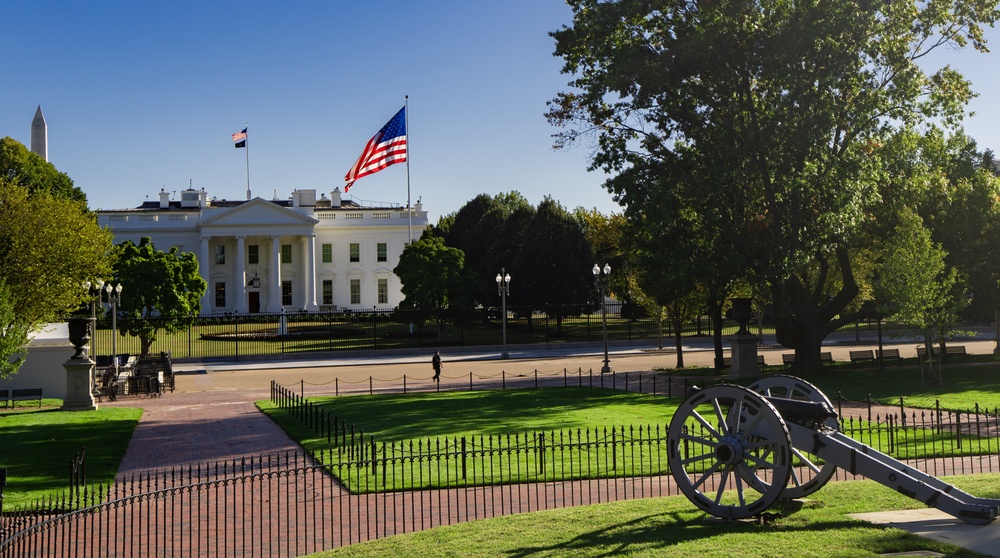
Monday’s exchange also included questions about Trump’s priorities while the aviation disruption was unfolding. Reporters challenged the president over his extensive White House construction projects and whether his attention to renovations had distracted him from the unfolding crisis.
Trump rejected the suggestion that he had spent too much time overseeing building work. He defended the improvements being made to the presidential residence and argued that they were necessary to maintain an important national building.
“I spend very little time” on building projects, Trump said.
The president also defended the construction of a large ballroom and improvements to the South Lawn. He pointed towards a granite helicopter landing pad and described the previous stone walkways as being in poor condition.
At one point, Trump directed reporters to examine the stonework surrounding him, insisting that the improvements were justified. He also dismissed a reporter’s question by responding, “You’re so pathetic.”
The exchange shifted attention away from the technical details of the FAA failure and towards the president’s approach to White House renovations.
Trump maintained that he had a responsibility to keep the presidential residence in suitable condition. However, the questions reflected wider scrutiny of his personal involvement in the construction projects and the costs associated with them.
The aviation crisis was also not the only travel-related issue attracting attention during his departure for Asia. Trump was travelling aboard a new aircraft gifted to the administration by Qatari officials, a plane that has generated separate questions about presidential security.
The aircraft has been the subject of scrutiny because it does not initially possess all the defensive capabilities associated with the existing presidential fleet. Previous reporting also described a security incident during Trump’s earlier trip to Turkey, when officials reportedly moved him away from the aircraft following threats.
Asked whether he was worried about being targeted by Iran while travelling aboard the foreign-supplied aircraft, Trump responded with a remark directed towards the reporters accompanying him.
“I’m worried about you, because if they get me, you’re gone, too,” he said.
His response added another contentious exchange to an appearance already dominated by questions about accountability, infrastructure, and national security.
Airlines Continue Dealing With The Aftermath of Friday’s Disruption
Although the FAA lifted the ground stop on Friday evening, airlines continued dealing with the consequences well into the following week. Flight schedules had been disrupted across multiple airports, leaving carriers with the difficult task of repositioning aircraft and crews.
The cancellations also affected passengers whose journeys depended on connecting flights. Even after airports resumed normal departures, delays could continue as airlines attempted to restore their schedules and accommodate travellers who had missed earlier journeys.
FlightAware figures cited in the reports showed that more than 340 flights remained cancelled in the United States by late Monday afternoon, with nearly 4,400 additional flights delayed.
United Airlines also experienced a separate systemwide outage on Monday that affected departing flights. The company resolved the problem approximately 90 minutes after pilots began reporting difficulties to air traffic controllers.
The separate incident added to an already difficult period for American air travel. However, the United Airlines outage should not be confused with the FAA communications failure that triggered Friday’s nationwide ground stop.
For passengers, the most immediate concern remains whether airlines can maintain reliable schedules and whether another technical disruption could cause widespread delays.
The FAA has restored operations following Friday’s incident, but its investigation remains important for determining how similar failures can be prevented. The administration must also explain how additional funding would address the weaknesses identified in the existing network.
Trump has made clear that he believes the country’s ageing infrastructure and decades of delayed investment are responsible for the crisis. Buttigieg, meanwhile, has challenged the administration to explain why its work on the communications network was followed by such a serious breakdown.
Congress now faces pressure to examine both the technical findings and the administration’s funding requests. Until officials establish exactly what happened in Arkansas and Texas, the dispute over responsibility is likely to remain closely tied to the wider debate over America’s ageing aviation infrastructure.