
Your cart is currently empty!
Trump Shrinks Two Utah National Monuments Sacred to Tribes by About 90% Each
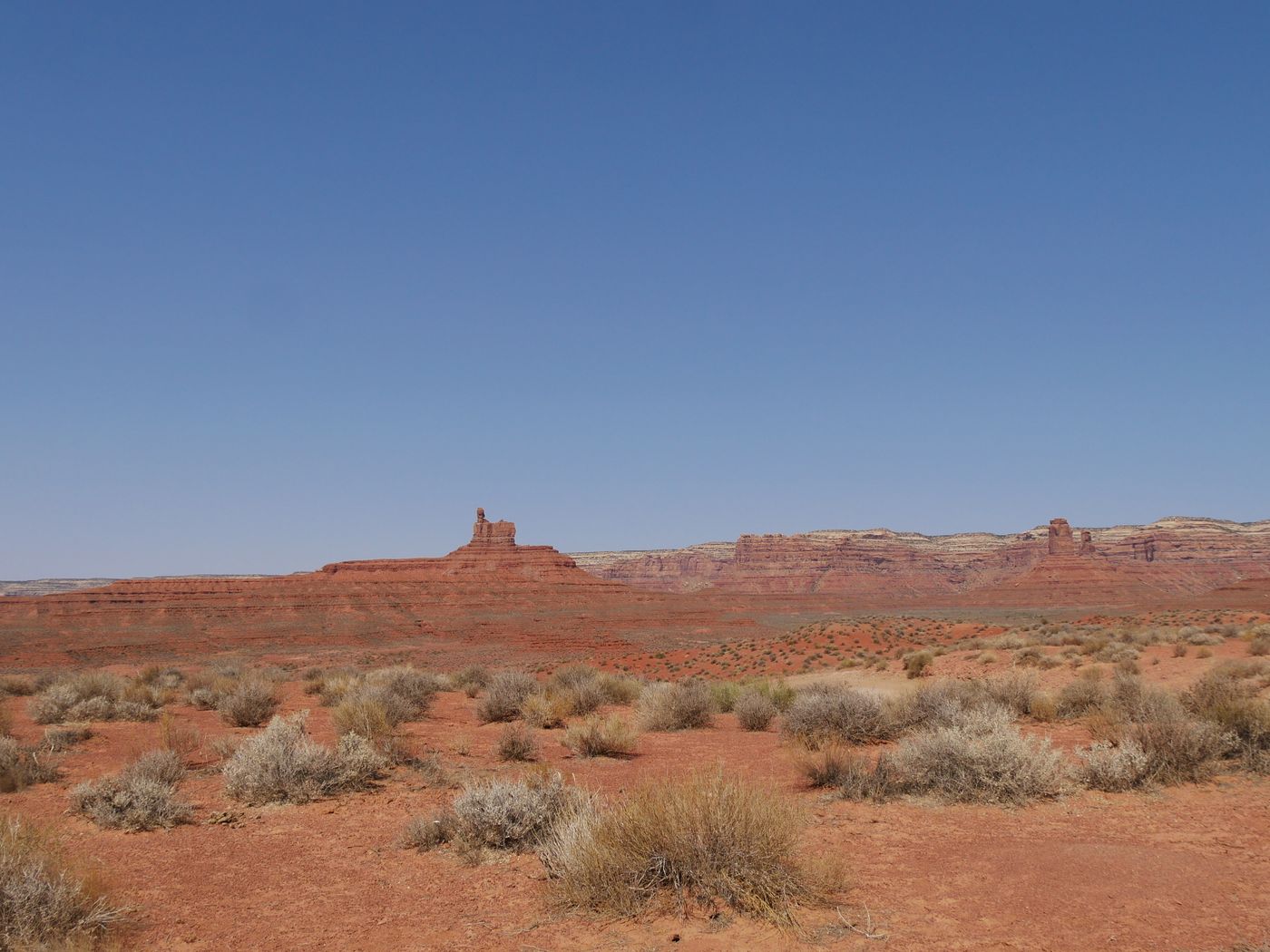
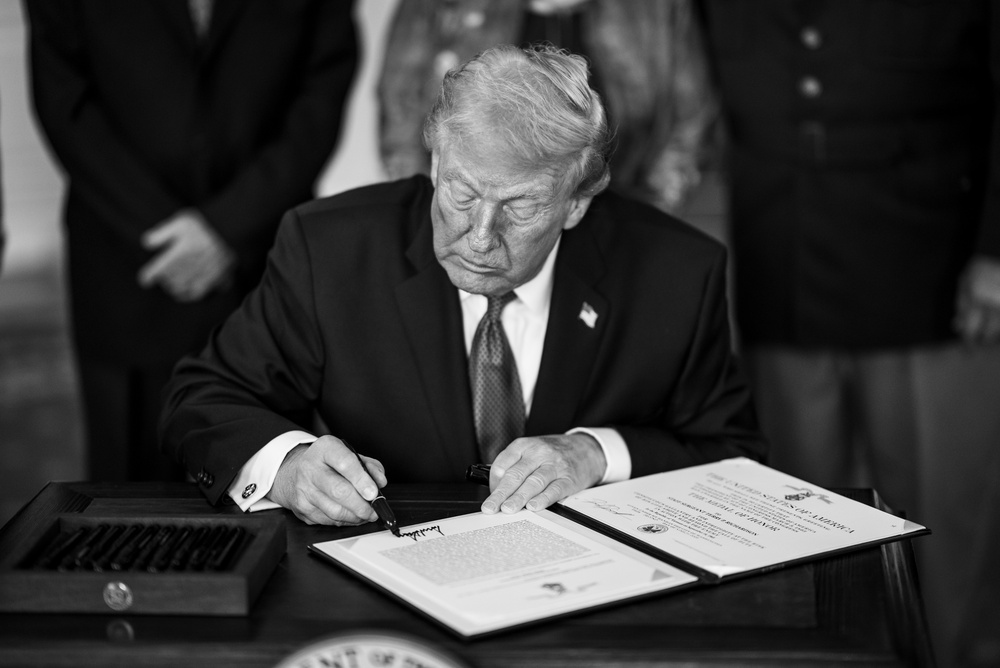
With a signature on Monday, President Donald Trump erased protections from an expanse of southern Utah nearly the size of Connecticut.
Contents
show
Standing at a White House signing event, flanked by Utah’s Republican governor, Trump approved proclamations shrinking two of the country’s best-known national monuments, Bears Ears and Grand Staircase-Escalante, by roughly 90% each. Together the two had spanned more than 3.2 million acres of red-rock canyons, ancient dwellings, and land that five tribal nations hold sacred. By the end of the day, what remained under federal monument protection had shrunk to a fraction of that.
The move was not a surprise. Trump had done something similar during his first term, and tribal leaders had braced for it since his reelection. But the scale of the cut, the resources now potentially open beneath the surface, and the legal war it is about to ignite make this one of the most consequential public-lands decisions in years. What the administration calls a correction, its opponents call an illegal act of destruction, and the fight over which is true is only beginning.
The Numbers Behind the Reduction
The specifics, drawn from the proclamations themselves, are stark. Grand Staircase-Escalante, which covered roughly 1.87 million acres, was reduced to about 181,500. Bears Ears, at roughly 1.36 million acres, was cut to about 121,100. The Associated Press tallied the combined figure as a drop from 3.2 million acres to less than 303,000.
That is a deeper cut than Trump made the first time around. During his initial term, his reductions left Grand Staircase-Escalante at about 1 million acres and Bears Ears at about 213,000. This time, far less survives. The land removed from the monuments does not vanish or change hands, but it loses the sweeping monument protections that had banned drilling, mining, and new construction across it.
What These Monuments Hold
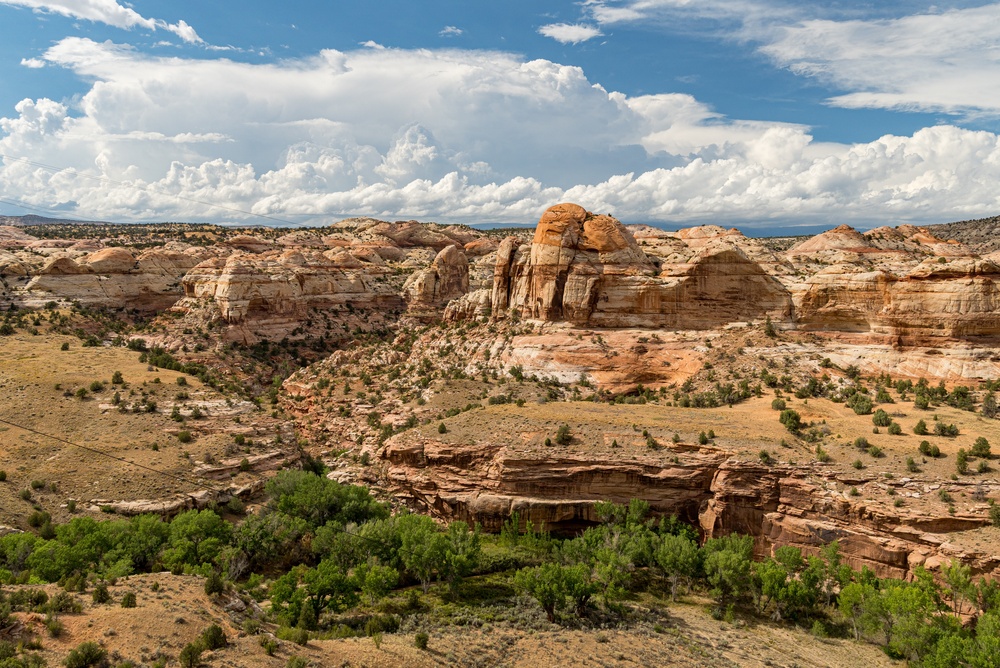
To understand why this land is fought over so fiercely, it helps to know what sits on it and beneath it.
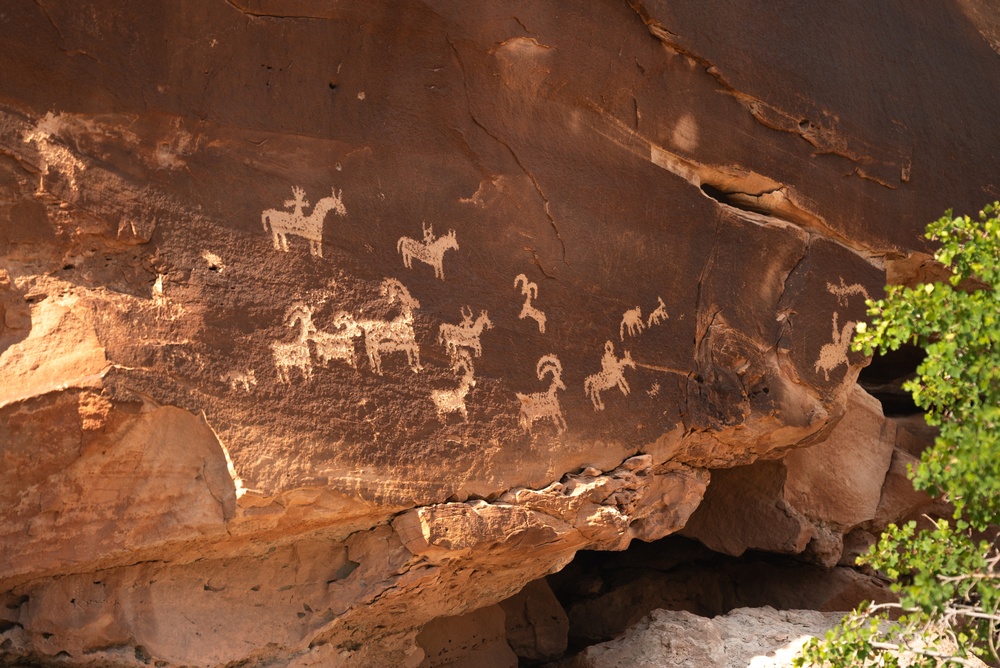
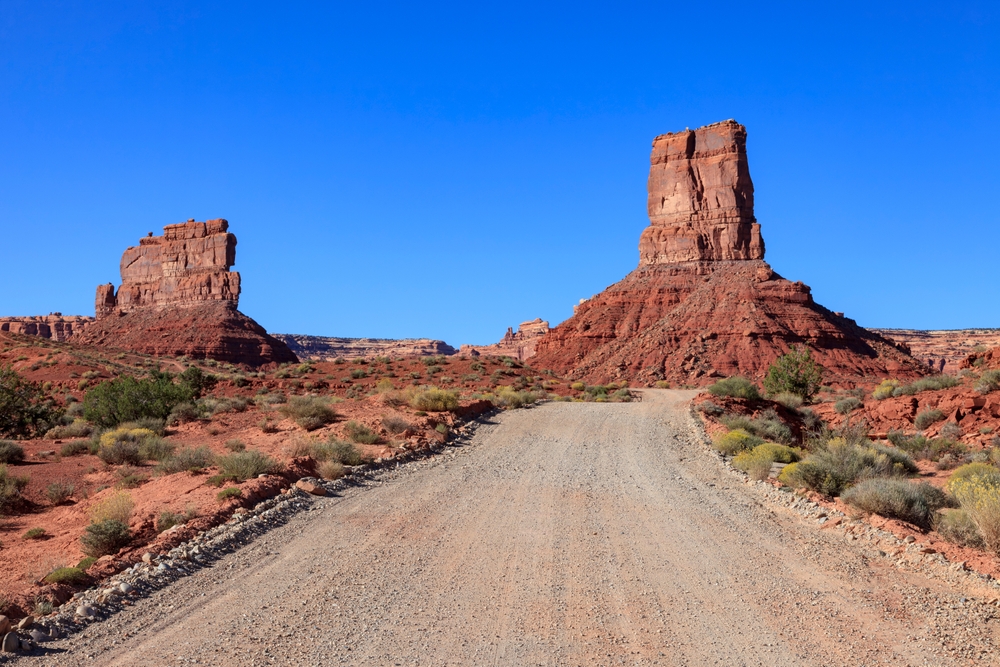
Both monuments are dense with human and natural history. They contain ancient cliff dwellings, petroglyphs, and dramatic canyons. Grand Staircase-Escalante is a landscape of cliffs, canyons, natural arches, and archaeological sites, including rock paintings. Bears Ears holds ancestral villages, ceremonial and burial grounds, and hundreds of thousands of objects of cultural and scientific significance.
Beneath that surface lies the other half of the story. Grand Staircase-Escalante sits atop large coal reserves, and the Bears Ears area contains uranium. Utah officials have long wanted those deposits made available for development, and supporters of the downsizing argue the monuments’ protective boundaries stretched far beyond what was needed, hindering access to minerals the state considers valuable. The land and what it contains are, in effect, the entire dispute.
How They Became Monuments
The monuments exist because of a law more than a century old. The Antiquities Act of 1906 grants presidents the power to protect sites deemed historic, archaeologically significant, or culturally important. Presidents of both parties have used it, but these two designations came from Democrats.
President Bill Clinton established Grand Staircase-Escalante in 1996. President Barack Obama created Bears Ears in 2016. That second designation carried a distinction that makes the current reduction especially fraught. Bears Ears was the first national monument created at the request of tribal nations who consider the land sacred, and its designation honored five tribes in the region: the Navajo, Hopi, Zuni, Ute Mountain Ute, and Uintah-Ouray Ute. The landscape features in some tribes’ creation and migration stories, and the monument is jointly managed under an agreement between tribal nations and federal agencies. Undoing it is not merely undoing a line on a map.
The Administration’s Case
Trump and his allies frame the reduction not as taking something away but as giving it back. At the signing, the president cast the original designations as a wrong being righted.
“They took the land from the people quite honestly. We’re giving it back,” Trump told reporters.
The legal argument beneath that framing rests on a specific reading of the Antiquities Act. Utah Governor Spencer Cox, standing beside Trump, contended that the law requires monuments to cover the smallest area necessary to protect their antiquities, and that multimillion-acre designations larger than the state of Delaware plainly exceed that standard. For Cox, the day was a victory in a long fight over who should control land within Utah’s borders.
The White House elaborated in a fact sheet describing the move as rightsizing. In the administration’s telling, the specific landmarks and objects the Antiquities Act was meant to safeguard will remain protected, while the surrounding land, which it argues was never properly the law’s concern, becomes available for what it calls multiple-use, sustained-yield management: grazing, timber harvest, resource development, hunting, fishing, and motorized recreation. The administration further argues that the phrase “objects of historic or scientific interest” has been improperly stretched to cover things like viewsheds, biodiversity, and remoteness, and that the reduction ends what it characterizes as decades of overreach.
The Fact-Check: What Trump Got Wrong
One claim Trump made in defending the reduction does not hold up, and it is worth noting plainly.
The president asserted that on the monuments as they stood, people could not hunt, fish, or “virtually not even walk.” That is false. According to the Associated Press, hunting, fishing, camping, and other recreation are all permitted on the monuments under existing state and federal regulations, a point confirmed by Steve Bloch, legal director for the Southern Utah Wilderness Alliance. The monument designation restricted industrial activity like drilling and mining, not visitors on foot. The claim matters because it sits directly against the administration’s framing of the reduction as restoring public access that, by this account, was never actually taken away.
The Tribal Response
For the tribes who fought to create Bears Ears, the reduction landed as a loss that reaches far beyond acreage. Davina Smith-Idjesa, a citizen of the Navajo Nation and co-chair of the Bears Ears Inter-Tribal Coalition, said leaders had steeled themselves for this since Trump’s reelection, but that the reality was still difficult to absorb. She called it heartbreaking, and she accused federal officials of sidestepping their legal obligation to consult the tribal nations the decision affects.
What is at stake, she said, cannot be measured the way the government measures land.
“From a Navajo perspective, Bears Ears is not simply a piece of federal public land. This is a living cultural site that holds our histories, our ceremonies, our traditional foods and medicines and our ancestors’ footprints,” Smith-Idjesa said.
That framing captures the gap between the two sides. Where the administration sees surrounding land not relevant to protected objects, tribal leaders see a continuous living landscape in which the ceremonies, the medicines, and the ancestral presence cannot be neatly separated from the specific artifacts the government is willing to keep protecting.
The Legal Fight Ahead
The proclamations are unlikely to be the final word, because the reduction heads almost immediately toward the courts. The environmental law firm Earthjustice announced it would take legal action to preserve protections for the two landscapes, and its managing attorney for the Rocky Mountain office, Heidi McIntosh, argued that the president has overstepped the very law he is invoking. The Antiquities Act, she said, authorizes presidents to designate national monuments, not to destroy them, and she called the move as illegal now as it was in 2017.
That last point identifies the genuinely unsettled question at the center of all this. When Trump shrank these monuments during his first term, the reductions were reversed not by a court ruling but by the Biden administration, which restored them. The underlying legal dispute, whether a president who can create a monument under the Antiquities Act also has the power to dramatically shrink one, was never definitively answered. The administration reads the law’s “smallest area compatible” language as authority to cut. Opponents read the Act’s grant of designation power as one that does not run in reverse. This time, with litigation promised, a court may finally have to decide.
Part of a Broader Push on Public Lands
The Utah reduction is not an isolated act but one piece of a much larger reshaping of how the country’s public lands are managed, concentrated heavily in the West.
Trump administration officials and congressional Republicans have moved to expand drilling, mining, and logging on taxpayer-owned land while rolling back conservation rules and removing protections for imperiled species. Interior Secretary Doug Burgum signaled last year that officials would review and consider redrawing monument boundaries as part of a push to expand energy production. Trump has also used proclamations to lift commercial fishing prohibitions in marine monuments in the Pacific and in the Atlantic off New England, monuments created by both Democratic and Republican administrations, in a shift that prioritizes the fishing industry over rebuilding fish populations.
The contrast with the previous administration is sharp. President Joe Biden designated or expanded more than a dozen monuments and set a goal of conserving at least 30% of US lands and waters by 2030. Trump’s approach runs largely the opposite direction, aimed at tapping the natural-resource wealth of federal lands that total more than 100,000 square miles, along with offshore areas in the Gulf of Mexico and off Alaska.
Where Land-Transfer Efforts Have Stalled
Yet the picture is more complicated than a single unbroken march toward development, and the complications cut against the sharpest version of the criticism.
Several Republican efforts to sell or transfer federal land outright have failed. A push by some House GOP lawmakers to sell public lands ran into bipartisan opposition. A separate proposal by Utah Senator Mike Lee to sell more than 3,200 square miles of federal land was stripped out of the Republicans’ major tax and spending bill. And last year, the US Supreme Court turned back a lawsuit from Utah officials seeking to wrest control of vast federal lands within the state. The appetite to move federal land into state or private hands exists, but it has repeatedly hit walls, including walls built by Republicans.
The Political Divide

In the end, the reduction lands as one more front in a decades-old argument over who should control the West’s public land, and the two sides describe the same act in incompatible terms.
Democratic Senator Martin Heinrich of New Mexico condemned the move as another chapter in what he called the administration’s war on the West, accusing Trump of turning the Antiquities Act on its head. Governor Cox, standing at the same lectern as the president, called it a big day for Utah and a restoration of the principle that monuments should cover only the smallest area needed to protect their antiquities.
Both men are describing the same 3 million acres. One sees treasured landscapes handed over for commercial gain; the other sees federal overreach finally corrected and land returned to local control. Between those two readings lies a legal question the courts have never resolved and a cultural one the tribes say cannot be resolved by acreage at all. For now, the maps have been redrawn. Whether they stay that way is a matter that will almost certainly be decided somewhere other than a White House signing table.
Antiquities Act, Bears Ears, Bears Ears Inter-Tribal Coalition, Bureau of Land Management, coal mining, conservation, Doug Burgum, Earthjustice, environmental law, Grand Staircase-Escalante, land management, national monuments, Native American land, Navajo Nation, public lands, Spencer Cox, tribal rights, Trump public lands, uranium mining, Utah