
Your cart is currently empty!
Trump Used Mail Voting Despite Calling It Cheating
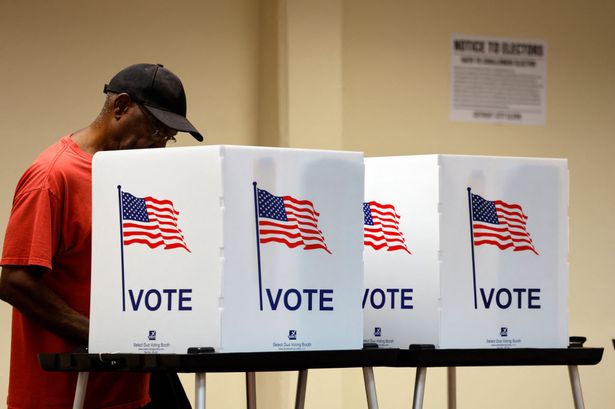
For years, Donald Trump has turned mail-in voting into one of the most politically charged subjects in American public life. He has repeatedly framed it as risky, vulnerable, and in his words, a threat to election integrity. At rallies, in speeches, and on social media, he has described the practice in stark and often inflammatory terms, tying it to broader claims that the system is too easy to manipulate.
Contents
show
That is why fresh reporting showing that Trump himself voted by mail in a recent Florida special election has landed with such force. The revelation is not shocking because a president voted from outside his home state. Presidents have long found practical ways to cast ballots while serving in Washington. What makes this moment so politically potent is the contrast between Trump’s own choice and the language he continues to use about the very method he relied on.
According to public voter records in Palm Beach County, Trump cast a mail ballot in Florida’s special election for House District 87, the district that includes his Mar-a-Lago estate. The vote itself is legal, common, and allowed under Florida law. But politically, it opens a much bigger conversation, one that goes beyond a single ballot and reaches into one of the central contradictions of Trump-era election politics: if voting by mail is so dangerous, why does he keep using it?
A Contradiction That Writes Its Own Headline
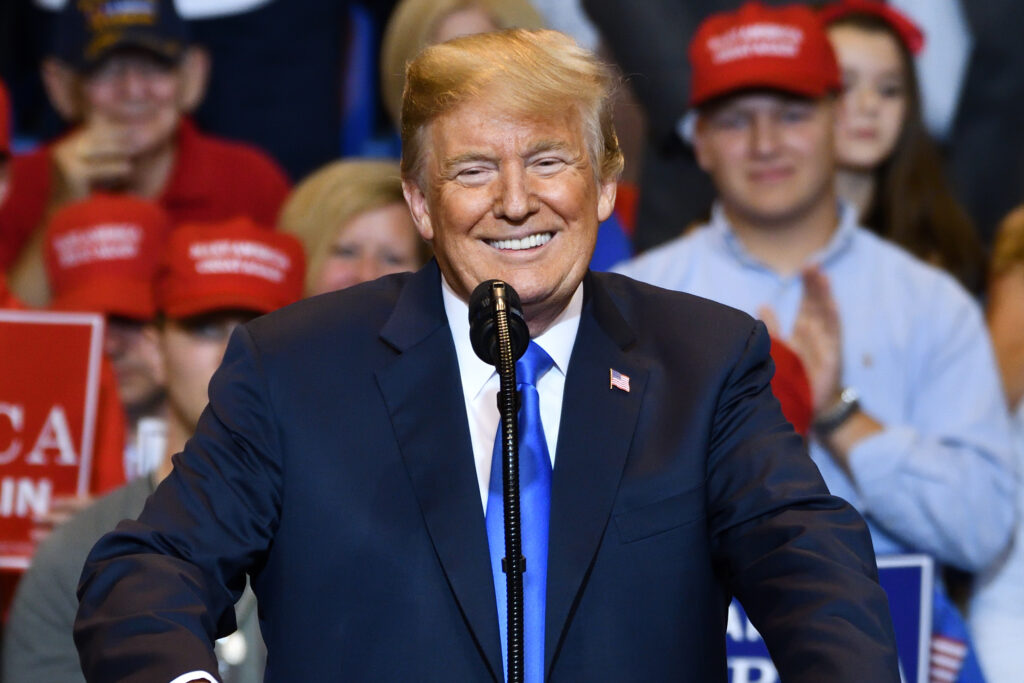
The story spread quickly because it carries a built-in irony that is difficult to ignore. Trump has spent years attacking mail-in voting, often in language far stronger than ordinary policy disagreement. As recently as the day before the Florida special election, he described it publicly as “mail-in cheating,” reviving one of the themes that has followed him since the 2020 election.
And yet public records show that, when it came time to cast his own ballot in a race tied directly to his home district, Trump used the same process he has portrayed as suspect. That tension is the real reason this story matters. It is not about whether he had the legal right to do so. He clearly did. It is about the gap between message and behavior.
That gap has become a familiar feature of modern political communication. Leaders often condemn systems in broad terms while making personal use of exceptions, loopholes, or lawful conveniences within those same systems. But when the issue is voting, the stakes are higher.
Elections are not just another policy battleground. They are the machinery of democracy itself. Public trust in that machinery depends heavily on whether voters believe the people leading the conversation are speaking consistently and honestly.
Trump’s defenders have argued that there is no contradiction at all. The White House has said he supports what it calls “commonsense exceptions” for voters who are traveling, in the military, ill, or disabled, while opposing universal mail voting more broadly. In that framing, Trump’s own vote was not hypocrisy but a legitimate use of a narrow carve-out.
That explanation may satisfy loyal supporters. But politically, it still leaves a deeper problem unresolved. Trump has not spent years drawing fine distinctions between absentee ballots and broader mail voting systems. More often, he has attacked the method in sweeping, alarming terms that leave little room for nuance. That is what makes his own use of it feel so revealing.
Why This Florida Election Suddenly Became Nationally Significant

On paper, the race itself was local. Florida’s 87th House District special election was held to fill a vacancy after former Republican state Rep. Mike Caruso left the seat for a county role. The district leans Republican and includes much of coastal Palm Beach County, including the area around Trump’s Mar-a-Lago residence.
Ordinarily, a statehouse special election would not become a national flashpoint. But this one came with unusual symbolism. Trump not only resides in the district, he also endorsed Republican candidate Jon Maples, turning the race into a small but visible test of GOP energy and Democratic ambition in a politically charged environment.
Democrats had their own reason to focus on it. Flipping the president’s home district, or even making the race unexpectedly competitive, would have carried obvious symbolic value. It would have fed into a broader national narrative that Democrats are outperforming expectations in down-ballot contests and that Trump’s political gravity does not automatically guarantee Republican dominance in every race that touches his orbit.
That context helps explain why Trump’s ballot method drew such attention. This was not some obscure procedural detail buried in a county filing cabinet. It emerged at the exact moment when voting rules, election confidence, and partisan messaging are all under heightened scrutiny.
In other words, this was not just about how Trump voted. It was about what his vote revealed while he and his allies continue trying to shape how millions of other Americans may be allowed to vote in the future.
The Bigger Fight is Not One Florida Ballot, It is the Save America Act
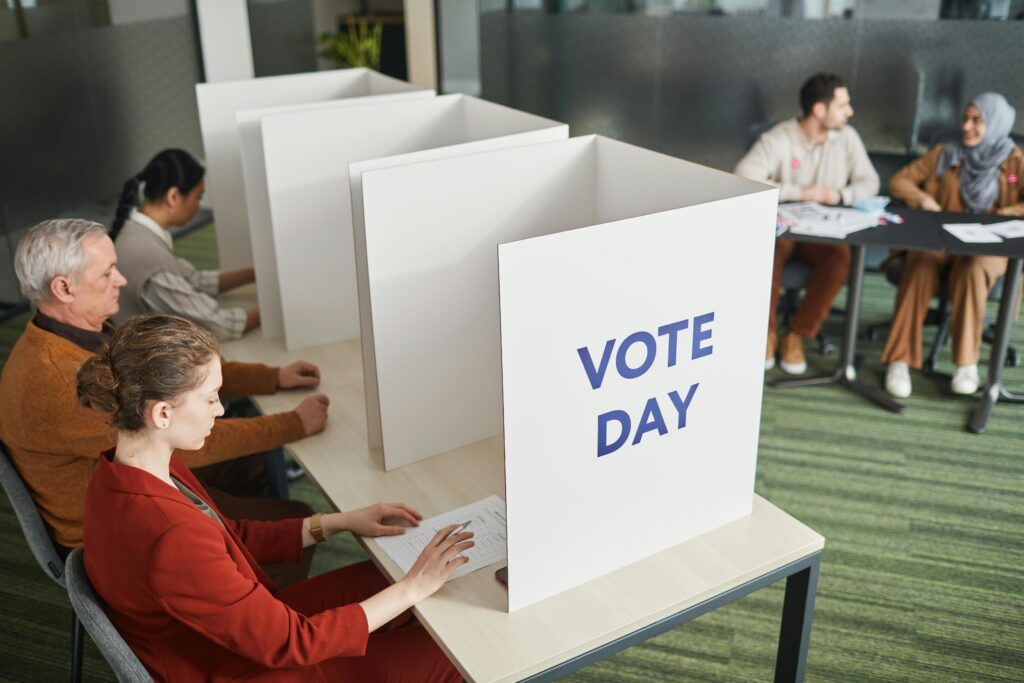
What makes the contradiction especially politically combustible is timing. Trump’s mail ballot did not surface in a vacuum. It emerged while he is actively backing legislation that would impose new restrictions on voting procedures, including tougher requirements connected to voter registration and election administration.
In the reporting around this episode, that legislative push has been referred to as the SAVE America Act, while some outlets also connect it to the Safeguard American Voter Eligibility framework often discussed in Republican election messaging. Regardless of the naming differences across political coverage, the core idea is clear: Trump and his allies are trying to push a more restrictive national approach to voting access, framed as election security.
For supporters, this is one of the most important issues in American politics. They argue the public has lost faith in election systems and that tighter safeguards are necessary to ensure only eligible citizens vote and that ballots are handled properly.
For critics, however, the concern is not just the substance of the proposed changes but the political logic behind them. They see these efforts as a response to narratives Trump has amplified for years, narratives that continue to shape public distrust despite repeated findings that widespread voter fraud remains extremely rare.
That is where this story cuts deeper than a single moment of apparent inconsistency. If a sitting president is using a legal, accessible voting method while simultaneously campaigning to narrow or stigmatize similar access for others, the public is entitled to ask what exactly the principle is.
Is the concern truly about fraud? Is it about administration? Is it about standardization? Or is it about preserving strategic political narratives that energize a base while allowing selective exceptions for those in power?
These are not abstract questions. The answers affect how future elections are run, who can participate easily, and how much friction gets placed between voters and the ballot box.
Trump’s Long War on Mail Voting Did Not Begin This Week
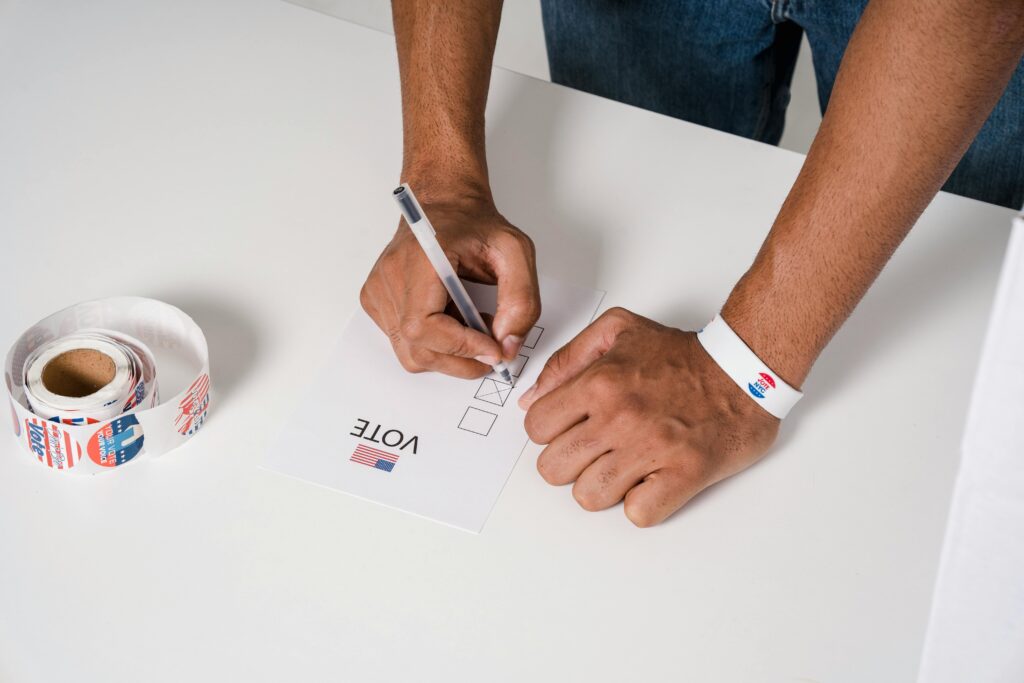
To understand why this latest episode matters, it helps to place it in the longer arc of Trump’s political relationship with mail voting. His hostility toward the practice did not appear overnight. It intensified dramatically around the 2020 election, when the COVID-19 pandemic pushed many states to expand mail access so voters could participate without gathering at crowded polling stations.
That expansion collided with a political environment already full of mistrust, polarization, and disinformation. Trump seized on the issue early, arguing that broader mail voting would invite fraud and undermine the legitimacy of election results. Even before ballots were counted, he laid rhetorical groundwork to cast suspicion on the process itself.
That strategy had enormous consequences. It did not just influence media coverage or partisan debate. It changed how millions of Americans viewed elections. For many voters, especially in Republican circles, mail ballots stopped being a simple administrative convenience and became a symbol of a system they were taught to distrust.
And yet even during that period, Trump’s own personal behavior never fully matched the absolutism of his rhetoric. He voted by mail in Florida in 2020 as well. When pressed about the contradiction at the time, he effectively argued that he was allowed to do so.
Legally, he was right. Politically, the answer was far less satisfying.
The problem is not that Trump has used absentee or mail voting. Plenty of voters do, for good reason. The problem is that he has helped create a political environment in which ordinary citizens are encouraged to view that same behavior as suspicious when it is done by other people.
That is the heart of the trust issue. Election systems cannot function well when public leaders treat lawful participation as legitimate only when it is personally convenient.
The Evidence Problem Keeps Colliding With the Political Message
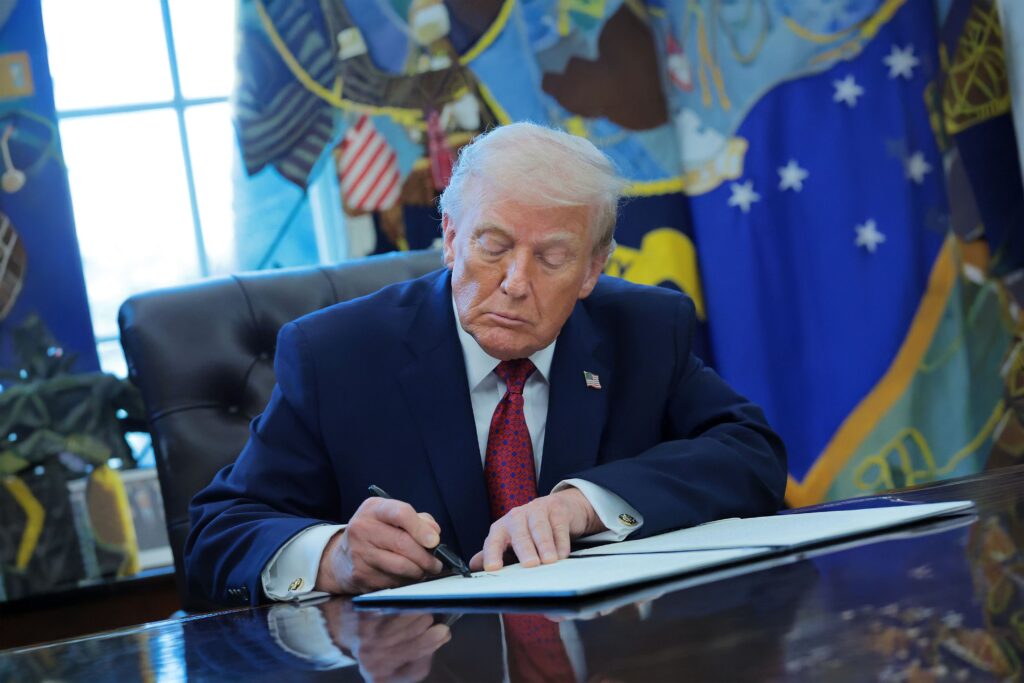
One of the reasons this debate remains so contentious is that the political language around mail voting often moves much faster than the evidence. Claims of widespread fraud are emotionally powerful and politically useful, especially in a climate where mistrust already runs high. But they have consistently struggled to hold up under scrutiny.
Research organizations, election experts, bipartisan administrators, and courts have repeatedly found that large-scale fraud in American elections is rare. That does not mean election systems are flawless. No human institution is flawless. Mistakes happen. Administrative errors happen. Isolated misconduct can happen. But the sweeping picture often painted in political rhetoric does not align well with the broader evidence.
One analysis cited in reporting on this story, from the Brookings Institution, found voter fraud in mail voting to be rare. That finding is broadly consistent with years of election research and post-election reviews. States that have long histories with mailed ballots have not produced evidence of the kind of mass fraud narrative that often dominates campaign speeches and partisan television.
That mismatch matters because repeated unsupported claims can do real damage even when they fail to change law. They can depress turnout, deepen cynicism, and create a situation in which many voters trust outcomes only when their side wins.
Trump’s own ballot now lands in the middle of that credibility problem. If his behavior suggests that mail voting is practical and acceptable when used under legal rules, then his rhetoric becomes harder to defend as a straightforward warning based on principle.
Instead, it begins to look more like selective alarm, something deployed for political effect rather than consistently applied concern.
Florida Law Shows How Ordinary This Really Is
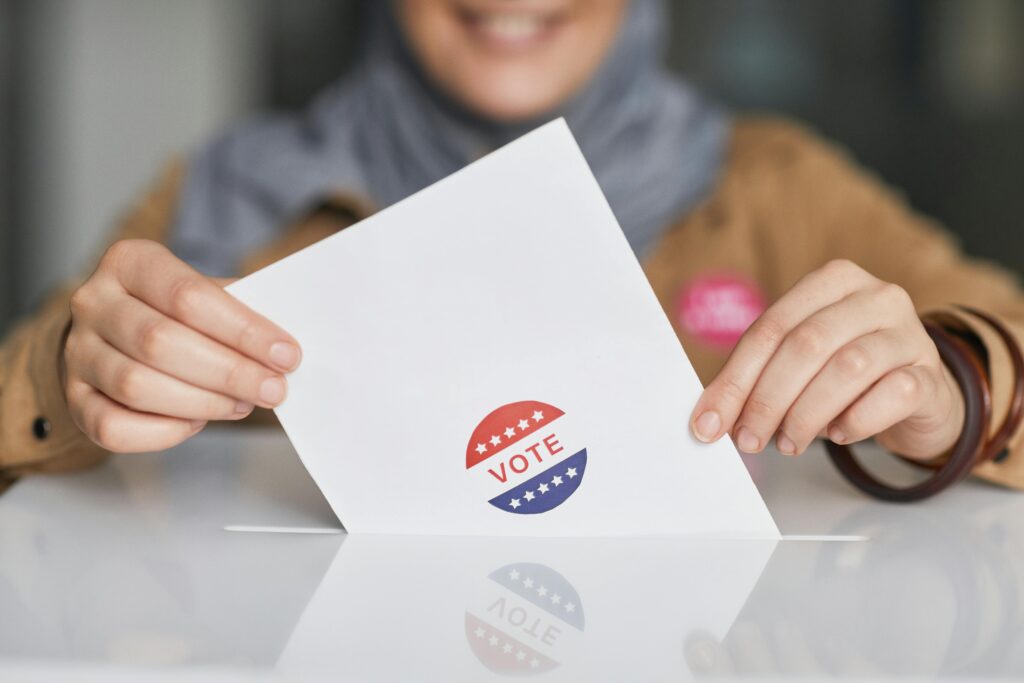
One of the most striking things about this episode is how unremarkable it would be in almost any other context. Florida allows no-excuse mail voting. That means registered voters do not need to provide a special justification in order to request and submit a ballot by mail. It is a normal, legal option available to the public.
Trump’s use of that option was not extraordinary. In fact, it mirrors what many Americans already do in every election cycle for reasons that have nothing to do with partisanship. People vote by mail because they travel for work, care for children, juggle multiple jobs, face mobility issues, or simply prefer the flexibility of filling out a ballot at home.
That practical reality is one reason critics of anti-mail rhetoric find it so frustrating. The policy debate is often framed as if mail voting is some exotic vulnerability inserted into elections by opportunistic politicians. In truth, for many voters, it is simply an access tool that helps them participate in ordinary civic life.
Trump’s own case illustrates that point almost perfectly. He lives politically and legally in Palm Beach, but as president, he spends much of his time in Washington. That is exactly the kind of logistical reality that makes remote voting options useful.
And once that practical logic is acknowledged, a larger question follows naturally: if the system is secure enough and useful enough for a sitting president, why should it be cast in such sinister terms when used by teachers, service workers, retirees, students, or parents trying to fit voting into a crowded life?
The Politics of Exception Are Becoming Impossible to Ignore
Trump’s defenders are not wrong to note that many election systems distinguish between broad universal access and specific absentee exceptions. That is a real policy distinction. But politically, distinctions only matter if they are communicated honestly and consistently.
What has made Trump’s approach so vulnerable to criticism is that he has often collapsed all of those distinctions into emotionally charged slogans. “Mail-in cheating” is not the language of careful policy design. It is the language of political theater. It is meant to produce suspicion first and detail later, if at all.
That kind of messaging works because it is simple. It creates a villain, identifies a threat, and gives supporters a clear emotional takeaway. But it also creates a trap. Once a politician has spent years portraying something as fundamentally tainted, using that same system personally becomes much harder to explain away.
This is where the broader politics of exception come into focus. The message often seems to be that systems are broken when “they” use them but acceptable when “we” do. That logic may be effective in partisan communication, but it is corrosive in democratic governance.
A healthy voting system cannot depend on whether the voter is famous, powerful, or politically useful. It has to rest on rules that are stable, comprehensible, and trusted across partisan lines.
That is why stories like this resonate so widely. People may disagree fiercely about Trump, but many can still recognize inconsistency when they see it. And in politics, inconsistency is often more damaging than ideological disagreement because it chips away at the sense that leaders actually believe what they say.
Why This Matters Beyond Trump Himself
It would be easy to dismiss this as one more Trump contradiction in a political era overflowing with them. But doing that risks missing why election rhetoric matters so much more than ordinary campaign spin.
When political leaders repeatedly undermine confidence in lawful voting methods, the effects do not disappear when the news cycle moves on. They linger in the culture. They shape local disputes, school board fights, county election administration, volunteer recruitment, and the willingness of ordinary people to trust institutions that require broad public buy-in to function.
That erosion of trust has become one of the defining political stories of the past decade. Americans are not just polarized over policy. They are increasingly polarized over whether the underlying systems of democratic life can be trusted at all.
That is why this episode lands as more than just hypocrisy theater. It touches a deeper concern about whether election integrity is being discussed as a serious governance issue or primarily as a political weapon.
If the standard is flexible for those in power and rigid for everyone else, the public notices. If rhetoric grows more extreme while personal behavior remains quietly pragmatic, the public notices that too.
And in a democracy already struggling with distrust, those patterns matter.
The Real Takeaway is Not Scandal, It is Clarity
In some corners of the political media ecosystem, this story will inevitably be packaged as another gotcha moment. And yes, there is a straightforward contradiction at its center. But the deeper takeaway should be more useful than partisan mockery.
Trump’s vote by mail reveals something many Americans already understand in their everyday lives: convenience, flexibility, and access are not signs of corruption. Often, they are simply signs that a system is designed to accommodate real human circumstances.
That does not mean election laws should never be debated. They should. Security matters. Verification matters. Public confidence matters. But those conversations should be grounded in evidence, administrative reality, and consistency, not slogans that collapse the difference between a lawful ballot and a stolen election.
If there is one lesson in this episode, it is that voting rules tend to look very different when viewed from the perspective of power than from the perspective of ordinary citizenship. Politicians often discover the usefulness of flexibility the moment they need it themselves.
That is why this story resonates. It is not simply that Trump voted by mail after attacking mail voting. It is that his ballot exposed, in one unusually clean political snapshot, the distance between campaign rhetoric and democratic reality.
And that distance matters.
Because when leaders tell voters to fear a system they are still willing to use, they are not just making a tactical political choice. They are shaping how a country understands its own democracy.
The long-term danger is not that one president mailed in one ballot. The long-term danger is that millions of Americans are asked to distrust the very mechanisms that make participation possible, while the people warning them continue to rely on those mechanisms when it suits them.
That is not just a contradiction. It is a reminder of how fragile public trust can become when politics rewards suspicion more than consistency.
In the end, this episode says less about the mechanics of one Florida election than it does about the larger American struggle over truth, access, and credibility. Trump’s ballot may have been counted in a statehouse special election, but the symbolism of it reaches much further.
It reaches into the national argument over who gets to vote easily, who gets told to be suspicious, and who gets to make exceptions for themselves while calling everyone else’s participation into question.
That is why this story will stick. Not because it is surprising, but because it is clarifying.
And in American politics right now, clarity is rare enough to matter.