
Your cart is currently empty!
How Uranus Almost Carried a Royal Name That History Rejected
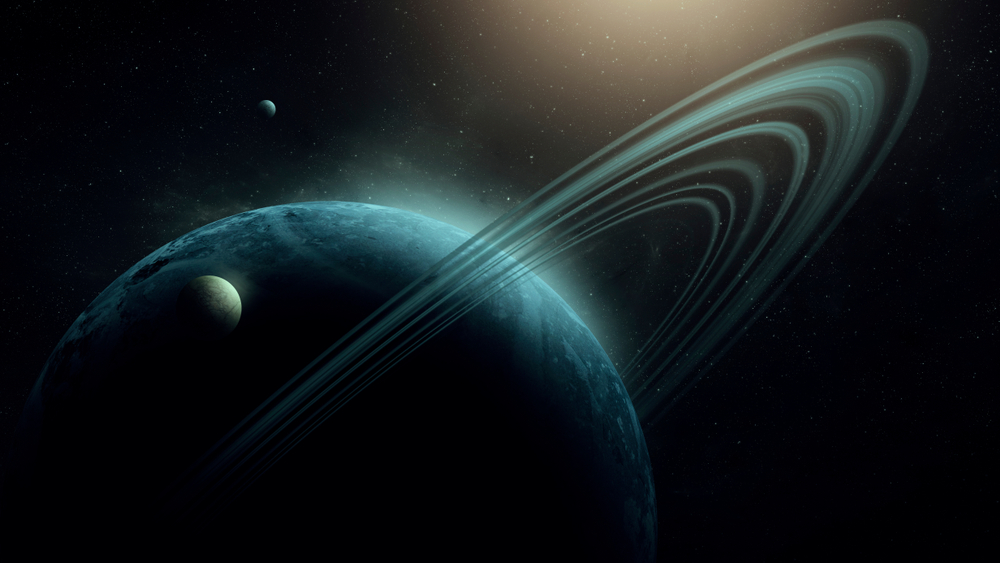
Most planets in our solar system carry names that feel ancient and inevitable, like echoes from a mythic past whispered through the centuries. Jupiter, Saturn, Mars, Venus, and Mercury sound like they have always belonged to the sky. Yet Uranus, that cyan ice giant rolling sideways through the heavens, has a history that is strangely theatrical. Its identity was once fiercely debated, shaped by politics, mythology, scientific rivalry, and eventually, public humor. People may giggle at the name before they learn the science, but few realize how much controversy and symbolism are packed into the planet we now call Uranus.
Contents
show
This renewed interest in Uranus is not random. The planet recently reached opposition, a moment when Earth sits directly between Uranus and the Sun. That alignment makes Uranus appear brighter, clearer, and more powerful from our viewpoint. In astronomy, opposition gives observers a cleaner look at a planet. In astrology, opposition magnifies a planet’s influence, amplifying its symbolic energy in collective consciousness. For Uranus, the planet associated with awakening, upheaval, rebellion, and sudden insight, this alignment feels particularly electric.
The deeper story behind Uranus has layers. It involves the discovery that expanded the boundaries of the solar system, the political tug of war over what to call the new world, the scientific mysteries of an ice giant visited only once by human technology, and the mythic symbolism that astrologers still interpret today. The fact that so many people are only now learning Uranus once carried another name highlights how easily cosmic history becomes forgotten. Yet when rediscovered, it opens a doorway to reflection, wonder, and meaning.
Herschel’s Discovery That Changed Everything
The story of Uranus begins in 1781, when William Herschel, a German-born British astronomer, scanned the night sky from his garden with the most powerful telescope in the world. Herschel was originally a musician who spent his nights crafting instruments and studying the stars. The telescope that changed history was a 40-foot Newtonian reflector that had been funded by King George III. With that enormous device, Herschel spotted something in the constellation Gemini that did not behave like a star.
At first, he believed it might be a comet. The object moved slowly against the stellar background, suggesting it was part of the solar system. Over months of observation across Europe, astronomers realized the truth.

This object was a new planet and it was farther away than Saturn. For thousands of years, humanity believed the solar system ended with Saturn. Uranus shattered that cosmic boundary.
The impact of this discovery was huge. It expanded the size of the known universe. It pushed astronomers to reconsider celestial mechanics and the distribution of planetary bodies. It inspired new telescopes, new star charts, and new speculations about what else might lie beyond. Even more interesting is the timing. Uranus was discovered during an era of political revolution. The American Revolution, the French Revolution, and an explosion of new scientific ideas were sweeping through society. Many astrologers later reflected on the synchronicity. A planet associated with rebellion and awakening was discovered in a period defined by both.
The Planet Almost Called George

Uranus could have carried a very different name, one that reflected human monarchy rather than mythic lineage. When Herschel realized he had discovered something monumental, he proposed naming the planet Georgium Sidus, which means George’s Star. He intended to honor King George III, who had personally funded his telescopes and scientific work. Although Herschel’s intentions were practical and respectful, the name created immediate controversy.
Astronomers outside of Britain disliked the idea. The planets had always been named for deities, not kings. A name referencing a living monarch felt political, biased, and inconsistent with celestial tradition. There were also scientific objections. The planet was not a star, so the name George’s Star was technically inaccurate.
The resistance grew quickly. French astronomers suggested naming the planet after Herschel himself. Others proposed names like Neptune or Hypercronius. None gained traction. It was not until German astronomer Johann Elert Bode offered the name Uranus that momentum began to shift.
Bode argued that if Jupiter was the father of gods and Saturn was the father of Jupiter, then the new planet should be named after the father of Saturn. Uranus, the primordial sky god, fit perfectly into the mythological family tree. It established a clean lineage and kept planetary naming consistent with ancient traditions. Despite initial hesitation, astronomers around Europe gradually adopted the name. British astronomers resisted for decades, but by 1850, the name Uranus became official.
It is amusing that a planet symbolizing rebellion eventually won its name through quiet resistance to monarchy. Choosing mythology over politics reflected a subtle shift in scientific culture. In a symbolic way, the planet was breaking free of earthly hierarchy long before astrologers began associating Uranus with liberation.
A Name That Still Causes a Reaction
Even after its name gained universal acceptance, Uranus refused to behave neatly. Its pronunciation quickly became a source of endless jokes, especially in English speaking countries. Scientists, teachers, and broadcasters tried a variety of pronunciations to distance the name from its anatomical association. Some said yur-un-us. Others preferred YOOR-uh-nuhs. Still others attempted a more authentic Greek inspired pronunciation like ore-AN-ose. But none of these stuck in the public consciousness.
This quirk of language is ironically fitting. Uranus represents disruption, rebellion, and the breaking of social norms. A planet that astrologically governs surprise and unconventional behavior ended up with a name that cannot be spoken in a classroom without laughter. Even researchers studying the planet face this reality. As one planetary scientist once admitted, the jokes are distracting but also help draw interest toward a world many people otherwise barely think about.
Despite the humor, the name Uranus carries profound mythological meaning. In Greek cosmogony, Uranus is the primordial sky father who gave birth to the Titans and shaped the early cosmos. The name connects the planet to the very concept of the heavens themselves, which resonates beautifully with both astronomy and spirituality.
Uranus at Opposition and the Energetic Amplification

Opposition is an astronomical term describing when Earth moves directly between a planet and the Sun. In this configuration, Uranus becomes brighter and larger in the night sky. With clear conditions, observers can sometimes spot it without a telescope. Scientists value opposition because it provides an ideal window for observation.
Astrologically, opposition is more than a visual alignment. It is considered an energetic spotlight. A planet at opposition is believed to express its symbolic qualities more intensely. For Uranus, this includes themes such as awakening, rebellion, innovation, sudden change, liberation, surprising shifts, and intuitive insight.
When Uranus stands in full view, astrologers say its influence becomes clearer, offering opportunities for breakthroughs in personal and collective awareness. People may feel compelled to challenge old routines or step into new perspectives. Unexpected news may surface. Technology, politics, and social movements are often activated during strong Uranian transits. This symbolism mirrors the experience of looking up at a strange, sideways spinning planet that seems to break every rule of planetary behavior.
The fact that Uranus’s naming history resurfaced in public conversation around the same time as its opposition adds another layer of synchronicity. Uranus has a habit of drawing attention in surprising ways.
The Sideways Planet and Its Scientific Mysteries
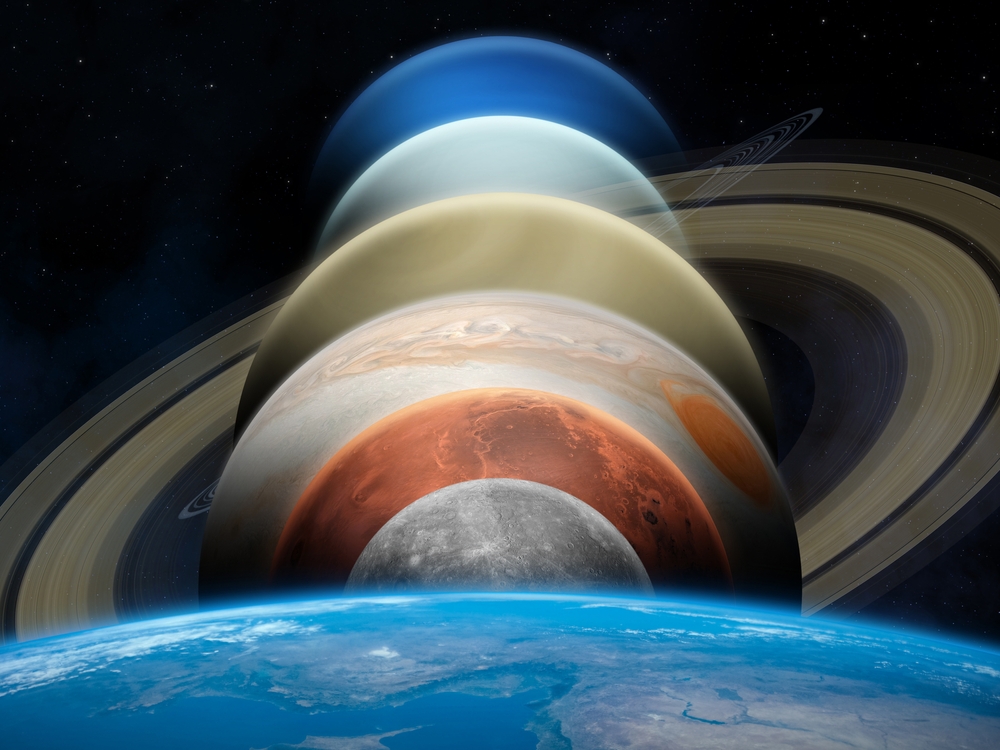
Uranus is one of the most unusual planets in the solar system. It rotates at an extreme tilt of about 98 degrees, causing it to roll around the Sun like a tipped over sphere. Scientists think a massive collision early in its formation may have knocked it sideways. This unusual orientation creates dramatic seasonal cycles. Each pole experiences 21 years of daylight followed by 21 years of darkness.
The planet’s magnetic field is also highly irregular. It is tilted at a steep angle and offset from the planet’s center. As a result, its auroras do not align with its rotational poles like Earth’s or Jupiter’s. Uranus also holds the record for some of the coldest temperatures in the solar system, reaching nearly minus 370 degrees Fahrenheit. Its winds can accelerate to more than 500 miles per hour.
One of the most surprising features lies deep inside. Under immense pressure, carbon atoms in the interior are believed to compress into diamonds. This has led to the widely shared idea that it may rain diamonds on Uranus.
Despite its unique characteristics, Uranus has been visited only once by a spacecraft. Voyager 2 performed a flyby in 1986, capturing images and collecting data. Of all the planets, Uranus and Neptune remain the least explored. That is finally changing. NASA has proposed the Uranus Orbiter and Probe mission, which would study the planet’s atmosphere, interior, magnetic field, and moons in detail. This mission represents the next chapter in understanding a world that has puzzled scientists for centuries.
What the Myth Reveals

Mythology gives Uranus a deeper symbolic context that astrologers weave into their interpretations. In ancient Greek thought, Uranus was not simply a god. He was the sky itself, the boundless canopy that stretched over the primordial world. He represented limitless potential, expanded consciousness, and the creative force that precedes manifestation.
These themes merge seamlessly with modern astrological symbolism. Uranus is associated with futuristic thinking, technological breakthroughs, spiritual awakening, and the dismantling of outdated systems. It governs sudden insight, rebellion against conformity, and collective revolutions. The fact that its discovery coincided with major political and cultural upheaval strengthens this association.
Astrologers often say that a celestial body becomes symbolically active when it becomes visible to the human eye. With Uranus entering human awareness during an era of revolution, its energies were interpreted through that lens. Its strange rotation, icy storms, and unpredictable magnetic field serve as physical metaphors for its symbolic identity.
The Spiritual Meaning Behind the Naming Controversy
The battle between Georgium Sidus and Uranus holds symbolic value as well. Herschel’s desire to name the planet after a king represented tradition, hierarchy, and political allegiance. Bode’s push for a mythological name represented universal symbolism, cosmology, and spiritual lineage. The scientific community choosing mythology over monarchy reflects the archetype of Uranus itself. It echoed the planet’s themes of liberation and the breaking of outdated systems.
This symbolic resonance deepened when the element uranium was named after the planet in 1789. Uranium, with its transformative and sometimes explosive properties, parallels the disruptive and electrifying qualities astrologers attribute to Uranus. The correlation is coincidental historically, but symbolically meaningful.

The More We Learn, the Stranger It Gets
Modern research continues to reveal the planet’s complexity. Uranus has 27 known moons, many of which show signs of past geological activity. Some may contain subsurface oceans. Its ring system is faint but intricate. Its internal composition challenges existing models of planetary formation. Its sideways orbit remains one of the greatest puzzles in planetary science.
From a spiritual perspective, this aligns with Uranus’s archetype. The planet represents the unknown, the unconventional, and the mysterious. Just as Uranus invites astronomers to rethink cosmic history, it encourages individuals to expand their awareness and question assumptions. It embodies the idea that truth often lies beyond current understanding and can only be reached by shifting perspective.
The Royal Name That Almost Stuck
Uranus is more than an ice giant at the edge of the solar system. It is a world with a name shaped by politics, mythology, and controversy. It is a planet whose scientific mysteries challenge our understanding of the universe. It is a symbol of rebellion, awakening, and transformation, both in astrology and in its historical journey from George’s Star to the sky god Uranus.
As it reaches opposition and appears brighter in the night sky, Uranus invites people to rediscover its story. The fact that many are only now learning it once had another name reflects a timeless truth. Discovery is not just about objects in space. It is also about how we interpret them and what their stories reveal about ourselves.
Uranus continues to surprise, disrupt, and awaken. Its sideways spin reminds us to see the world from new angles. Its symbolic lineage reminds us of our connection to the cosmos. And its naming debate reminds us that even the heavens are shaped by human culture.
Looking up at Uranus today is an invitation to curiosity. It is a chance to consider how myth, science, humor, and spirituality weave together into the story of a single planet. The journey of Uranus encourages us to question, to explore, and to open our minds to new possibilities. In this way, the planet continues to embody its ancient meaning. It is the sky itself. It is awakening. It is a reminder that the universe is still full of wonders waiting to be known.