
Your cart is currently empty!
Why Scientists Are Alarmed After the US Approved a Space Mirror

For generations, the night sky has been one of the few places on Earth that remained largely untouched by human development. That assumption is now being challenged after U.S. regulators approved an experimental satellite designed to beam sunlight back to Earth after dark.
Contents
show
Supporters see the project as a bold step toward new space-based services. Critics see it as the beginning of a future where darkness itself becomes a commercial product. The debate has quickly expanded beyond astronomy, raising political questions about regulation, environmental protection, and who has the authority to reshape a resource shared by every nation.
The FCC Gives Reflect Orbital the Green Light
The controversy centres on California startup Reflect Orbital and its experimental satellite, Eärendil-1. The company has received approval from the U.S. Federal Communications Commission (FCC) to launch the satellite, which will carry an 18-metre steerable mirror designed to reflect sunlight onto selected locations on Earth during nighttime hours.
Reflect Orbital describes the concept as “sunlight on demand.” The company says the technology could support emergency rescue operations after natural disasters, provide illumination for construction sites, extend daylight for solar power facilities, and potentially assist agricultural operations.
The demonstration satellite would illuminate an area roughly five kilometres wide. According to the company’s plans, the reflected light could appear up to four times brighter than a full Moon under certain operating conditions. As the satellite travels through low-Earth orbit, the mirror would need to reposition approximately every four minutes to maintain its target.
Although only one satellite has been authorised for testing, the long-term ambitions are far larger.
Reflect Orbital has outlined plans for a constellation of as many as 50,000 mirror satellites by 2035. If realised, it would become one of the largest satellite networks ever proposed, dramatically changing how artificial light reaches Earth’s surface.
Company co-founder and CEO Ben Nowack welcomed the decision, saying the licence represents the first step toward testing both the technology and the safeguards developed around it. Reflect Orbital has repeatedly argued that the mirrors can be aimed with enough precision to illuminate only customers requesting the service while limiting unwanted spillover.
That assurance has done little to calm many scientists.
Why Astronomers Believe This Is Different
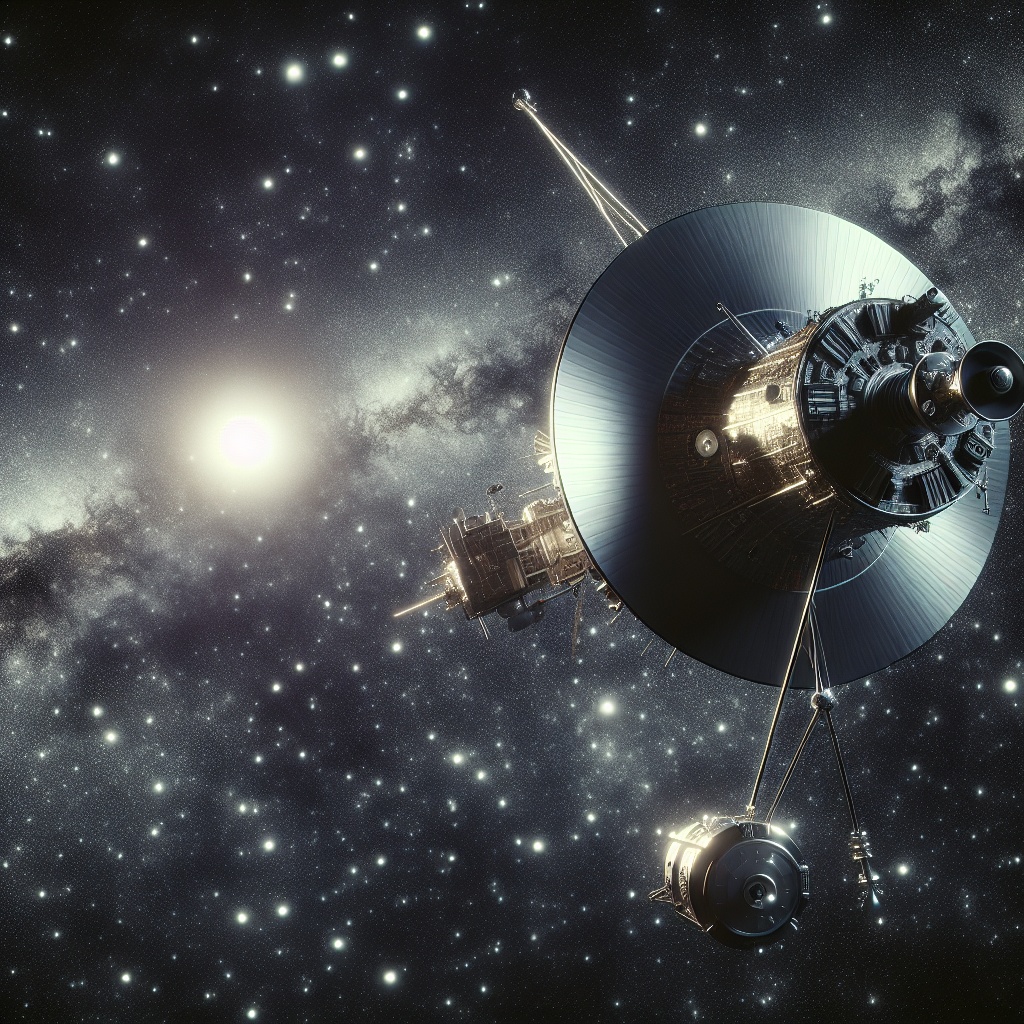
Artificial satellites reflecting sunlight are nothing new. Thousands already cross the night sky every evening, including SpaceX’s vast Starlink network.
Astronomers argue that Eärendil-1 represents something fundamentally different.
Unlike communications satellites, which reflect sunlight as an unavoidable side effect, Reflect Orbital’s spacecraft is specifically designed to be as bright as possible. Its entire purpose is to direct concentrated sunlight toward Earth after sunset.
That distinction became a central point in objections submitted to the FCC before approval was granted. The American Astronomical Society argued that the proposal was unlike conventional telecommunications satellites because intentional illumination introduces risks that existing regulations were never designed to address.
Researchers warn that even a single satellite could create significant problems for observatories.
Sensitive telescope detectors are designed to capture extremely faint light arriving from distant galaxies, stars and other celestial objects. A concentrated beam reflecting directly into those instruments could permanently damage sensors or overwhelm observations.
Even outside the direct beam, scientists say atmospheric scattering presents another concern.
Earth’s atmosphere naturally spreads light beyond its original source. That is why sunrise begins before the Sun itself appears over the horizon. According to experts, reflected sunlight from orbital mirrors would behave in much the same way, creating a wider glow than the intended target area.
For professional observatories searching for distant supernovae, asteroids or other short-lived cosmic events, even brief increases in sky brightness could result in valuable scientific data being permanently lost.
Samantha Lawler, an astronomer at the University of Regina, expressed deep concern over the decision.
“It’s terrifying to me that one country can change the night sky for everybody in the world,” she said.
She added, “I need access to dark skies in order to do my research. If you’ve got giant mirrors shining down, then we’ve lost that.”
Those fears become even greater when scientists consider the company’s longer-term plans.
One Satellite Today Could Become Fifty Thousand Tomorrow
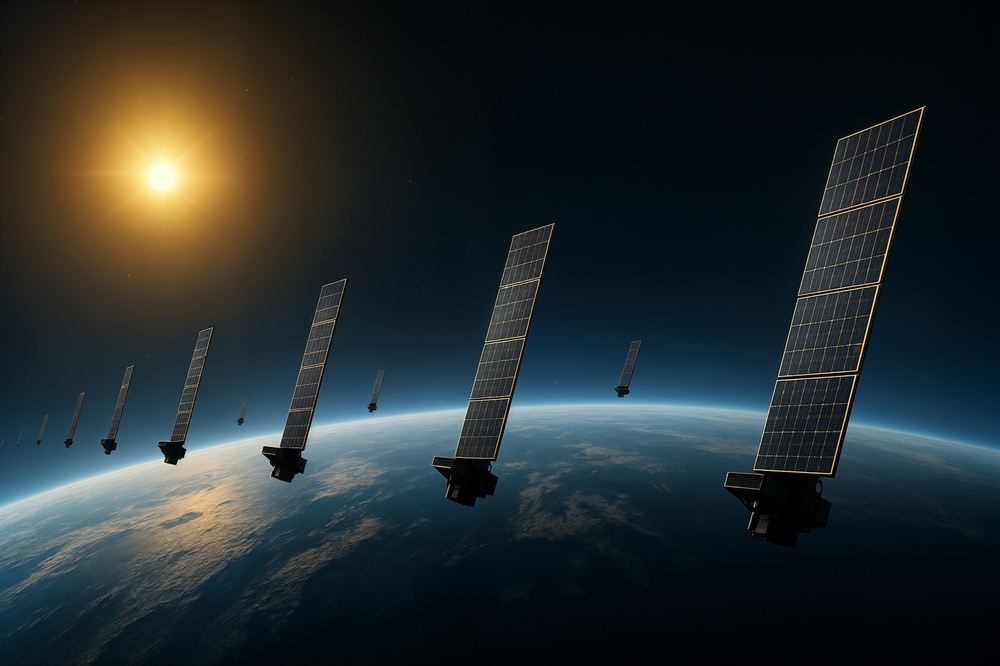
The FCC repeatedly emphasised that its approval applies only to the experimental Eärendil-1 mission.
Scientists acknowledge that distinction but argue it does not answer the larger question.
If the demonstration succeeds, Reflect Orbital hopes to expand rapidly over the next decade. Internal projections describe a rollout beginning with dozens of satellites before scaling into thousands and eventually reaching approximately 50,000 spacecraft.
Researchers have already begun modelling what such a network might look like.
Astronomer Olivier Hainaut of the European Southern Observatory conducted simulations examining the cumulative effect of tens of thousands of mirror satellites operating simultaneously.
His findings suggest the consequences could extend far beyond isolated beams of light.
According to the simulations, a full constellation could make the global night sky between three and four times brighter than it is today. Even locations currently recognised among the darkest places on Earth could experience skies resembling those above suburban communities affected by light pollution.
Such changes would affect far more than astronomy.
Scientists say brighter nights could interfere with wildlife behaviour, migration patterns, and natural biological cycles that have evolved over millions of years.
For ordinary stargazers, thousands of stars currently visible to the naked eye could gradually disappear beneath an increasingly bright sky.
For observatories worth billions in public investment, researchers warn that significant portions of observation time could become unusable.
Hainaut stressed that astronomers are not opposed to satellites themselves.
“We astronomers are certainly not in favor of forbidding satellites,” he explained. “It is really in the interest of everybody to take this into account before it happens, not to slow progress but just not to do anything stupid.”
His concern reflects a broader shift occurring across low-Earth orbit.
The Growing Race to Fill Low-Earth Orbit
Reflect Orbital’s proposal arrives during a period of explosive satellite growth.
More than 14,500 active satellites currently orbit Earth, with over 10,000 belonging to SpaceX’s Starlink broadband constellation alone.
Yet many experts believe today’s crowded skies may represent only the beginning.
Scientists point to proposals for dramatically larger satellite constellations serving communications, data processing and commercial infrastructure. Among the most ambitious are filings that envision orbital AI data centres consisting of hundreds of thousands, or even one million, satellites. Rival companies have also submitted plans involving tens of thousands of additional spacecraft.
Each proposal introduces fresh questions about orbital congestion, collision risks and the growing volume of debris surrounding the planet.
Near misses between satellites have already highlighted those concerns. As more spacecraft occupy similar orbital paths, operators must increasingly coordinate launches and manoeuvres to reduce the possibility of catastrophic collisions.
Some researchers warn that continued expansion without stronger oversight could increase the chances of a cascading chain reaction known as Kessler Syndrome, where collisions create debris that triggers further impacts, making sections of orbit increasingly hazardous for future missions.
The debate over Reflect Orbital therefore extends well beyond one experimental mirror.
For many scientists, it represents a test case for how governments intend to regulate an increasingly crowded and commercially valuable frontier.
The Political Debate Is About More Than One Satellite

One of the most contentious aspects of the FCC’s decision is not simply the technology itself. It is the question of who should be responsible for regulating it.
The Federal Communications Commission oversees commercial satellites because they rely on radio frequencies for communications. Its authority includes managing spectrum use and ensuring satellite systems do not interfere with one another’s radio transmissions.
Reflect Orbital’s mirror, however, raised concerns that extend well beyond radio signals.
Thousands of public comments submitted during the approval process focused on light pollution, environmental impacts and threats to astronomical research. The FCC concluded those issues fall outside the scope of its authority, stating that the risks raised were unrelated to its role in authorising the use of radiofrequency spectrum. Even if it possessed broader authority, the agency wrote that the alleged harms were unlikely to occur.
For many researchers, that response exposed what they describe as a major gap in space governance.
Samantha Lawler said the ruling “really scares me” because it demonstrates “gigantic holes” in the regulatory framework governing activities in space. She argued that Reflect Orbital had effectively found a pathway through those gaps without anyone evaluating the broader environmental consequences.
The concern extends beyond one company.
As commercial activity in orbit accelerates, regulators are increasingly being asked to evaluate projects that would have been considered science fiction only a decade ago.
A Regulatory System Built for a Different Era

The FCC was created to regulate communications, not artificial sunlight.
Critics argue that reality is now moving much faster than the legal framework designed to oversee it.
Reflect Orbital’s proposal arrives alongside a growing list of commercial concepts involving orbital manufacturing, pharmaceutical production, space tourism, satellite servicing, artificial meteor showers, solar power transmission and even large-scale AI data centres operating in orbit. Some researchers have referred to these proposals collectively as “weird space stuff,” borrowing language used in an FCC discussion paper examining emerging commercial activities.
Many scientists believe evaluating these projects requires expertise extending beyond telecommunications.
Environmental scientists want assessments of atmospheric effects.
Astronomers want protections for observatories and dark skies.
Space policy experts want clearer rules governing orbital congestion, collision risks and long-term sustainability.
At present, no single U.S. agency has clear authority over all of those concerns before satellites are launched.
That uncertainty has reignited discussion about the 1967 Outer Space Treaty, one of the foundational agreements governing activities beyond Earth’s atmosphere.
The treaty states that nations are responsible for the activities of spacecraft launched from their territory and requires countries to avoid harmful contamination of outer space. Some astronomers argue that intentionally brightening the night sky could fall within that broader responsibility, even if existing domestic regulations do not explicitly address light pollution.
For researchers, waiting until damage has already occurred is not an acceptable solution.
Olivier Hainaut illustrated the problem by noting that financial compensation cannot replace scientific observations that were never collected.
“If we lose 30 percent of our observation time,” he said, “the data are lost. We’re not going to replace them. So we don’t want to fix the problem; we want to avoid the problem.”
Concerns Reach Far Beyond Astronomy
The debate has largely been framed around protecting dark skies, but astronomers are far from the only group expressing concern.
Researchers studying wildlife warn that artificial light at night can interfere with natural biological rhythms that many species rely upon.
Bird migration is strongly influenced by natural patterns of darkness and starlight. Insects, amphibians and countless nocturnal animals also depend on predictable day and night cycles.
Scientists caution that introducing moving beams of intense reflected sunlight could disrupt those behaviours in ways that remain poorly understood.
Human health is another area receiving attention.
Medical research has long shown that disruptions to circadian rhythms can affect sleep quality, hormone production and overall wellbeing. Critics argue that introducing additional artificial light into nighttime environments deserves far more study before widespread deployment.
Safety concerns have also been raised.
Astronomers and advocacy groups have warned that bright reflections could distract aircraft pilots or temporarily affect drivers if mirror beams or repositioning flashes crossed their field of view. The American Astronomical Society has also expressed concern that amateur astronomers looking through telescopes could suffer eye damage if they unknowingly viewed one of the satellites directly.
Reflect Orbital disputes many of those concerns.
The company says its satellites are being designed for highly accurate targeting and that it intends to work with scientists, regulators and government agencies as testing continues.
A company spokesperson said Reflect Orbital plans to provide data from the demonstration mission and is developing coordination agreements with the U.S. National Science Foundation to minimise impacts on astronomical research.
“We recognize that responsible deployment at scale requires clear rules,” the company said. “We welcome oversight and want to play an active role in shaping it.”
Pressure Is Growing for International Oversight
The FCC’s approval may represent only the beginning of a much larger international debate.
Space is inherently global.
A satellite launched from one country can pass over every continent within hours, affecting observers and environments far beyond the nation that authorised its launch.
That reality has prompted calls for broader international regulation.
The American Astronomical Society has indicated it hopes Congress will consider assigning environmental oversight to another federal agency or creating a new regulatory body capable of evaluating impacts beyond radio communications.
International organisations are also beginning to respond.
Officials involved with the United Nations Committee on the Peaceful Uses of Outer Space have reported growing concern among member states over the need for greater transparency and stronger oversight of commercial satellite operators.
Earlier this year, the national science academies of the G7 countries recommended creating an international organisation similar to the International Telecommunication Union but with broader responsibilities covering orbital traffic management, environmental protection and the preservation of astronomical observations.
The proposal also called for a new international treaty specifically addressing the expanding impacts of satellite constellations.
Whether those recommendations evolve into binding international rules remains uncertain.
Commercial space activity is expanding rapidly, while governments continue trying to determine how best to regulate technologies that did not exist when many current treaties were written.
A Decision That Could Shape the Future of the Night Sky
Reflect Orbital’s first satellite has not yet launched, and its long-term vision remains years away from becoming reality.
Even so, the FCC’s approval has already changed the conversation.
The debate is no longer simply about one experimental mirror orbiting hundreds of kilometres above Earth. It has become a test of how governments balance commercial innovation against environmental stewardship and scientific research in one of humanity’s last shared frontiers.
Supporters argue that technologies capable of providing emergency lighting, assisting disaster response and expanding renewable energy deserve the opportunity to prove themselves.
Opponents counter that once the night sky has been fundamentally altered, reversing that change may prove impossible.
For centuries, darkness arrived every evening without permission from governments or corporations.
Whether future generations inherit that same night sky may depend on decisions that are only beginning to be made today.