
Your cart is currently empty!
Report Shows U.S. Students Performing Worse Than 10 Years Ago
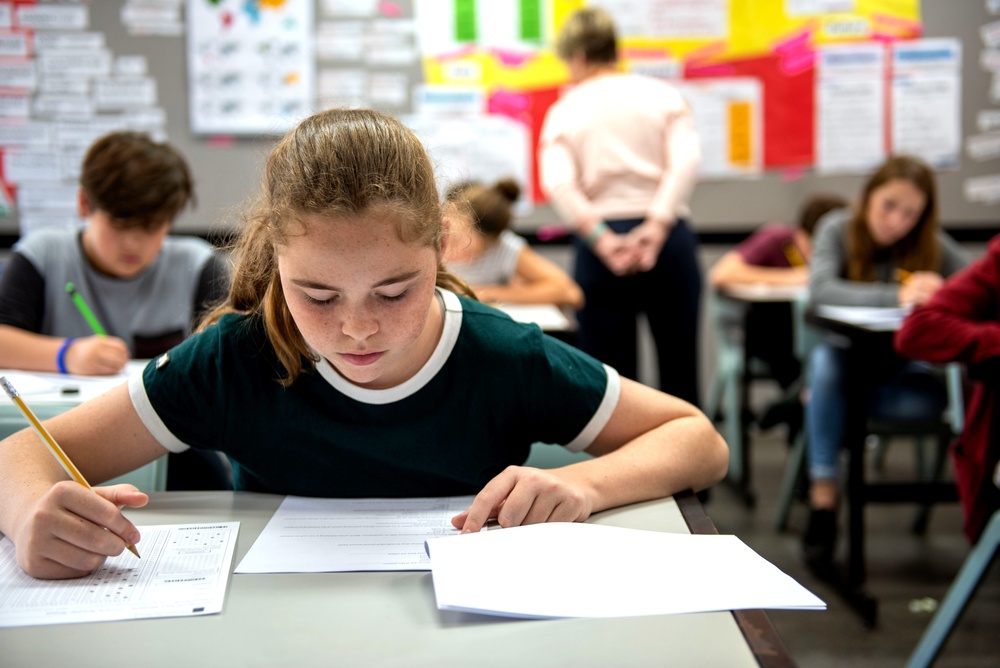
When students bring home a less-than-stellar report card, the instinct is often to look for an immediate disruption—perhaps a difficult semester or a sudden shift in routine. For the past several years, parents and educators alike have pointed to pandemic-era virtual learning as the obvious culprit for declining grades. However, a startling new analysis from top academic researchers suggests we have been misdiagnosing the timeline of the problem. A closer look at the data reveals that American classrooms have been quietly struggling for much longer, trapped in a slow-moving academic slide that began nearly a decade ago.
Contents
show
A Decade-Long Learning Recession

American schools are facing a long-term problem that began well before recent global disruptions. A recent project called the Education Scorecard, led by researchers at Harvard, Stanford, and Dartmouth, shows that students nationwide are scoring significantly lower than their peers did ten years ago. Looking at local district data, reading scores fell in 83 percent of areas compared to a decade prior, and math scores dropped in 70 percent of those same communities.
People often blame pandemic lockdowns and virtual learning for these academic struggles. However, the data reveals a “learning recession” that actually started around 2013. At that time, student progress in both reading and math stopped improving and began a slow, steady drop. According to the National Assessment of Educational Progress, eighth-grade reading scores have now reached their lowest point since 1990.
Experts point to several reasons for this decline that existed long before online classes became the norm. Thomas Kane, faculty director of the Center for Education Policy Research at Harvard University, provides a clear timeline. “The pandemic was the mudslide that followed seven years of erosion in student achievement,” Kane explained.
He noted that this educational drop began a decade ago when policymakers changed test-based accountability rules, right around the time smartphones and social media began taking up more of children’s daily attention. Today’s classroom challenges are not just the result of a sudden crisis, but stem from years of gradual changes in both education and daily life.
Empty Desks, Empty Promise
While some areas are starting to see progress, the road to academic recovery has been uneven. Researchers describe the situation as a “U-shaped” recovery, meaning the biggest improvements are happening at two economic extremes: the wealthiest and the poorest school districts. Unfortunately, this leaves middle-income communities caught in the crossfire.
Schools where a moderate percentage of students rely on subsidized lunches are experiencing the slowest academic rebound. The reason comes down to resources. High-poverty districts received a massive boost from federal pandemic relief funds, which researchers point to as the main driver keeping them afloat. Without that government aid, those schools would likely have seen zero improvement. On the other end of the spectrum, the wealthiest districts relied on strong community funding and high levels of parental involvement to bridge the learning gap.
This leaves middle-income schools lagging significantly behind their past achievement levels, struggling to catch up without targeted federal aid or deep local tax bases. The lack of resources makes every classroom challenge harder, especially when so many desks sit empty. According to the report, 23 percent of students were chronically absent during the 2024 to 2025 school year. While this is an improvement from recent peaks, it remains far above the 15 percent absenteeism rate seen before the pandemic.
Despite these hurdles, there is still reason for optimism. Stanford University professor Sean Reardon, who helped lead the data project, noted that test scores improved dramatically for three decades before this recent drop. “And so I think that says, as a country, we can improve education and educational opportunity,” Reardon explained. The challenge now is ensuring that no student gets left behind in the middle.
Smartphones Are Undermining Reading Gains
When researchers look closely at the subjects students are struggling with, a noticeable difference appears between math and reading. Math scores bounced back much faster once schools reopened. This makes sense to educators, as math is primarily learned inside the classroom, making it highly responsive to direct teacher instruction. Reading, however, relies heavily on habits built at home. The data shows a concerning pattern: the annual drop in reading scores before the pandemic was just as severe as the drop during it. Many experts suspect that the rapid rise of smartphones and social media is directly replacing the time children used to spend reading outside of school.
Despite these ongoing reading challenges, there is positive news in certain parts of the country. A turnaround is happening in states that have changed how they teach literacy. According to the Education Scorecard, every single state that showed reading improvements between 2022 and 2025 had adopted “science of reading” reforms. This approach relies on evidence-based methods, focusing on foundational skills like phonics instead of older, less structured reading programs.
Louisiana serves as a practical example of what happens when schools embrace this shift. By returning to these fundamentals, the state has transformed its academic path. “Louisiana is the only state in the country that has climbed back above its 2019 levels in both math and reading,” noted Tom Kane, faculty director of the Center for Education Policy Research at Harvard University.
This localized success proves that while the educational setbacks of the last decade are deep, targeted and researched instruction can successfully help students catch up.
“Not a Pandemic Story Anymore”
The narrative surrounding student performance is finally beginning to shift. Educational advocates emphasize that simply waiting for a natural, post-crisis academic rebound is no longer a viable strategy for communities.
“This is not really a pandemic story anymore. It is really a policy and instruction story,” stated Jennie Williamson, state director of EdTrust in Massachusetts. This perspective moves the focus away from uncontrollable global events and places it directly on actionable, local choices.
What does this intentional focus look like in practice? The Education Scorecard identifies several specific districts that are defying the national downward trend. In Modesto, California, targeted instructional strategies led to test score growth that represents an extra 18 weeks of learning in math and 13 weeks in reading. While overall proficiency in the area still has room for growth, the upward momentum is undeniable.
Similarly, schools in Detroit have managed to improve reading scores by taking a dual approach. Educators there paired foundational reading instruction with aggressive, community-wide efforts to improve student attendance. These local triumphs highlight a crucial lesson for other districts: progress happens when schools actively address structural barriers instead of hoping for a natural course correction.
Improving student achievement will take teamwork between schools and families. While teachers and schools need to use proven strategies in the classroom, parents also have an important role at home. Experts say small daily habits can help students regain focus and confidence. Setting aside time for reading, talking with children about what they learned in school, and limiting distractions from smartphones can all make a real difference. These simple routines help create a home environment that supports learning and recovery.
At the same time, families cannot carry the responsibility alone. School leaders and policymakers need to invest in long-term solutions instead of relying on temporary pandemic funding. Research shows that targeted support programs can help students catch up, but those efforts need steady funding and stronger systems behind them. Many middle-income communities still lack the resources needed to speed up learning recovery, making equal access to tutoring and effective curriculums more important than ever.
The drop in test scores over the past decade is serious, but it does not define this generation of students. Instead, it should serve as a wake-up call. By addressing the causes of learning loss and focusing on lasting reforms, communities can move beyond short-term fixes. With committed teachers, supportive families, and smart policy decisions working together, student achievement can move in the right direction again.