
Your cart is currently empty!
Watch a Patient Diver Negotiate With a Picky Octopus to Trade Its Plastic Cup for a Proper Home

Twenty metres beneath the surface of the Lembeh Strait, off the coast of Indonesia, a small creature was making a decision it did not know could cost it its life.
Contents
show
It had found shelter, of a sort. Something smooth and transparent that fits its body. Something that, from its tiny point of view, probably felt like a win. But the divers watching nearby knew what the creature did not. That shelter was a slow death sentence, a ticking clock wrapped around a life no bigger than the palm of a hand.
What happened next was not a quick rescue. It was not even a straightforward one. It was a patient, almost painfully delicate negotiation between a human and a cephalopod, played out in silence, with nothing but gestures and instinct passing between them.
The footage of that encounter has since crossed 20 million views on YouTube. People have compared it to a Pixar short. Watch it once, and you understand why.
The Moment That Stopped a Diver in His Tracks
Icelandic diver and YouTuber Pall Sigurdsson was exploring the waters of Lembeh, Indonesia, in 2018 when he spotted something small and strange on the seafloor. A coconut octopus, tucked inside a clear plastic cup, is using it the way the species has used shells and coconut halves for millions of years. The cup was a clever adaptation. It was also a problem.
Sigurdsson and his dive team understood immediately what that plastic cup meant. Not just as an environmental eyesore, but as a real and imminent danger to the animal inside it. Rather than film the scene and move on, they made a decision that would use up most of their oxygen supply. They would try to convince the octopus to give up the cup.
As Sigurdsson later put it in the video’s description, “We spent a whole dive and most of our air saving this octopus from what was bound to be a cruel fate.”
Why the Cup Was More Dangerous Than It Looked
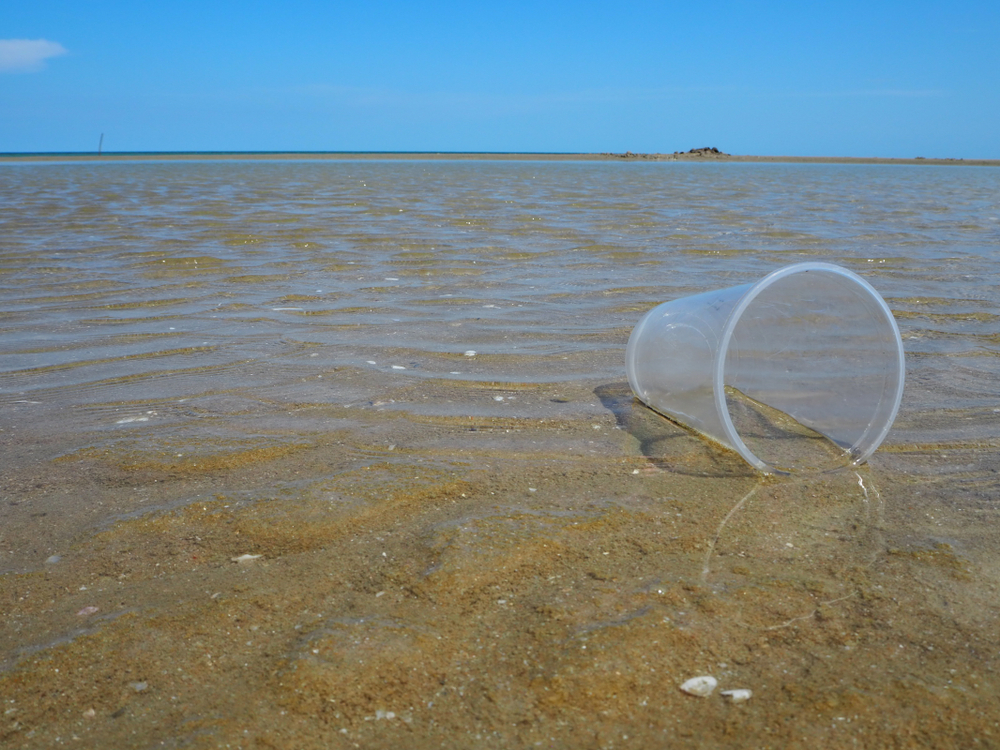
A plastic cup might seem, at first glance, like a reasonable substitute for a shell. It covered the octopus. It was lightweight. It moved with the current.
But Sigurdsson, an experienced diver, knew the cup offered none of the real protection a shell provides. Worse, it introduced a fresh danger that a natural shell never would.
A predator like an eel or a flounder hunts by instinct. It does not pause to examine the material of whatever it is about to swallow. If such a predator came across the cup, it would swallow the whole thing, octopus included. The plastic would then sit in the predator’s gut, unable to be digested, potentially killing or weakening that animal to the point where it too would become easy prey.
One piece of plastic, one small octopus, and suddenly the problem ripples outward through an entire food chain. That is the quiet brutality of ocean plastic. It does not just harm the creature that finds it first. It cascades.
Even setting aside the predator problem, plastic simply does not belong in the ocean. A shell is home. A cup is pollution. Sigurdsson was not willing to leave the octopus to either fate.
Meet the Coconut Octopus
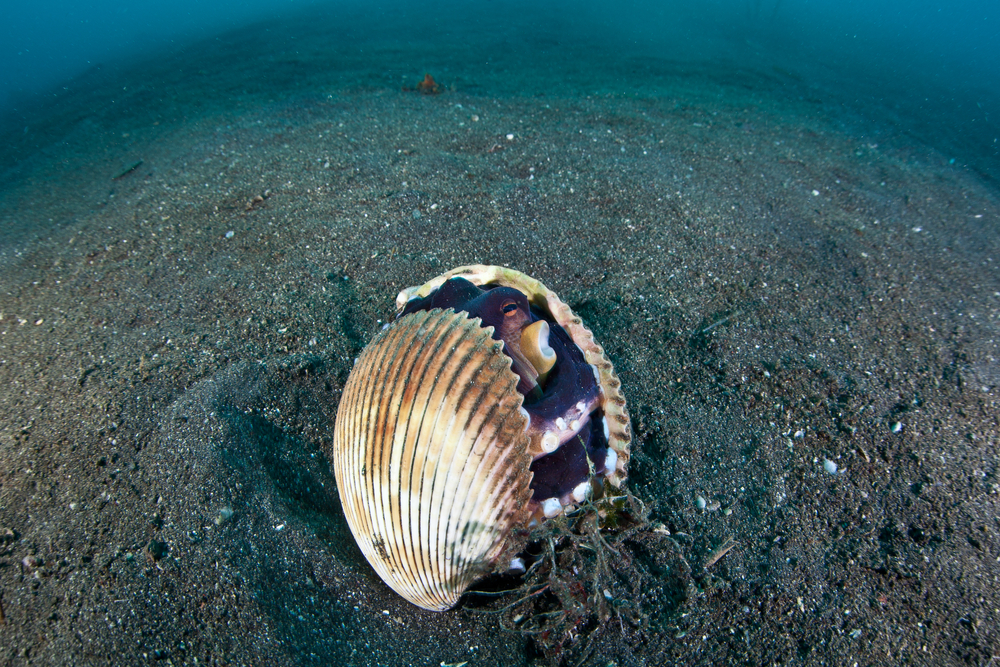
To understand why this particular rescue was so tricky, you need to understand the species. The coconut octopus, also called the veined octopus, is one of the most charming and resourceful creatures in the ocean. It grows to only about six inches in length. It is famous for a behaviour rarely seen in invertebrates. It carries a mobile home.
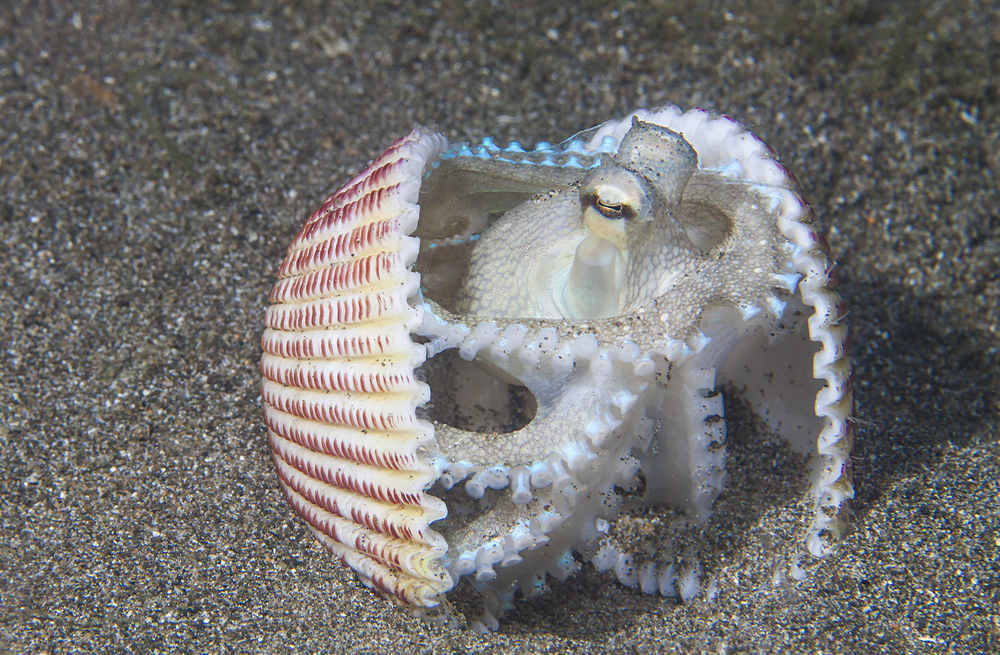
Born with the instinct to protect itself, the coconut octopus scavenges the seafloor for hollow coconut halves, clam shells, and other debris, then uses them as portable armour. It can even stack two halves together and tuck itself inside, walking along the seafloor on a few tentacles while the rest hold its little fortress closed.
That resourcefulness is also what got this particular octopus into trouble. The instinct to find a smooth, hollow object and crawl inside did not distinguish between a natural shell and a human-made cup. The octopus had done exactly what evolution had taught it to do. It had simply done it with the wrong material.
Coconut octopuses are also notoriously picky. They do not accept the first shell that comes along. They test the weight. They test fit. They test, in their own way, whether this new home feels right. Sigurdsson and his team were about to find out just how choosy this one would be.
A Dive That Turned Into a Rescue Mission
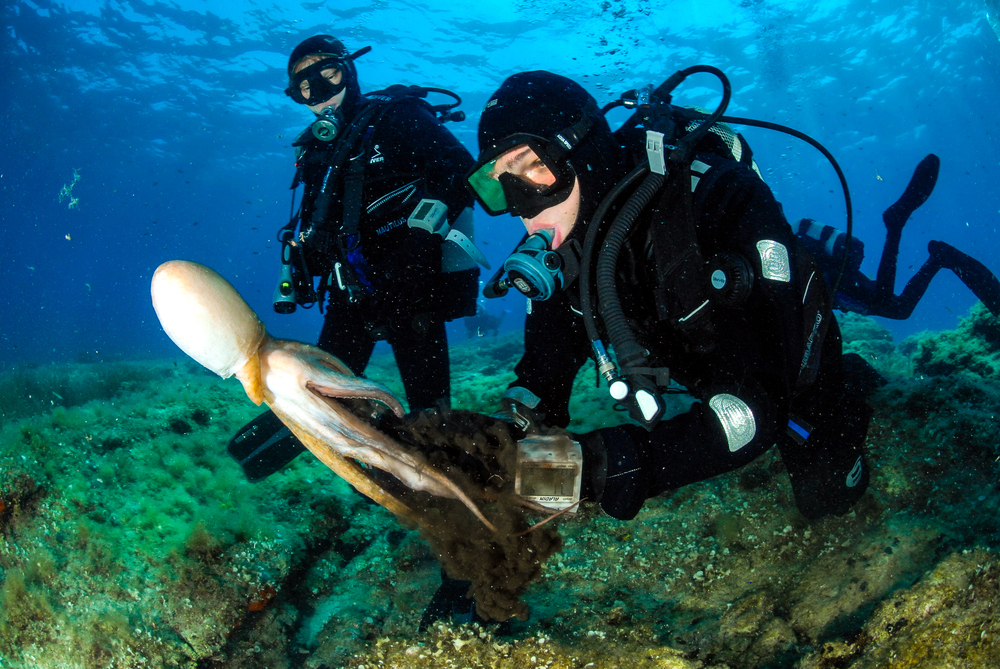
The team began offering shells. One, then another, then another. Each time, they drifted the option close to the octopus and waited.
The octopus inspected each candidate with tentative tentacles, the way a person might lift a ceramic mug in a shop and turn it over before deciding. Some it rejected outright. Others were considered briefly before returning to the familiar safety of their plastic cup.
As Sigurdsson later explained on YouTube, “We tried for a long time to give it shells, hoping that it would trade the shell. Coconut octopus are famous for being very picky about which shells they keep, so we had to try with many different shells before it found one to be acceptable.”
The divers searched the seafloor for fresh options. Air gauges ticked down. The octopus, entirely unaware of the clock running above it, took its time.
Eventually, a hollowed clam shell was offered. Something in it seemed right. The octopus uncurled from the cup, inspected the shell more closely, and slowly began the transition from old home to new. Sigurdsson even helped position a second shell to complete the protective covering, the way a coconut octopus would naturally stack two halves together. The plastic cup, finally abandoned, was collected and removed from the sea.
A Quiet Cinematic Moment
It is difficult to explain, in words alone, why watching this footage feels so deeply moving. There is no dramatic music. No narration. No anthropomorphic voiceover telling you what the octopus is feeling.
And yet the scene plays out with the emotional beats of a short film. The tentative reach of a tentacle. The small, patient gestures of the divers. The suspense of wondering whether the octopus will really let go of the only home it has known. The relief when it finally does.
Sigurdsson has shared many underwater videos on his channel, including another popular clip of a veined octopus that seemed uninterested in him but became fascinated with his dive partner, a man named Gary. In that video, the octopus reaches out and just barely touches the tip of Gary’s finger before retreating, shy and curious all at once. No words are exchanged. None needs to be.
That is part of why the cup video resonated with so many viewers. It captured something that feels impossible to fake. A genuine moment of cross-species understanding, happening in real time, without a script.
What We Now Know About Octopus Minds
Part of the reason these videos hit so hard is that our understanding of octopus intelligence has changed dramatically in recent decades.
Octopuses solve puzzles. They navigate complex mazes. They unscrew jars from the inside. They recognise individual human faces, reportedly holding grudges against some keepers and affection for others. They dismantle aquarium equipment out of what looks unmistakably like curiosity. Some researchers now argue they may experience something close to dreams.
With that knowledge in mind, the Lembeh footage becomes even more fascinating. What was this particular octopus thinking? Did it understand, on some level, that the divers were trying to help? Was the slow, thoughtful inspection of each offered shell simply instinct, or was there judgment behind it? Curiosity? Trust?
We cannot know. But anyone who has watched the video has probably felt, at some point, that the octopus was doing more than reacting. It was evaluating. And at the end, choosing.
The Bigger Picture
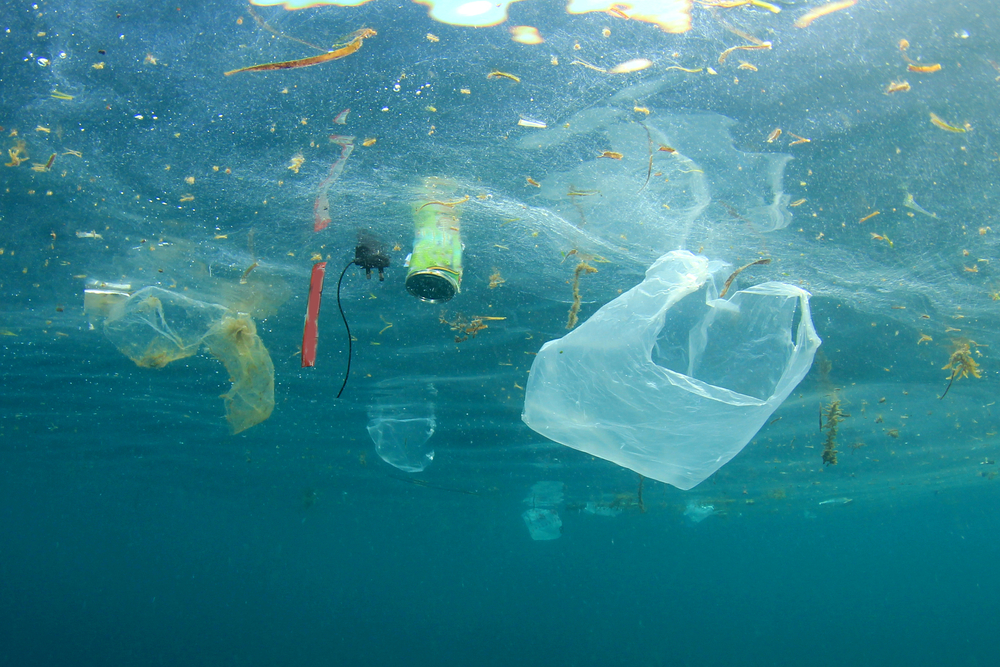
One octopus in one cup is a small story. The problem it points to is not. The United Nations Environment Programme estimates that between 19 and 23 million tonnes of plastic waste leak into aquatic ecosystems every year. The total volume of plastic already in the ocean is thought to sit somewhere between 75 and 199 million tonnes. According to a Center for Biological Diversity report, plastic debris now covers an estimated 40 percent of the world’s ocean surfaces.
More than 700 marine species are affected, including Hawaiian monk seals and Pacific loggerhead sea turtles, both frequently found entangled in plastic litter. Industrial fishing alone contributes roughly 20 percent of ocean plastic pollution, according to UNESCO data, much of it in the form of discarded nets and fishing gear.
Then there is the Great Pacific Garbage Patch, the vast gyre of floating plastic debris in the north-central Pacific, now estimated to be roughly the size of a small country.
UNEP projects that without meaningful intervention, emissions of plastic waste into aquatic ecosystems will nearly triple by 2040. That is the backdrop against which one diver decided to spend most of his air on one tiny octopus.
Why One Small Rescue Still Matters
It would be easy to dismiss the Lembeh rescue as a feel-good clip, a charming diversion that does nothing to fix the underlying crisis. Sigurdsson himself acknowledged that saving a single octopus will not save the ocean.
And yet the video has done something that policy papers and UN resolutions often struggle to do. It has made people care.
Statistics about millions of tonnes of plastic are abstract. The figure becomes so large that it stops meaning anything. A single octopus, reaching out a tentacle to inspect a new shell, is something else entirely. It is a creature you can root for. It is a rescue you can believe in.
Small acts of care do not solve systemic problems on their own. But they often do something just as important. They remind us that the systems are made up of individual lives, and that those lives are worth noticing. The 20 million people who watched that video did not all become activists. But some of them probably picked up a plastic bottle from the beach the next time they saw one. Some of them probably thought twice before buying a single-use cup. Some of them probably shared the video and the message with someone else. That is not nothing. In a crisis this vast, it may be where every real solution begins. The octopus in Lembeh got a new shell. The ocean it lives in still needs one too.
Cephalopod Intelligence, coconut octopus, Great Pacific Garbage Patch, Lembeh Indonesia, Marine biology, marine conservation, marine life rescue, ocean conservation, ocean plastic pollution, ocean wildlife, octopus behavior, octopus facts, octopus rescue, octopus shell trade, Pall Sigurdsson, Pixar worthy video, plastic cup ocean, plastic pollution crisis, scuba diver rescue, scuba diving video, sea life protection, underwater videography, UNEP plastic statistics, veined octopus, viral octopus video, wildlife video viral