
Your cart is currently empty!
What Queen Camilla’s Brooch Really Says About the Royal State Visit to America
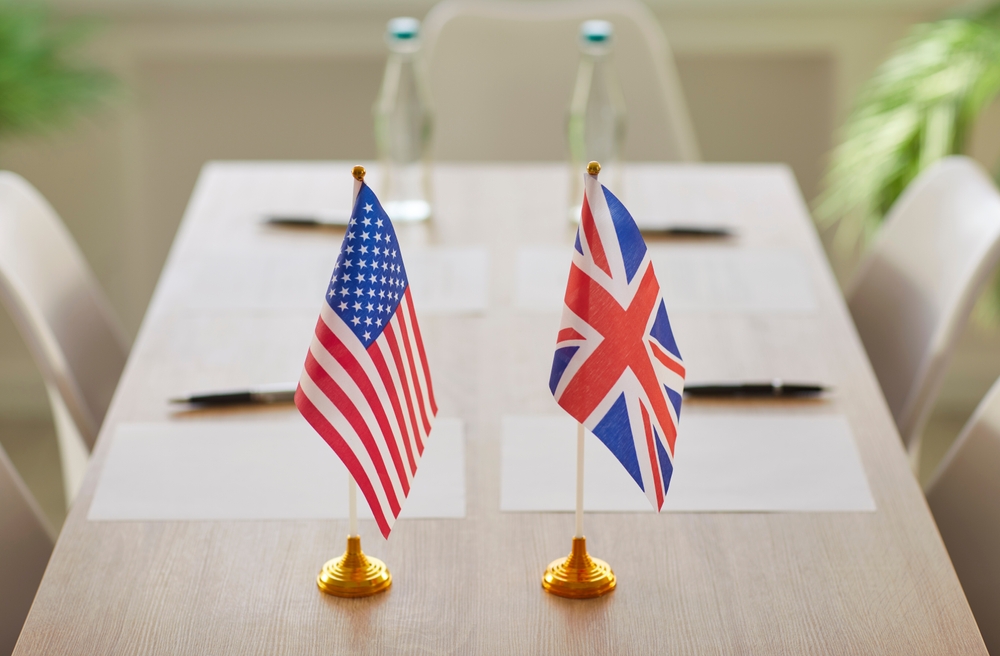
When Queen Camilla stepped off a plane at Joint Base Andrews in Maryland on April 27, few could have anticipated that a single piece of jewelry would become the most talked-about detail of the day. Royal observers, fashion commentators, and diplomatic analysts all turned their attention to a brooch pinned to her dress, and what it quietly communicated would only come into focus once the experts began to weigh in. On a visit already carrying more diplomatic weight than most, Camilla had made her opening statement before a single official word was spoken.
Contents
show
King Charles III and Queen Camilla arrived in the United States for a four-day state visit marking the 250th anniversary of the signing of the Declaration of Independence. On the official schedule, it read as a celebration of a long-standing alliance. Beneath the pageantry and the polished choreography of a state visit, it was one of the more carefully managed royal trips in recent memory, arriving at a moment when the transatlantic relationship needed considerably more than ceremony to steady itself.
How the Iran War and Falklands Fears Set the Tone for This Visit
Few alliances in the modern era carry the historical and emotional weight of the so-called “Special Relationship” between the United Kingdom and the United States. Right now, that bond is under strain that neither government has managed to keep entirely behind closed doors.
Donald Trump’s military campaign against Iran created a visible fracture in transatlantic consensus. Prime Minister Keir Starmer declined to back American strikes, a position that drew a sharp rebuke from Trump, who publicly dismissed Starmer as “no Winston Churchill.” For British observers, that particular comparison carried a pointed sting, given that the wartime partnership between London and Washington remains the emotional cornerstone of the alliance. Leaked Pentagon discussions added further unease, with reports suggesting the administration had at least considered reviewing long-standing U.S. support for British sovereignty over the Falkland Islands.
British ministers placed genuine hope in the monarchy’s capacity to steady what government-level diplomacy had so far failed to fix. Trump, whatever his frustrations with Downing Street, has never hidden his admiration for the British Crown and the ceremonial weight it carries. He has called King Charles “a great man” and “a friend,” drawing a deliberate line between his regard for the monarchy and his criticism of Starmer’s government. That line gave the state visit genuine diplomatic room to operate.
A security incident in the days before Charles and Camilla arrived added yet another layer of complexity. A gunman opened fire inside the Washington Hilton on April 25 during the White House Correspondents’ Association dinner, prompting Secret Service agents to rush Trump from the room. Officials later confirmed that the president and members of his administration were believed to be the intended targets, triggering an urgent review of security arrangements ahead of the royal couple’s arrival. Buckingham Palace consulted with U.S. authorities and confirmed the visit would proceed as planned, with a spokesperson expressing gratitude to all those who worked quickly to ensure it could. Charles and Camilla reached out to the Trumps privately in the aftermath, and Trump confirmed on CBS News that he and Charles had spoken and that the royal couple were eager to make the trip.
Camilla’s Choice of a 1957 Brooch Was Anything But Accidental
By the time Charles and Camilla posed for photographs with Donald and Melania Trump on the South Lawn of the White House, many eyes had already traveled back to an image captured hours earlier. It was the moment Camilla descended the steps of the plane at Joint Base Andrews, and it was a brooch pinned to her dress, rather than her coat, that had set off a quiet but telling conversation among royal observers.
Drawn from Queen Elizabeth II’s personal vault, the piece is a Cartier creation known as the Union Jack and Stars and Stripes brooch. Its origins trace back to 1957, when it was presented to the late Queen during her first state visit to the United States. Set in platinum with rubies, emeralds, and diamonds, it carries the flags of both Britain and America woven together in a design that leaves little room for ambiguity about its intent.
Former royal butler Grant Harrold, speaking on behalf of Slots Temple, put into words what many had already begun to sense. “These things are never a coincidence or an accident, everything is carefully planned,” he said. “They know that people will pick up on these things and that’s why they do it. The fact that she’s picked this brooch says a lot, she’s sending a clear message about what the King and Queen hope to get from this trip – unity.”
Harrold also flagged a detail that a less practiced eye might have missed. Camilla had moved the brooch from her coat to her dress, a departure from standard royal practice that carried clear purpose. Moving it there was not a stylistic preference. It was a calculated bid to ensure cameras and commentators would pick up on the piece and carry its meaning into the day’s coverage.
With Charles scheduled to visit New York later in the trip, the brooch’s connection to a gift from a former New York mayor folded quietly into the broader itinerary. Harrold believed the historical weight of the piece would not be lost on Trump. “Wearing a brooch from the vaults is also a clever way to remind Trump about the past, as well as the future,” he said. “It was a gift to the late Queen from a former New York mayor back in 1957, so will possibly cause the President to think back on decades of close ties between the two countries.”
From a Private White House Tea to a 650-Guest British Embassy Garden Party
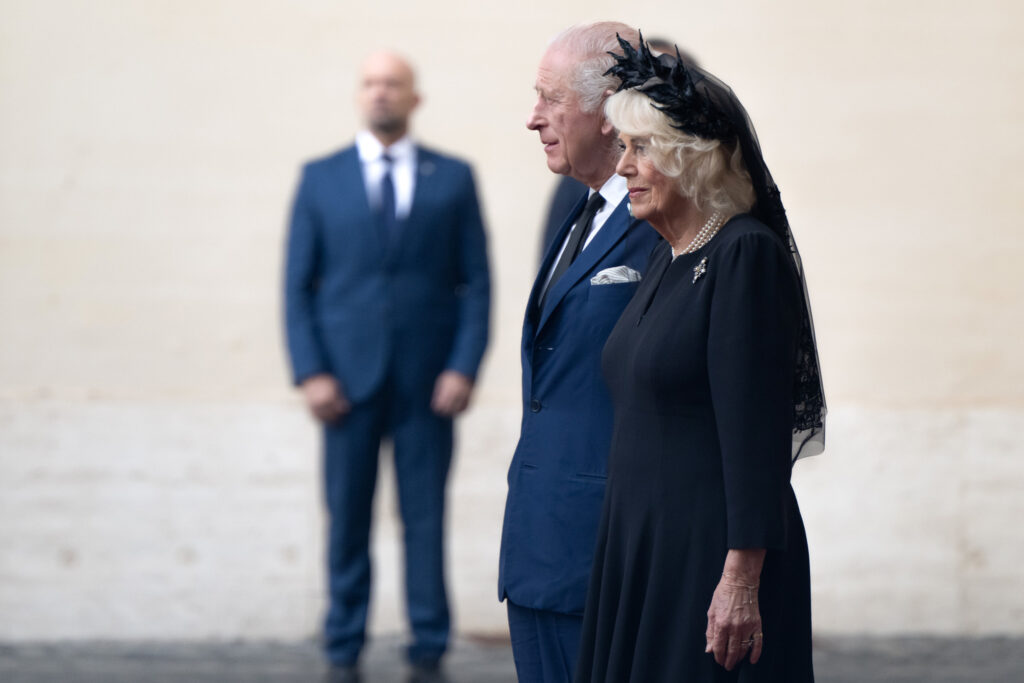
After the formal welcome and photographs on the South Lawn, Trump and Melania took their guests inside the White House for a private tea, with the White House reportedly selecting Royal Blend and Earl Grey varieties from London’s Fortnum & Mason for the occasion. A tour of the newly expanded White House beehive followed, a gesture that subtly acknowledged Charles’s decades-long commitment to environmental conservation, a cause he has championed publicly since long before he became king.
From there, the royal couple made their way to the British Ambassador’s residence for a garden party drawing around 650 guests from across politics, science, sustainability, and the creative industries. Treasury Secretary Scott Bessent, Commerce Secretary Howard Lutnick, and Dr. Mehmet Oz attended on behalf of the Trump administration. House Speaker Mike Johnson and former Speaker Nancy Pelosi shared the same occasion in a display of bipartisan attendance, with senators Ted Cruz and Lindsey Graham and Republican Congressman Michael McCaul also on the guest list.
Camilla, candid about the realities of transatlantic travel, admitted to feeling “slightly jet-lagged” after crossing five time zones from London to the East Coast. Jet lag aside, she moved through the gardens with characteristic ease. She spent time with representatives from domestic abuse charities, a cause central to her public work for many years, and paused for a photograph with a group of West Point cadets who made the request. Olympic diver Tom Daley updated her on his two young sons, Robbie, now seven, and Phoenix, three, expressing surprise at how quickly time had passed. A time capsule marking America’s 250th anniversary drew the royal couple’s attention in the Ambassador’s library during a quieter moment away from the crowd.
Charles Aims to Defuse Transatlantic Tensions
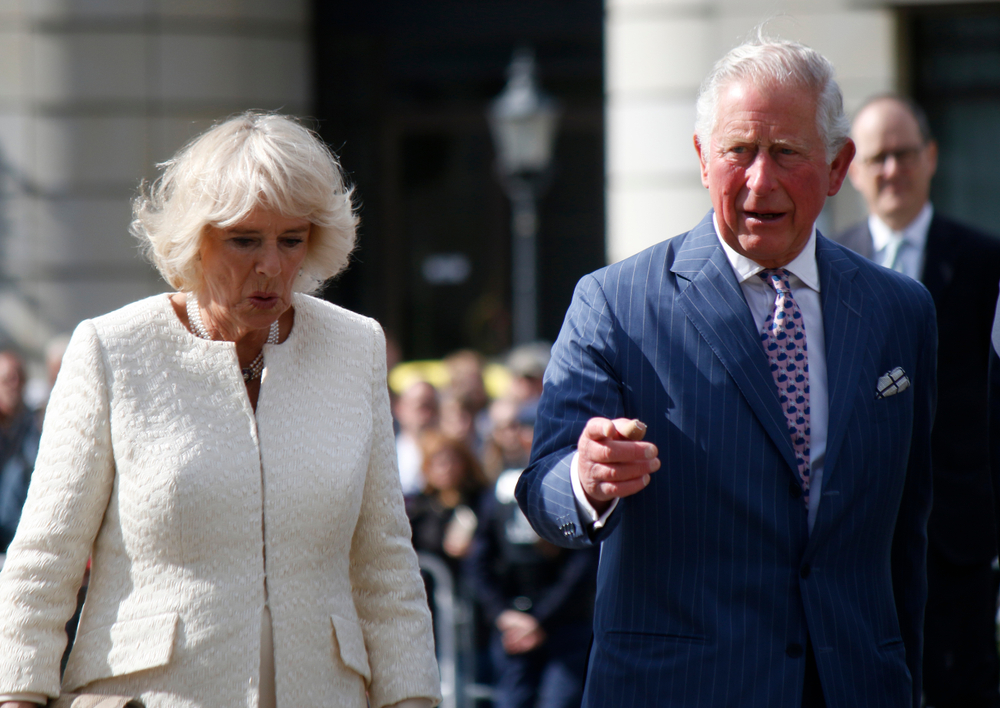
On day two of the visit, Charles was set to become only the second British monarch ever to address a joint meeting of Congress, with Queen Elizabeth having been granted that occasion in 1991. His remarks were widely expected to frame the UK-U.S. alliance as “one of the greatest alliances in human history,” drawing on the two nations’ shared democratic, legal, and social traditions to make the case that both countries have, time and again, found ways to come together even during periods of genuine disagreement.
Dr. Fabian Hilfrich, a senior lecturer in American History at the University of Edinburgh, noted it would be worth watching how direct Charles chose to be about contemporary friction between the two governments. He described the visit as designed to “defuse tensions over the war in Iran and to improve the mood music between both countries,” and pointed to Trump’s well-documented admiration for royal pageantry as a reason the soft power approach carried real weight with this particular White House.
Charles was also expected to briefly reference the weekend shooting, offering the friendship of the British people to Americans, marking 250 years of independence. After his address, the itinerary would carry him to New York for a visit to the September 11 Memorial, joined by the city mayor and rising political figure Zohran Mamdani, before concluding in Virginia with meetings with conservation groups. Some British politicians remained cautious about the risks attached to a mission of this kind, with Trump’s recent public criticism of Pope Leo XIV having already sharpened concerns in Westminster about the potential for an unexpected diplomatic misstep.
An Alliance Built on 250 Years of History
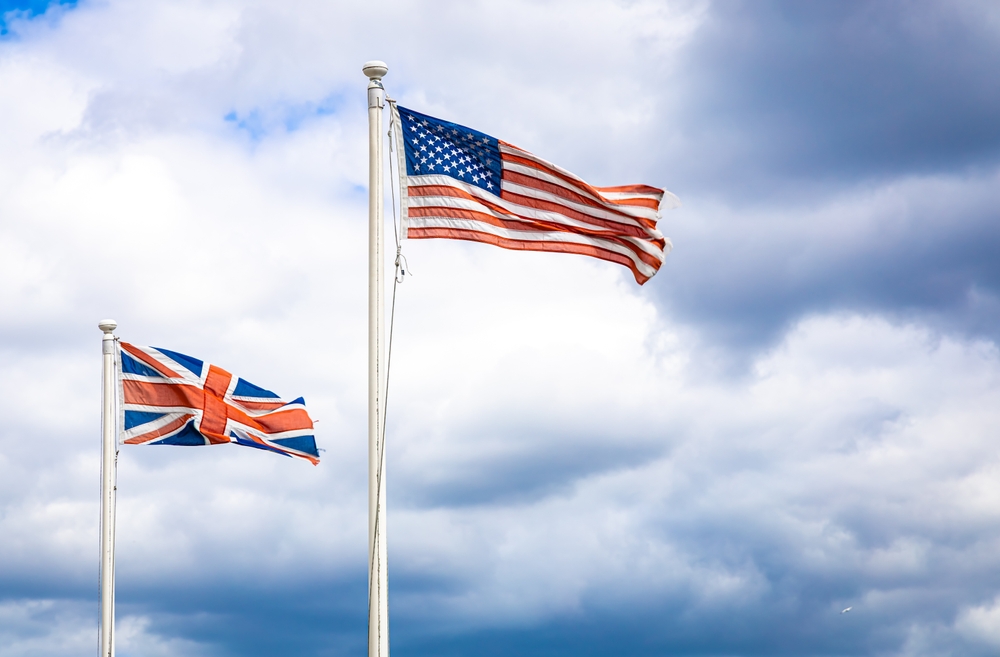
Whether this visit could genuinely shift the diplomatic temperature between London and Washington remained, as it would for any state visit, an open question. What was already clear from day one was that both sides had come prepared to signal their intentions through every available channel, from careful remarks to carefully chosen accessories.
British Ambassador Christian Turner offered a view of the alliance that felt well-suited to the moment. “We had a small difference of opinion in 1776,” he told CBS’s Face the Nation. “We’ve been through that. We’ve come a very long way and that, in a way, for me, is what is so enduring about these relationships.”
A queen who pinned a 68-year-old Cartier brooch to her dress with evident purpose, a king preparing to stand before Congress for only the second time in British royal history, and a Washington garden party where political rivals shared the same lawn on a warm April afternoon all seemed to make the same point. Some relationships, however tested, carry too much history to let go of easily.
America 250th Anniversary, British monarchy, British Royal Family, Buckingham Palace, Donald Trump, Grant Harrold, Iran War Diplomacy, King Charles III, Queen Camilla, Queen Elizabeth II, Royal Brooch, Royal Diplomacy, Royal Fashion, Soft Power, special relationship, UK-US relations, US State Visit 2026, washington dc, White House