
Your cart is currently empty!
White House Rejects Claims Trump Slept During Lindsey Graham Funeral
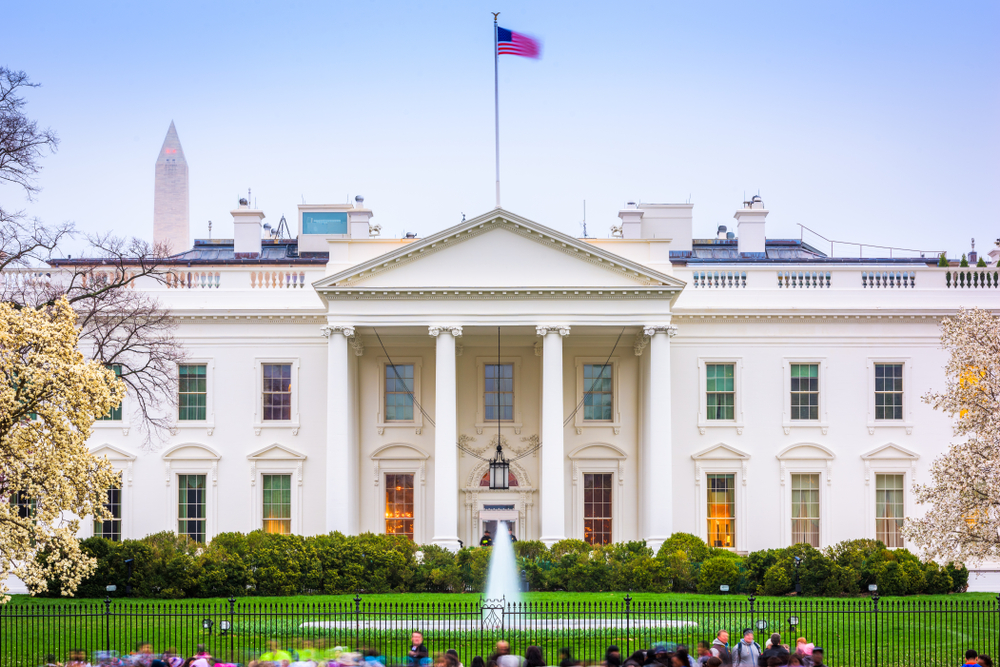
Few moments at a funeral attract the kind of scrutiny reserved for a presidential appearance. Yet that is exactly what unfolded after cameras captured President Donald Trump seated inside Washington National Cathedral during the funeral service for longtime Republican senator Lindsey Graham.
Contents
show
Within hours, images and video clips circulated across social media, prompting claims that Trump had briefly fallen asleep during the memorial. The speculation quickly became another flashpoint in the ongoing political battle over the president’s public appearances, with critics arguing the footage spoke for itself while the White House issued one of its strongest denials yet.
Instead of allowing the conversation to gather momentum, administration officials responded immediately, insisting there was no truth to the accusations and accusing critics of deliberately misrepresenting what happened.
White House Issues a Blunt Rejection
The White House did not attempt a measured response.
Instead, spokesperson Davis Ingle forcefully dismissed the allegations, insisting that Trump had simply been reflecting on the loss of one of his closest political allies after delivering a eulogy.
“President Trump was reflecting on the loss of his dear friend Lindsey Graham, for whom he had just delivered a beautiful eulogy,” Ingle said.
He followed that statement with an unusually sharp attack on those promoting the claims.
“Anyone suggesting otherwise is a depraved moron.”
The language immediately attracted attention because it mirrored previous responses from the administration whenever questions have surfaced about Trump’s alertness during public events.
Rather than offering additional explanation or medical clarification, the White House has consistently framed the accusations as politically motivated attacks designed to create misleading narratives from isolated photographs or short video clips.
Videos From the Cathedral Fueled Online Speculation
The controversy began after television cameras and photographers captured Trump seated in the front pew during the service at Washington National Cathedral.
Several clips appeared to show the president with his eyes closed and his head lowered for brief moments after delivering his remarks.
Those images spread rapidly online.
Critics argued that the footage suggested Trump had drifted off during portions of the memorial service. Others pointed to still photographs that appeared to capture similar moments.
The discussion accelerated as additional clips circulated across social media platforms, with users debating whether the president had simply closed his eyes in reflection or had actually fallen asleep.
None of the available footage conclusively establishes that Trump was asleep.
That uncertainty did little to slow the online debate, which quickly became another politically charged argument between supporters and critics.
The White House maintained that viewers were interpreting a solemn moment through a partisan lens rather than considering the emotional circumstances surrounding the funeral.
A Pattern Seen Before
This was not the first time the administration has found itself responding to similar allegations.
According to White House officials, accusations that Trump falls asleep during meetings or public appearances have surfaced repeatedly over recent months.
Earlier this summer, critics questioned whether Trump had nodded off while attending the NBA Finals in New York. The administration rejected those claims as false.
Following comments from Representative Alexandria Ocasio-Cortez regarding Trump’s appearance during another event, Ingle responded with another strongly worded statement.
“Anyone ridiculously claiming the President was asleep is either lying or has severe brain damage.”
A similar exchange unfolded in May after Reuters published a photograph that some viewers interpreted as showing Trump asleep during a maternal health event.
The White House rejected that interpretation as well.
“He was blinking, you absolute moron,” officials said at the time.
Administration aides have repeatedly argued that isolated images fail to capture what actually occurred during lengthy public appearances, particularly when photographers freeze individual moments that can easily be taken out of context.
Trump Has Long Insisted He Sleeps Very Little
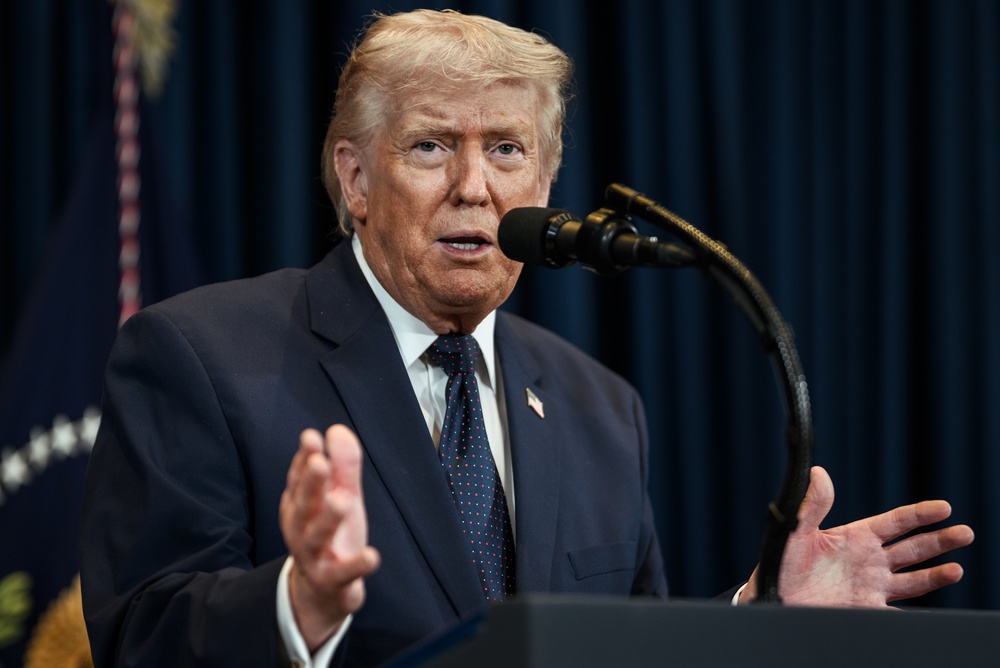
The renewed discussion also revived a familiar aspect of Trump’s public image.
For years, Trump and members of his inner circle have maintained that he functions on remarkably little sleep.
Throughout both of his presidencies and his campaigns, Trump has frequently portrayed limited sleep as evidence of his work ethic, often suggesting that long hours are simply part of how he operates.
Supporters have echoed those claims, arguing that his demanding schedule leaves little opportunity for extended rest.
Critics, meanwhile, have occasionally pointed to moments during lengthy ceremonies, meetings, or speeches where they believe the president appeared fatigued.
The White House has consistently rejected every suggestion that these appearances indicate any broader health concern.
Instead, officials have argued that brief moments captured by cameras are being selectively amplified for political purposes.
A Funeral Marking the Loss of a Republican Ally
The debate over Trump’s appearance unfolded against the backdrop of a deeply significant event for the Republican Party.
Lindsey Graham died unexpectedly on July 11 at the age of 71 after suffering an aortic dissection caused by arteriosclerotic cardiovascular disease.
For decades, Graham served as one of South Carolina’s most recognizable political figures and became one of the Republican Party’s most influential voices on foreign policy and national security.
His relationship with Trump was anything but straightforward.
During the fiercely contested 2016 Republican presidential primary, the two frequently traded personal attacks.
One of the most memorable moments came when Trump publicly revealed Graham’s personal cellphone number during a campaign event, encouraging supporters to call him.
The episode became one of the defining moments of that primary battle.
Yet over time, their relationship evolved into one of Washington’s more unexpected political alliances.
As Trump’s presidency progressed, Graham became one of his strongest defenders on Capitol Hill, often appearing beside the president during major legislative fights and impeachment battles.
By the time of Graham’s death, the two men had spent years working closely together despite their turbulent beginning.
That complicated history became a central theme of Trump’s eulogy.
Trump Mixed Humor With Personal Memories
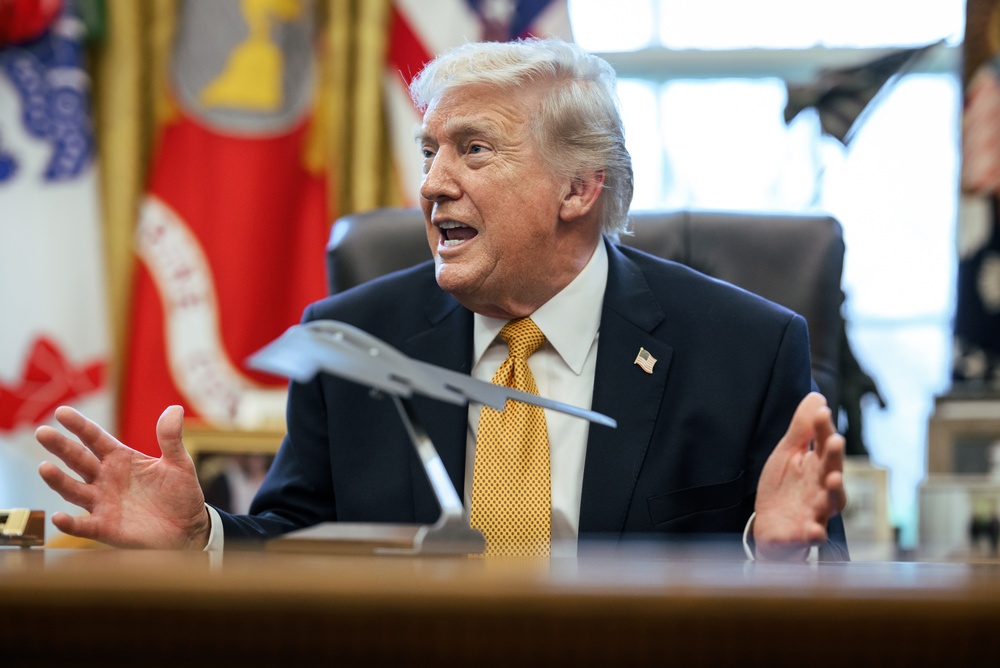
Reading largely from prepared remarks, Trump praised Graham’s ability to build relationships across party lines.
“Virtually everyone, Republican or Democrat, liked Lindsey,” Trump told mourners.
Then he paused.
“Well, not everybody, but it sounds good. Not everybody.”
The remark drew laughter inside the cathedral before Trump continued speaking more personally about his longtime friend.
He described Graham as “a tough cookie” before briefly stepping away from his prepared remarks to reflect on their early clashes during the 2016 campaign.
Trump recalled the infamous moment when he publicly shared Graham’s cellphone number during their rivalry.
“I did something that I shouldn’t have done,” Trump admitted.
He joked that he still remembered the number years later and even repeated it during the funeral service before adding with a smile that Graham continued calling him for the next decade.
The anecdote illustrated the unusual path their relationship had taken, transforming from political enemies into close allies whose friendship endured through two administrations, multiple election cycles, and countless political battles.
A Funeral That Drew National and International Figures

The memorial service reflected Graham’s standing within Republican politics and American foreign policy.
Held at Washington National Cathedral, it brought together current administration officials, lawmakers, diplomats and international leaders who had worked with the South Carolina senator throughout his long career.
Among those in attendance were Vice President JD Vance, Secretary of State Marco Rubio and Defense Secretary Pete Hegseth. Ukrainian President Volodymyr Zelenskyy and Israeli Prime Minister Benjamin Netanyahu also attended, highlighting Graham’s influence on international affairs and his long record of advocating for American involvement overseas.
Trump acknowledged that reputation during his remarks.
“He never saw a war that he didn’t like,” the president said.
“Only his true friends would understand that.”
The comment reflected the often candid nature of Trump’s relationship with Graham. Even while honoring his longtime ally, the president mixed humor with pointed observations that those familiar with their friendship recognized as characteristic of their exchanges.
The funeral itself remained focused on celebrating Graham’s decades of public service, but much of the media attention shifted almost immediately toward the debate surrounding Trump’s appearance during the ceremony.
Political Moments Are Increasingly Judged Frame by Frame
The controversy illustrates how modern political events are consumed very differently from just a decade ago.
Televised appearances are no longer experienced only in real time. Individual frames, short clips and screenshots are routinely extracted from hours of footage before spreading across social media within minutes.
A brief facial expression, a blink or a few seconds with closed eyes can become the focus of national discussion, often overshadowing the event itself.
Supporters and critics frequently reach opposite conclusions after watching the same footage.
Those convinced Trump appeared to fall asleep argued the videos spoke for themselves.
Administration officials insisted viewers were assigning political meaning to what they described as a private moment of reflection during an emotional service.
Because the clips show only brief portions of the ceremony, they have become open to competing interpretations rather than offering definitive proof of either claim.
That dynamic has become increasingly common in American politics, where viral moments often develop independently of the broader event in which they occurred.
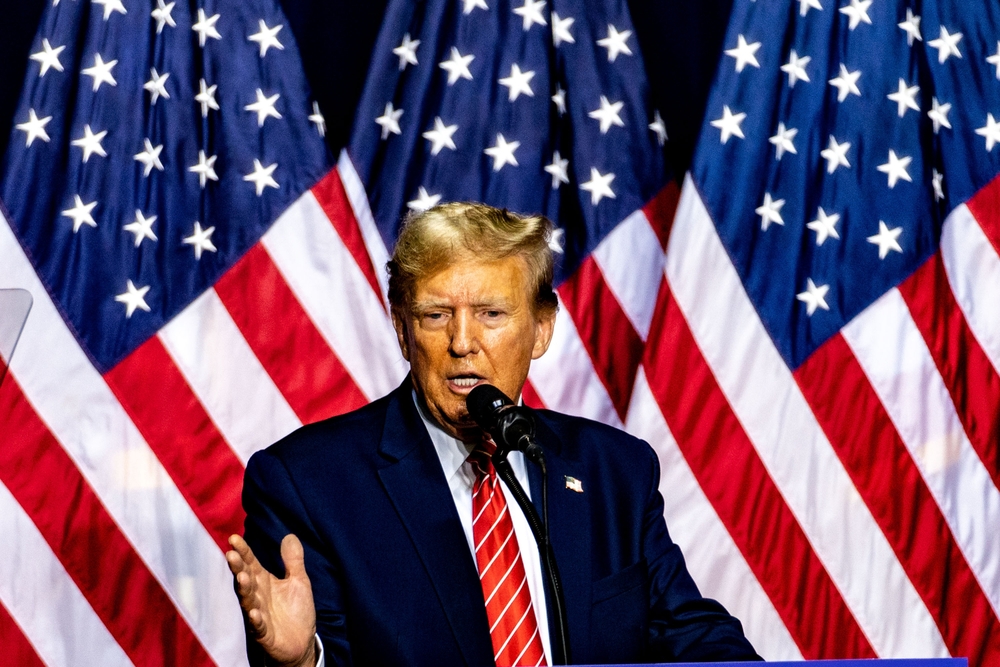
Health Questions Continue to Follow Public Figures
Questions about the health of national leaders have become a recurring feature of American political coverage, regardless of party.
Every appearance by a sitting president is examined closely, with television viewers and online commentators often scrutinizing posture, speech, facial expressions and body language.
Trump has faced repeated questions over the years about moments when critics believed he appeared tired during public appearances.
His administration has consistently rejected those claims.
The president has also repeatedly insisted he remains in excellent health and has frequently described himself as operating on very little sleep.
The White House has argued that isolated images or several seconds of video should not be interpreted as evidence of fatigue or medical concerns.
Critics maintain that repeated incidents naturally invite public discussion.
Neither side appears likely to change its position, making each new appearance another opportunity for familiar debates to re-emerge.
The White House Chooses an Aggressive Response
One aspect of the controversy that stood out was not simply the denial itself, but the language used to deliver it.
Rather than issuing a carefully worded statement, the administration again adopted an openly confrontational approach.
Calling those promoting the claims “depraved morons” continued a communication strategy that has become increasingly familiar throughout Trump’s presidency.
Administration officials have often responded to criticism with unusually direct language, particularly when defending the president against claims they consider misleading or politically motivated.
That approach energizes many Trump supporters, who see the blunt rhetoric as evidence that the White House is willing to challenge what it considers unfair media narratives.
Opponents argue the language does little to reduce political tension and instead fuels another cycle of public confrontation.
Regardless of perspective, the response ensured that the administration’s denial became almost as widely discussed as the original claims themselves.
The Debate Overshadowed the Day’s Purpose
Lindsey Graham’s funeral was intended to honor one of the Republican Party’s most recognizable senators, whose career stretched across decades and included a central role in debates over national security, judicial appointments and foreign policy.
Instead, much of the national conversation quickly shifted toward a handful of seconds captured by television cameras.
That outcome reflects the modern political landscape, where viral images often eclipse the events that produced them.
Whether viewers believe Trump briefly nodded off or simply closed his eyes while reflecting on the loss of a longtime friend depends largely on how they interpret the available footage. The White House has left little room for ambiguity, insisting the president was mourning a close ally after delivering what officials described as a heartfelt eulogy.
With neither the administration nor its critics backing away from their positions, the episode has become another example of how even the quietest moments inside a cathedral can evolve into a nationwide political controversy before the service has ended.