
Your cart is currently empty!
Wildflower Strips Attract Beneficial Insects That Naturally Control Crop Pests
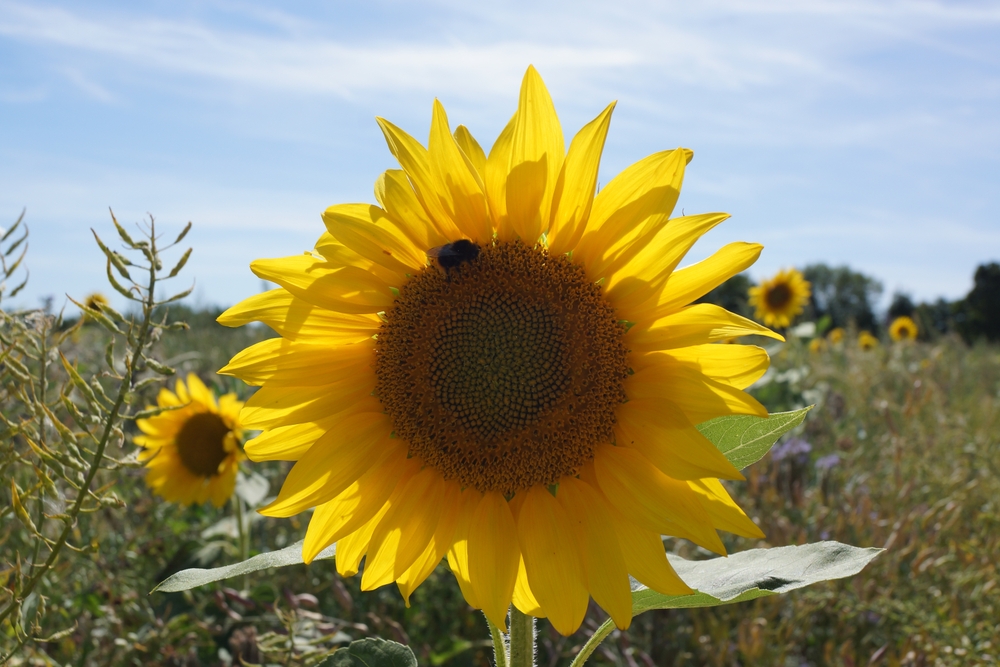
At first glance, Julian Gold’s decision makes little financial sense. Across his farm in Oxfordshire, England, vibrant strips of wildflowers cut through fields that could otherwise be producing valuable crops. Every hectare devoted to those flowers represents income he’s choosing to give up, and even government support doesn’t fully offset the cost. For most farmers, sacrificing productive land during a period of rising costs would be difficult to justify. Yet Gold continues planting flowers year after year because he believes they are doing something tractors and chemical sprays cannot.
Contents
show
That belief is no longer based on instinct alone. Scientists across Europe have spent years studying whether carefully planted wildflowers can help farmers fight destructive crop pests by attracting beneficial insects. The results have surprised even researchers. Several large field trials now suggest that diverse flower strips can dramatically reduce pest numbers, and in some cases perform almost as well as conventional insecticides. While experts are careful not to describe them as a complete replacement for pesticides, the growing evidence points to a farming strategy that could help reduce chemical use while keeping harvests productive.
The Farmer Who Sees Flowers as Part of the Farm’s Workforce
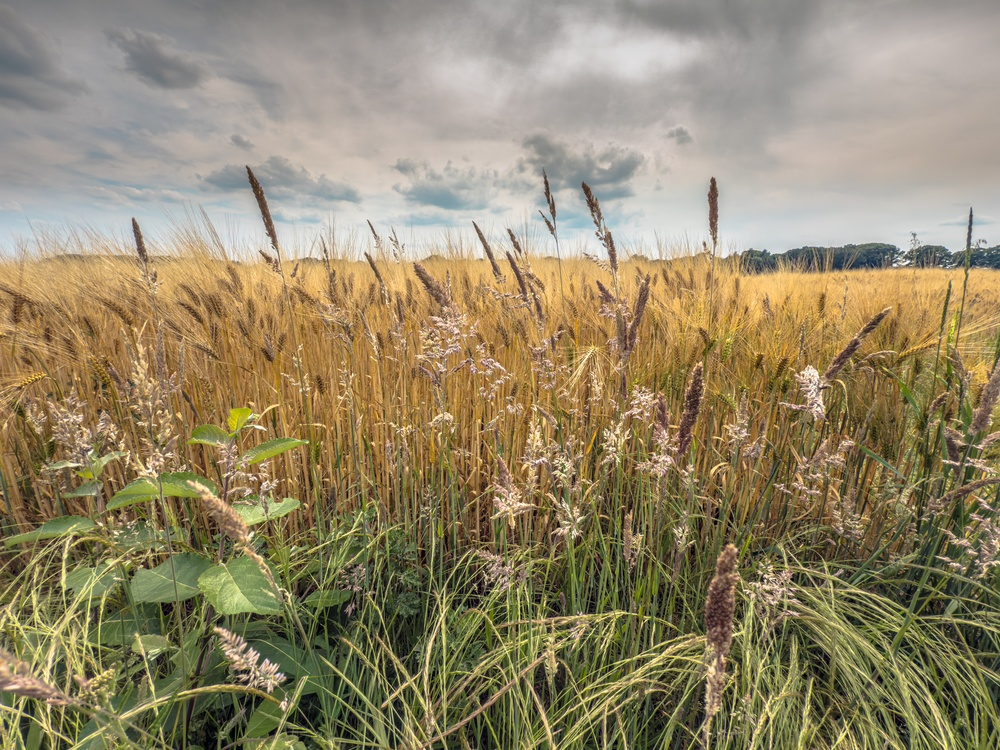
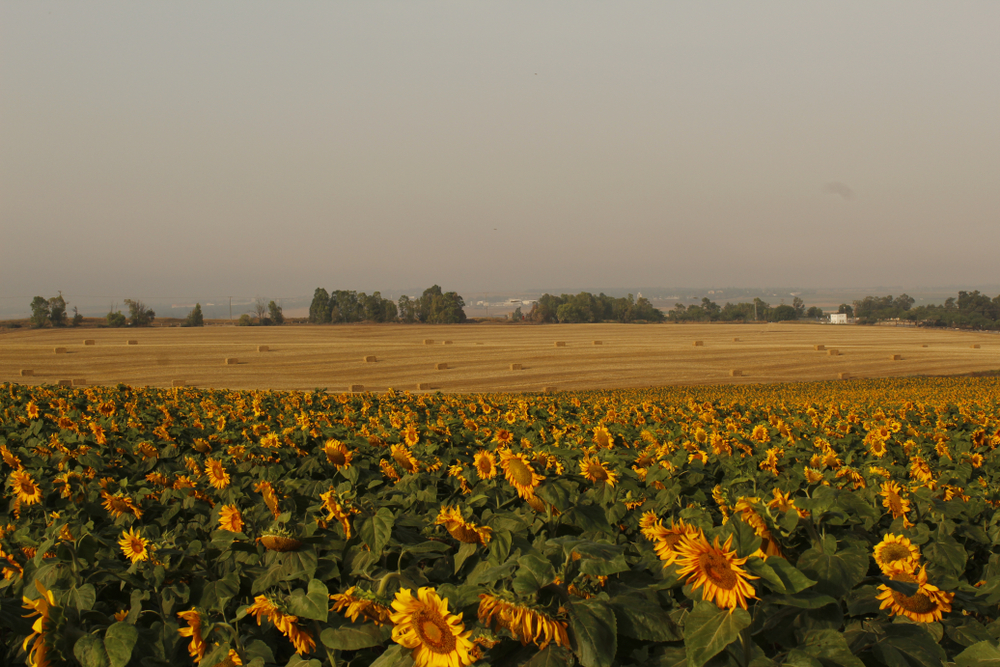
Julian Gold manages around 750 hectares at Hendred Farm Partnership, located on the edge of the Berkshire Downs. Running through many of his fields are carefully planned strips of wildflowers that aren’t grown for profit or decoration. They exist for one reason: to create permanent habitats for insects that naturally prey on crop pests. Maintaining those strips comes at a cost. Once the value of the crops that could have been grown there is included, each hectare costs £776.02. Government payments reduce some of that loss, but Gold still estimates the farm gives up roughly £100 per hectare every year.
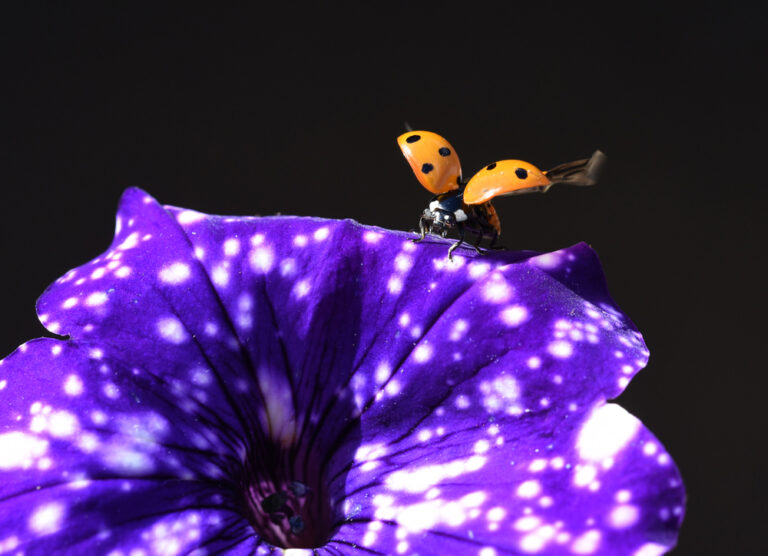
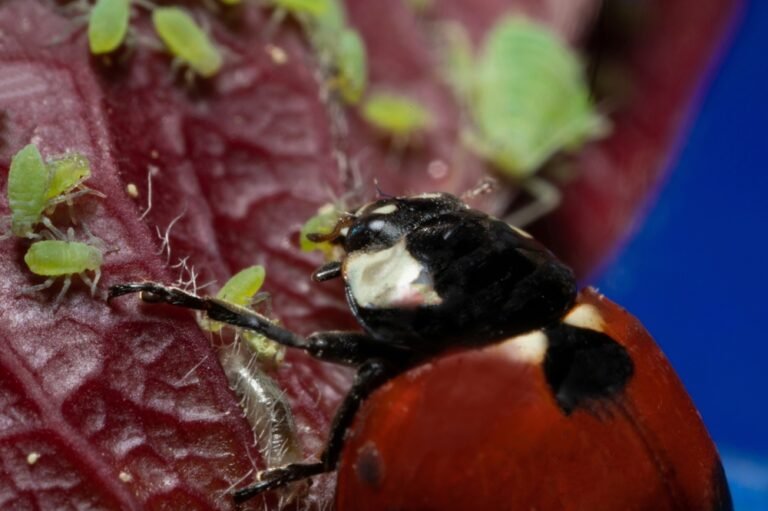
Despite the financial sacrifice, Gold believes the flowers provide something that cannot easily be bought in a bottle. Ladybirds, hoverflies, lacewings and tiny parasitic wasps all hunt insects that damage crops such as wheat, sugar beet and oilseed rape. Instead of depending solely on chemical insecticides, he wants these natural predators to become part of the farm’s pest management system. It’s an investment in biodiversity that he hopes will pay off through healthier crops and lower reliance on chemicals over time.
For many years, farmers noticed that fields surrounded by healthy habitats often seemed to suffer fewer pest outbreaks, but there was little scientific evidence proving why. Researchers have since begun measuring those effects in detail, tracking insect populations across farms and comparing fields with and without flower strips. Those long-term studies are gradually turning what was once considered an interesting idea into a farming practice supported by data.
Scientists Found a Weak Spot in Modern Farming
One of the biggest challenges isn’t the lack of beneficial insects. It’s where they live. Most species spend their time in hedgerows, grassy margins and patches of natural vegetation surrounding farmland. From there, they venture into nearby crops in search of food. The problem is that many of today’s fields are simply too large.
Professor Richard Pywell of the UK Centre for Ecology and Hydrology explained that their research showed natural pest control drops rapidly the farther insects have to travel from field edges. Smaller farms don’t experience the problem as severely because beneficial insects can reach almost every part of the crop. In modern large-scale agriculture, however, the middle of vast fields often lies beyond their normal hunting range, creating ideal conditions for pests to establish themselves.
Rather than trying to increase insect numbers around the edges alone, researchers developed a different solution. They began planting strips of flowering plants directly through the center of crop fields, creating what they describe as “predator highways.” These flowering corridors allow beneficial insects to spread much deeper into farmland instead of remaining concentrated around the borders. On Gold’s farm, those strips are positioned roughly every 90 metres, ensuring predators have access to the entire field rather than just its edges.
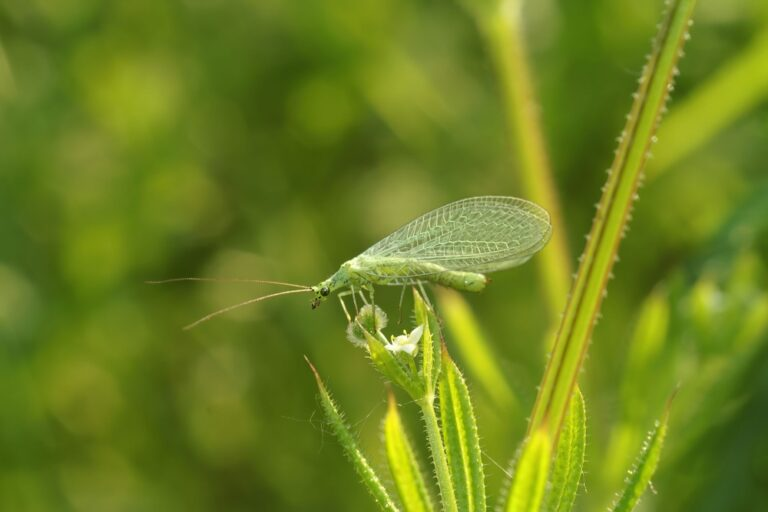
The approach became a central part of the UK’s ASSIST programme, funded by the Natural Environment Research Council (NERC) and the Biotechnology and Biological Sciences Research Council (BBSRC). Over five years, scientists monitored 15 large arable farms across central and eastern England, studying whether these flower corridors could strengthen natural pest control under real farming conditions rather than in laboratory experiments.
Ordinary Wildflowers Were Asked to Do an Extraordinary Job
The flower mixtures used in these trials weren’t made up of rare or exotic species. Researchers deliberately selected common plants that are inexpensive to establish and capable of supporting a wide range of beneficial insects throughout the growing season. Oxeye daisy, red clover, common knapweed and wild carrot were among the species planted between commercial crops.
Each flower serves a different purpose because different insects rely on different sources of nectar and pollen. Together, they create a continuous food supply that helps predator populations survive long after pest numbers begin to decline. Instead of appearing only during outbreaks, beneficial insects remain in the landscape throughout the season, ready to respond whenever aphids or other damaging pests emerge.
Scientists hoped these flower strips would effectively create permanent homes for the insects farmers need most. If enough predators could be sustained inside crop fields, they might reduce pest populations naturally before serious damage occurred. It was an ambitious theory, but proving it required years of careful monitoring across multiple countries and farming systems.
A German Study Produced Results That Caught Researchers’ Attention
Some of the strongest evidence arrived in April 2026, when researchers published a study in the Journal of Applied Ecology examining flower strips across 10 sugar beet growing sites in Germany. Scientists monitored aphid populations, beneficial insects and crop yields while comparing fields containing flower strips with fields managed using conventional insecticides.
The findings were striking. Every flower mixture reduced aphid numbers more effectively than fields without flowers, and several mixtures performed almost as well as chemical insecticides. For farmers searching for practical ways to reduce pesticide use, the results represented one of the clearest demonstrations yet that biodiversity could deliver measurable pest control under real agricultural conditions.
Researchers also discovered that mixtures containing legumes consistently produced the strongest results. They believe those plants may attract predator species that are particularly effective at feeding on aphids, although they noted this explanation still requires further study. Just as importantly, sugar beet yields remained broadly similar regardless of whether fields relied on flower strips, insecticides or neither, suggesting natural pest control did not come at the expense of production.
The authors stressed that no single study can answer every question. Ten research sites cannot represent every farming system or climate around the world. Even so, the findings add to a growing collection of studies suggesting that carefully designed flower strips could become an increasingly valuable tool for farmers looking to balance productivity with lower pesticide use.
Swiss Researchers Saw Similar Results Years Earlier
Long before the German study made headlines, researchers in Switzerland were already exploring whether flower strips could reduce the need for insecticides in commercial farming. Scientists at Agroscope established specially designed flower strips alongside 10 winter wheat fields and compared them with 15 nearby fields that contained only wheat. Rather than focusing on laboratory conditions, the team wanted to see how the approach performed under everyday farming practices.
The results were encouraging. Cereal leaf beetle larvae fell by 40%, while second-generation adult beetles dropped by 53%. Damage to wheat crops also declined by 61%, showing that fewer pests translated into healthier plants rather than simply lower insect counts. Most importantly, pest numbers fell below the economic threshold where spraying normally becomes worthwhile, leading the researchers to conclude that carefully designed flower strips could provide “a viable alternative to insecticides.”
Scientists also reported success in other crops. Research carried out in potato fields linked flower strips with aphid populations that were roughly 75% lower than fields without them. While every crop presents different challenges, the growing number of successful trials has strengthened the argument that encouraging beneficial insects can become a practical farming strategy rather than simply a conservation project.
Researchers Found That Diversity Makes a Huge Difference
One lesson has become increasingly clear throughout these studies: planting any flowers isn’t enough. The number and variety of species matter just as much as the decision to establish flower strips in the first place. To better understand what works best, researchers at the University of Copenhagen reviewed 24 separate studies covering 382 individual field trials.
Across all of those experiments, flower strips increased the number of natural enemies by an average of 48%. However, strips planted with only a single flower species produced no statistically significant improvement. The biggest gains came when farmers sowed multiple species together. Fields containing two or more flowering plants supported around 70% more beneficial insects than fields without flower strips, while each additional plant species continued to provide further improvements.
As Professor Lene Sigsgaard explained, “Our study confirms that diversity pays off. The more species in the flower strip, the more natural enemies in the field.” Lead researcher Nika Jachowicz also noted that relying on one flower species leaves farmers vulnerable if that particular plant performs poorly during the season. A diverse mix provides greater stability because different flowers bloom at different times and attract different insects.
Scientists have also discovered that flower shape matters. Small parasitic wasps, among the most effective natural predators of crop pests, rely on open flowers that allow easy access to nectar and pollen. According to the UK Centre for Ecology and Hydrology, many of these wasps simply cannot feed from flowers with deep or complex blooms. Choosing the right combination of plants can therefore make the difference between a successful flower strip and one that delivers only limited benefits.

Experts Say Flower Strips Are Powerful, But Not a Miracle Solution
Although the growing evidence is encouraging, researchers are also careful to avoid overstating what flower strips can achieve. Farming conditions vary enormously between countries, crops and landscapes, meaning results that work well in one location may not automatically be repeated somewhere else.
Researchers in Sweden highlighted those challenges while studying 10 pairs of perennial flower strips alongside cereal fields in Skåne. The flowers successfully attracted pollinators and beneficial insects, but the increase did not lead to a clear reduction in pest numbers within the crops themselves. Co-author Mattias Jonsson explained, “We observed that some insects spread about ten meters into the field. However, this did not translate into any clear changes in pest abundance in the crop itself.”
His colleague Maria Viketoft said the findings demonstrate why local conditions remain important. “There is no universal solution. To maximize benefits, flower strips need to be designed with local conditions and specific goals in mind.”
Professor Richard Pywell has consistently taken a similarly balanced view. Rather than presenting flower strips as a replacement for pesticides, he argues they should become another tool available to farmers. “Our goal is not to replace pesticides, but provide other management options that allow farmers to be less reliant on them.”
Nature May Be Solving Problems Farmers Didn’t Expect
Some of the biggest benefits may extend beyond the pests researchers originally set out to study. Julian Gold has noticed that parts of his farm appear to require fewer slug pellets than in previous years, although he is careful to describe that observation as anecdotal rather than proven science. He believes beneficial insects encouraged by the flower strips could be helping suppress slug populations as well.
Researchers are also investigating whether these habitats can help protect other valuable crops. At Rothamsted Research, PhD student Hannah McGrath has been studying flower strips in carrot production, where aphid-borne viruses caused an estimated £20 million in losses to the UK industry during 2015. One reason for exploring alternatives is that many insect pests have gradually developed resistance to widely used chemical treatments, making long-term pest control increasingly difficult.
That challenge sits at the center of the conversation surrounding sustainable farming. As insects evolve resistance to pesticides, farmers may need a broader range of tools to protect crops. Encouraging natural predators through habitat management offers one potential way to reduce that dependence without abandoning modern agriculture altogether.
Farmers Are Learning That Flowers Can Work as Hard as Crops
Wildflower strips were once viewed mainly as a conservation measure designed to support bees and butterflies. Today, researchers are finding they may also provide practical economic value by helping farmers manage pests naturally while supporting wider biodiversity across agricultural landscapes.
The evidence remains measured rather than absolute. Flower strips will not eliminate the need for pesticides in every crop or every region, and scientists continue studying the conditions that produce the strongest results. Even so, multiple studies now point in the same direction: when carefully designed with diverse plant species, flower strips can increase beneficial insect populations and, in the best-performing trials, reduce pest damage to levels approaching those achieved by insecticides.
For Julian Gold, the flowers growing across his farm no longer represent land taken out of production. They have become another working part of the business. As he puts it, “Using a factory analogy, we run a food production line alongside ecosystem services.” As more research emerges, that philosophy may become less of an exception and more of a blueprint for the future of farming.
Agricultural innovation, beneficial insects, biodiversity, climate-smart agriculture, crop protection, eco-friendly agriculture, Environmental conservation, farm biodiversity, green farming, healthy ecosystems, insect predators, integrated pest management, Natural pest control, organic farming, pesticide reduction, pollinators, regenerative agriculture, Sustainable farming, wildflower strips