
Your cart is currently empty!
12 Year Old Dancer Takes Her First Steps After A Rare Spinal Stroke
Morgan Lopez was just 12 when a routine dance practice turned into a medical emergency that left her unable to walk. Within hours, her family was facing the possibility that their daughter might never move normally again.
Contents
show
Three months later, Morgan walked out of rehabilitation on her own. The California dancer is still undergoing treatment, but she is already looking toward the stage again.
A Dance Move Suddenly Changed Everything
Morgan, who lives in Rancho Cucamonga, California, is an advanced acro-dancer who was accustomed to challenging movements. On May 12, she attempted a no-handed headstand during dance practice, a move her family said she had performed before.
This time, something went wrong.
After returning home, Morgan began experiencing severe symptoms. Her father, Felipe Lopez, said she vomited almost immediately, prompting him to take her to an urgent care facility.
The situation deteriorated rapidly.
As Felipe arrived and parked the car, Morgan suffered a spinal stroke. Her father carried her into the urgent care facility, where a doctor began performing CPR after she went into cardiac arrest.
“The look on my daughter’s face in that moment is something I will never forget. It is an image that will stay with me for the rest of my life,” Felipe said in an Instagram account of what happened.
Morgan regained consciousness and was rushed to Loma Linda University Children’s Hospital, where medical teams stabilized her before beginning the next stage of her treatment.
For her family, the terrifying emergency was only the beginning.
Doctors Warned Morgan Might Never Walk Again

A spinal stroke is extremely rare. According to the Cleveland Clinic information cited in the family’s reports, spinal strokes account for less than 1% of all strokes.
The condition occurs when blood flow to the spinal cord is interrupted. Depending on the location and severity of the injury, it can cause paralysis, pain, breathing problems and other serious complications.
Morgan’s injury also affected the area involved in respiration. After being hospitalized, she was unable to walk and remained bedbound.
Her parents, Jamie and Felipe Lopez, were told that there was a possibility their daughter might never walk again.
They made a decision that was difficult but deeply personal. They chose not to tell Morgan about that possibility.
“We didn’t tell her there was a possibility she may never move again,” Jamie told KTLA. “We just have so much faith and hope in her.”
Instead, Morgan focused on the work directly in front of her.
Her recovery involved speech, physical and occupational therapy. Her family documented her progress through regular updates, showing how seemingly small movements became major milestones.
On June 7, the family said Morgan was intentionally testing movements in her arms while still in her hospital bed.
By the middle of June, she was working on breathing independently. At one point, she was able to breathe without the machine for four minutes.
The progress continued.
Small Movements Became Huge Milestones

Morgan’s recovery did not happen overnight. It unfolded through repeated therapy sessions, strength training and incremental improvements.
For someone who had been unable to move normally, each new ability represented another step forward.
Her family shared several milestones during the weeks that followed:
- Morgan began testing movement in her arms while still hospitalized.
- She learned to breathe independently for short periods.
- She began regaining movement in her arms and legs.
- She completed a bridge by bending her knees and lifting her hips.
- She managed to complete a push-up during rehabilitation.
- She eventually stood for the first time since the injury.
- Days later, she took her first steps.
One of the earliest breakthroughs came on May 23, when Morgan moved a toe.
“It was way early to get our hopes up, but we had no idea what was about to happen next,” Felipe said.
That tiny movement became part of a recovery that would eventually take Morgan from a hospital bed to walking independently.
By June 8, after nearly a month in the hospital, Morgan transferred to Totally Kids Rehabilitation Hospital in Loma Linda.
There, she began an intensive rehabilitation program.
Three Months Of Rehabilitation Changed Her Recovery
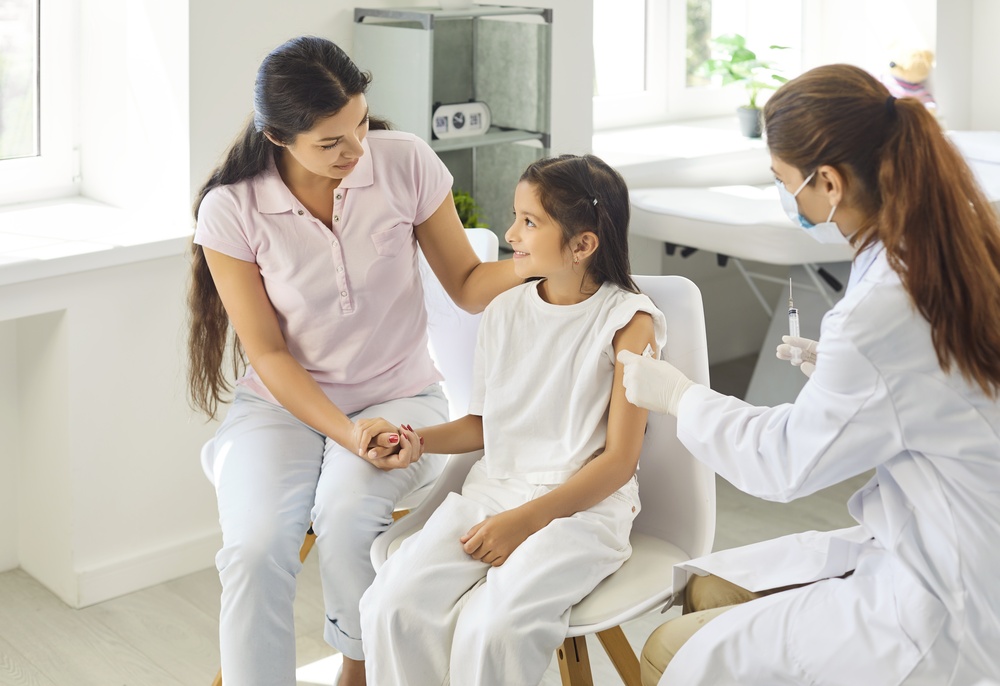
Morgan spent roughly three months at the rehabilitation facility working with therapists and building strength.
Her family said she regained strength and mobility in nearly all of her muscles as she continued treatment.
The process required patience. Breathing exercises were still part of her rehabilitation, while physical and occupational therapists helped her rebuild control and strength.
Then came the moment her family had been waiting for.
On July 27, Morgan stood up for the first time since the injury.
Her father described the reaction as pure happiness.
“When she stood up, she had a big old smile on her face because when she stood up, it was easier than what she thought,” Felipe told KTLA.
Morgan then progressed to taking her first steps.
For her mother, watching those first steps was an emotional moment after months of uncertainty.
“Seeing her now with a smile on her face, taking steps,” Jamie said. “She was so excited to walk for the first time.”
The progress continued until Morgan was able to walk out of Totally Kids Rehabilitation Hospital on August 11.
She still has treatment ahead of her, but the image of a girl who entered rehabilitation unable to walk leaving on her own feet marked a dramatic change from where her family had started.
Morgan Has One Goal In Mind

Morgan’s recovery has been driven by something that mattered to her long before the injury.
She wants to dance again.
The 12-year-old has spent years building her skills as an acro-dancer. After her spinal stroke, that passion became a source of motivation during rehabilitation.
“I draw strength from the desire to dance again,” Morgan told KTLA. “I hope that continuing my rehab will get me stronger so I can be able to dance on stage again and go to school.”
That goal gives her recovery a clear direction.
For now, returning to the stage is still something she hopes to achieve. Her family said she will continue treatment at another hospital before she can return home and begin readjusting to her previous daily life.
The road ahead remains a long one.
But Morgan has already accomplished something that once seemed uncertain: she can walk again.
Her Family Never Stopped Believing

Morgan’s recovery has also been a family effort.
Jamie and Felipe remained by their daughter’s side throughout the hospitalization and rehabilitation process. Friends, dance friends and other supporters also rallied around the family.
Hundreds of people contributed through a GoFundMe campaign, with donations helping cover medical expenses, treatments and resources needed during Morgan’s recovery.
The family’s updates allowed supporters to follow Morgan’s progress from those first tentative movements through her first steps.
For Felipe, watching his daughter regain her mobility has strengthened his belief in what comes next.
“I have faith that she’ll be able to bounce back stronger than ever,” he said.
That confidence is also reflected in plans for the future.
According to one of the family’s reports, Felipe hopes to run alongside Morgan in the Long Beach marathon in October following her recovery.
For a family that spent the summer confronting the possibility of permanent disability, imagining a future involving a marathon is a striking change.
Morgan’s Story Is Part Of A Larger Stroke Reality
Morgan’s case is unusual partly because spinal strokes are so rare, but her story also shows how quickly a medical emergency can unfold.
A spinal stroke involves disrupted blood supply to the spinal cord. The effects depend on the part of the spinal cord affected and the severity of the interruption.
Morgan’s experience included loss of mobility and respiratory complications. Her initial hospitalization required emergency intervention, followed by weeks of intensive treatment.
Another young stroke survivor featured in the supplied reports experienced a very different form of stroke.
Rachel Vasquez-Villalobos was 15 when she suffered a severe stroke during her first junior varsity basketball practice at Point Loma High School.
Rachel initially noticed that she was clumsy and having difficulty handling the ball. Her condition then deteriorated rapidly. She lost the ability to speak and collapsed.
Her coach called 911, and paramedics recognized the possibility of a stroke.
Doctors later discovered a small hole in her heart through which a clot had traveled to a blood vessel in her brain.
“The next day she was up and walking and talking and made really a miraculous recovery,” Dr. Jeffrey Steinberg of UC San Diego Health said.
Rachel later underwent surgery to repair the hole in her heart and continued rebuilding her endurance.
Her story and Morgan’s are medically different, but both demonstrate the uncertainty families can face when a young person suffers a major stroke.
They also show how much recovery can depend on rapid medical care and intensive rehabilitation.
The Next Chapter Will Be Measured In Steps
Morgan’s walk out of rehabilitation does not mark the end of her recovery.
Her family said she will continue treatment at another hospital before returning home. She will also need to readjust to a lifestyle that once included dance practice and school.
There is no guarantee that the process will be quick or easy.
What is clear is that Morgan has already moved far beyond the point where her family feared she might remain.
Three months ago, she was bedbound.
Now, she can walk.
And the dream she keeps talking about is waiting for her: stepping onto a dance stage again.
For Morgan, the next milestone may not be about how far she can walk. It may be about how far she can dance.