
Your cart is currently empty!
New Stanford AI Model Predicts 130+ Diseases From a Single Night of Sleep

Most of us view a good night’s sleep simply as the fuel for a productive morning, focusing primarily on energy and mood. Yet, emerging research suggests that our unconscious hours hold a far more profound secret: a detailed roadmap of our future physical health. Stanford University scientists have developed a way to decode the complex biological signals emitted while we dream, utilizing artificial intelligence to detect silent warning signs for over a hundred distinct medical conditions years before symptoms ever surface.
Contents
show
Unlocking the Hidden Health Data in Our Dreams
A poor night’s rest is often dismissed as merely the precursor to a groggy morning, yet new research suggests those unconscious hours hold profound secrets about our future health. Researchers at Stanford Medicine have developed a groundbreaking artificial intelligence model capable of analyzing physiological recordings from a single night of sleep to predict a person’s risk for over 100 different health conditions.
Published in Nature Medicine, this study introduces SleepFM, a new AI model designed to interpret the complex biological language of slumber. While traditional sleep medicine typically focuses on diagnosing immediate disorders like apnea, this innovative tool mines the data for subtle indicators of diseases that may not manifest for years.
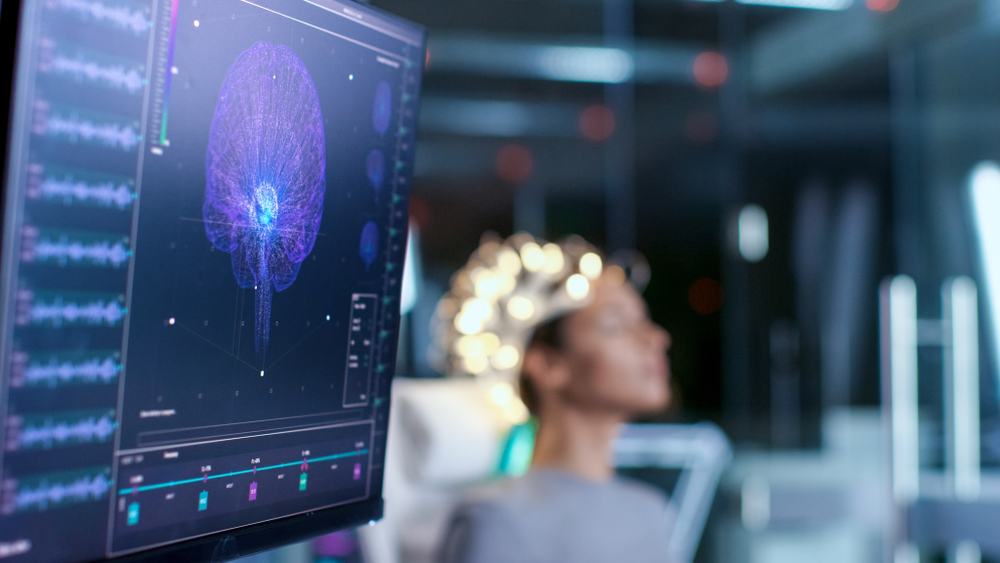
The model relies on data from polysomnography, the gold standard for sleep assessments conducted in laboratories. These studies track a symphony of bodily functions, including brain waves, heart rate, breathing patterns, and limb movements. According to the researchers, this environment offers a unique window into human biology that has previously been underutilized in broader medical diagnostics.
Emmanuel Mignot, MD, PhD, a professor in Sleep Medicine and co-senior author of the study, emphasized the depth of this information. “We record an amazing number of signals when we study sleep,” Mignot stated. “It’s a kind of general physiology that we study for eight hours in a subject who’s completely captive. It’s very data rich.” By applying advanced AI to this untapped reservoir of physiological data, the team has effectively turned a standard night of sleep into a comprehensive, predictive health screening tool.
Teaching AI to Speak the Language of Sleep
To translate raw biological data into predictive insights, the researchers built what is known as a foundation model. This is the same type of artificial intelligence architecture that powers large language models like ChatGPT. However, instead of ingesting vast libraries of text to learn human speech, SleepFM was trained on nearly 600,000 hours of sleep data collected from approximately 65,000 participants.
The model processes this massive dataset by splitting recordings into five-second increments. James Zou, PhD, an associate professor of biomedical data science and co-senior author, described this process as “essentially learning the language of sleep.” In this context, brief physiological moments serve the same function as words in a sentence, allowing the system to recognize complex patterns over time.
A key innovation in this study was the development of a training technique called “leave-one-out contrastive learning.” This method challenges the AI to analyze multiple data streams simultaneously, including brain activity, heart rhythms, pulse readings, and breathing airflow. By temporarily hiding one specific signal, the model must attempt to reconstruct the missing piece based solely on the remaining information.
This rigorous training forces the AI to understand how different bodily systems relate to one another. Zou noted that a primary technical achievement of the work was figuring out how to harmonize these distinct data modalities. By learning how these signals interact, SleepFM moves beyond simple monitoring and begins to comprehend the holistic physiology of a sleeping human body.
Forecasting Future Health Risks

To verify the model’s capabilities, the team leveraged an extensive archive of medical history. The Stanford Sleep Medicine Center provided a crucial dataset comprising 35,000 patients aged 2 to 96. By linking polysomnography data recorded between 1999 and 2024 with electronic health records, the researchers could trace patient outcomes over a period of up to 25 years.
The model was initially tested on standard diagnostic tasks, such as classifying sleep stages and assessing sleep apnea severity, where it performed equal to or better than current state-of-the-art tools. However, its performance in forecasting future illness proved even more remarkable. Out of over 1,000 disease categories analyzed, SleepFM successfully identified 130 conditions with significant predictive accuracy.
The researchers used a metric called the C-index, or concordance index, to measure success. This index evaluates how well the model predicts which of two individuals will experience a specific health event first. “A C-index of 0.8 means that 80% of the time, the model’s prediction is concordant with what actually happened,” Zou explained.
The results were particularly striking for serious chronic conditions. SleepFM achieved high predictive scores for Parkinson’s disease (0.89), prostate cancer (0.89), breast cancer (0.87), and dementia (0.85). Even for conditions like heart attacks and death, the model maintained C-indices above 0.8. These figures suggest that the physiological signals recorded during sleep contain early warning signs for diseases involving the brain, heart, and cellular regulation long before conventional symptoms appear.
When Body Signals Clash
Even with accurate predictions, AI can be a mystery. It identifies patterns without explicitly explaining the cause. James Zou noted that the model “doesn’t explain that to us in English,” so the team developed specific techniques to understand exactly what biological clues the computer prioritizes.
The researchers discovered that the most powerful insights did not come from checking the heart or brain in isolation. While heart signals naturally helped predict cardiac issues and brain waves linked to mental health, the most accurate forecasts occurred when the model analyzed how these systems worked together.
Emmanuel Mignot explained that the most valuable information came from comparing the different data channels. The AI essentially looks for parts of the body that are out of sync. For example, if a patient’s brain waves look like they are deeply asleep, but their heart activity looks like they are wide awake, that mismatch is a warning sign. These internal conflicts are often invisible to doctors during a standard checkup, yet they can signal serious health problems long before a diagnosis occurs.
Prioritising Sleep as a Vital Health Indicator
The Stanford study serves as a potent reminder that sleep is far more than a nightly reset button; it is a critical window into our biological future. The ability of an AI model to predict over 100 diseases solely from sleep data validates the long-held medical belief that sleep quality is inextricably linked to systemic health.

As technology advances, the line between sleep tracking and comprehensive health monitoring will continue to blur. However, we do not need to wait for advanced AI diagnostics to take action today. The connection between disrupted physiological signals during sleep and serious chronic conditions suggests that protecting our sleep quality is one of the most effective preventative measures we can take.
Prioritizing sleep hygiene—maintaining consistent schedules, reducing screen time before bed, and addressing snoring or restlessness—is no longer just about feeling rested the next day. It is about safeguarding long-term longevity. If you suspect you have sleep issues, consulting a specialist for a formal assessment could provide more than just a better night’s rest; it might offer a lifesaving glimpse into your overall well-being. By treating sleep with the medical seriousness it deserves, we can proactively manage our health before risks turn into reality.
Source:
- Thapa, R., Kjaer, M. R., He, B., Covert, I., Moore, H., IV, Hanif, U., Ganjoo, G., Westover, M. B., Jennum, P., Brink-Kjaer, A., Mignot, E., & Zou, J. (2026). A multimodal sleep foundation model for disease prediction. Nature Medicine. https://doi.org/10.1038/s41591-025-04133-4