
Your cart is currently empty!
Common Food Preservatives May Raise Your Risk of High Blood Pressure and Heart Disease

Check your pantry. Behind every label listing a long row of E-numbers and chemical names sits a question that scientists in France have spent 15 years trying to answer. Most people accept food preservatives as a necessary trade-off, a way to keep packaged goods on shelves longer without spoiling. But what if some of those same preservatives, found in everything from wine and deli meats to bread and fruit juice, are doing something else inside the body entirely? A major study published in the European Heart Journal is raising that question with hard data behind it, and the answers are making nutrition researchers sit up straight.
Contents
show
A Major French Study Puts Food Preservatives Under Scrutiny
Since 2009, researchers running the NutriNet-Santé cohort have tracked the diets of more than 112,000 volunteers across France, making it one of the most detailed nutritional studies ever conducted. Participants logged every item they ate and drank, down to the brand name, for three days every six months. Scientists then cross-referenced those records against product ingredient databases and the French national health insurance system to look for patterns between what people consumed and what happened to their health over time.
After a median follow-up of nearly eight years, researchers identified 2,450 cases of cardiovascular disease and 5,544 cases of high blood pressure among the study population. Rather than pointing to salt, sugar, or fat content alone, the team chose to focus on preservative food additives, compounds that had largely been ignored in large-scale human population studies until now.
What the Numbers Actually Show

Out of 58 preservatives detected in participants’ diets, researchers closely examined 17 that at least 10% of the study population consumed regularly. Eight of those 17 were associated with elevated blood pressure over the following decade, and the risk figures attached to them are not small.
People in the highest consumption category for non-antioxidant preservatives, which are those that kill bacteria, mold, and yeast in food, faced a 29% greater risk of high blood pressure compared to lower consumers. When it came to cardiovascular disease, including heart attacks and stroke, that same group carried a 16% higher risk. Antioxidant preservatives, which prevent oxidation and browning in food, produced a separate but equally notable pattern, linked to a 22% greater risk of high blood pressure among higher consumers. No category of preservative appeared to offer any cardiovascular protection in the data.
Natural Does Not Always Mean Safe
Here is where the research becomes genuinely surprising for most readers. Among the preservatives flagged in the study were several compounds that many consumers would consider natural, including citric acid, rosemary extracts, and ascorbic acid, better known as vitamin C.
Senior author Mathilde Touvier, principal investigator of the NutriNet-Santé study and director of research at France’s National Institute of Health and Medical Research in Paris, drew a firm line between vitamin C found naturally in food and its manufactured counterpart used in packaging. “Naturally occurring ascorbic acid and added ascorbic acid — which may be chemically manufactured — may have different impacts on health,” Touvier said. “Thus, the results observed here for these food additives are not true for natural substances found in fruits and vegetables.”
Her distinction matters for how people should read these findings. Eating an orange is not the same as consuming a processed meat product preserved with added ascorbic acid. Factors such as food matrix, dosage, and how different compounds interact once inside the body can affect how a substance behaves biologically, even when two versions of it share identical molecular structures.
Which Preservatives Raised the Most Concern
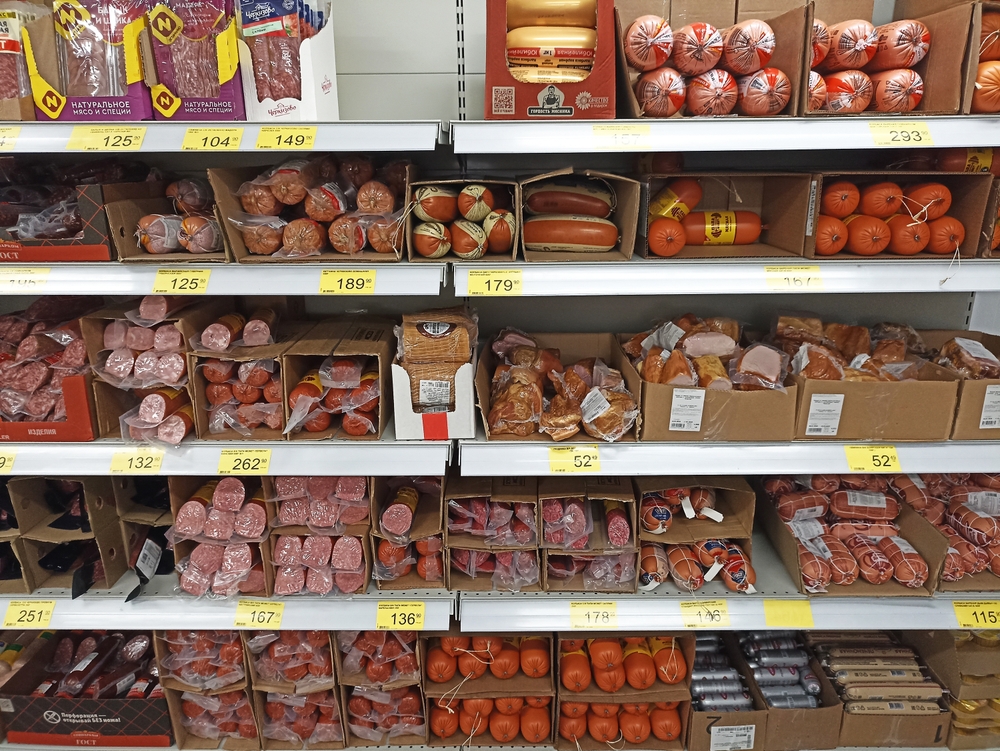
Potassium sorbate, potassium metabisulphite, and sodium nitrite were the three non-antioxidant preservatives most closely linked to elevated blood pressure. Potassium sorbate appears in wine, baked goods, cheeses, and sauces. Potassium metabisulphite, which releases sulphur dioxide when dissolved, shows up in wine, juice, cider, beer, and other fermented beverages. Sodium nitrite is a chemical salt long used in processed meats, including bacon, ham, and deli products.
On the antioxidant side, ascorbic acid, sodium ascorbate, sodium erythorbate, citric acid, and rosemary extracts were all associated with higher rates of high blood pressure. Ascorbic acid went a step further, with the data pointing to a specific link with cardiovascular disease, including coronary heart disease and stroke. Researchers also calculated that roughly 16% of the association between non-antioxidant preservative exposure and cardiovascular disease ran through hypertension itself, suggesting elevated blood pressure is one key pathway through which these compounds may affect the heart over time.
Preservatives Are Everywhere, Not Just in Ultra-Processed Foods

One assumption worth challenging is that avoiding ultra-processed foods would be enough to sidestep significant preservative exposure. Prior research from the same team found that only about 35% of preservative-containing foods that people consumed were classified as ultra-processed, which means preservatives appear across a much wider range of products, including items many consumers would not associate with heavy processing.
Tracy Parker, nutrition lead at the British Heart Foundation in London, welcomed the study’s approach for exactly that reason. “This is one of the first large studies to look at individual preservatives rather than treating ultra-processed foods as a single category,” Parker said. “UPFs have long raised concerns due to their high levels of sugar, salt and fat, but these factors alone have never fully explained why they appear more harmful than their nutrient profile suggests. These findings help fill part of that gap.”
Lead author Anaïs Hasenböhler, a doctoral student at the Nutritional Epidemiology Research Team at Université Sorbonne Paris Nord, noted that no single food category can be cut to resolve the issue, and encouraged consumers to choose fresh and minimally processed options wherever possible, with frozen products preserved by low temperature rather than chemical additives as a practical alternative.
Patterns Consistent With Earlier Research on Cancer and Diabetes
Two prior studies from the same research team had already flagged several of the same preservatives in different disease areas. Six preservatives, including sodium nitrite, potassium nitrate, and sorbates, were linked to up to a 32% higher risk of cancer, covering breast cancer, prostate cancer, and overall cancer incidence. Five of those same compounds were also associated with up to a 49% higher risk of type 2 diabetes. Read together, three separate studies now point to some of the same additives as recurring risk factors across multiple serious chronic conditions, a pattern that researchers say warrants deeper investigation.
What Scientists Think Might Be Happening in the Body
Researchers proposed several biological mechanisms that could help explain the cardiovascular associations, though experimental confirmation is still needed. Nitrites have been connected to oxidative damage in cell-level studies and may raise insulin resistance, which in turn elevates blood pressure risk over time. Potassium sorbate carries a trans fatty acid configuration, and trans fats have a well-documented association with blood pressure elevation and arterial damage. Some preservatives also showed cytotoxic properties in human cell models, with potential interference in liver function, and the liver and cardiovascular system share close biological ties.
A few of the compounds, including citric acid and sulphites, had previously shown possible blood pressure-lowering effects in animal studies. Researchers proposed that low-level chronic human exposure might trigger an initial adaptive response that eventually gives way to cardiovascular strain over time, though they were clear that further study is needed to understand that dynamic fully.
How the Study Was Conducted and What Makes It Credible
Methodologically, researchers went to considerable lengths to account for factors that most commonly skew nutritional science. Cox proportional hazard models adjusted for age, sex, body mass index, smoking history, physical activity, education, family history of heart disease, alcohol intake, sodium consumption, and overall diet quality. Researchers also applied dynamic matching to track when manufacturers reformulated products, so that a participant’s exposure data reflected what was actually in their food at the time they ate it.
Rachel Richardson, methods support unit manager for the Cochrane Collaboration, assessed the study in a statement. “Other strengths of this study include the way in which they assessed people’s diets and their comprehensive approach to identifying hypertension and cardiovascular disease. Although they cannot prove causation, there are signals in the results that warrant further investigation.”
As an observational study, it cannot establish direct cause and effect. Residual confounding from unmeasured variables cannot be entirely ruled out, and generalising findings beyond France calls for caution, as the cohort was skewed female and highly educated.
Practical Steps Consumers Can Take Right Now
For those looking to reduce exposure while the science continues to develop, researchers offered straightforward guidance. Fresh and minimally processed food remains the preferred choice, and when convenience takes priority, frozen products preserved by cold temperature rather than chemical additives are a sensible alternative.
Hasenböhler noted that the findings are a prompt to become more deliberate about food choices, not a reason for alarm. Eating more fruit, vegetables, legumes, and whole grains while reducing
What the Findings Mean for Food Safety Regulations

Current acceptable daily intake values for preservatives, set by bodies including the European Food Safety Authority, were derived from toxicological data covering behavioural, reproductive, carcinogenic, and metabolic endpoints. Cardiovascular outcomes were not part of that original risk calculation, and the study authors argued that a formal re-evaluation is now warranted, one that weighs the benefit of food preservation against potential long-term cardiovascular impact. Over 20% of industrial foods and beverages in the Open Food Facts database contained at least one of the studied preservatives in 2024, which gives some sense of how widely consumers are exposed.
Source: Preservative food additives, hypertension, and cardiovascular diseases: the NutriNet-Santé study, European Heart Journal, 2026;, ehag308, https://doi.org/10.1093/eurheartj/ehag308
ascorbic acid, cardiovascular health, citric acid, European Heart Journal, food additives, food labeling, food preservatives, food safety, healthy eating, heart attack risk, heart disease, high blood pressure, hypertension, NutriNet-Santé study, nutritional research, potassium sorbate, processed meats, sodium nitrite, stroke risk, ultra-processed foods