
Your cart is currently empty!
NASA Plans Permanent Human Base On The Moon By 2032
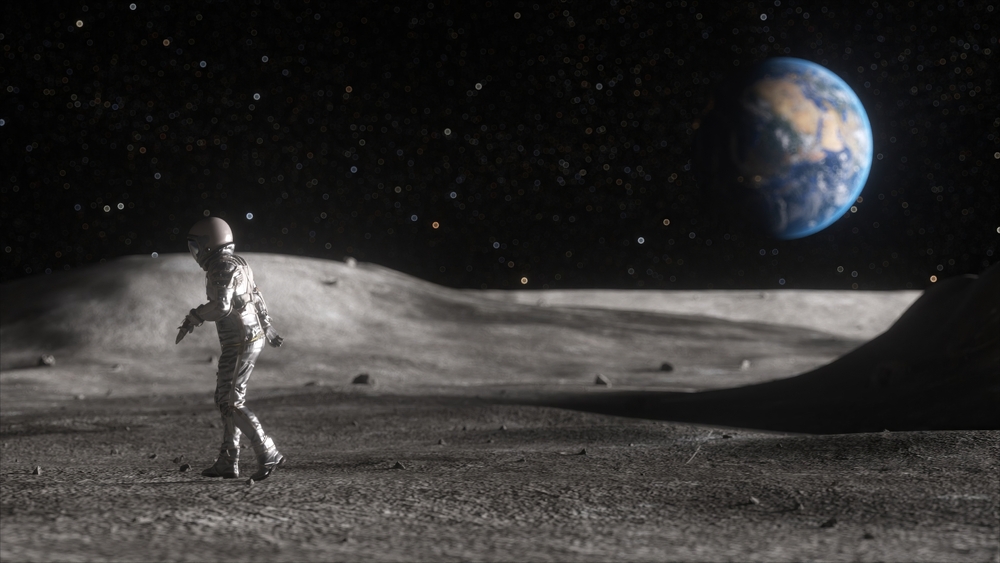
NASA has revealed new details about its ambitious plan to build a permanent base on the Moon, and the timeline is far more aggressive than many people expected.
Contents
show
The agency says the first major missions connected to the project are already being prepared, with robotic landers, hopping drones, lunar rovers, and experimental systems expected to begin arriving on the Moon within the next two years.
Unlike the Apollo era, where astronauts briefly visited the lunar surface before returning home, NASA now wants to create something far more permanent. The goal is a long-term human presence at the Moon’s south pole that could eventually support continuous operations, scientific research, resource extraction, and future missions deeper into space.
NASA Says America Is “Returning To The Moon”
During a recent NASA briefing, administrator Jared Isaacman described the Moon Base initiative as one of the agency’s most difficult challenges in decades.
“America is returning to the moon,” Isaacman said while outlining the agency’s strategy for building a sustainable lunar presence.
He also admitted the environment astronauts will face is far more dangerous than many people realize.
According to NASA, temperatures on the lunar surface can climb above 250 degrees Fahrenheit in sunlight before plunging below negative 250 degrees in darkness. The Moon also lacks an atmosphere, leaving future crews exposed to radiation, meteorite impacts, and extreme space weather.
Isaacman said NASA cannot simply rush into building giant futuristic habitats.
“We are not jumping right into the glass dome moon base,” he explained. “Because the moon base is as beautiful as it is hostile.”
That reality has forced NASA to rethink how humans will live and work on the Moon. Instead of immediately constructing permanent habitats, the agency plans to spend years testing survival systems, robotic infrastructure, transportation technology, and autonomous equipment before astronauts begin extended stays.
The broader goal stretches well beyond short-term exploration.
NASA believes the Moon could become a stepping stone for future Mars missions, while also creating what officials describe as a future “lunar economy” involving private companies and international partners.
Why The Moon’s South Pole Has Become So Important

The location NASA selected for the base is not random.
The agency is focusing heavily on the Moon’s south pole because scientists believe the region contains frozen water trapped inside permanently shadowed craters. That ice could eventually become one of the most valuable resources in space.
Water on the Moon is not only important for drinking. It can also be broken down into hydrogen and oxygen, creating breathable air and rocket fuel.
That changes everything.
Instead of launching every supply from Earth, future astronauts could potentially use lunar resources to sustain longer missions and even refuel spacecraft for deeper exploration.
The south pole also offers periods of near-continuous sunlight along certain ridges, making the region attractive for solar power generation.
NASA’s long-term plan combines both nuclear and solar energy systems. Officials say surface reactors may eventually provide reliable power during the Moon’s long periods of darkness.
Scientists believe these conditions make the south pole one of the few realistic places where humans could eventually establish a semi-permanent settlement.
Still, getting there safely remains one of the hardest engineering challenges ever attempted.
NASA Wants To Build The Moon Base In Three Phases

NASA’s roadmap divides the project into three major stages stretching from now into the 2030s.
The first phase focuses almost entirely on robotic exploration and testing.
Between now and 2029, NASA plans to conduct around 25 launches and 21 lunar landings. During this stage, companies working with NASA will deliver rovers, drones, scientific payloads, communication systems, and experimental technologies to the Moon.
Carlos García-Galán, NASA’s Moon Base program executive, explained that this stage is designed to answer one critical question.
Can humans actually survive there long term?
“We’re going to test and experiment the science of survival,” García-Galán said.
The second phase, expected to begin around 2029, shifts toward infrastructure.
NASA plans to install early habitat systems, stronger communications networks, advanced power systems, and logistics support capable of handling regular astronaut operations.
This is the point where the Moon begins transforming from an exploration target into an active operating environment.
The third phase is where NASA’s vision starts sounding almost unbelievable.
By the early 2030s, the agency hopes to support long-duration human presence at the lunar south pole using expanded habitats, transportation systems, cargo operations, and larger infrastructure networks.
Officials say this phase would mark the transition from temporary missions to what is effectively a permanent lunar base.
NASA also expects international agencies to contribute major hardware during this period.
Japan’s space agency is expected to assist with pressurized lunar rovers, while Canada and Italy are also being considered for major infrastructure contributions.
Private Space Companies Are Doing Much Of The Heavy Lifting

One of the most surprising parts of NASA’s announcement is how dependent the entire project has become on private industry.
Rather than building every system internally, NASA is outsourcing enormous portions of the Moon Base initiative to commercial companies.
Blue Origin, the space company founded by Jeff Bezos, is one of the major contractors.
Its Blue Moon Mark 1 Endurance lander is expected to become one of the first major vehicles involved in the project. NASA hopes the robotic lander will launch as early as fall 2026.
The mission will carry scientific payloads to the lunar south pole while testing precision landing capabilities and autonomous navigation systems.
Another major player is Astrobotic, a Pittsburgh-based aerospace company building the Griffin-1 lander.
NASA says the vehicle will deliver more than 1,100 pounds of cargo to the lunar surface during an upcoming Moon Base mission.
The agency is also working with Lunar Outpost and Astrolab to build lunar terrain vehicles that astronauts can eventually drive across the Moon’s surface.
These rovers are expected to travel between six and nine miles per hour and can operate both autonomously and manually.
NASA hopes at least one will arrive before astronauts return to the lunar surface during future Artemis missions.
The Moon Base program also includes a mission called Moonfall, which sounds more like the title of a Hollywood disaster movie than a real NASA project.
The mission involves sending four drones to the Moon to map terrain, identify resources, and help define potential settlement boundaries.
NASA says the drones will study landing zones and assist with creating a future “Moon Base perimeter.”
Firefly Aerospace has been selected to build the spacecraft that will transport those drones to the lunar surface.
The Artemis Program Is Under Huge Pressure
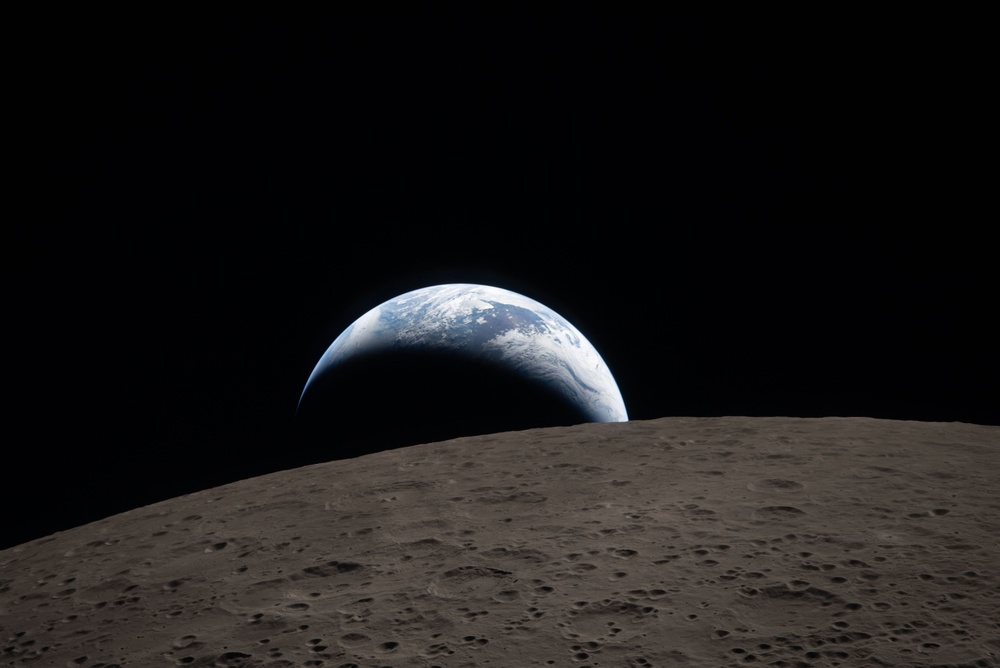
NASA’s Moon Base strategy depends heavily on the success of Artemis, the agency’s program designed to return astronauts to the lunar surface.
After decades without human lunar missions, Artemis II successfully carried astronauts around the Moon earlier this year.
That mission represented a major symbolic victory for NASA.
But the harder part is still ahead.
Landing astronauts safely on the lunar surface again remains one of the agency’s biggest obstacles.
Much of that responsibility currently falls on SpaceX.
Elon Musk’s company is developing the Starship Human Landing System that NASA plans to use during future Artemis landings.
The problem is that Starship has faced repeated delays, technical setbacks, and test failures.
Some experts now believe China could potentially land astronauts on the Moon before NASA completes its own return mission.
Dr. Simeon Barber, a lunar scientist at the Open University, told the BBC that NASA’s timeline may be unrealistic.
“It would not surprise me at all if China gets there first,” Barber said.
China has accelerated its own lunar ambitions while steadily expanding its space capabilities.
The country recently launched another crewed mission to its Tiangong space station and continues developing plans to land astronauts on the Moon before 2030.
That growing rivalry has created enormous political pressure inside the United States.
NASA officials have repeatedly framed the Moon Base project as part of a broader competition for leadership in space.
During the agency’s “Ignition” event, Isaacman warned that success or failure would be measured “in months, not years.”
The language sounded less like traditional space exploration and more like a geopolitical race.
NASA Wants The Moon To Become An Economic Hub
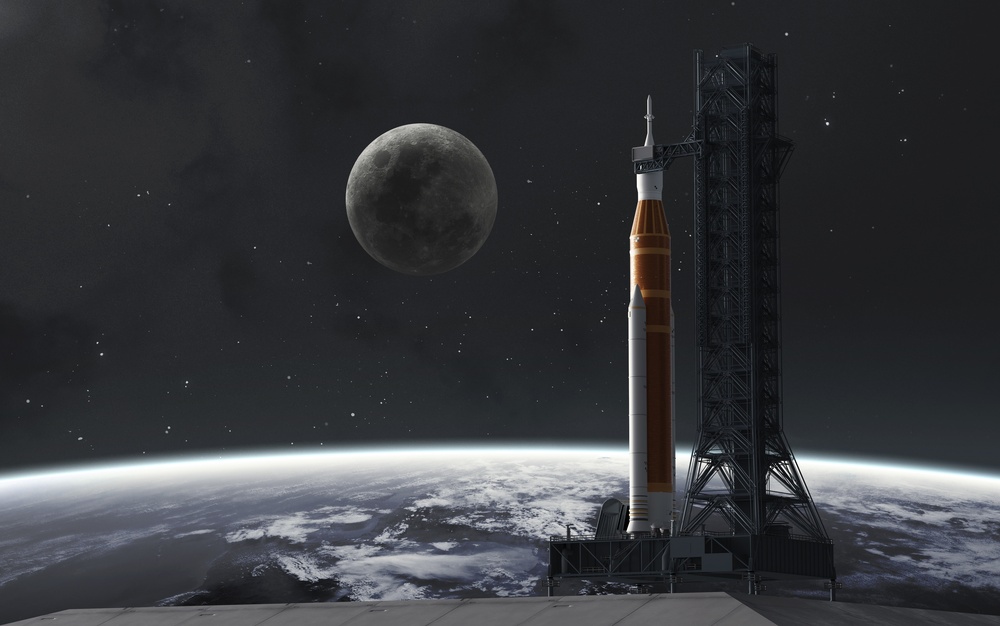
One of the biggest shifts in NASA’s modern strategy is the idea that space exploration must eventually become commercially sustainable.
Isaacman openly acknowledged that taxpayers alone cannot support humanity’s long-term future in space.
“I don’t believe that we are going to have the true kind of space-faring world we may have imagined as children reading science fiction books, if it’s perpetually funded by taxpayers,” he said.
That statement explains why NASA is relying so heavily on private companies.
The agency wants to create an environment where businesses can profit from lunar operations, transportation systems, scientific infrastructure, communications, mining technology, and future manufacturing.
NASA officials believe this commercial approach could eventually reduce costs and increase mission frequency.
The agency is already discussing the possibility of launching lunar missions every six months once the infrastructure matures.
That would represent a dramatic shift from the rare lunar missions of the Apollo era.
NASA also hopes the Moon can serve as a testing ground for future Mars exploration.
If humans can learn to survive in the hostile environment of the lunar surface, many of those same technologies could eventually support missions to the Red Planet.
The Moon effectively becomes a giant training ground for humanity’s next phase of space exploration.
Nuclear Power Could Become Essential For Lunar Survival
One of the most controversial aspects of NASA’s plan involves nuclear technology.
The agency says reliable lunar infrastructure may depend on nuclear reactors capable of generating power during long lunar nights.
Unlike Earth, the Moon experiences day and night cycles that last around two weeks each.
Solar power alone may not provide enough continuous energy for habitats, communications, scientific equipment, and life support systems.
That is why NASA is investing heavily in nuclear systems.
The agency recently announced plans for Space Reactor-1 Freedom, which it describes as the first nuclear-powered interplanetary spacecraft.
NASA hopes to launch the mission to Mars before the end of 2028.
The project is designed to demonstrate nuclear electric propulsion technology in deep space.
Officials believe similar systems could eventually support lunar bases and future long-duration missions beyond Mars.
NASA says nuclear propulsion offers major advantages because it can efficiently transport large amounts of cargo through deep space.
The technology also becomes more valuable farther from the Sun, where solar energy becomes less effective.
For now, NASA insists safety remains the top priority.
Still, the growing role of nuclear technology in space exploration marks a major shift from earlier generations of missions.
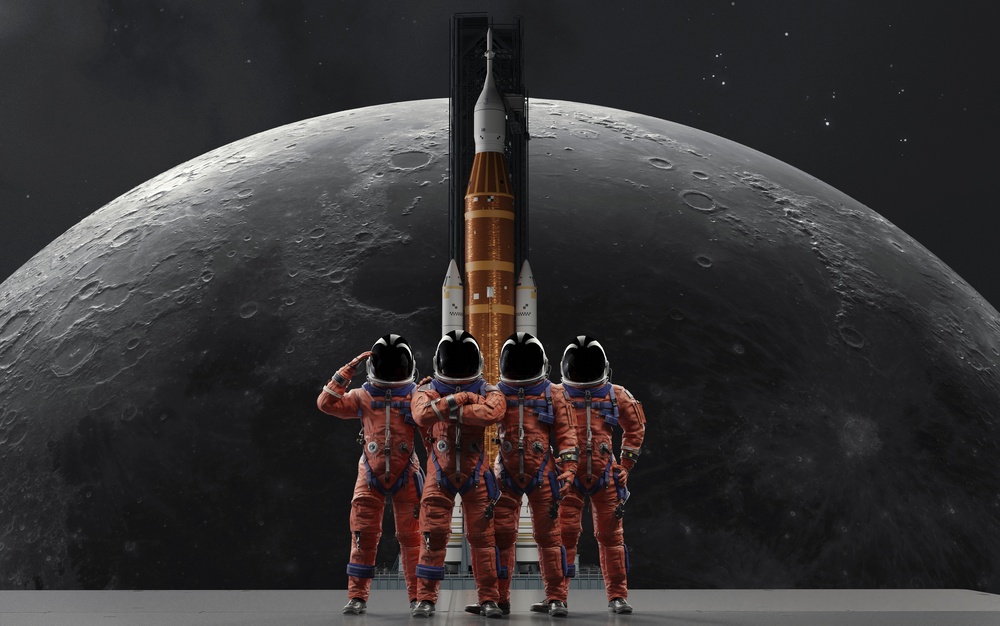
The Moon Base Could Change How Humans Live In Space
For decades, space missions have largely followed the same pattern.
Astronauts launch from Earth, conduct limited operations, and eventually return home.
NASA now wants to move beyond that model.
The Moon Base initiative is designed around permanence.
That means creating transportation systems, communications networks, habitats, energy infrastructure, maintenance operations, cargo deliveries, and scientific facilities that can function continuously.
NASA officials say every mission, whether crewed or robotic, will contribute to building that future.
“Every mission, crewed and uncrewed, will be a learning opportunity as we return to the lunar surface, build the infrastructure to stay, and master the skills required to live and operate in one of the most demanding and dangerous environments imaginable,” Isaacman said.
If the project succeeds, it could fundamentally reshape humanity’s relationship with space.
For the first time in history, humans would no longer be temporary visitors beyond Earth.
They would become permanent occupants.
That possibility carries enormous scientific and technological implications.
Researchers believe lunar laboratories could eventually support experiments impossible to conduct on Earth.
The Moon’s lower gravity and lack of atmosphere create conditions that could advance everything from manufacturing techniques to astronomy and medicine.
Some scientists even believe future lunar industries could emerge around resource extraction, energy systems, and spacecraft construction.
None of that is guaranteed.
NASA still faces technical challenges, political pressure, funding battles, launch risks, and international competition.
The timeline also remains extremely ambitious.
Even some experts working within the field question whether the agency can realistically achieve permanent lunar operations by the early 2030s.
But the momentum behind the project is clearly growing.
Why The Race Back To The Moon Feels Different This Time

The Apollo missions were driven largely by Cold War competition.
The goal was to beat the Soviet Union.
Once the United States achieved that objective, the urgency faded.
This new lunar push feels different.
NASA is no longer talking about planting flags and leaving footprints.
The agency is talking about infrastructure, logistics, transportation corridors, industrial systems, resource extraction, and long-term habitation.
That language makes the Moon sound less like a destination and more like the beginning of something much larger.
At the same time, the modern space race involves far more players.
China is rapidly expanding its capabilities.
Private companies are developing launch systems once controlled entirely by governments.
International agencies are preparing to contribute hardware, rovers, habitats, and scientific missions.
The commercial space industry has also matured dramatically over the past decade.
Companies like SpaceX and Blue Origin are now central to NASA’s future planning.
That level of private involvement would have seemed unimaginable during the Apollo era.
The Moon itself has also become more valuable.
Scientists now understand far more about lunar ice deposits, energy opportunities, and the possibility of using local resources to sustain future missions.
Instead of viewing the Moon as a dead world, many researchers now see it as a strategic platform for deeper exploration.
NASA clearly believes the next decade could define who controls that future.
NASA’s Moon Base Still Sounds Impossible To Many Experts
Despite the excitement surrounding the announcement, skepticism remains widespread.
Building a permanent base on the Moon is one of the most difficult engineering goals humanity has ever attempted.
Every system must survive radiation, extreme temperatures, dust, isolation, and enormous transportation challenges.
Even small equipment failures could become life-threatening in an environment with no breathable atmosphere and no immediate rescue options.
There are also massive financial risks.
NASA’s current Moon Base program already carries a projected cost of around $20 billion, and many experts believe the true number could rise significantly higher over time.
Past space programs have often experienced delays, budget overruns, and technical setbacks.
The Artemis program itself has already faced repeated scheduling changes.
Some scientists believe political pressure may also be pushing NASA toward unrealistic public timelines.
The agency is attempting to balance scientific ambition, commercial partnerships, international diplomacy, and growing competition with China.
That creates enormous pressure to show visible progress quickly.
Still, NASA appears determined to move forward.
Requests for proposals and industry contracts are already being released.
Robotic missions are being prepared.
Commercial partners are building hardware.
And for the first time in decades, serious discussions about permanent human settlements beyond Earth no longer sound completely theoretical.
Whether NASA reaches its goal by 2032 or much later, one thing is already clear.
The race to build humanity’s first real off-world base has officially begun.